


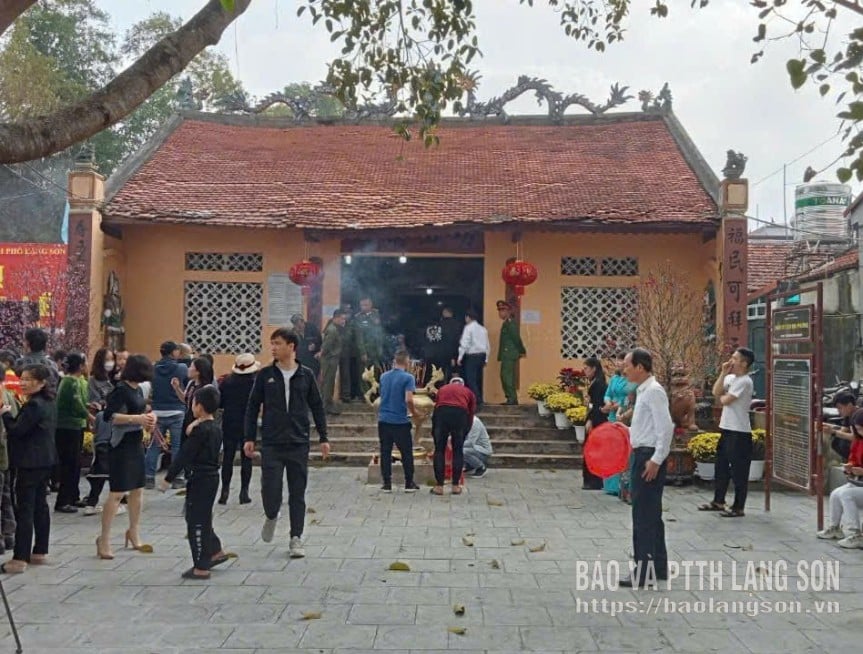
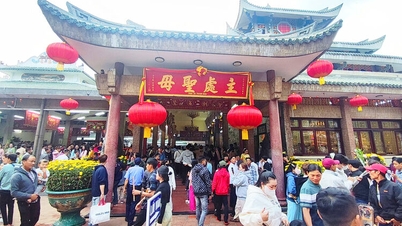
Tet, the Lunar New Year, marks the end of the old year and the beginning of a new one. Since ancient times, whenever Tet arrives, the villages and communities of Lang Son province eagerly prepare to hold thanksgiving ceremonies to the local guardian deity, praying for peace and blessings with sacred and noble beliefs. These ceremonies are usually held at the village's shrines, temples, or communal houses. The most common are the shrines of the Earth God – places of worship for the local people, found in almost every village. The Earth God is often a celestial being who governs the land, but can also be a human deity – someone who contributed to the development of the land and the establishment of the village, revered by the people as the guardian deity.
From the end of the twelfth lunar month of the previous year, in some villages, meetings were held to collect money from households to prepare for purchasing offerings for the village temples and shrines. The custom of Huu Ich commune, Quang Bi district, Diem He prefecture (copied on the 1st of April, the 4th year of Khai Dinh (1919)) states: “On the 26th of December each year, the village elders, village chiefs, and village officials gather to discuss and assign people to collect contributions based on the population of the commune, with each person paying 1 hao and 6 xu of Indochinese currency and half a pound of white rice…” In some places, no money or goods were collected; instead, the village set aside a plot of rice paddy for the temple caretaker to cultivate. The harvest was used to purchase offerings for the annual festivals and ceremonies to worship the deities… The custom of Loc Duong commune, Trinh Nu district, Cao Loc prefecture (copied on the 24th of June, the 4th year of Khai Dinh (1919)) states: “These offerings include the temple's rice paddy, entrusted to the temple caretaker for cultivation, preparation, and provision…”. The person preparing the offerings could be the temple caretaker (the person in charge of the lamps and candles, who is responsible for looking after them). The ritual involves visiting the temple, the shamans (chief officiants), or the village headman and deputy headman. The timing of the Lunar New Year ceremony varies depending on the village. The most common is the ceremony lasting three days (from the 1st to the 3rd). However, some villages hold continuous ceremonies from the 1st to the 5th. Common offerings include boiled or roasted roosters, pork, roasted pork, white or red sticky rice, white wine, honey cakes, vegetarian cakes, incense, flowers, betel nuts, votive paper, and especially a large quantity of various types of firecrackers. The offerings vary depending on the conditions and customs of each place. Some places offer only a simple daily sacrifice of one chicken, one kilogram of sticky rice, one kilogram of rice wine, incense, flowers, and votive paper; while others hold three consecutive days of the Lunar New Year with very elaborate offerings, reflecting the villagers' wishes for prosperity and abundance. (Customs of Tu Mac commune, Khuat Xa district, Loc Binh province (recorded on December 10th, 4th year of Khai Dinh (1919)) I noticed that the offerings here were quite numerous. On the first day, the offerings included: "35 flower-shaped cakes, one roasted pig, 15 kilograms of sticky rice, 15 kilograms of wine, 15 kilograms of red sticky rice, flowers, incense, paper effigies, various other items, and 5000 paper firecrackers." The offerings for the following two days were roughly the same, with only minor differences.
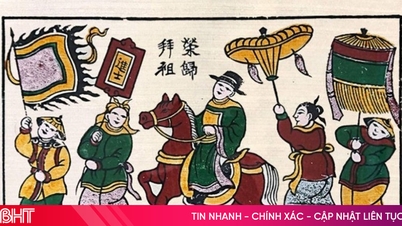
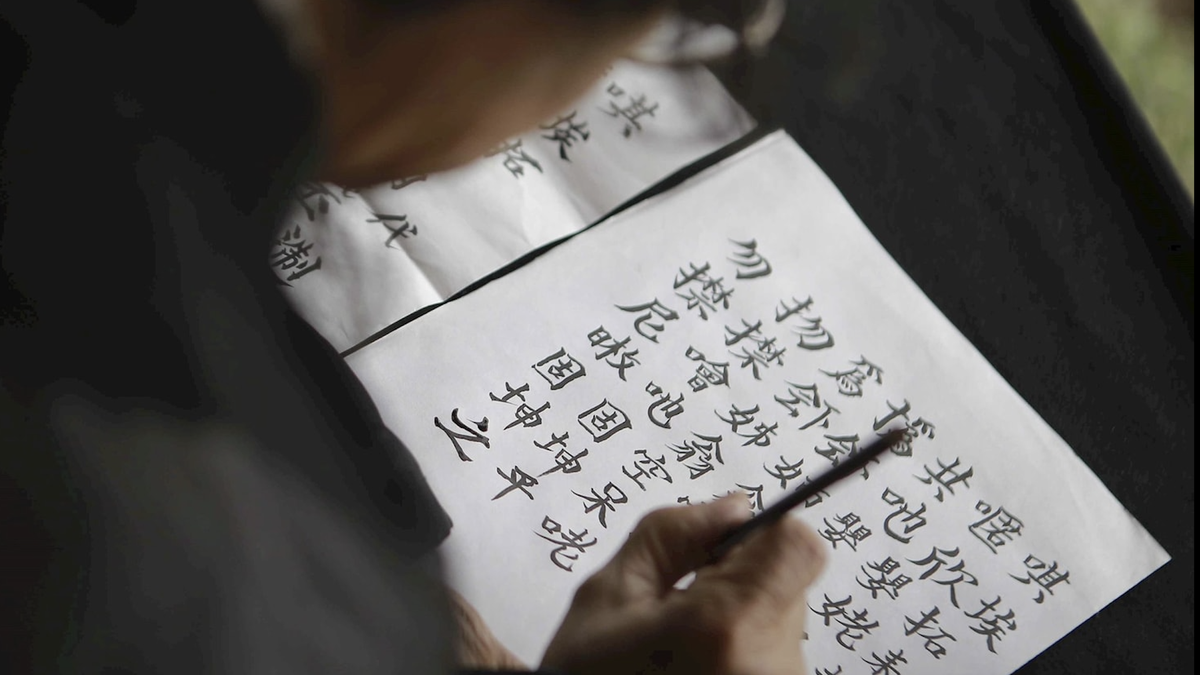
Nowadays, the customs of offering sacrifices during the Lunar New Year in villages have been greatly simplified to suit the modern pace of life. However, in the past, the rituals in Lang Son were very solemn, somewhat elaborate, and strongly reflected the organizational structure of feudal villages. According to tradition, on the first day of the new year, when those assigned to prepare the offerings brought them to the temple, the shaman would beat drums and gongs to signal everyone to come and participate in the ceremony. Following this signal, all the members had to be present in full attendance: the village chief, the deputy chief, the village elders, the village headmen… These were the elected officials responsible for managing and carrying out the general duties of the village. Once everyone had gathered, the shaman solemnly performed the ceremony. From the ancient customs recorded, we see that after offering the sacrifices, the shaman prayed and thanked the local guardian deity for protecting the villagers and ensuring their peace throughout the past year. At the same time, they "pray to the deity this year to bless the people with peace, prosperity, and abundance" (Custom of Quang Bi commune, Quang Bi district, Diem He district). After the shaman finishes his prayers, everyone respectfully enters in order of rank to light incense and pray. Simultaneously, the assistants bring out firecrackers and light them. The sound of firecrackers rings out crisply in the tranquil, pure space on the first day of the year, like a joyful cheer welcoming the new year, creating a lively and exciting atmosphere, spreading happiness. It also signifies warding off evil spirits and bringing good fortune to the villagers. After a week of incense and wine, the offerings are taken down, and the paper effigies are burned. The village head divides the offerings into many portions, giving some to the temple caretaker and the shaman, and distributing the rest as blessings to those present to take home and enjoy. In some places, everyone partakes in the blessings right there. In the sacred space, people pour wine, exchange greetings, and offer each other warm and kind words, reflecting the spirit of community. The custom of Quang Bi commune, Quang Bi district, Diem He province (copied on March 26, 4th year of Khai Dinh (1919)) states that "After that, everyone danced and sang together before going home."
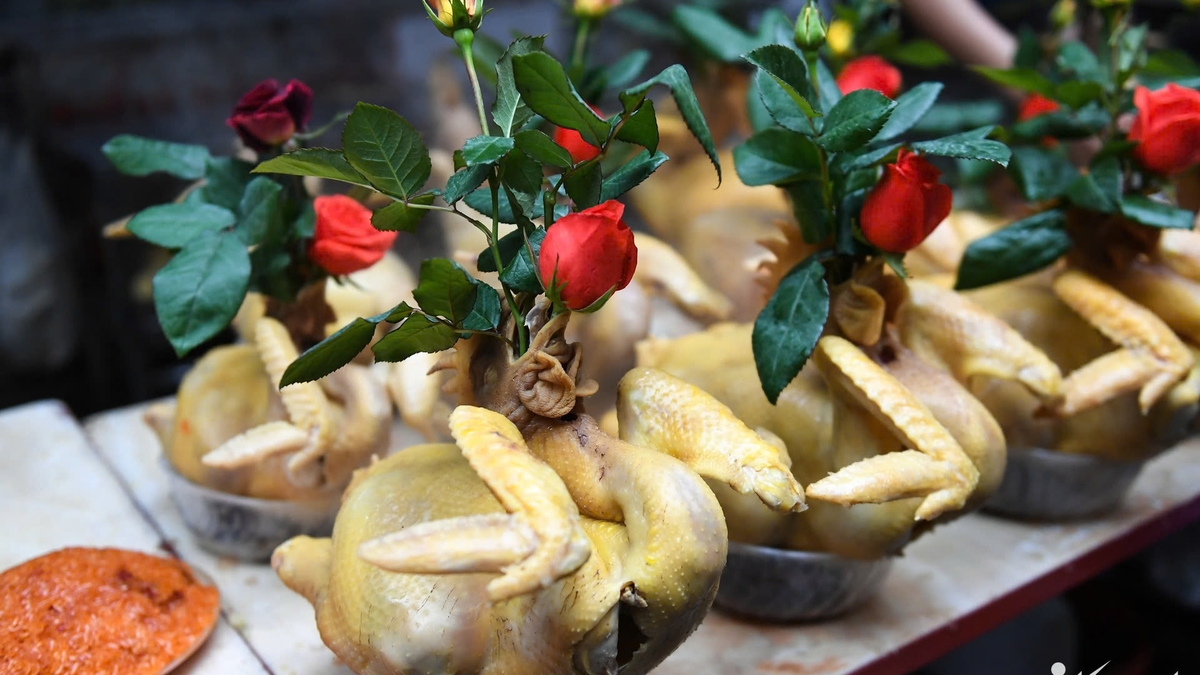
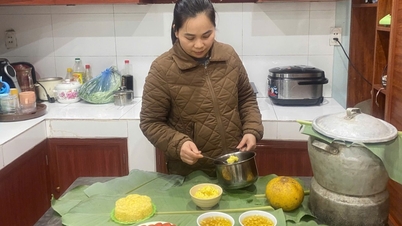
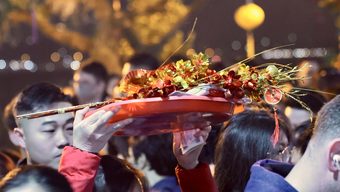
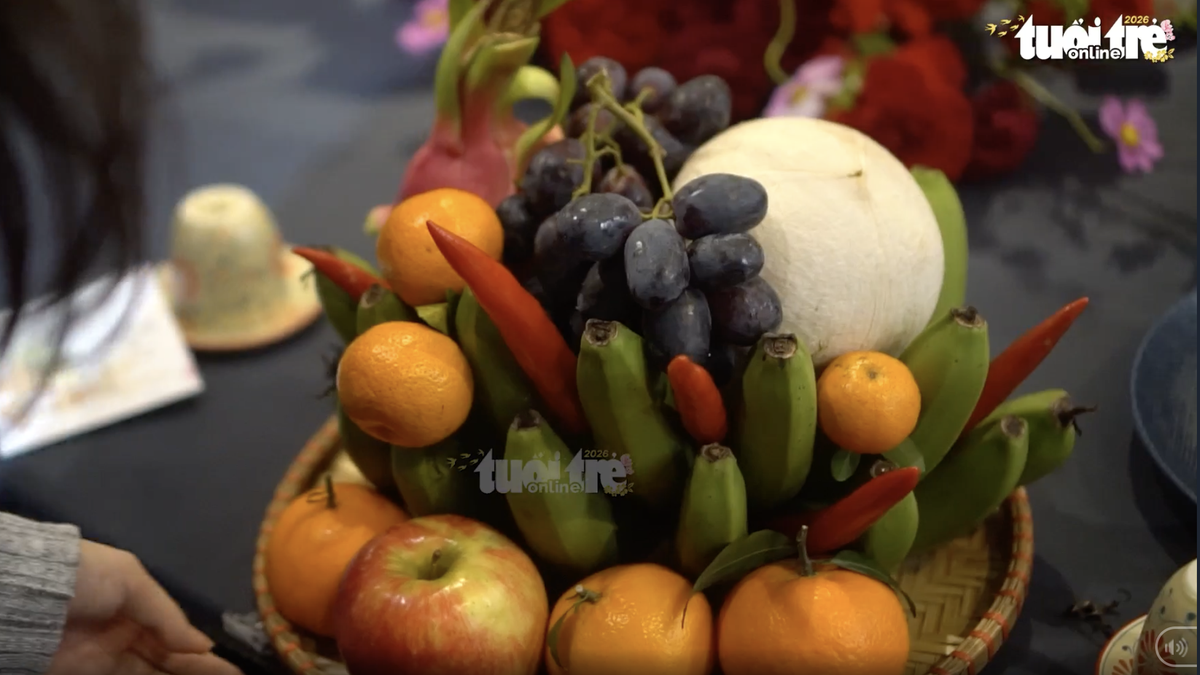
Besides the communal offering ceremony, each family prepares their own offering tray, which includes sticky rice, chicken, cakes, fruits, wine, incense, and gold leaf. Some places traditionally offer this on the first day of Tet (Lunar New Year), while others do it on the second or third day. The offerings are made from the family's agricultural products, carefully selected and beautifully arranged. This not only expresses the family's gratitude to the deities but also symbolizes the family's skill and prosperity in the past year, and their hope for a comfortable and prosperous life in the new year. After the ceremony, each family takes their offering tray home for their children and grandchildren to partake in.
For the people of Lang Son in the past, the Lunar New Year ceremony was a very important ritual marking the beginning of a new year of work for the community. It was also a ritual associated with the beliefs of ancient agricultural communities, initiating the festivities of the year. Remembering the ancient New Year customs of our ancestors, we feel even more deeply the meaning of the warm, joyful reunion, the connection to our roots, a tradition of the people of Lang Son that continues to this day.
Source: https://baolangson.vn/tuc-le-tet-nguyen-dan-o-lang-xa-lang-son-xua-5071551.html


![[Photo] General Secretary To Lam attends the opening session of the Peace Council on Gaza.](https://vphoto.vietnam.vn/thumb/1200x675/vietnam/resource/IMAGE/2026/02/19/1771516865192_tbttolam5-jpg.webp)








































Comment (0)