

On November 15th, the University of Economics and Law (Vietnam National University Ho Chi Minh City) collaborated with the Ho Chi Minh City Law Newspaper to organize the national scientific conference '30 Years Since the United Nations Convention on the Law of the Sea Entered into Force: From Commitment to Action of Vietnam'.
In his opening remarks at the workshop, Associate Professor Hoang Cong Gia Khanh, Rector of the University of Economics and Law, stated that on November 16, 1994, the 1982 United Nations Convention on the Law of the Sea (UNCLOS) officially came into effect after being ratified by the 60th country.
According to Mr. Khanh, UNCLOS 1982 comprehensively regulates international legal issues concerning the seas and oceans, serving as an important international legal basis for states to establish and exercise sovereign rights, sovereign exercise rights, jurisdiction, as well as other rights, obligations, and freedoms in the process of governing, exploiting, and using the seas and oceans for the purposes of peace, sustainable development, and prosperity of nations.
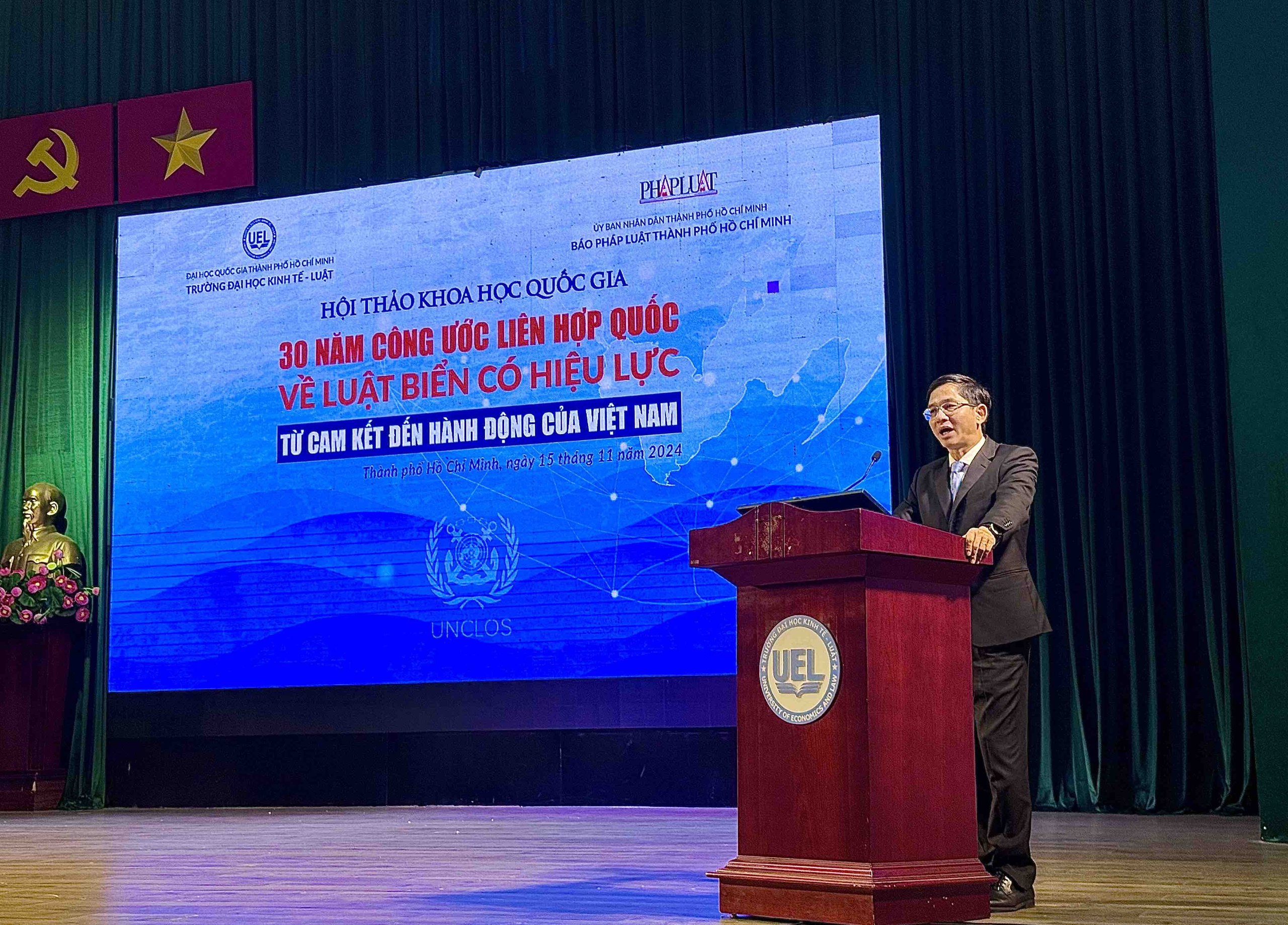
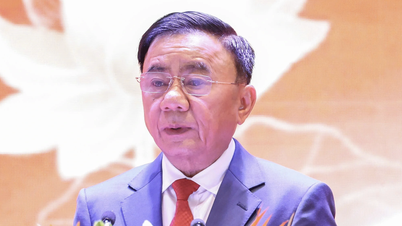
Associate Professor Hoang Cong Gia Khanh, Rector of the University of Economics and Law, delivered the opening remarks at the conference.
Speaking at the conference, Mr. Mai Ngoc Phuoc, Vice President of the Ho Chi Minh City Journalists Association and Editor-in-Chief of the Ho Chi Minh City Law Newspaper, stated that the 1982 UNCLOS is likened to a "constitution of the seas and oceans," a massive multilateral international document. This convention represents a global compromise, encompassing all the most important legal issues related to the seas and oceans, including the seabed and subsoil beneath the seabed, benefiting not only coastal nations but also landlocked countries, developed nations as well as developing nations.
Many new challenges
Associate Professor Hoang Cong Gia Khanh noted that over the past 30 years, humanity has witnessed many changes, especially technological breakthroughs in the fields of maritime and aviation, and the demand for exploiting, processing, and utilizing marine and ocean resources. In addition, nations have also faced and been profoundly affected by major geopolitical shifts, climate change, and the constant movement of international trade.
Assoc. Prof. Dr. Hoang Cong Gia Khanh
Sharing the same view, Mr. Mai Ngoc Phuoc also pointed out that marine environmental pollution, overexploitation of marine resources, the development of new marine technologies, various forms of maritime crime, escalating regional tensions, global hotspots, and unilateral actions of states threatening maritime safety and security... are challenges that UNCLOS 1982 must face.
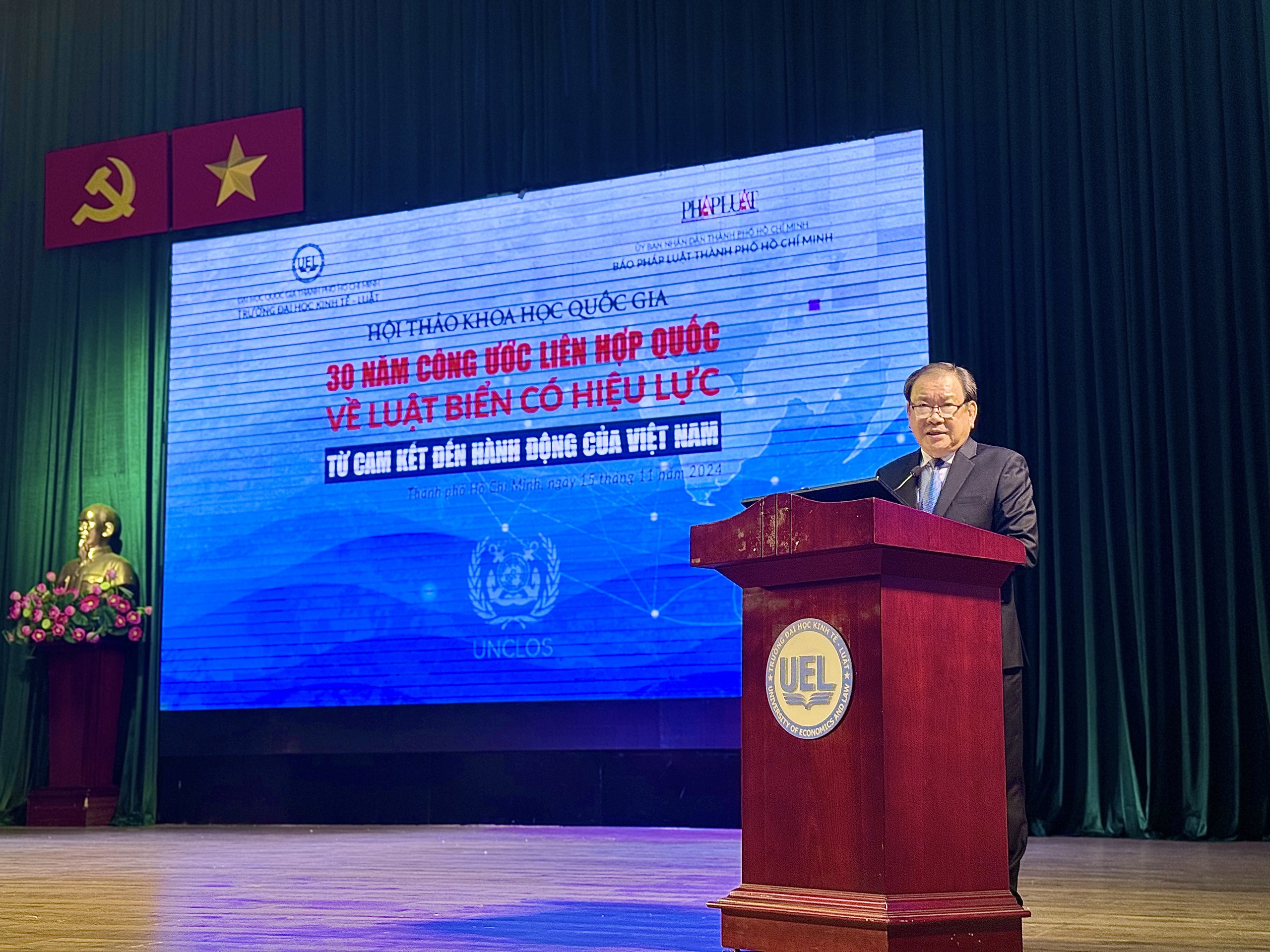
Mr. Mai Ngoc Phuoc, Editor-in-Chief of the Ho Chi Minh City Law Newspaper, spoke at the seminar.
Mr. Phuoc views Vietnam as a coastal nation located in the South China Sea, possessing sovereignty, sovereign rights, and jurisdiction over the Paracel Islands and the Spratly Islands. According to Mr. Phuoc, the South China Sea is considered one of the busiest and most potentially powerful seas in the world, but it is also a region of long-standing disputes. "Therefore, alongside the advantages, Vietnam also faces numerous difficulties and challenges," Mr. Phuoc observed.
According to Mr. Phuoc, the Party and the State of Vietnam have been resolutely and persistently fighting to protect the sovereignty and legitimate interests of the nation at sea, while proactively and actively resolving disputes and disagreements in the East Sea through peaceful means on the basis of international law, especially UNCLOS 1982.
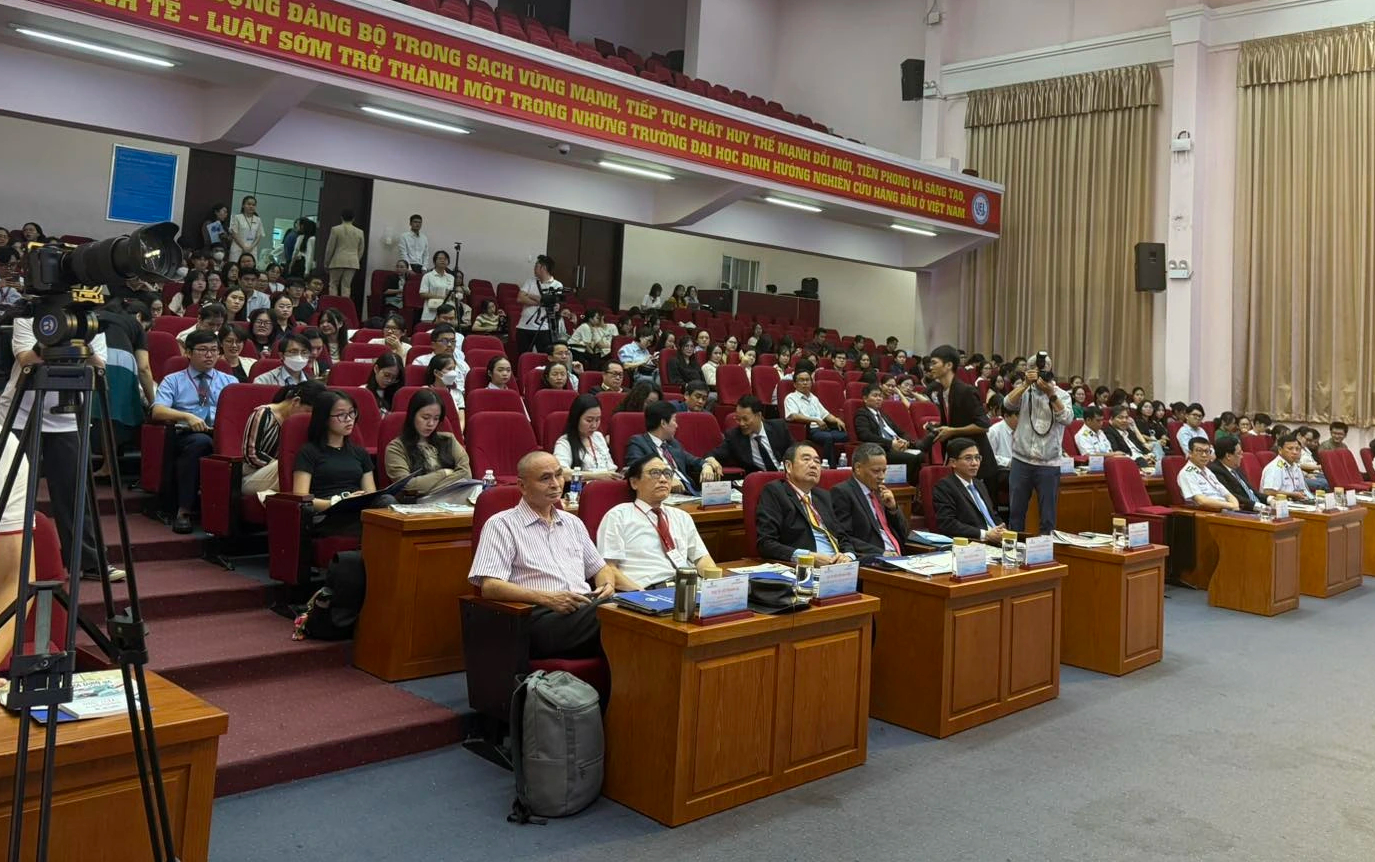
Delegates attending the workshop
Regarding the issue of marine resource management, Associate Professor Dr. Vu Thanh Ca, former Director of the Department of International Cooperation and Science and Technology, General Department of Seas and Islands of Vietnam, acknowledges that many challenges still exist in implementing the provisions of UNCLOS 1982 on the sustainable exploitation and use of resources, environmental protection, ecosystems, biodiversity, marine fisheries resources, coastal areas and islands.
Mr. Vu Thanh Ca believes that these obstacles can only be overcome with the political determination of the country's leaders, as well as the leaders of ministries, departments, localities, and government officials and citizens participating in the management, exploitation, and use of marine resources and the environment in coastal and island areas.
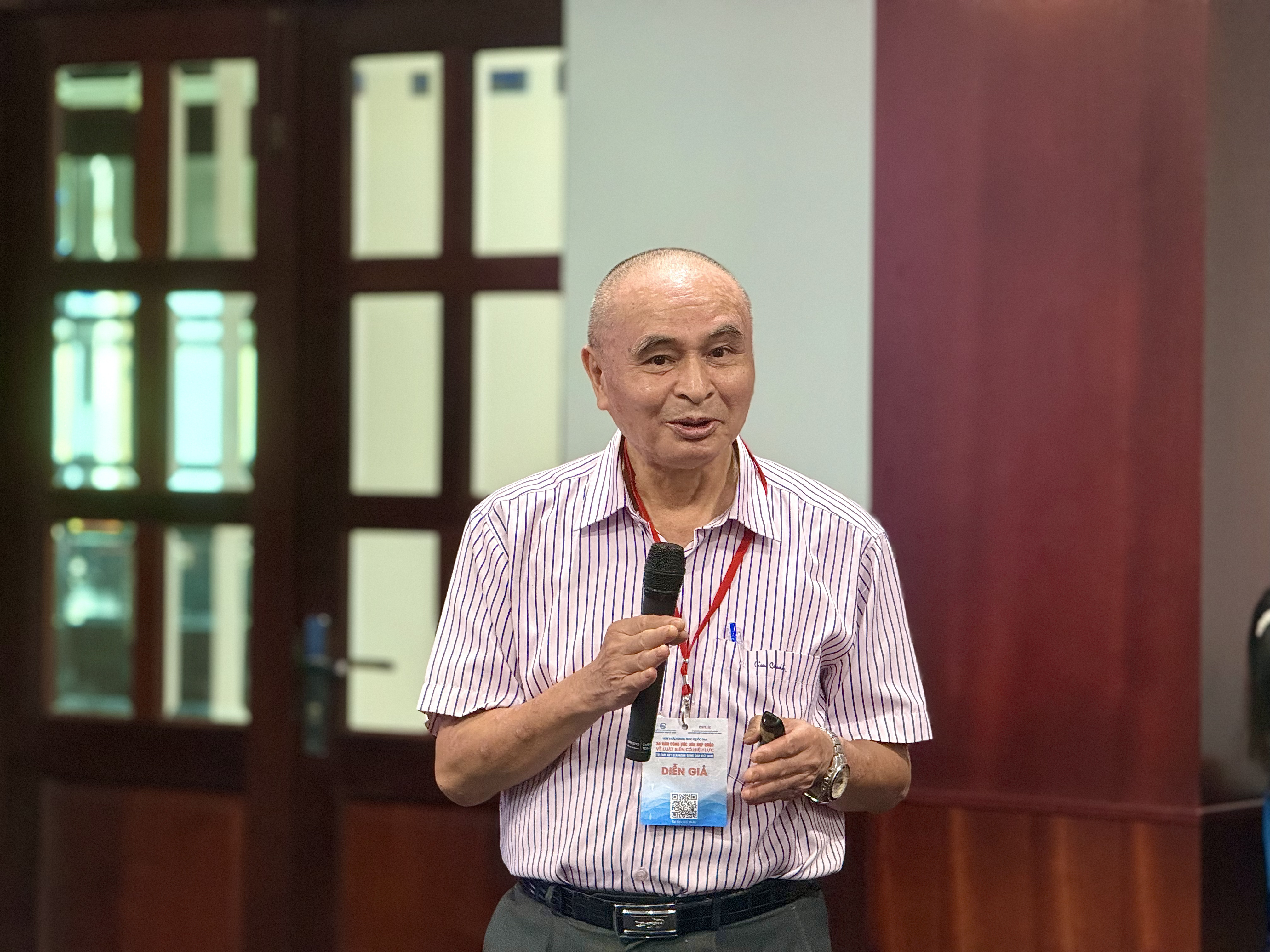
Associate Professor Dr. Vu Thanh Ca, former Director of the Department of International Cooperation and Science and Technology, General Department of Seas and Islands of Vietnam, delivered a speech at the conference.
Prospects for implementation
Professor Nguyen Hong Thao, a member of the United Nations International Law Commission, assessed that the 1982 UNCLOS has many progressive aspects. First, the 1982 UNCLOS has overcome the weaknesses of the 1958 Geneva Convention on the Law of the Sea, thereby establishing a new, fairer legal order and resolving the issue comprehensively and without fragmentation.
The 1982 UNCLOS expands the rights of coastal states beyond their national jurisdiction and establishes fair principles for resolving maritime delimitation issues, creating a new and effective mechanism for settling maritime disputes. Currently, the 1982 UNCLOS serves as inspiration for coastal states to develop and adopt a series of national maritime laws consistent with the Convention's content and spirit.
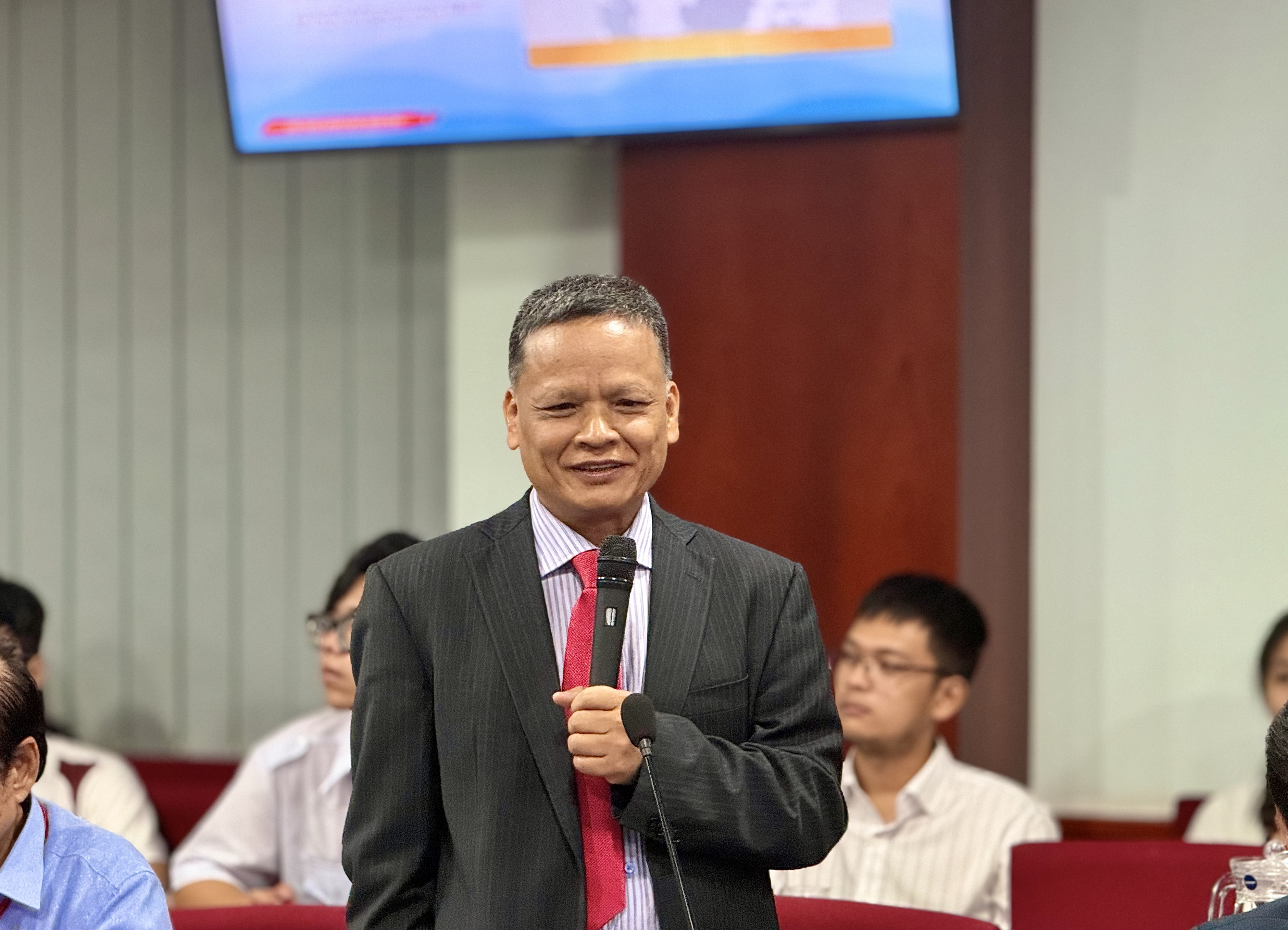
Professor Nguyen Hong Thao presented a paper titled "UNCLOS and Vietnam – a country with three parts sea and one part land".
Professor Nguyen Hong Thao assessed that UNCLOS 1982 allowed coastal states to legally access the sea, and Vietnam seized that opportunity earliest and most effectively. Accordingly, Vietnam was the first country in Southeast Asia to issue a Declaration of the Government of the Socialist Republic of Vietnam on May 12, 1977, establishing a 200-nautical-mile exclusive economic zone and continental shelf in accordance with the spirit of the Draft Convention.
Besides its declarations, Vietnam is also one of the leading countries in Southeast Asia in negotiating the delimitation of maritime zones and resolving maritime disputes using the most diverse tools. Vietnam has also contributed to the development and implementation of the Declaration on the Conduct of Parties in the South China Sea (DOC) and the Code of Conduct of Parties in the South China Sea (COC).
Also at the workshop, Associate Professor Dr. Vu Thanh Ca noted that Vietnam has made efforts and achieved many successes in integrated management of marine and island resources and environment, thereby implementing the provisions of UNCLOS 1982 on sustainable exploitation and use of resources, environmental protection, ecosystems, biodiversity, marine fisheries resources, coastal areas and islands.
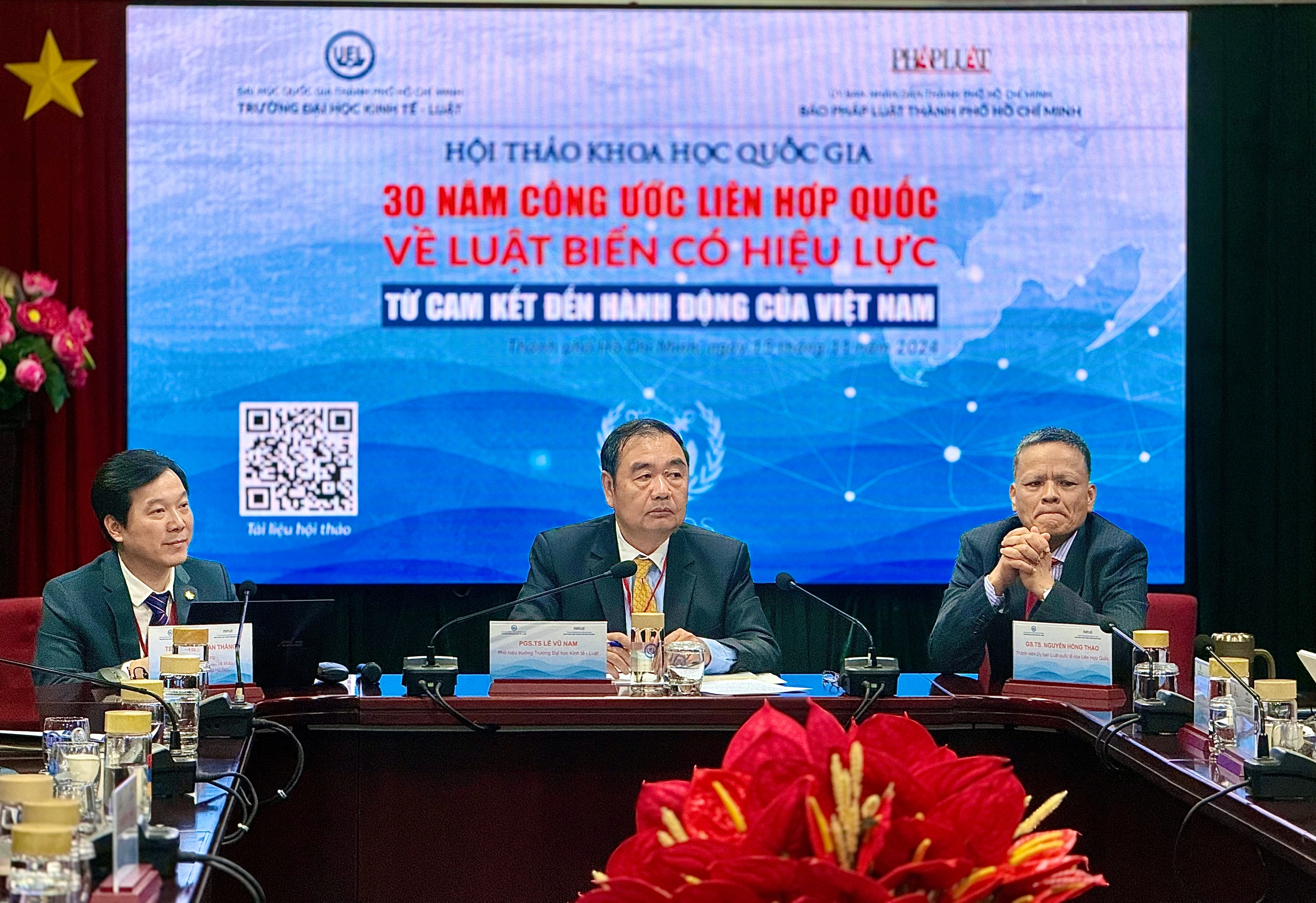
Prof. Dr. Nguyen Hong Thao, Assoc. Prof. Dr. Le Vu Nam, and Dr. Nguyen Toan Thang (from right to left) chaired and moderated the discussion at the conference.
Answering the question "besides diplomacy, what other peaceful methods might Vietnam employ to resolve disputes in the process of exploiting and managing the sea?", Dr. Nguyen Toan Thang from Hanoi Law University said: "Resolving disputes through legal mechanisms, regulations in international documents and treaties - especially UNCLOS 1982, seeking consultation, and mediation are all perfectly appropriate peaceful measures that countries can use. However, each measure will depend on the context and its effectiveness in ensuring the interests of the nation and achieving the set goals."
Colonel Nguyen Minh Khanh, Deputy Commander and Chief of Staff of the Vietnam Coast Guard Region 3 Command, stated: "The practical situation is very complex, therefore flexible and seamless coordination between fishermen and functional forces is necessary."
Source: https://thanhnien.vn/thach-thuc-va-trien-vong-thuc-thi-unclos-1982-185241115125810626.htm
![[Photo] General Secretary and President To Lam presides over a meeting on preparations for the review of one year of operation of the three-tiered government system.](https://vphoto.vietnam.vn/thumb/1200x675/vietnam/resource/IMAGE/2026/06/02/1780391821195_a1-bnd-4595-9717-jpg.webp)
































































Comment (0)