Building a 'digital infrastructure' for land resources.
In the context of digital transformation becoming a new driving force for economic development, Thanh Hoa province has identified the construction of a land database not only as a professional task but also as one of the important foundations for innovating governance methods, improving the effectiveness of state management, and creating a transparent and modern investment environment.
According to the revised Thanh Hoa Provincial Land Database Construction Project, approved by the Thanh Hoa Provincial People's Committee under Decision No. 1789/QD-UBND, the province will complete the construction and operation of a comprehensive land information system throughout the province, scheduled for the period from 2026 to the end of Q3/2027. This is considered one of the largest digital transformation projects in the province's agriculture and environment sector to date.
The project aims to establish a centralized, unified land data system, synchronously connected with the national database, to effectively serve land registration, issuance of land use right certificates, land acquisition, site clearance, land use planning, land price establishment, and monitoring of land-use projects.
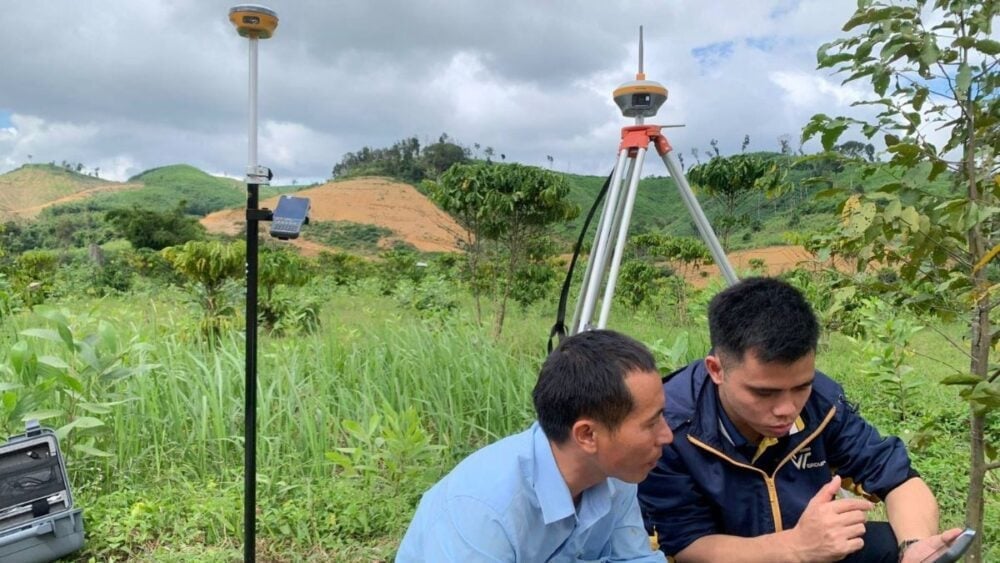
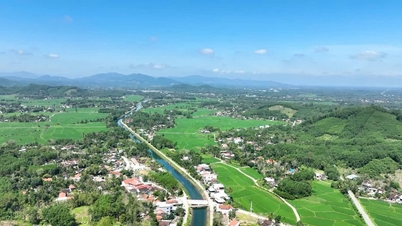
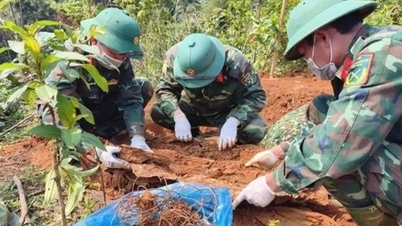
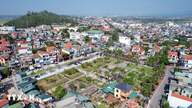
Thanh Hoa province is investing heavily in building a land database. Photo: Viet Thanh.
A highlight of the project is its massive scale of implementation. In 2026, Thanh Hoa province will complete the cadastral map revision for 109,046 hectares of land and 364,604 land parcels; complete land registration for 364,604 parcels; and build a cadastral database for 2,853,464 land parcels in 159 communes and wards, achieving approximately 81% of the total project volume.
By the end of the third quarter of 2027, Thanh Hoa province will continue to complete land registration for 668,456 land parcels, issue land use right certificates for 110,310 dossiers; build cadastral databases for the remaining 668,456 land parcels, and complete the databases for land statistics, inventory, land use planning, and land prices in 166 communes and wards in the province.
The project not only digitizes existing land records but also includes new surveys and re-surveys of land maps in many areas lacking complete data. The total area requiring new and re-surveys amounts to over 692,000 hectares, affecting more than 4.5 million land parcels across the province.
This is a huge amount of work, but it is especially important in standardizing land information and overcoming the long-standing problem of scattered and inconsistent data.



Making breakthroughs in management and serving the people.
The core of the Project lies not in mere digitization, but in building a land data ecosystem that is "accurate - complete - clean - vibrant - unified - and shared".
Once the database is complete, all information regarding land parcels, land users, planning, land prices, current land use status, and changes will be centrally updated in a digital environment. This will significantly reduce processing time for administrative agencies and enhance accuracy and transparency in land-related decisions.
For citizens and businesses, the benefits are very clear. Administrative procedures related to land will gradually be implemented electronically, reducing the need for multiple trips or resubmission of documents already available in the state database.
The project also aims to comprehensively restructure the process of handling administrative procedures related to land based on maximizing the use of digital data and connecting with the National Population Database. This is an important step towards realizing a "non-geographical administrative boundary" model, helping people access public services more quickly and conveniently.

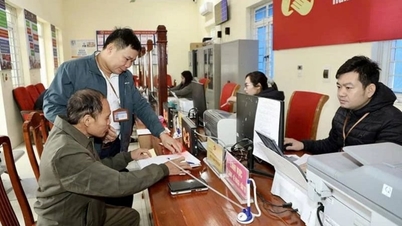
Transparent and accurate land data will better serve the people and businesses. Photo: Thanh Hoa Newspaper.
On the other hand, land databases also become effective tools for planning, resource management, and monitoring the progress of investment projects where the State allocates or leases land; supporting investors in accessing transparent and accurate information, contributing to enhancing the competitiveness of localities.
To realize this goal, Thanh Hoa province plans to allocate significant resources to the project. The total budget is approximately over 2,430 billion VND, of which about 1,131.6 billion VND will be allocated in 2026 and about 1,298.4 billion VND in 2027.
The cost of building the land database alone exceeded 2.177 billion VND. In addition, the province also invested nearly 46.7 billion VND in leasing infrastructure services and information technology software to operate the system.


Funding for implementation will be balanced from the provincial budget, with a minimum of 10% of annual revenue from land use fees and land lease fees, along with other legitimate sources of support.
Notably, the project places particular emphasis on ensuring information security and cybersecurity. Data backup, system redundancy, cybersecurity monitoring, access control, and personal data protection solutions will be implemented synchronously to ensure stable, continuous, and secure system operation.
It can be affirmed that the Thanh Hoa Provincial Land Database Construction Project not only addresses existing shortcomings in land management but also lays the foundation for a modern, data-driven governance system. Upon completion, this will be a crucial "digital infrastructure" contributing to administrative reform, improving the efficiency of land resource utilization, attracting investment, and creating momentum for sustainable socio-economic development in Thanh Hoa in the new era.
Source: https://nongnghiepmoitruong.vn/thanh-hoa-xay-kho-du-lieu-dat-dai-hon-2430-ty-dong-d817811.html




![[Photo] Prime Minister Le Minh Hung presides over the thematic session on promoting science and technology development and innovation.](https://vphoto.vietnam.vn/thumb/1200x675/vietnam/resource/IMAGE/2026/06/23/1782207872934_ndo_br_dsc-1724-jpg.webp)