

Rice production met and exceeded many targets.
In 2025, amidst climate change, complex weather patterns, and volatile agricultural input prices, the Crop Production and Plant Protection sector of An Giang province still recorded positive results, affirming its pivotal role in agricultural production, especially the rice industry. Planting targets, yields, and output were basically met and exceeded, and many technical advancements and sustainable production models were widely adopted, creating an important foundation for 2026 and the period up to 2030.
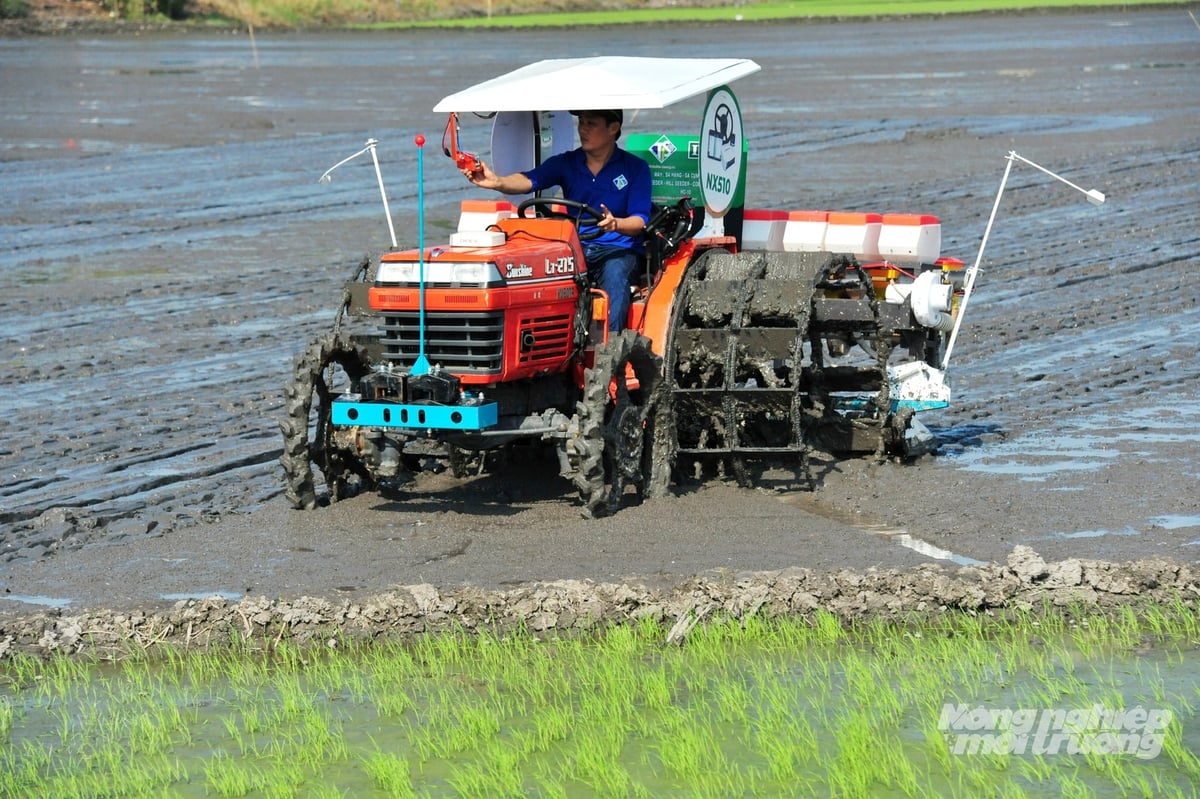
Synchronized mechanization in rice production in An Giang , with modern transplanting and sowing machines, helps reduce seed usage, save costs, and contribute to high-quality, low-emission rice cultivation. Photo: Le Hoang Vu.
According to the An Giang Department of Crop Production and Plant Protection, from the beginning of the year to date, the province has planted over 1.34 million hectares of rice, exceeding 100% of the plan according to the 8.5% growth scenario. The harvested area has reached over 1.2 million hectares, with a yield of over 8 million tons of rice, reflecting the great efforts of the agricultural sector and farmers despite numerous difficulties.
All rice crops throughout the year yielded positive results. The 2024-2025 crop achieved an average yield of 5.38 tons/ha, exceeding the plan; the 2024-2025 winter-spring crop, despite weather impacts, still achieved a yield of 7.58 tons/ha; the 2025 summer-autumn crop is estimated to yield 6.04 tons/ha, a more than 3% increase compared to the plan. The 2025 autumn-winter crop is currently being harvested, with an estimated yield of 5.74 tons/ha, higher than the set target.
Ms. Nguyen Thi Le, Deputy Head of the An Giang Department of Crop Production and Plant Protection, stated: "The results of rice production in 2025 show the great proactiveness of localities in closely following the planting schedule, applying technical advancements and recommendations from specialized agencies. In particular, the gradual shift towards sustainable farming and reduction of input costs has helped farmers stabilize yields and increase economic efficiency."
One of the highlights of An Giang's agricultural sector in 2025 is the successful implementation of the Project for the sustainable development of one million hectares of high-quality, low-emission rice linked to green growth in the Mekong Delta. This year, An Giang province aimed to participate in the Project with an area of over 142,000 hectares and has actually achieved results exceeding expectations.
Specifically, the application of 3 to 5 criteria of the Project (reducing seed usage, water management, fertilizer reduction, pesticide reduction, straw collection) has spread widely, with over 150,000 hectares meeting 3 criteria, over 108,000 hectares meeting 4 criteria, and over 43,000 hectares meeting all 5 criteria. As a result, production costs have decreased significantly, and farmers' profits have increased by several million to nearly ten million dong per hectare.
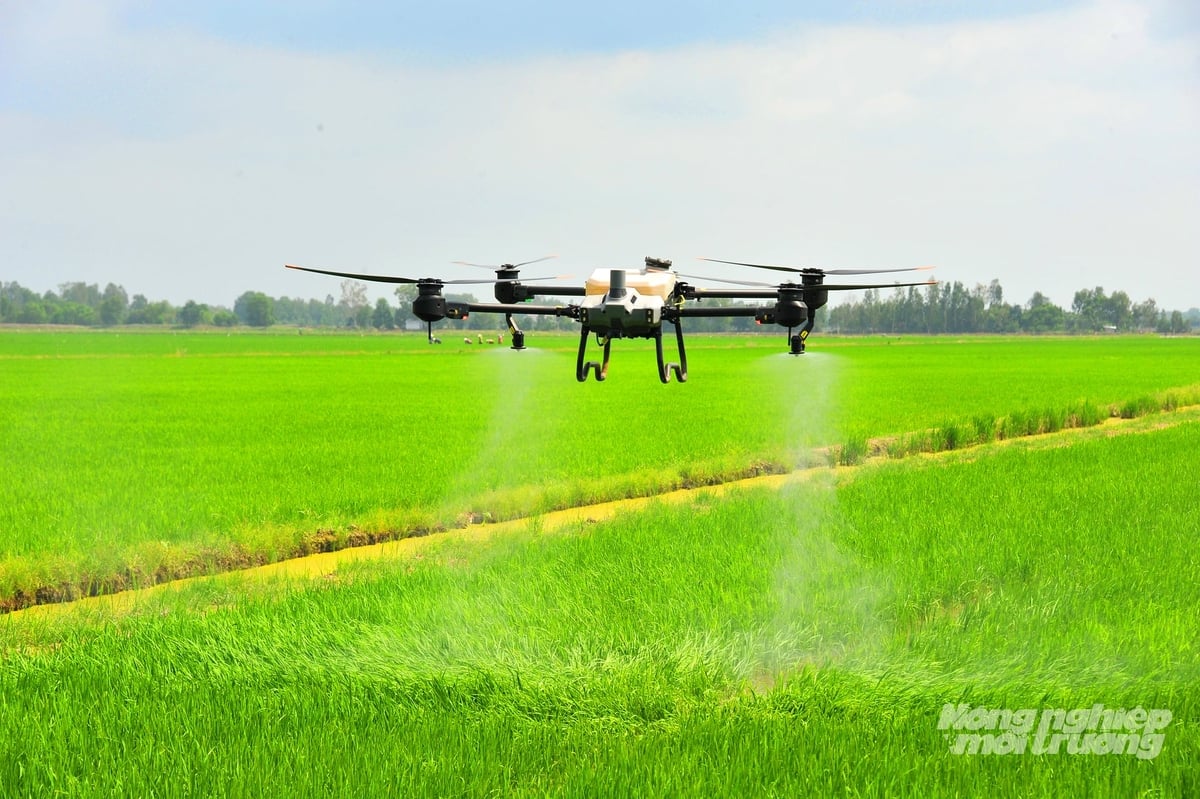
Drones are used for spraying pesticides and fertilizers in rice fields, helping to reduce manual labor, control the amount of materials used, and limit emissions in rice production. Photo: Le Hoang Vu.
Demonstration models in An Giang show clear economic and environmental benefits: average costs reduced by over 4 million VND/ha, productivity increased, and profits increased by more than 9 million VND/ha compared to traditional farming. This is a crucial motivation for farmers to boldly change their production practices.
In Go Quao commune, many farmers participating in the low-emission rice cultivation model reported noticeable results as early as 2025. Mr. Nguyen Van T., a farmer participating in the model, shared: “Following the new process, we sow more sparsely, use less fertilizer and pesticides, but the rice is still healthy and the yield hasn't decreased. Importantly, costs are reduced, profits are increased, and the fields are cleaner.”
That belief is further strengthened as rice crops for 2026 are being planted with a focus on high-quality, low-emission rice, promising to expand acreage and improve efficiency in the future.
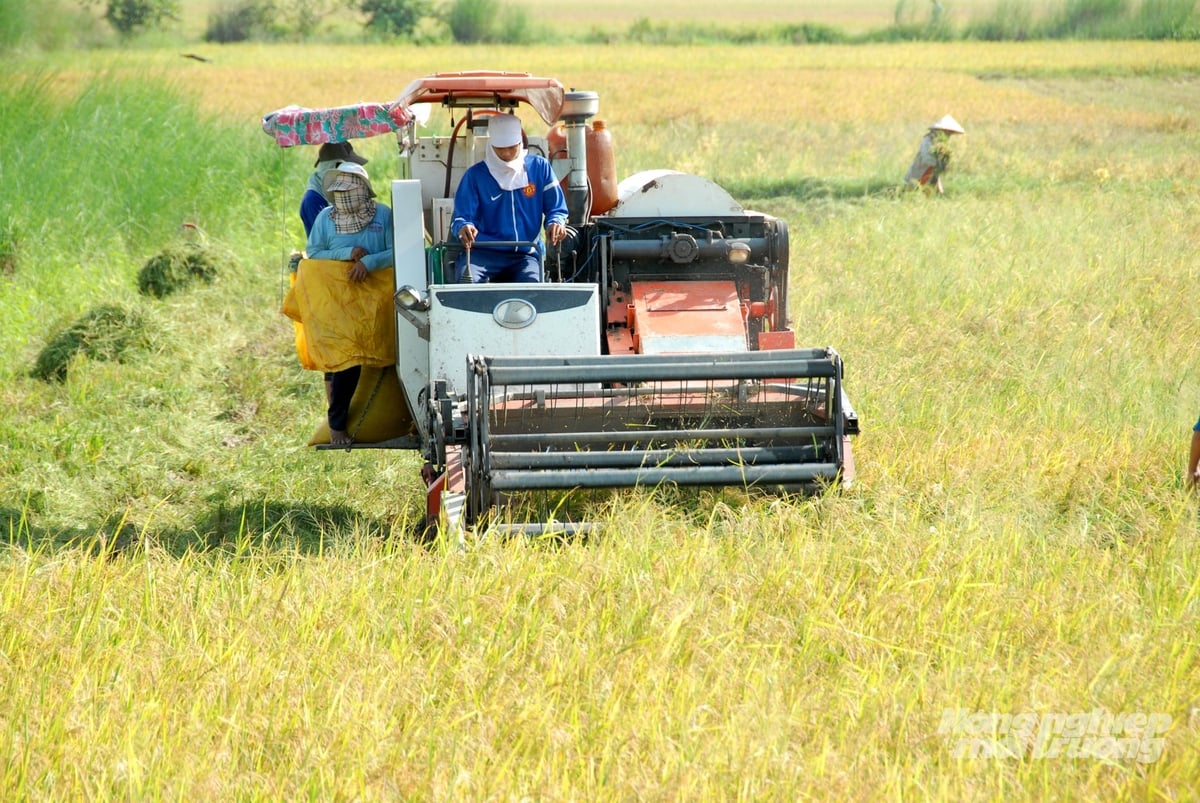
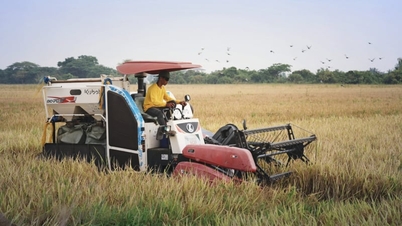
Combine harvesters harvest rice in high-quality rice fields in An Giang, reducing emissions, contributing to reduced post-harvest losses and improved production efficiency. Photo: Le Hoang Vu.
Production is linked to output.
Tri Ton commune, with its large rice-growing area, continues to affirm its role as a bright spot in agricultural development linked to value chains. Mr. Tran Van Cuong, Chairman of the Tri Ton Commune People's Committee, stated: “Tri Ton recognizes that agriculture remains the economic backbone. We focus on developing production through linkages with businesses, connecting production with product consumption agreements. In particular, the 1 million hectare high-quality rice project has encouraged farmers to confidently participate in low-emission rice cultivation, thereby significantly increasing profits.”
According to Mr. Cuong, despite the impact of weather and pests, the total planted area in Tri Ton in 2025 met the set plan. Local trade and service activities also developed strongly, serving the lives of the people well and creating a foundation to support agricultural production.
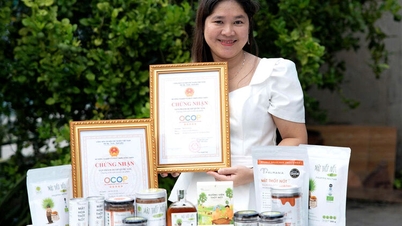
In addition, many effective cooperatives such as Loc Phat 1 Cooperative, Chau Lang Cooperative, TVP Nui To Organic Cooperative, etc., have contributed to linking the value chain and improving productivity and product quality. Notably, Tri Ton has 3 national-level 5-star OCOP products: thick palm sugar syrup, granulated palm sugar syrup, and powdered palm sugar syrup from Palmania JSC, along with 4 3-star OCOP products, contributing to diversifying rural livelihoods.
Entering 2026, An Giang's Crop Production and Plant Protection sector aims to continue expanding the area of high-quality rice cultivation, promoting mechanization and digital transformation, consolidating cooperatives, and strengthening linkages with businesses for agricultural product consumption and export. The focus will be on investing in inland irrigation infrastructure, improving the production organization capacity of cooperatives and production groups, and simultaneously inviting businesses to participate more deeply in the rice value chain and fruit processing and export.
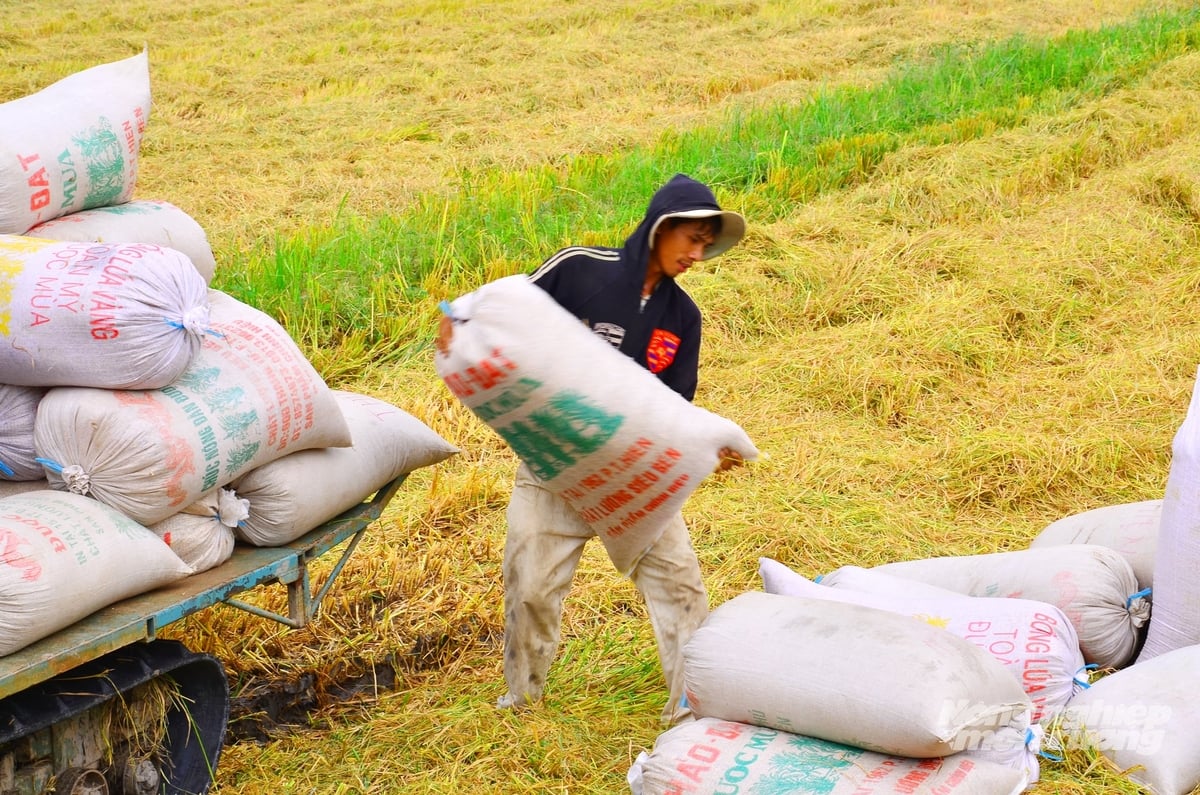
Farmers and cooperatives in An Giang are linking with businesses in rice production and consumption to reduce emissions, create stable outlets, increase income, and promote sustainable development. Photo: Le Hoang Vu.
The crop production and plant protection sector will continue to work alongside localities and farmers, focusing on technical training and raising awareness about sustainable production and emission reduction. The goal is to both increase farmers' income and build a brand of high-quality, environmentally friendly An Giang rice.
"With the achievements in 2025, along with clear directions and solutions for 2026, An Giang's crop production and plant protection sector is gradually affirming its correct direction, making an important contribution to the development of green, sustainable agriculture and enhancing the value of rice in An Giang," Ms. Nguyen Thi Le emphasized her expectations.
Source: https://nongnghiepmoitruong.vn/thanh-qua-tu-canh-tac-lua-giam-phat-thai-d790707.html

![[Image] Hanoi Police officially crowned champions of V-League 2025/2026](https://vphoto.vietnam.vn/thumb/1200x675/vietnam/resource/IMAGE/2026/05/31/1780244769054_ndo_br_039d561b692be875b13a-jpg.webp)
![[Photo] Solemn bathing ceremony and Buddha procession in Hue](https://vphoto.vietnam.vn/thumb/1200x675/vietnam/resource/IMAGE/2026/05/31/1780228263543_1-jpg.webp)
![[Photo] The General Secretary, President and his wife begin their state visit to the Philippines.](https://vphoto.vietnam.vn/thumb/1200x675/vietnam/resource/IMAGE/2026/05/31/1780230559452_anh-man-hinh-2026-05-31-luc-19-28-11.png)
![[Photo] Admire the coral "masterpiece" amidst the million-year-old heritage of Dak Lak province.](https://vphoto.vietnam.vn/thumb/1200x675/vietnam/resource/IMAGE/2026/05/31/1780221235105_anh-man-hinh-2026-05-31-luc-16-53-27.png)


![When forestry is a 'weakness' of Nghe An?: [Part 1] Living a precarious life amidst the golden forests](https://vphoto.vietnam.vn/thumb/402x226/vietnam/resource/IMAGE/2026/05/30/1780156547904_1-2-001514_717-225327.jpeg)






![[Video] Sunset at Lap An Lagoon – Where the sun sets over the fishing nets](https://vphoto.vietnam.vn/thumb/340x192/vietnam/resource/IMAGE/2026/05/31/1780192137701_beach-landscape-sea-water-nature-grass-745871-pxhere-com.jpeg)
![The Essence of Viet Bac Villages: [Part 3] The Precious Fragrance of Nghinh Tuong](https://vphoto.vietnam.vn/thumb/402x226/vietnam/resource/IMAGE/2026/05/29/1780020600366_5237-tinh-tuy-ban-lang-viet-bac-bai-3-chuyen-o-nghinh-tuong-050626_700.jpeg)
![The Quintessence of Northern Vietnam's Villages: [Part 2] The Famous Cassava Noodles of Kunming](https://vphoto.vietnam.vn/thumb/402x226/vietnam/resource/IMAGE/2026/05/28/1779937455892_3929-3144-mien-dong-15-nongnghiep-023138.jpeg)
![The Essence of the Village: [Part 1] Wine on the mountain, tea in the clouds - Bang Phuc](https://vphoto.vietnam.vn/thumb/402x226/vietnam/resource/IMAGE/2026/05/27/1779841729178_3821-1jpg-nongnghiep-103814.jpeg)




























![[Photo] Admire the coral "masterpiece" amidst the million-year-old heritage of Dak Lak province.](https://vphoto.vietnam.vn/thumb/402x226/vietnam/resource/IMAGE/2026/05/31/1780221235105_anh-man-hinh-2026-05-31-luc-16-53-27.png)




























Comment (0)