


This is a particularly important event, demonstrating deep concern and great encouragement for the province in its overall socio -economic development, particularly in education and training, and in strengthening national defense and security in the border region of the Fatherland.
This school was also chosen by Lao Cai province as the model for the groundbreaking ceremony for other schools in the area, including: Trinh Tuong Primary and Secondary Boarding School (Trinh Tuong commune), Ban Vuoc Primary and Secondary Boarding School (Bat Xat commune), and Si Ma Cai Primary and Secondary Boarding School (Si Ma Cai commune).
The aforementioned projects involve the simultaneous construction of new classroom blocks, administrative buildings, a multi-purpose hall, a cultural center, student dormitories, teacher housing, a canteen, and other facilities such as access roads, exterior landscaping, technical infrastructure, and fire prevention and control. The auxiliary facilities and school equipment are designed to meet the operational needs of approximately 28 classes (12 primary school classes, 16 secondary school classes) and 980 students per school, in accordance with current regulations.
The total investment for the four schools is 980 billion VND, sourced from the central government budget, the provincial budget, and other legally mobilized capital. The project is expected to be completed in 2028.
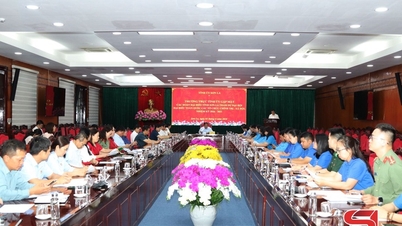
Speaking at the ceremony, Mr. Nguyen Tuan Anh, Chairman of the People's Committee of Lao Cai province, affirmed that, along with other projects in border communes, the Ban Lau Primary and Secondary Boarding School, upon completion, will create better learning conditions for students in border areas, contributing to raising the intellectual level of the people and training human resources; while also strengthening solidarity and ensuring long-term stability in the border region.
Lao Cai is committed to fully preparing the necessary conditions in terms of staff, programs, and facilities so that when the project is completed, the schools will truly become a "second home" for students in the highlands, a place to nurture knowledge and ignite the aspirations of these children in the border region of the Fatherland.
Ms. Do Thi Thu Huyen (a teacher at Ban Lau Commune Secondary School) shared that the teachers and students of the school are very excited because this will be a modern boarding school that will help students bridge the geographical distance, improve the quality of education in remote areas; and at the same time help teachers feel secure and committed to the long-term career of teaching in the border region.
Parent Vuong Thi Le (Coc Tru village - a particularly disadvantaged village in Ban Lau commune) said that her family was very relieved and happy to know that her child would be studying in a new, modern, and spacious environment.
According to Nguyen Hai Dang, Secretary of the Party Committee of Ban Lau commune, Ban Lau commune currently has 17 ethnic groups living together and is a border commune with 14 particularly disadvantaged villages. The construction of the school contributes to reforming education, supporting students with better learning conditions; creating trust among the people in the Party and the State, and actively contributing to protecting the border and boundary markers.
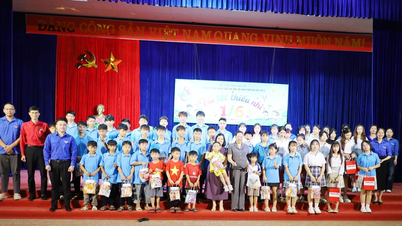
At the ceremony, Deputy Prime Minister Le Thanh Long presented gifts to 20 disadvantaged students in Ban Lau commune.
Previously, in November 2025, Lao Cai province held a groundbreaking ceremony for the construction of four boarding schools for primary and secondary levels in the border communes of A Mu Sung, Y Ty, Muong Khuong, and Pha Long. The projects are scheduled for completion within nine months, aiming for completion before August 30, 2026, and are expected to be operational from the 2026-2027 school year.
With the attention of the central government, the determination of the entire political system, and the efforts of the teaching staff, the quality of education in Lao Cai is constantly improving, ranking among the leading provinces in the northern mountainous region. The province currently has over 950 educational institutions and nearly 500,000 students; including a system of boarding and semi-boarding schools that are being gradually strengthened. However, the learning and living conditions of students in mountainous areas remain limited and require continued investment.
Source: https://baotintuc.vn/thoi-su/thap-sang-khat-vong-vuon-len-cua-cac-hoc-sinh-vung-cao-20260319093030617.htm























![[Photo] Reception to welcome General Secretary and President To Lam and his wife on their State visit to the Philippines](https://vphoto.vietnam.vn/thumb/1200x675/vietnam/resource/IMAGE/2026/06/01/1780295488620_vna-potal-chieu-dai-chao-mung-tong-bi-thu-chu-tich-nuoc-to-lam-va-phu-nhan-tham-cap-nha-nuoc-toi-philippines-8798060-7855-jpg.webp)























































Comment (0)