

The cemetery neighborhood has changed.
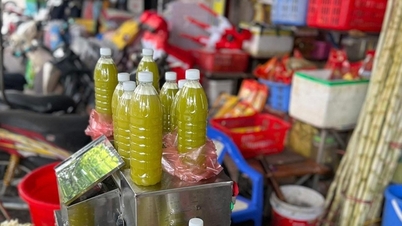
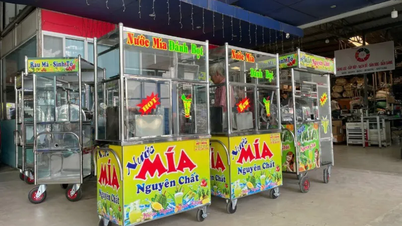
“Sell some juice, dear…”, Mr. Mười Lang called out to his wife when he saw us stop by their door. His wife, Mrs. Huỳnh Thị Nhiên, a woman with salt-and-pepper hair, stopped working on the pile of fabric she was processing and hurried to turn on the sugarcane juice machine. Recognizing old acquaintances, Mr. Lang laughed heartily and excitedly told us about the birth of his grandson a few months ago.
Mr. Mười Lang (real name Trương Văn Lang, born in 1959) is one of the first households to live in the Bình Hưng Hòa cemetery. He spent a significant portion of his life working as a grave digger and is also one of the few houses not included in the relocation project. To reach his house, one has to navigate a dirt and gravel road riddled with potholes, which floods during the rain and is filled with dust during the sunny season.
We say we're acquaintances because two years ago, when the local authorities began accelerating the first and second phases of exhuming graves to prepare for the construction of public works, we sat with him until late at night, listening to his life stories, the cemetery, and the hopes of a man whose family had relied on this land for three generations. Sitting beside his wife's sugarcane juice cart, Mr. Lang reminisced about the difficult years after liberation.
“In the past, the cemetery was very complicated, everyone suffered. People from all over brought their relatives here to be buried. Then there were gangsters and thieves gathering, and everyone living around here was afraid at night,” he recalled. But then the graves were gradually relocated, and the local authorities tightened security, “life was like turning a new page,” Mr. Lang said, pointing to the road in front of his house which is being proposed to be widened to more than 10 meters.
The winding, dusty dirt road, once flooded in the rain and shrouded in dust in the sun, is about to become a new road. Locals are telling each other to wait for the day when traffic becomes easier and children can go to school less dirty. Then he smiled as he talked about his grandson, born a few months ago, almost at the same time they started selling sugarcane juice in front of their house. “When he grows up, I’ll enroll him in the new school built in the cemetery.” Perhaps the revival of this land begins with houses like these, where people dare to think about having children, making a living, and settling down permanently.
Return to peace, prosperity, and harmony.
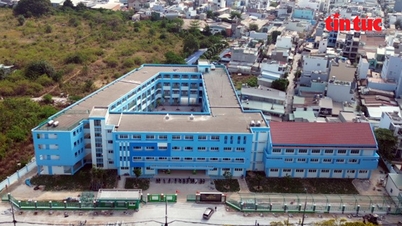
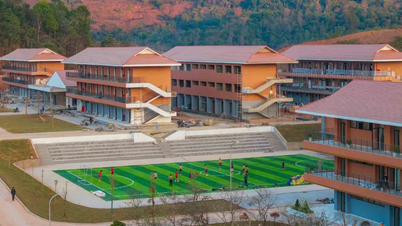
Leaving Mr. Lang's house, we continued along the winding road deeper into Binh Hung Hoa Cemetery. Reaching Ward 44, amidst the once densely packed graves, a large construction site emerged, the roar of construction machinery echoing in the midday May sun. This was the project to build a secondary school within the Binh Hung Hoa Cemetery area, with 41 classrooms, expected to be completed by the end of 2026.
Right next to the construction site is a small residential cluster nestled beside the project. We met Mrs. Huyen (born in 1959) sitting on her porch preparing lunch for her family, sorting vegetables. Her house is outside the cemetery boundary, but for over a decade, all the changes in this area have been visible right outside her door. Mrs. Huyen recounted that in the past, just opening the door revealed rows of graves. "Back then, sometimes I felt embarrassed even to sit in front of the house for a moment, and it was even scarier at night," she said, glancing towards the school building that was gradually taking shape. Now, the sound of construction machinery day and night replaces the previously desolate atmosphere. For many locals, that sound symbolizes the transformation of an area once considered a "dead land."
The story was interrupted when Mr. Nguyen Van Quang (born in 1957), Mrs. Huyen's older brother, rushed home on his motorbike. As a member of the neighborhood security and order protection team, his phone constantly rang with work from the ward to the neighborhood. After handling several calls, he pulled up a plastic chair in front of his house and slowly recounted his more than 20 years of involvement with the cemetery. Mr. Quang recalled that in the late 1990s, many people were apprehensive about passing by this cemetery.
“Back then, everyone was scared; no one dared to walk past this place at night. But now it’s different. The graves are gone, and seeing the school spring up, our people are very happy,” he recounted. He spoke as he walked with us closer to the school project site. The tanned man stood silently, gazing at the construction. After many years, this place is beginning to become a place where people can consider settling down permanently, where the name Binh Hung Hoa seems to be gradually returning to its true meaning of peace, prosperity, and tranquility.
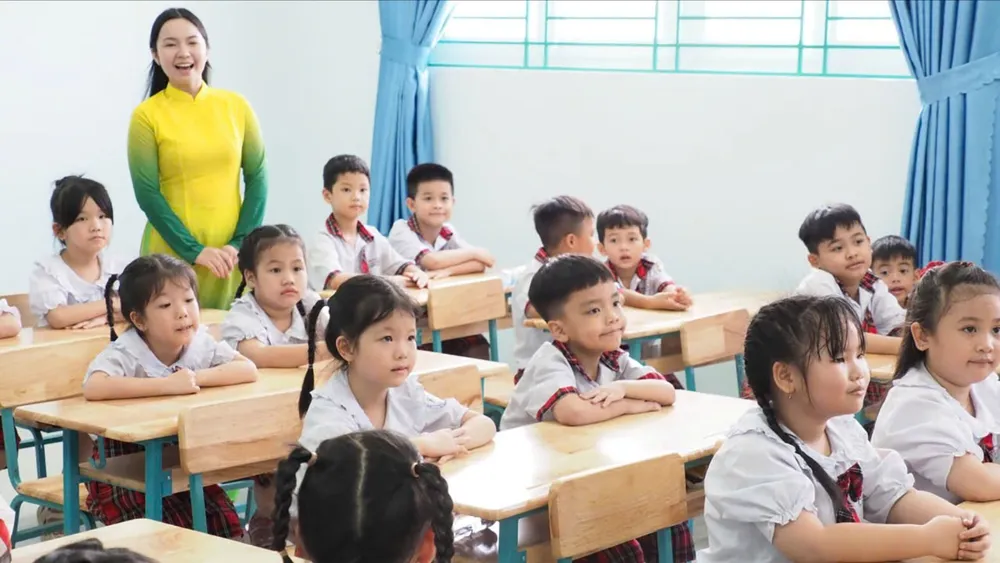
Tran Dai Nghia Primary School (Binh Hung Hoa Ward) was recently inaugurated on the occasion of the 136th anniversary of President Ho Chi Minh's birthday and welcomed students back to school. The Binh Hung Hoa cemetery relocation project involved the acquisition of over 40 hectares of land, affecting more than 52,000 graves. From 2010 to the present, the local authorities have basically completed the excavation and relocation of phases 1 and 2, involving over 30,000 graves, and are expected to complete the remaining areas by the end of 2026. After the land was cleared, many public infrastructure projects have begun to be implemented, including Tran Dai Nghia Primary School. The local authorities have also started construction of a secondary school on the land within the project area. In addition to public works, the relocation project also serves the purpose of building a green park and ecological zone.
Source: https://www.sggp.org.vn/thay-doi-hinh-dung-ve-mot-vung-dat-post853655.html















































































Comment (0)