

DNA-integrated identity cards are a technological advancement in which an individual's genetic information is encoded and stored digitally on the card. DNA, being unique to each person, can provide an incredibly accurate method of identification, far surpassing traditional methods such as fingerprints or facial images.
Decree 70 of 2024, which details certain provisions and implementation measures of the 2023 Identity Card Law, takes effect from July 1st. It clarifies the methods for collecting and updating biometric information, including DNA and voice data, into the identity card database. According to Identity Card Law No. 26/2023/QH15, biometric information, including DNA, is collected when citizens voluntarily provide it during the identity card application process.
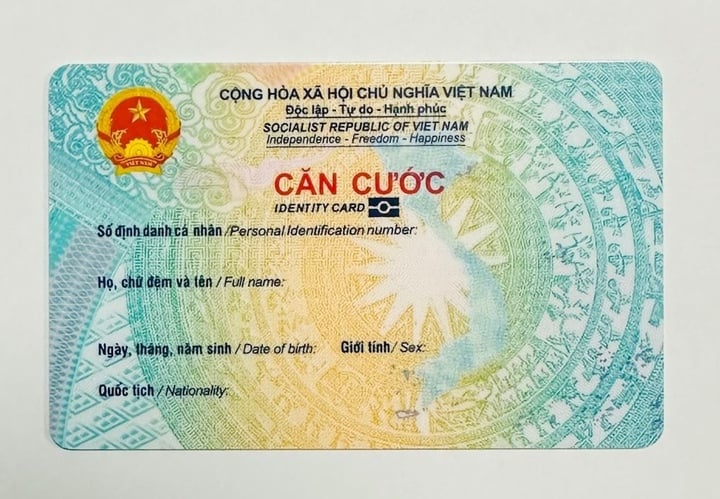
The DNA-integrated identity card is a technological advancement.
According to the National Population Data Center, the guidelines for citizens to use the genetic testing service for citizen identification consist of four steps:
Step 1: Register and go to the sampling point: Citizens contact the GeneStory hotline 1800888680 for guidance on procedures and to be directed to the nearest sampling point.
Step 2: Information verification: At the sampling point, citizens are verified using their chip-embedded identity cards.
Step 3: The technician/nurse collects the sample. The sample is sealed and transported to GeneStory's laboratory for analysis.
Step 4: Results will be provided to citizens within 7 working days. After receiving the results, citizens can easily request the integration of their DNA biometric information into the National Identity Database at the relevant national identity management agencies.
For citizens who already have DNA identification test results obtained from accredited agencies and organizations and announced by the Ministry of Public Security's identity management agency, they only need to provide relevant information for the integration request to the identity management agency. The receiving officer will then process the DNA information integration request.
GeneStory, a company providing comprehensive gene decoding services, was established by Vingroup Corporation and is listed by the Ministry of Public Security's identity management agency as an organization meeting the requirements to transfer DNA data to the national identity database upon citizen request.
There are many benefits to integrating DNA into identity cards that people may not be aware of, specifically:
Enhanced security: With DNA information, forging identity cards becomes nearly impossible. This helps to improve security in financial transactions and legal procedures.
Accurate identity verification: DNA provides a nearly foolproof method of identification, helping authorities manage populations and control borders more effectively.
Medical applications: Integrated DNA data can also assist in medical emergencies, enabling rapid identification of individuals in need of assistance and providing crucial medical information.
Alongside the benefits, integrating DNA into identity cards also poses significant challenges regarding privacy and data security. Countries need to establish a robust and transparent legal framework to ensure that personal information is adequately protected and not misused.
Clearly, DNA-integrated identity cards promise to be a major step forward in personal information management and national security. However, effective implementation requires close cooperation between relevant agencies, scientists, and the community to ensure the safety and rights of each individual.
Source: https://vtcnews.vn/the-can-cuoc-tich-hop-adn-the-nao-ar903322.html





































































































Comment (0)