

Following a recent meeting with relevant agencies regarding the study and refinement of the investment plan for the Thu Thiem 4 bridge, the Director of the Ho Chi Minh City Department of Transport, Tran Quang Lam, requested the Project Management Board for Investment and Construction of Transport Works (abbreviated as Transport Board) to coordinate with the consulting unit to study and supplement additional technical and traffic organization options on the District 7 side, the scope of land clearance (the scope affecting Tan Thuan Port when implementing the Thu Thiem 4 bridge project...). At the same time, they were asked to thoroughly analyze the advantages and disadvantages of each option to propose and recommend the most suitable investment plan for the Thu Thiem 4 bridge, and submit it to the Department before October 20th.
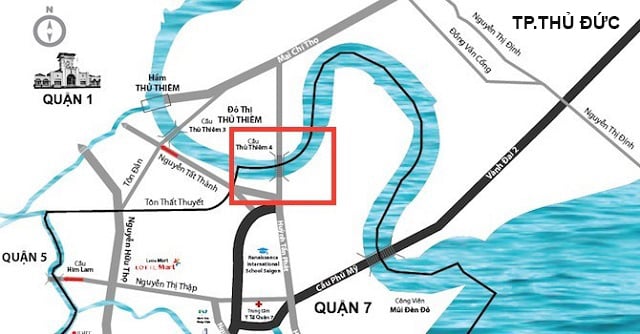 |
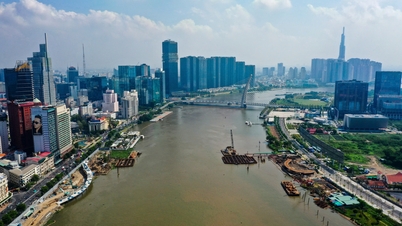
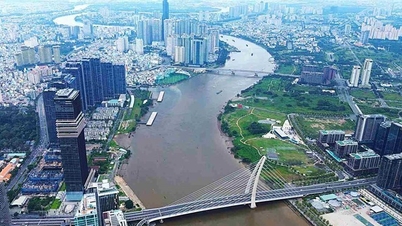
Location of Thu Thiem 4 Bridge |
Ho Chi Minh City Department of Planning and Architecture |
This is one of 29 projects included in the list of key transportation projects in Ho Chi Minh City in 2022, which was approved by the City People's Committee in mid-May. At that time, the Department of Planning and Architecture was tasked with requesting a consulting unit to develop an architectural design plan for the Thu Thiem 4 bridge, which needed to further refine the "Vietnamese Bamboo" concept – the overall design should clearly show the bamboo structure, and a distinctive artistic lighting plan... With a total investment of 5,300 billion VND, the Thu Thiem 4 bridge is expected to receive investment approval and proceed with the preparation of a pre-feasibility study report in the 2022-2023 period, select an investor, and commence construction in 2024 to be completed and put into use in 2028.
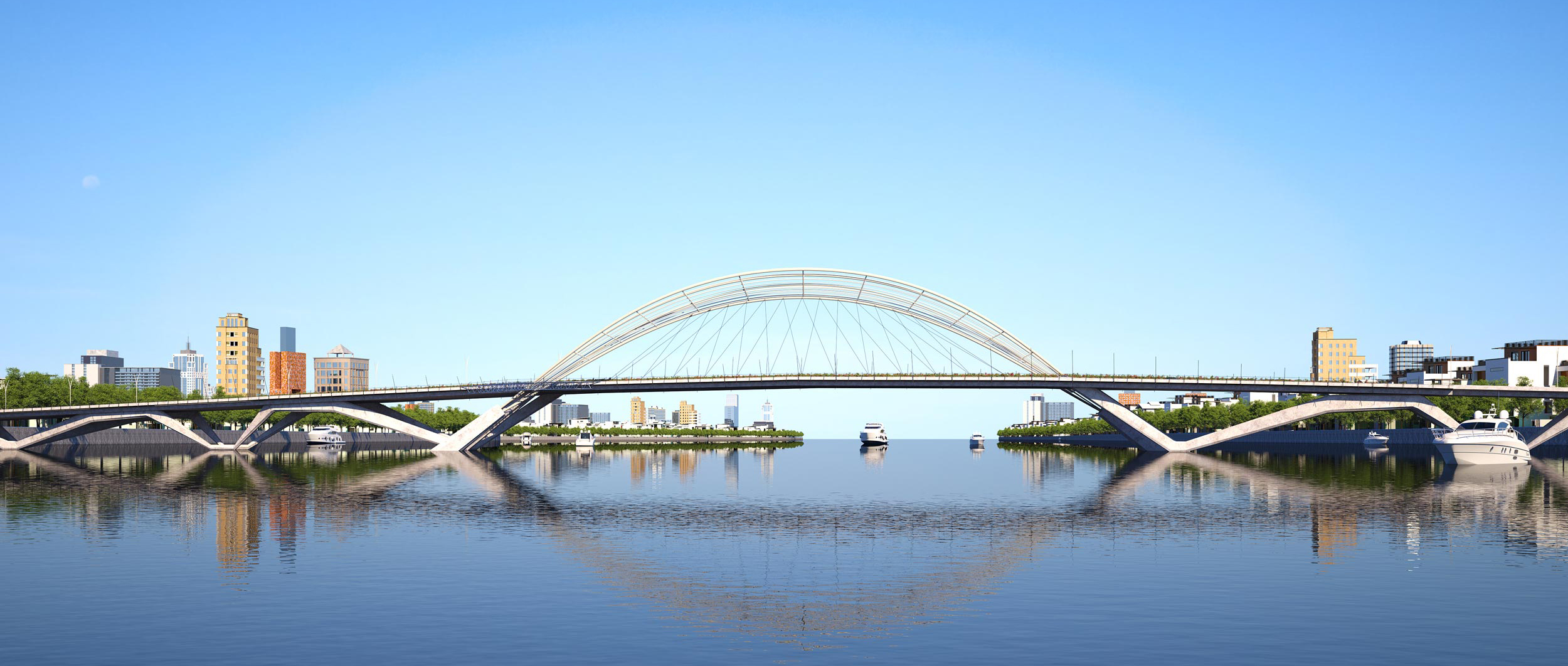 |
One design proposal submitted for the architectural design competition of the Thu Thiem 4 bridge. |
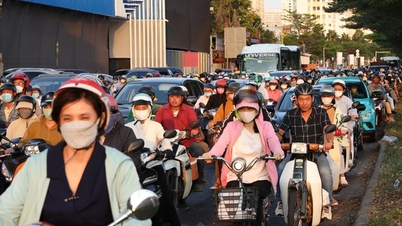
The latest moves by the Department of Transport regarding the investment plan for the Thu Thiem 4 bridge have received much attention from the public because, in addition to helping reduce traffic congestion in the South and promoting the rapid development of the Thu Thiem New Urban Area, this bridge is also a crucial point that will determine the "fate" of the existing Tan Thuan port. Specifically, the plan to relocate Tan Thuan port has been promoted by the Ho Chi Minh City People's Committee since 2017, expected to be completed in the first quarter of 2020 to facilitate the construction of the Thu Thiem 4 bridge.
However, according to a representative of Saigon Port Joint Stock Company, the company still has no plans to relocate the port. The reason is that in 2016, the Ho Chi Minh City People's Committee approved the construction of the Thu Thiem 4 bridge project with a total investment of over 5,000 billion VND under the BT (Build-Transfer) model. This included a package of approximately 3,500 billion VND for the relocation of Tan Thuan port. Subsequently, all BT projects in Ho Chi Minh City ceased implementation, and the Thu Thiem 4 bridge project also stalled, awaiting the identification of a new investor and investment plan. "Since there was no progress on the bridge construction, there was no plan to relocate the port either. Now that the city is accelerating the Thu Thiem 4 bridge project, it means that the relocation of Tan Thuan port is also about to see new developments," the representative said.
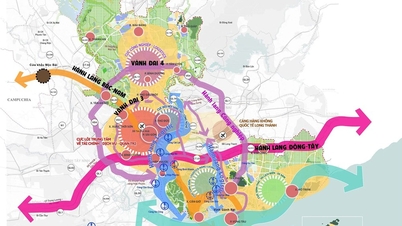
Besides the Thu Thiem 4 bridge, the Department of Transport has also requested an acceleration of the investment plan for the construction of the Ho Chi Minh City Ring Road 4 project, specifically the section crossing the Saigon River and Thầy Cai Canal (including the Saigon River overpass). Based on a review of the current situation, relevant planning, and urban development requirements in the project area, the Transport Department has been tasked with coordinating with the consulting unit to research and add new route options to reduce land compensation and clearance costs, as well as project investment costs. Simultaneously, a thorough analysis of the advantages and disadvantages will be conducted to propose and recommend the most suitable and efficient route option. If implemented quickly, the Saigon River overpass connecting across the Thầy Cai Canal will be the first point of entry for Ring Road 4, connecting Cu Chi and Long An, and will have significant implications for the socio -economic development of the entire region.
Wherever bridges are built, the economy develops.
Since 1996, the Government has approved the Ho Chi Minh City master plan, identifying the construction of the Thu Thiem new urban area on the east bank of the Saigon River, with a total area of 657 hectares. Located just a short distance from the historical central area of District 1, opposite the Saigon River, this peninsula was chosen as the new integrated center, meeting the development needs of a city of over 10 million people and a large number of visitors, and is expected to become an international-class financial and commercial center, and the most beautiful city in Southeast Asia.
However, according to architect Nguyen Hoang Manh - CEO and lead architect of MIA Design Studio, despite being separated from the city center by only a river, Thu Thiem has stagnated for many years and has not been able to develop to its full potential. Consequently, the landscape on both sides of the river has not been comprehensively renovated or planned. The city has only focused on urban planning and beautifying the eastern bank. The reasons include inconvenient transportation and the fact that investors have not yet seen the potential to invest on the opposite bank.
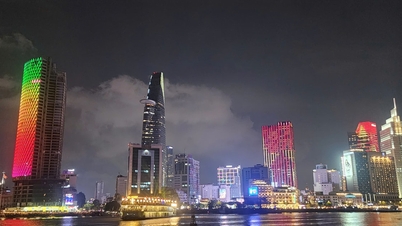
It wasn't until the Saigon River Tunnel (also known as the Thu Thiem Tunnel) officially opened that this area began a new chapter. A series of high-end housing projects sprang up rapidly, roads were newly built and expanded, becoming clean and beautiful… Thu Thiem transformed from a desolate swamp into a "golden land" area that only the wealthy, those with immense wealth, could dream of owning. Continuing the gradual formation of a new satellite urban area to the east, the Thu Thiem 2 Bridge, connecting the Ton Duc Thang - Nguyen Huu Canh intersection (District 1) to Thu Thiem, inaugurated during the recent April 30th - May 1st holiday, further brought the two banks of the Saigon River closer together. Roads began to be marked and named, facilitating the search for high-rise buildings and the rapid development of new urban areas…
“The Thu Thiem 2 Bridge, Thu Thiem 4 Bridge, and many other connecting bridges should have been built a long time ago. The more connections there are in different ways, the better the urban effect will be. It not only relieves traffic congestion and facilitates trade, but also breaks down the architectural differences between the two banks of the river, improving the aesthetic appeal of the riverside landscape,” emphasized architect Nguyen Hoang Manh.
"Wherever bridges are built, the economy will develop accordingly. The development of Thu Thiem is also an opportunity to expand the existing urban core, gradually realizing the policy of decentralizing the population and reducing pressure on the inner city of Ho Chi Minh City," said architect Manh.
Source: https://thanhnien.vn/them-2-cau-noi-doi-bo-song-sai-gon-1851511621.htm



![[Photo] General Secretary and President To Lam presides over a meeting on preparations for the review of one year of operation of the three-tiered government system.](https://vphoto.vietnam.vn/thumb/1200x675/vietnam/resource/IMAGE/2026/06/02/1780391821195_a1-bnd-4595-9717-jpg.webp)



















































































Comment (0)