

 |
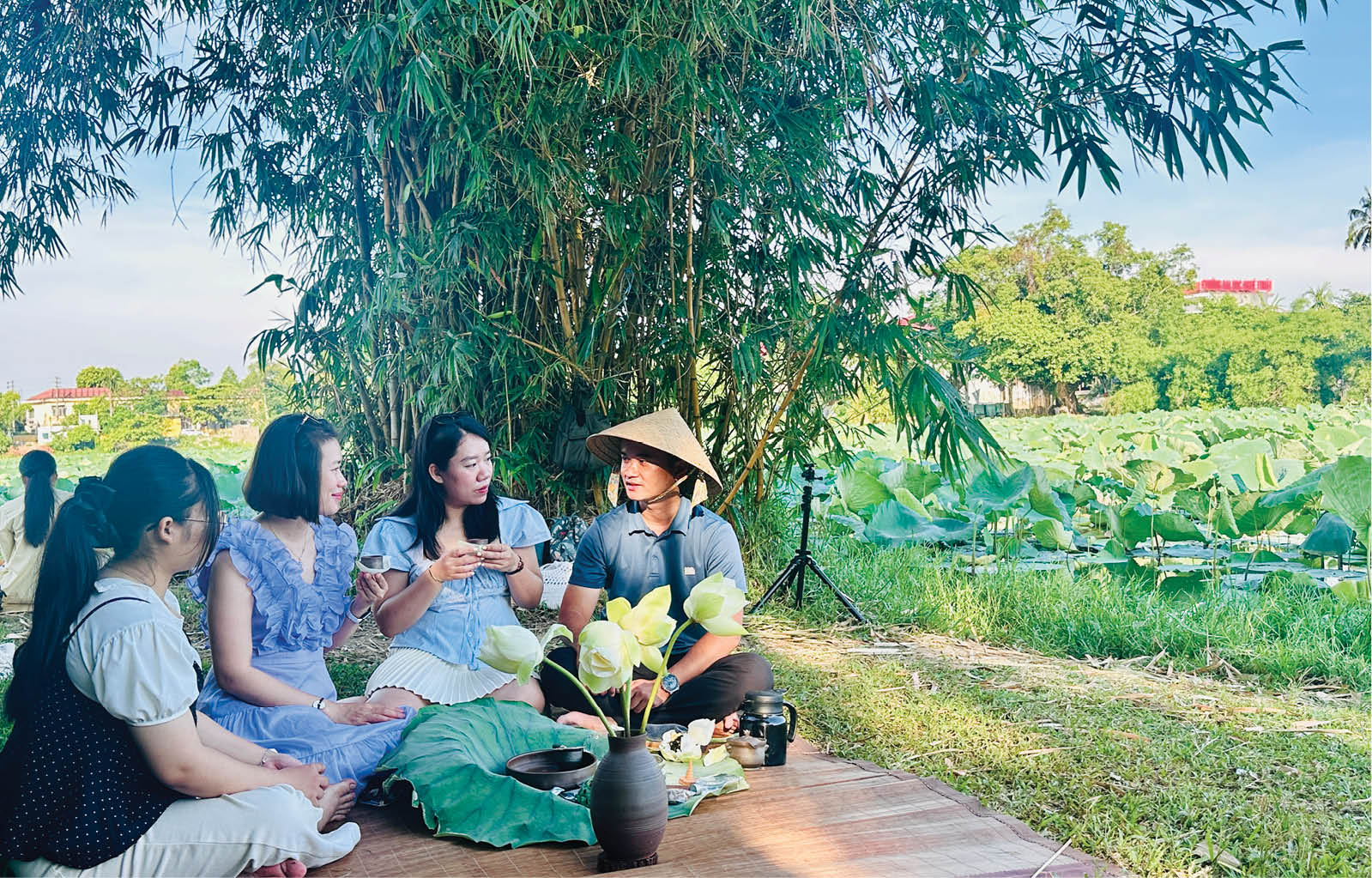
| Visitors to Hue enjoy lotus tea at Tinh Tam Lake and listen to the story of lotus tea offered to the emperor. Photo: Ngoc Hoa |
The whirlwind of backdrops and the illusion of "likes"
At the end of May, Ms. Ha Thi Hoa and her family traveled from Ninh Binh to Hue for a vacation . That morning, while visiting the Imperial Citadel, she was delighted when her daughter rented her a traditional Vietnamese dress (áo dài) in the "nhật bình" style, which she proudly wore. When she asked why it was called "nhật bình," her daughter brushed it off, saying, "Mom, just wear it to look beautiful for photos with your grandchildren; what's the point of knowing more?" Behind that statement lies the reality that many tourists visit Hue's historical sites quickly, rent a traditional costume, pose in the gilded corridors, and then leave without knowing which dynasty the dress belonged to, its significance, or the solemn ceremonies that once took place in the imperial palace.
Recently, Hue has witnessed a visual explosion. The vibrant colors of the traditional Vietnamese áo tấc and áo nhật bình dresses have become ubiquitous on social media platforms, from TikTok and Instagram to Facebook Reels. The ancient Imperial Citadel, the solemn tombs, and several traditional craft villages have suddenly become popular "check-in spots." Tourists frolic in their colorful attire, carefully selecting the perfect angle to capture stunning photos to post on Facebook.
In terms of numbers, this is a positive sign showing that heritage is becoming "closer" to young people. But looking deeper, in the long term, we cannot help but worry about the reality unfolding in community-based tourism areas and craft villages across the country, and Hue is no exception: Cultural heritage is gradually being transformed into mere backdrops for tourists to take photos, purely superficial check-in spots lacking depth.
The spirit of Hue culture
If tourism in Hue relies solely on the scenic beauty of historical sites for stunning photos, it will fall into the trap of "blooming early and fading quickly." After all, a beautiful decor can be copied, a beautiful outfit can be rented anywhere, but the only thing that truly keeps tourists coming back is the cultural depth and genuine emotion they experience when admiring the historical sites.
Fortunately, Hue also possesses a "filter" that not every region has: the resilience to preserve itself. The traditional Hue way of life, the discreetness and slow pace of the people, is a kind of resource, a natural shield against the turmoil of the times.
Many people in Hue still preserve their dialect, cuisine , and family traditions as if by instinct. They are not easily swayed to cater to the fleeting tastes of the masses. Tourism in Hue is sometimes criticized as "slow" or "boring," but it is precisely this slowness and melancholy that prevents the heritage from being completely distorted by the storm of commercialization.
Furthermore, Hue's heritage structure is very solid, a harmonious blend of systematically preserved scholarly court culture and the folk culture of its craft villages and suburban gardens. Inheriting such a rich and diverse foundation, Hue doesn't need to borrow or fabricate stories. What Hue currently lacks is not products, infrastructure, or media, but rather storytellers with a deep and broad understanding of Hue's culture—those who can act as "cultural interpreters" for tourists.
Experiencing knowledge and emotions - a unique path.
To escape the shadow of contemporary check-in culture, Hue tourism needs a strong shift in mindset: commercializing intellectual and emotional experiences instead of commercializing superficial images. Spreading images to promote cultural relics is necessary, but more importantly, it's about how to help tourists understand the value of these relics.
Hue needs to train and standardize its experiential tour guides. These shouldn't be guides who simply memorize dry historical facts, but rather people who can connect knowledge with emotion.
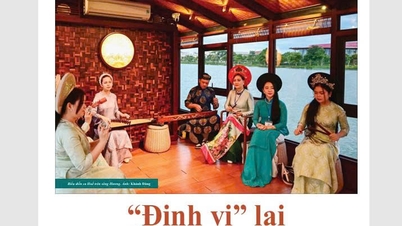
A Hue folk music tour shouldn't just involve getting on a dragon boat, listening to a few songs, releasing lanterns to pray, and taking pictures. Poet Vo Que diligently introduces traditional Hue folk music at the foot of Truong Tien Bridge every Tuesday evening, showcasing how the people of Hue express their feelings through the melodies of the Nam Binh and Nam Ai, concluding with a heartfelt conversation with the artist, which many tourists greatly appreciate. That's one example.
Furthermore, it's necessary to create experiential living spaces, not just for photography but also to evoke emotions. Instead of chasing the trend of modern, stereotypical homestays, the garden houses in Kim Long, Vy Da, and Phuoc Tich should be developed based on the core value of enjoying the Hue way of life. The value offered to tourists shouldn't be a bed, but a day spent as a Hue resident. Let tourists experience a day waking up at dawn to water the plants in the garden, brewing a pot of lotus tea, learning how to cook beef noodle soup with pork trotters, making banh beo and nam loc (traditional Hue-style steamed rice cakes), and listening to elders recount their family traditions.
Behind the cultural relics lies the memory of our ancestors, the way the people of Hue have lived, loved, and taught their children to revere sacred things. Hue does not need, and should not, rush to cater to the tastes of the masses. What Hue needs to steadfastly preserve is the solemnity of its heritage and the dignity of the lives of its indigenous people.
How can we ensure that when tourists leave Hue, what they retain in their cameras are beautiful pictures, but what remains in their minds is a profound reverence for a land that cherishes its culture? That is the unique path that will elevate Hue tourism above the illusions of the digital age.
Source: https://huengaynay.vn/du-lich/de-du-lich-co-do-khong-la-phong-nen-truoc-con-loc-check-in-166271.html


![[Photo] General Secretary and President To Lam presides over a meeting with the Central Organizing Committee.](https://vphoto.vietnam.vn/thumb/1200x675/vietnam/resource/IMAGE/2026/06/03/1780482764658_a1-bnd-4741-3342-jpg.webp)
![[Photo] First session of the 14th Congress of the Vietnam Trade Union](https://vphoto.vietnam.vn/thumb/1200x675/vietnam/resource/IMAGE/2026/06/03/1780465947883_ndo_br_img-3852-jpg.webp)

![[Photo] Secretary of the National Assembly Party Committee, Chairman of the National Assembly presides over the meeting of the Standing Committee and Executive Committee of the National Assembly Party Committee.](https://vphoto.vietnam.vn/thumb/1200x675/vietnam/resource/IMAGE/2026/06/03/1780480353201_ndo_br_bnd-2585-jpg.webp)







































![[Video] Sunset at Lap An Lagoon – Where the sun sets over the fishing nets](https://vphoto.vietnam.vn/thumb/1200x675/vietnam/resource/IMAGE/2026/05/31/1780192137701_beach-landscape-sea-water-nature-grass-745871-pxhere-com.jpeg)


































Comment (0)