

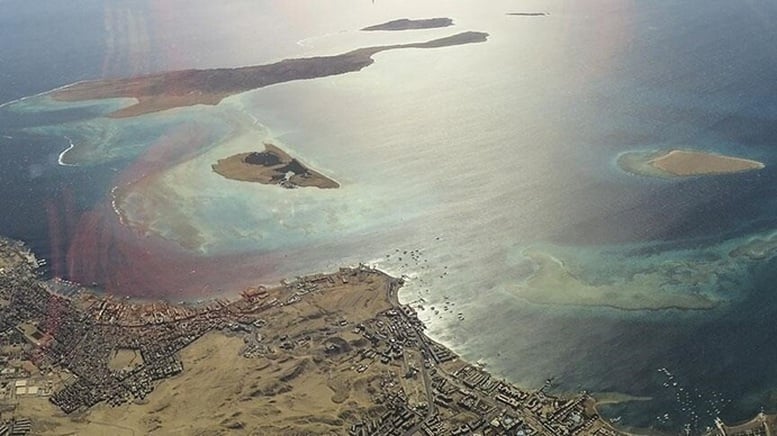
A section of the Strait of Hormuz. Photo: ANADOLU
According to Trump, ships stranded in the strait due to the naval blockade "can begin to return home."
President Trump also outlined conditions that he believed Iran should accept as part of a peace deal, including: Iran agreeing never to possess nuclear weapons; the Strait of Hormuz being open to two-way, toll-free traffic; Iran removing all remaining naval mines in the strait; and the U.S. – and possibly China – destroying Iran's enriched uranium.
The US confirms reaching a preliminary agreement to extend the ceasefire with Iran.
On May 28, a US official said that negotiators from the US and Iran had reached a preliminary agreement to extend the ceasefire for another 60 days and resume talks on Tehran's nuclear program.
US Vice President JD Vance confirmed that the two sides had reached a preliminary agreement, but it remains unclear whether President Donald Trump will ratify the deal.
Earlier that day, in an interview with the press, President Trump warned that a deal that does not meet core American interests could lead to Washington restarting a military campaign against Iran.
Iran reaffirms its position on the Strait of Hormuz and the nuclear issue.
On May 29, Tehran officials continued to demonstrate a tough stance regarding control of the Strait of Hormuz and the country's enriched uranium reserves.
Speaking to the media, Ebrahim Azizi, head of the Iranian Parliament 's National Security and Foreign Policy Committee, asserted that Iran has established permanent control over maritime shipping in the Strait of Hormuz. He argued that the US and other countries in the region need to accept this reality and act according to Tehran's own rules and mechanisms. Meanwhile, regarding Iran's enriched uranium, Azizi stated that Tehran has no plans to transfer it to "third countries, intermediaries, or anywhere else."
Notably, this new statement contradicts the White House announcement that the US and Iran had reached an agreement in principle to reopen the Strait of Hormuz and begin negotiations related to Tehran's nuclear program. According to that agreement, Tehran would not be allowed to charge fees for ships passing through the Strait of Hormuz, nor would it be permitted to participate in negotiations on the destruction of its highly enriched uranium.
The conflicting statements highlight the complexity of negotiations aimed at reaching a common memorandum to end the crisis that is profoundly impacting lives and economies worldwide.
Meanwhile, developments on the ground remain tense. Iranian media reported that on the evening of May 28, the country's air defense system activated and intercepted a US drone in Bushehr province, in the south of the country.
An Binh
Source: https://baochinhphu.vn/thoa-thuan-so-bo-my-iran-va-ky-vong-ve-eo-bien-hormuz-10226053005413472.htm






















































































Comment (0)