

All eyes are on how the EC President will strike a balance between the economy and the environment in his second term, while remaining steadfast in his commitment to innovation across the continent and maintaining a green growth trajectory for the EU in the future.
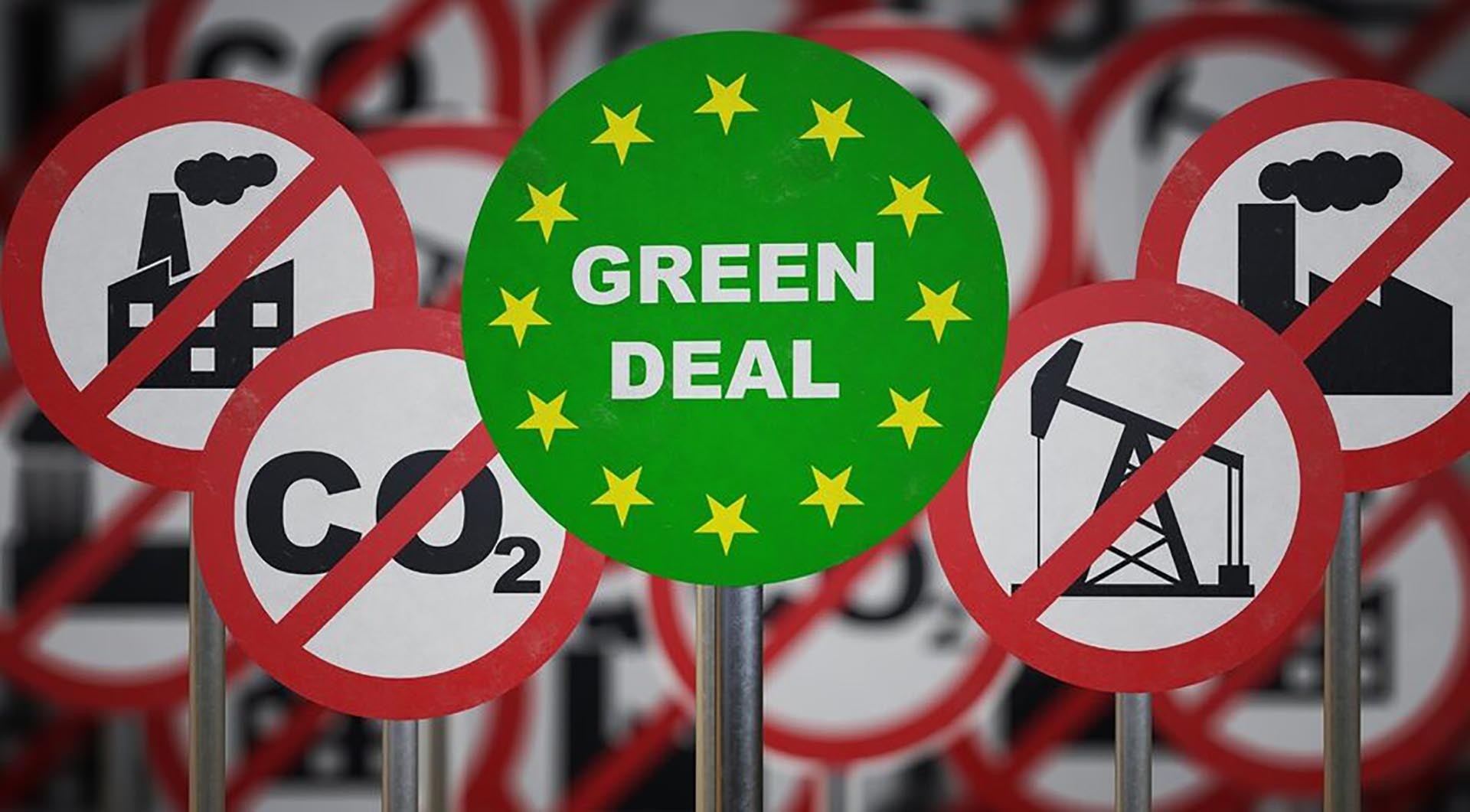 |
| The European Green Deal aims to position the EU at the forefront of the fight against climate change, leading the global trend toward green growth. (Source: Getty Images) |
Ursula von der Leyen has just been officially appointed President of the European Commission (EC) for a second term. Facing a series of complex challenges to economic recovery from the Covid-19 pandemic, the sustainable development path of the Union, and the continued realization of more ambitious environmental policies to enhance the EU's global influence, is Leyen ready to shape the future of Europe, as she convinced her supporters during her first term?
Leading the trend in green growth.
The European Union (EU) is one of the world's leading regions in terms of its commitment to and significant progress in greening its economy. In 2020, the European Green Deal (EGD) was adopted, officially launching a landmark global trend and creating a concrete plan for the sustainable development of the EU economy.
Aiming to mobilize at least €1 trillion in sustainable investment over the next decade, the Green Deal aims to help Europe transition to a resource-efficient economy, address climate change, reduce reliance on fossil fuels, enhance food security, and move toward net-zero emissions by 2050. The areas of implementation, set out until 2030, encompass energy, transport, agriculture , and construction.
Therefore, the EGD is considered a comprehensive plan with actions to drastically reduce greenhouse gas emissions by at least 55% by 2030 (compared to 1990) and transform the climate crisis into a stepping stone towards more sustainable development in the future. The agreement also outlines the necessary investments and financial instruments to achieve this transition goal.
Accordingly, a series of policies with a vision for 2050 have been issued, including the Carbon Border Adjustment Mechanism (CBAM), the Farm to Fork Strategy, the Circular Economy Action Plan, and the Biodiversity Strategy to 2030.
On this foundation, many EU countries have risen to the forefront of investing in green growth. According to the Green Future Index 2022 ranking, the top 5 leading low-carbon economies are all EU countries. Iceland holds the top position – one of only two European countries that generate more electricity from renewable energy than they consume domestically. The Icelandic economy is currently based on 85% renewable energy and aims to use 100% renewable energy. Denmark ranks second, with efforts to invest in sustainable energy and green transition. And many other member states have expressed their determination to accelerate the green transition, quickly moving away from dependence on fossil fuels.
This "green turning point" bears the strong imprint of EC President Leyen – who played a key role in launching the EGD policy, with the ambition of placing the EU at the forefront of the fight against climate change and leading the global trend towards green growth. Supporters hope that Ms. Leyen will continue the successful policies of her first term. In particular, strategic policies with a significant impact on the EU's future, such as EGD, are hoped to be fully realized to achieve the goals by 2050.
The major challenge for the reformer.
In a context where green growth has become an inevitable path pursued by many countries globally, the EU has become one of the pioneers. However, making steady progress on this path is no easy feat, and the story of EC President Ursula von der Leyen during her first term is a case in point.
Observers commented that Leyen was successful in her first term thanks to the implementation and development of green policies. However, faced with such a complex problem with so many variables, the challenge for the "helmsman" of the EU to reconcile environmental and socio-economic goals for the 27 member states has multiplied, and it may even be very difficult to remain steadfast in pursuing those goals.
One piece of concrete evidence is that, at the end of his first term, the EC President had to cancel one of his commitments – cutting pesticide use in half – to appease populist right-wing opposition and peasant uprisings across the region, from Belgium, Germany, the Netherlands, Poland, Romania, Italy, and others.
The Green Deal is key to the EU achieving carbon neutrality by 2050, but it demands excessively high standards from farmers. For example, the Farm to Fork Strategy – the centerpiece of the EGD – sets ambitious targets for EU agriculture by 2030, such as halving pesticide use and reducing fertilizer use by 20%, and converting at least 25% of agricultural land to organic farming…
A senior commission official said that the European People's Party (EPP), led by the EC President herself, and other EU leaders had also pressured her to abandon key climate commitments. EU voters generally tend to worry about the rising cost of living associated with a "green lifestyle," due to higher agricultural prices and cheaper imports – things that directly affect their wallets – rather than considering the long-term impacts of the environment and climate change.
Ultimately, the European Parliament reached a consensus with a majority vote to approve a proposal to relax some environmental regulations linked to the distribution of tens of billions of euros in EU agricultural subsidies by April 2024. These "stopgap" policies partially address societal needs and alleviate farmers' grievances.
Despite the "political headwinds," the EU declared its unwavering commitment to its goals, asserting that the easing of regulations would not undermine environmental targets, but merely simplify rules to ensure farmers can protect the environment while maintaining efficient production.
However, analysts argue that in a future where green agriculture and industry are inevitable trends, every reform requires painful sacrifices, and any delay in the green transition could cost the country its leading position. This poses a significant challenge for EC leader Leyen, who needs to find a more balanced path to avoid missing the bigger goal.
Source: https://baoquocte.vn/thoa-thuan-xanh-sang-trang-moi-277430.html


![[Image] Nearly 125,000 Hanoi students completed the Literature exam for the 10th grade entrance exam.](https://vphoto.vietnam.vn/thumb/1200x675/vietnam/resource/IMAGE/2026/05/30/1780117233041_ndo_br_thiet-ke-chua-co-ten-2-png.webp)
































































Comment (0)