

In 1817, when Thoại Ngọc Hầu took charge of Vĩnh Thanh, he initiated the construction of the Đông Xuyên - Rạch Giá canal. According to the "Thoại Sơn Stele," after receiving approval from King Gia Long, the canal construction began in the spring of the year Mậu Dần (1818). Thoại Ngọc Hầu mobilized approximately 1,500 militiamen to cut down trees and dredge the mud. The canal followed the old waterway, and thanks to favorable conditions, the work was completed in over a month. Initially, the canal was known as Tam Khê (also called Ba Lạch), connecting Long Xuyên with Rạch Giá, 20 fathoms wide (over 50m), and 12,410 fathoms long (over 31km).
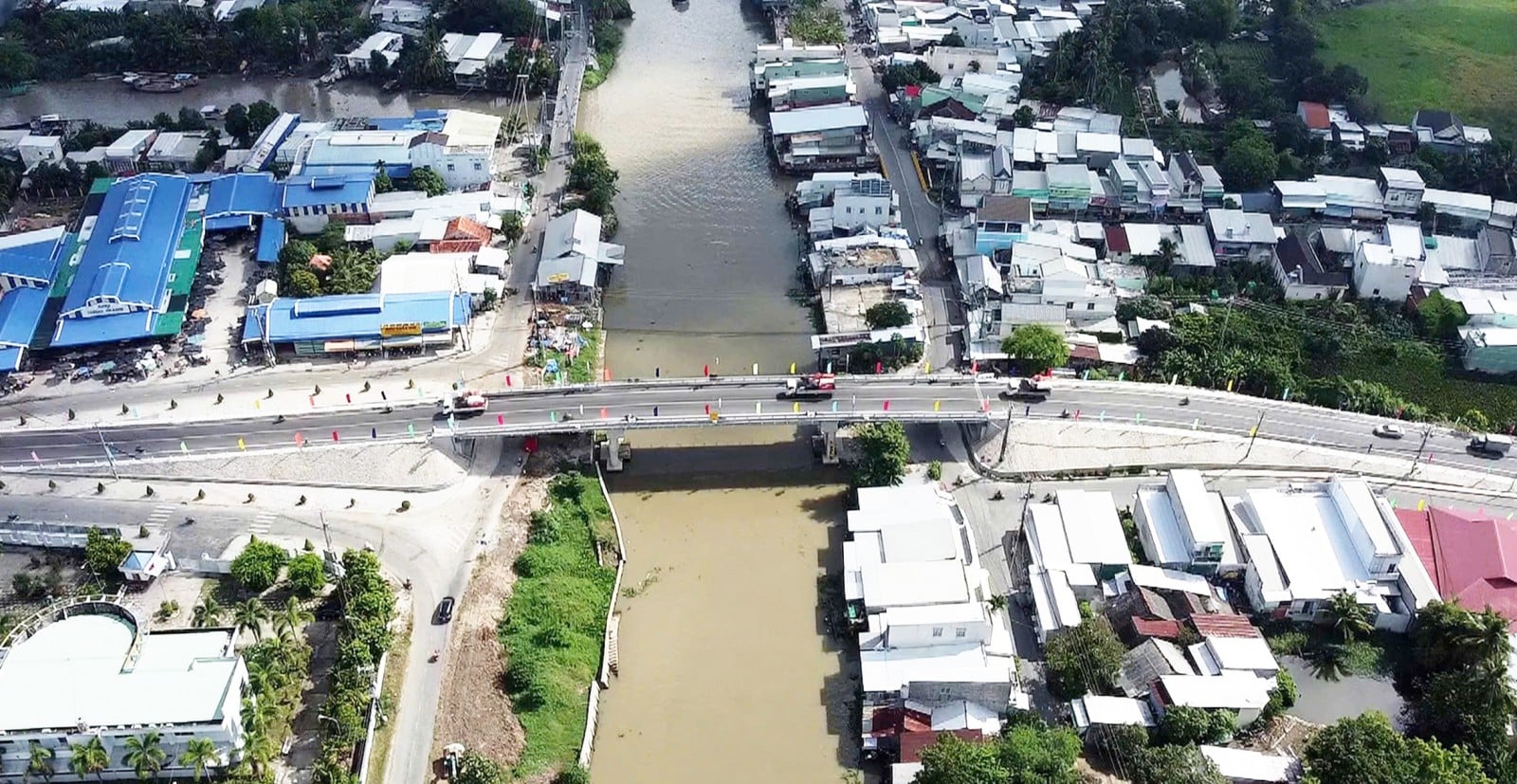
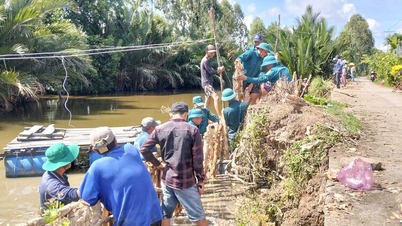
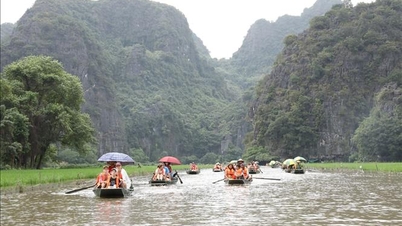
The Thoai Ha Canal holds significant historical, cultural, and economic value. Photo: Phuong Lan
In 1822, to commemorate this project, Thoại Ngọc Hầu erected a stele and established Thoại Sơn village. King Gia Long renamed the Tam Khê canal to Thoại Hà and Mount Sập to Thoại Sơn, showing his recognition of Thoại Ngọc Hầu's pioneering efforts. In Nguyễn Liên Phong's work "Nam Kỳ phong tục nhơn vật diễn ca" (1909), the image of the Thoại Hà canal is vividly depicted through the verses: "In the seventeenth year of Gia Long's reign, the Protector Thoại Ngọc Hầu was ordered to dig the very long Lạc Dục canal, crossing Mount Sập for internal and external communication. After just one month of labor, the people of Rạch Giá benefited greatly."
More than just an irrigation project, it was a strategic decision, opening up waterway trade, diverting floodwaters to the sea, and developing production. Most importantly, it opened up a lifeline for an entire region, fulfilling the wish of Mr. Thoai when he ordered the canal to be dug: "The old minister hopes that by digging this canal, a path to prosperity will be opened for everyone: The flowing water will wash away the acidity and salinity of the land, creating fertile fields, bringing peace and prosperity to every household, building bustling markets to expand financial opportunities and strengthen neighborly bonds."
Besides its economic value, the Thoại Hà Canal also held strategic importance for national defense, creating a continuous waterway from the Hậu River to the Western Sea. This facilitated the rapid transportation of goods, food, and the deployment of troops, contributing to enhanced defense capabilities and control of the Southwestern region. The project transformed the landscape from Long Xuyên to Rạch Giá, while also affirming sovereignty and laying the foundation for the Nguyễn Dynasty's defense system. Thoại Ngọc Hầu's strategic vision laid a solid foundation for the later development of Thoại Sơn.
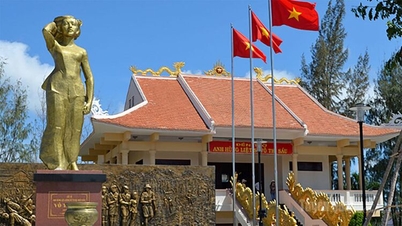
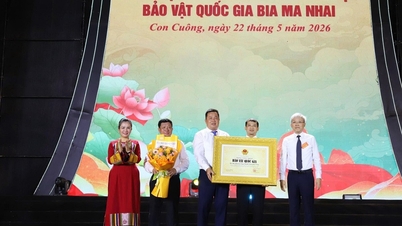
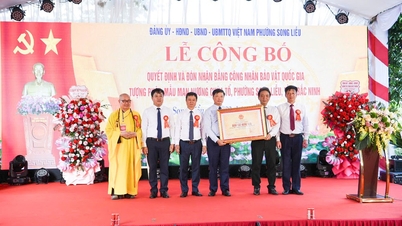
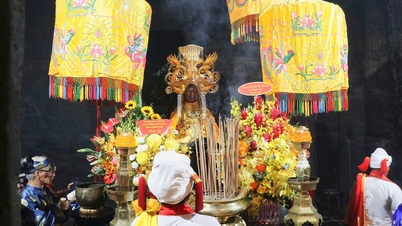
On April 26, 2026, the Vietnam Record Institute (Vietnam Record Organization) awarded a certificate of honor for the Vietnamese Record value to the Thoai Ngoc Hau Temple and Thoai Son Stele, a national historical site associated with the Thoai Ha Canal, with the following content: “The Thoai Ha Canal – one of the largest manually dug canals in Southern Vietnam, laying the foundation for the formation and development of a canal system serving irrigation and waterway transportation in the Mekong Delta. The project was built in 1818 under the command of the renowned official Thoai Ngoc Hau, with the participation of militia and local people. After more than two centuries, the Thoai Ha Canal still holds significant historical, cultural, economic, security, and defense value. It is a prime example of the vision, labor skills, and the process of exploring and developing the Southern region by our ancestors.”
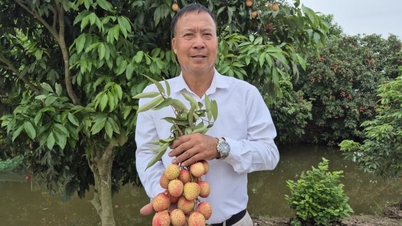
Mr. Nguyen Thanh Lam, a resident of Thoai Son commune, shared: "Thanks to the Thoai Ha canal, which carries water to flush out acidity and regulate irrigation, agricultural production has increased from one crop per year to two or three crops, with both productivity and output rising."
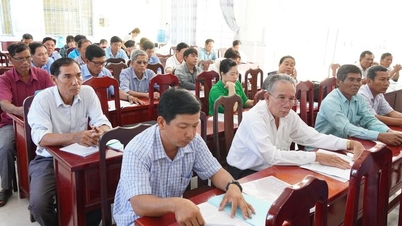
Before implementing the two-tiered local government model, the former Thoai Son district rose to become a leader in the new rural development movement, achieving the new rural district standard in 2018 and the advanced new rural standard in 2023, exceeding the set targets. Now, Thoai Son commune is entering a modern development phase with systematic steps in implementing the two-tiered local government model. A notable feature is the streamlined and smooth operation of the administrative apparatus. The commune's officials and civil servants have reformed their working style to be more grassroots-oriented, closer to the people, and more responsive to their needs. Digital transformation has become a crucial "lever." Thoai Son commune has now completed its e-government system with a 100% completion rate.
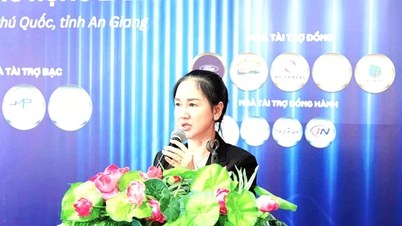
Ms. Dao Thi Bich Huyen, Vice Chairman of the People's Committee of Thoai Son commune, emphasized: "Entering a new stage of development, especially with Thoai Son facing great opportunities to expand its development space, the Party Committee, government, and people of Thoai Son commune will continue to uphold the glorious tradition, consolidate the great national unity, be proactive and creative, seize opportunities, overcome all difficulties and challenges, and live up to the great contributions of our ancestors."
PHUONG LAN
Source: https://baoangiang.com.vn/thoai-ha-dong-kenh-mo-dat-phuong-nam-a484574.html






























































Comment (0)