

Coffee of memories
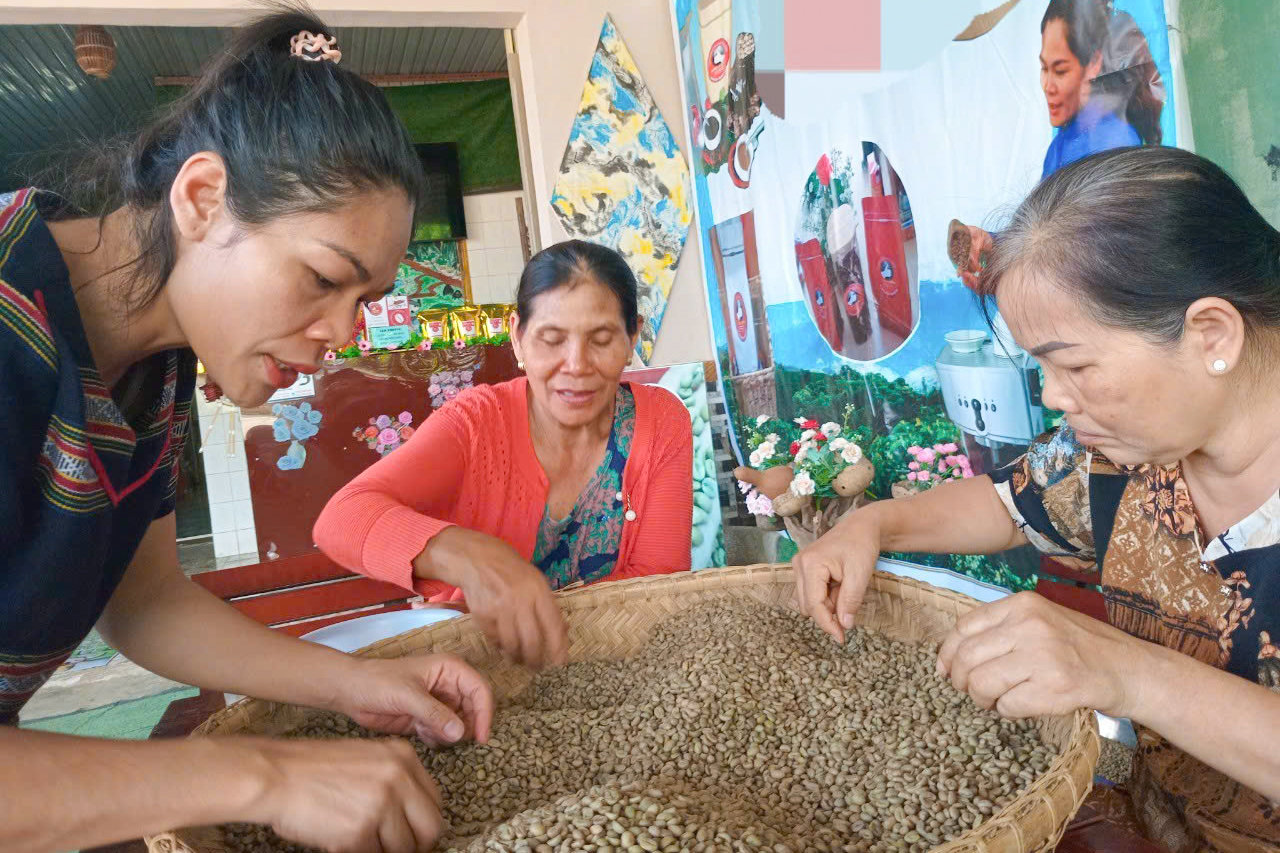
According to documents, the jackfruit coffee variety was introduced to Vietnam by the French in 1857, but the Liberica variety was officially widely adopted in 1908. Because the tree has a tall, thick trunk and glossy leaves that closely resemble the jackfruit tree, Vietnamese farmers call it jackfruit coffee.
This season, on the hillsides, the jackfruit coffee plants are blooming with white flowers, their fragrance spreading throughout the villages. Compared to other coffee varieties, jackfruit coffee ripens later and has lower yields, but it has the advantage of being drought-resistant, less susceptible to pests and diseases, and suitable for many types of soil and terrain. In the communes of the southern Central Highlands, jackfruit coffee plants are only scattered among households; a few families keep a few trees as souvenirs or plant them around their gardens to protect other crops from the wind.
According to elderly people in the villages of the Southern Central Highlands, the French established coffee plantations in the Di Linh plateau, the Tu Quy coffee plantation in Bao Lam 2 commune, and plantations in the Bao Loc area. They brought with them various coffee varieties, including the "jackfruit" coffee, to plant. Initially, coffee was grown on the plantations, but later, workers and locals took the seeds or uprooted seedlings growing under the mother trees to plant at home. Gradually, this species became widespread, found in almost all villages and on the hillsides.
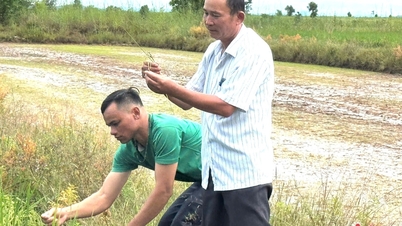
In Bao Lam 3 commune, some households still cultivate this coffee variety. Mr. Do Van Hien in Loc Thanh village, hamlet 1, has a plot of land on a hillside where he grows about 100 jackfruit coffee trees. His family says that jackfruit coffee is very easy to grow, doesn't need watering, and is very simple to care for; they just wait for the harvest season. In general, jackfruit coffee trees are like genuine forest trees, relying on nature and still yielding a harvest. In recent years, the increasing demand for specialty coffee has led to increased interest in jackfruit coffee, a variety with a distinctive slightly sour taste. Some businesses have started buying this type of coffee to process it separately or blend it with other coffees to create perfect flavors. Therefore, jackfruit coffee is bought by traders as soon as it ripens.
Mr. K' Bét from Hoa Ninh commune said that local farmers still preserve the jackfruit coffee variety. They are planted in rows to act as windbreaks for other crops or kept in their yards as mementos. During harvest season, farmers earn extra income without needing to care for or water them. There are still quite a few jackfruit coffee trees in this area, some of which are ancient, with large, gnarled trunks.
According to local farmers, some large trees yield 100 kg of fresh coffee beans, while smaller trees yield 30-40 kg. The coffee beans are purchased directly from the orchards by traders at prices ranging from 13,000-17,000 VND/kg for bulk beans and 20,000-23,000 VND/kg for selected ripe beans; coffee beans fetch prices from 95,000-97,000 VND/kg. Therefore, the advantage of this crop is that it protects other trees from strong winds, provides shade, and generates income.
A faint fragrance amidst the vast forest.
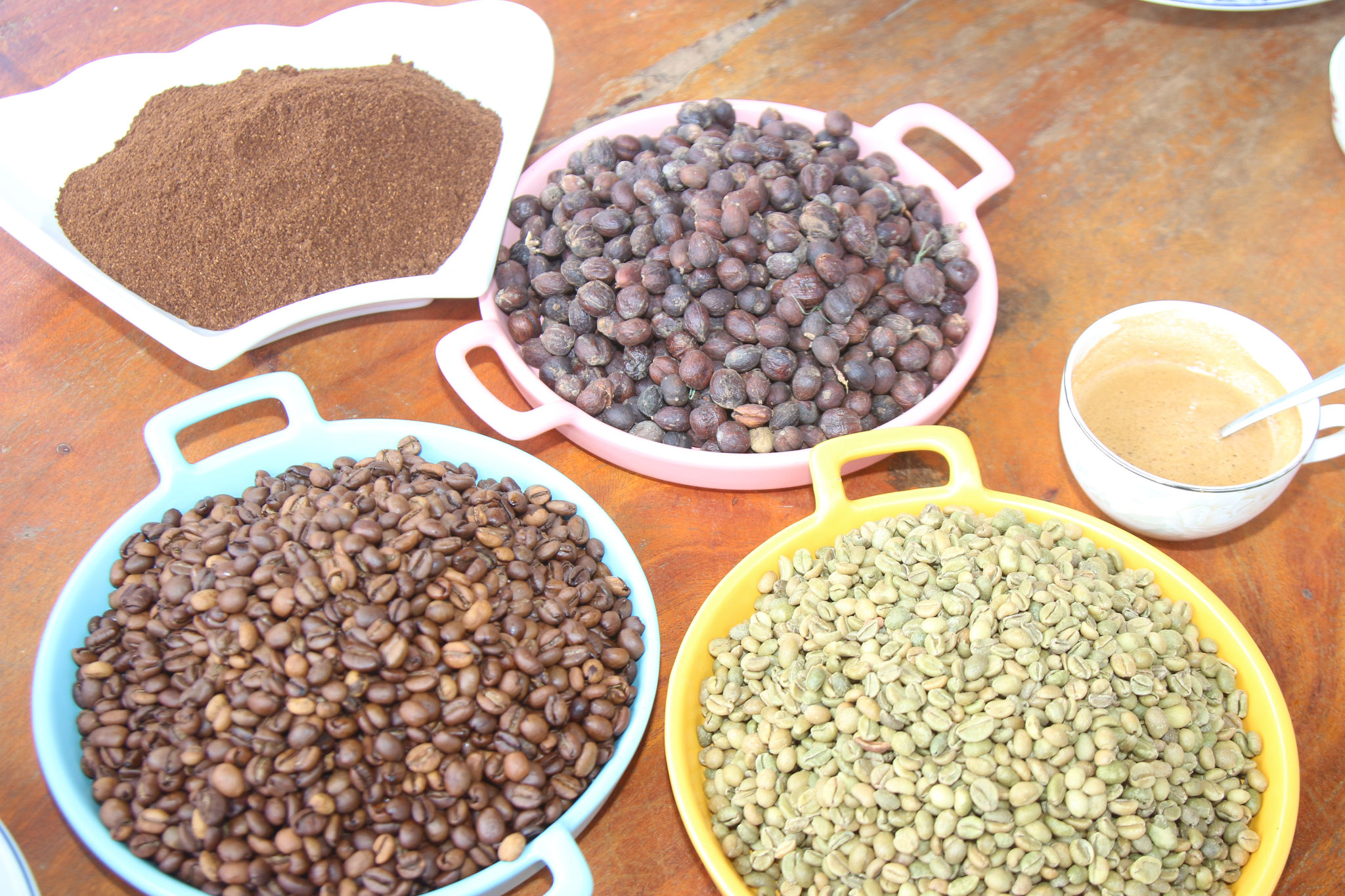
Through research into the coffee industry, it has been found that jackfruit coffee is characterized by a mild acidity and a subtle aroma of tropical fruits. Currently, some people in the southern Central Highlands have incorporated a small amount of jackfruit coffee into robusta coffee, creating a unique flavor.
Ms. Ka Nhuy, a coffee grower and processor in Bao Lam 3 commune, recounts that her family used to grow quite a few jackfruit coffee trees. Later, due to fluctuating prices and low yields, they cut down most of them, leaving only a few trees to create a blend of different coffee varieties. To ensure a more reliable supply of raw materials and better quality control, Ms. Ka Nhuy has now planted approximately 100 jackfruit coffee seedlings and 3,500 grafted jackfruit coffee trees.
According to research and analysis published by coffee industry experts, the caffeine content of Liberica coffee ranges from 1.2% to 1.8%, lower than that of Robusta coffee. This type of coffee has a slightly sour taste, a sweet aftertaste, and a characteristic aroma of ripe jackfruit, or the scent of wood or tropical fruits.
According to Ms. Ka Nhuy, through roasting techniques involving multiple steps and the experience of each individual, the broad, sweet aroma of jackfruit coffee can transition from tropical fruits such as yellow mango, ripe jackfruit, ripe banana, to a hint of green apple blended with a milky scent. The coffee maker also needs to maintain a specific blend ratio, reducing acidity and intensity of the aroma to suit the coffee style of each region and the taste of the connoisseur.
During a field trip to learn about and write an article about the fragrant jackfruit coffee tree still lingering in the mountains, I was fortunate enough to be invited by Mr. Ngo Duc Tien (a friend) from the former Loc Thanh commune, now Bao Lam 3 commune, to sample and witness the processing steps of a cup of jackfruit coffee. His garden currently has quite a few tall jackfruit coffee trees, some decades old. He is also propagating seedlings to plant more on his land, hoping to preserve this commemorative coffee variety.
During interviews in several localities regarding the "jackfruit coffee" tree, agricultural officials in communes and wards in the Di Linh, Bao Loc, and Bao Lam areas stated that currently, the localities do not have specific statistics on the area, yield, or number of "jackfruit coffee" trees. This is a long-standing crop, still preserved by local people as a memento or for windbreak purposes. The "jackfruit coffee" seeds from the remaining trees are being used to blend different coffee varieties. Currently, some farmers are propagating seedlings for new plantings or using them as rootstock for grafting on hillside gardens.
Source: https://baolamdong.vn/thoang-huong-ca-phe-mit-441710.html
![[Photo] General Secretary and President To Lam presides over a meeting on assessing national development resources.](https://vphoto.vietnam.vn/thumb/1200x675/vietnam/resource/IMAGE/2026/05/20/1779253785852_a1-bnd-2943-8519-jpg.webp)


![[Photo] National Assembly Chairman Tran Thanh Man working with the Standing Committee of the Economic and Financial Committee](https://vphoto.vietnam.vn/thumb/1200x675/vietnam/resource/IMAGE/2026/05/20/1779249584387_ndo_br_1-jpg.webp)




































































Comment (0)