


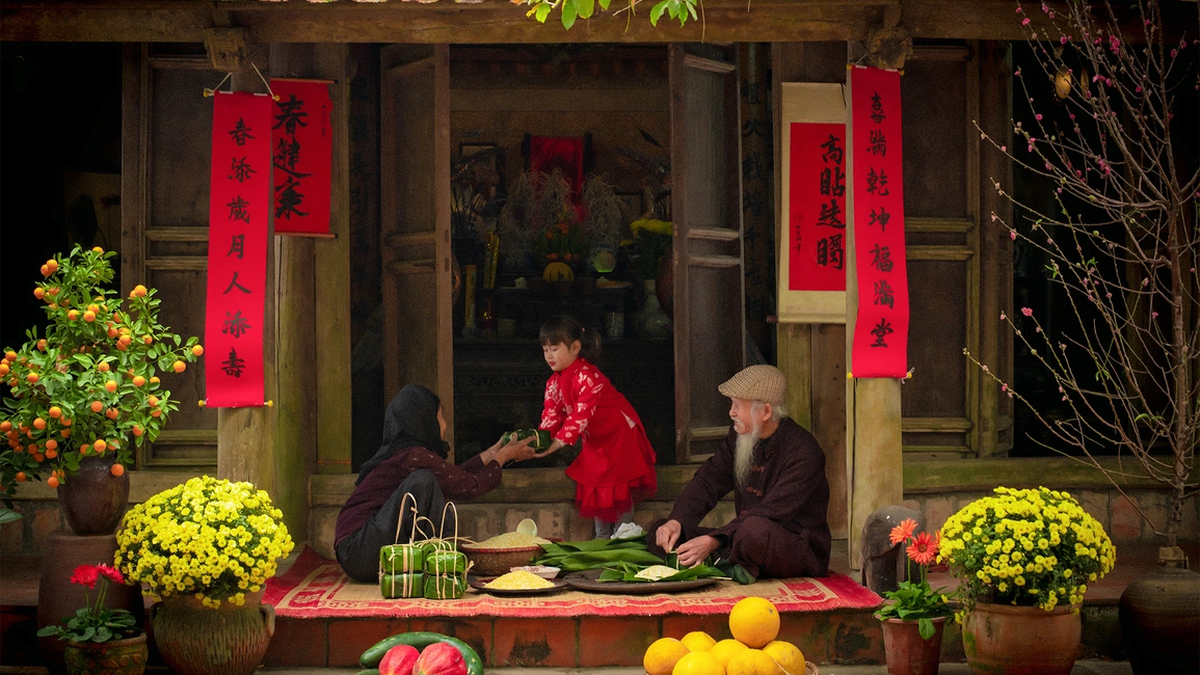
Amidst the fast-paced modern life and the booming market, there are still women who diligently preserve the traditional flavors of Tet (Vietnamese Lunar New Year) with their skillful hands and love for their families.
SWEET HOMEMADE JAM
For many Vietnamese people, bánh tét (sticky rice cake), jam, rice paper, and other traditional foods have long been indispensable parts of the Lunar New Year celebration. More than just familiar dishes on the guest table, these cakes and jams carry deep cultural significance, linked to memories of family reunions and warmth.

Although it is now easy to buy pre-packaged cakes and jams with beautiful designs and diverse flavors, many families still maintain the tradition of making them themselves to offer to their ancestors and to use during the Lunar New Year.
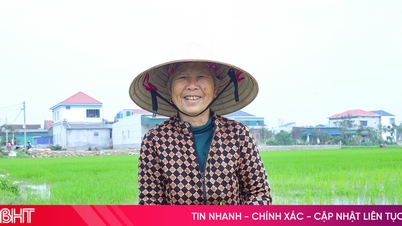
In Tan Dan hamlet, Cao Lanh ward, the days leading up to Tet (Lunar New Year) seem to pass quickly in the warmth emanating from the small kitchen of Mrs. Nguyen Thi Tho's family.
"Making banh tet (Vietnamese sticky rice cake) is quite laborious, from preparing the ingredients to cooking, requiring constant monitoring of the fire for many hours." "But I'm used to it, and besides, Tet without a pot of rice cakes feels incomplete and lacks the spring atmosphere. Besides selling them, I also make them for my family." |
A bustling atmosphere prevails as each member is busy with their own task: from washing the sticky rice and wiping the leaves to preparing the filling. Outside, a large pot awaits the perfectly round bánh tét (Vietnamese rice cakes), ready for a sleepless night tending the fire, marking the beginning of a warm and joyful new spring season.
Ms. Tho said that her family has been making banh tet (Vietnamese sticky rice cakes) for many years. Every Tet holiday, in addition to serving her family's needs, she also makes banh tet for people in and outside the local area.
"Making banh tet (Vietnamese sticky rice cake) is quite hard work, from preparing the ingredients to cooking it, which requires constantly monitoring the fire for many hours. But I'm used to it, and besides, Tet (Vietnamese New Year) feels incomplete without a pot of banh tet. In addition to selling them, I also make them for my family," Mrs. Tho shared.

According to Ms. Tho, the rice cakes she makes are not just a product of her labor, but also a way of expressing her feelings for her loved ones. Each layer of sticky rice, each slice of filling, contains wishes for a peaceful and prosperous new year.
Besides bánh tét (a type of Vietnamese sticky rice cake), many families in rural Dong Thap are also busy making traditional jams from readily available ingredients such as coconut, tamarind, star fruit, ginger, winter melon, and Siamese bananas...
With skillful hands, those familiar ingredients are transformed into jams and preserves that carry the distinctive flavors of the countryside.
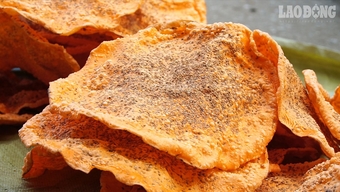
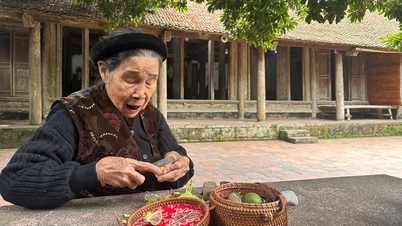
In Hoa Dinh 2 hamlet, Phong Hoa commune, the family of Ms. Do Thi Suong has been involved in making Tet jam for nearly 20 years. Every year, starting around the 10th lunar month, Ms. Suong begins preparing ingredients to serve the Tet market. In front of her house, batches of jam are sun-dried, emitting a gentle aroma.
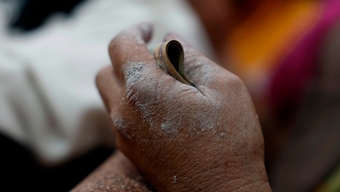
According to Ms. Suong, making jam requires meticulousness, patience, and a lot of experience. From selecting ingredients, preparing them, sun-drying, to simmering the sugar, everything must be done carefully. "To make beautiful, delicious jam without using artificial coloring, you have to sun-dry it properly, get the sugar right, and simmer it over the right heat. Just one mistake can ruin the whole batch," Ms. Suong said.
Ms. Suong does not use preservatives or additives in the jam-making process. Her products are made primarily using traditional methods, ensuring safety for consumers. As a result, her family's jams are always trusted and favored by customers.
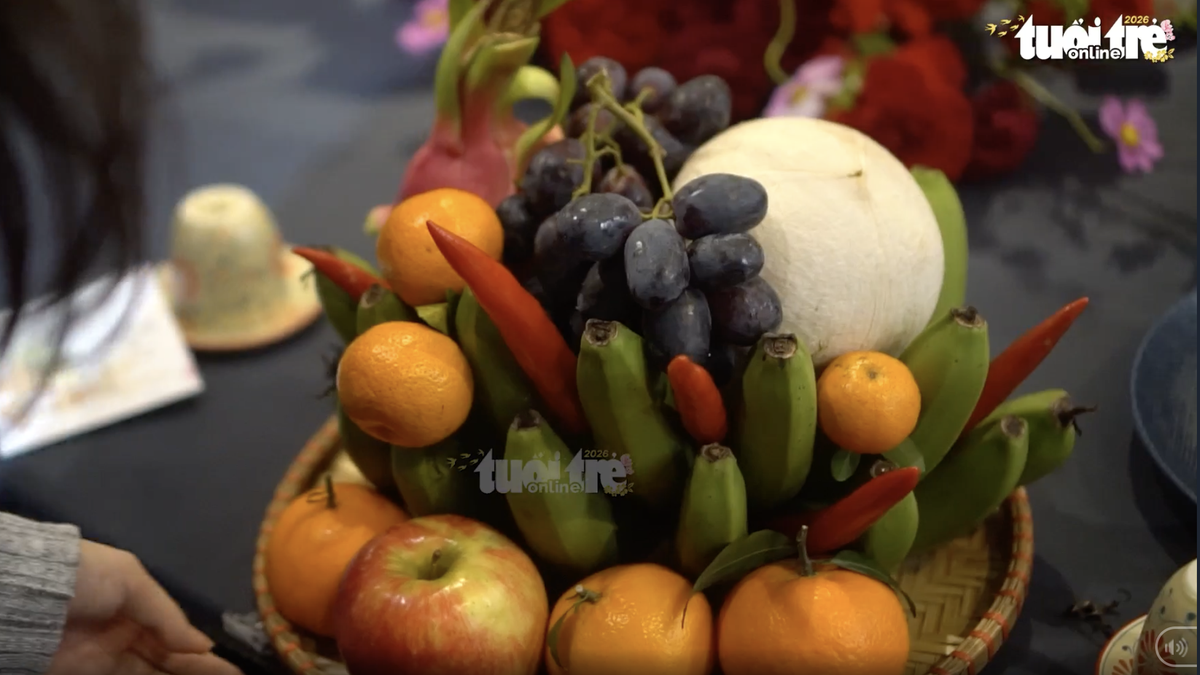
Every Tet holiday, Mrs. Suong's family makes many kinds of candied fruits such as: puffed bananas, tamarind, ginger, gooseberry, coconut, and winter melon. "Thanks to making candied fruits, I earn a few million dong extra each year to buy things for the house. More importantly, I'm still preserving my family's traditional craft," Mrs. Suong shared.
PRESERVING THE FLAVORS OF TET (LUNAR NEW YEAR)
In many rural areas, making cakes and jams is also an opportunity for family members to gather. Children and grandchildren who work far away return home to join their grandparents and parents in the kitchen, working and chatting at the same time.
Stories about the past year and plans for the new year are shared around the pot of simmering rice cakes, creating a warm and intimate atmosphere filled with family bonds.

Many young people, by participating with their families in making traditional cakes and jams, have gained a deeper understanding of the value of tradition. This contributes to fostering an awareness of preserving national cultural identity within each household.
In an increasingly diverse market, traditional homemade cakes and jams still hold a special place in people's lives. This is because each piece of jam, each slice of cake, not only carries a natural flavor but also embodies the love and care of the person who made it.
Many young people, by participating with their families in making traditional cakes and jams, have gained a deeper understanding of the value of these traditions. This contributes to fostering an awareness of preserving national cultural identity within each household. |
Spicy candied ginger, sweet candied winter melon, sweet and sour candied tamarind, along with fragrant and chewy sticky rice cakes (bánh tét), have become familiar symbols of Tet (Vietnamese Lunar New Year). They also symbolize the hope for a prosperous and happy new year.
According to many locals, maintaining the craft of making cakes and jams not only helps rural people increase their income and stabilize their lives, but also serves as a way to preserve and spread the beautiful customs and traditions of the nation.
Through the passing down of skills to future generations, traditional values are continued naturally and sustainably.
As Tet (Lunar New Year) approaches, throughout the rural areas of Dong Thap, kitchens are still ablaze with fire, yards are still overflowing with candied fruits, and hands are still diligently preparing for the new spring season.
Amidst the hustle and bustle of modern life, this image stands out as a peaceful touch, contributing to preserving the spirit of Vietnamese Tet (Lunar New Year).
Sticky rice cakes (Bánh tét) and Tet jams – though simple, they hold profound cultural value that people are still preserving and promoting.
It's not just the flavor of spring, but also a thread that connects generations, nurtures family bonds, and contributes to the cultural identity of Dong Thap province.
MY XUYEN
Source: https://baodongthap.vn/thom-ngon-banh-mut-ngay-tet-a236656.html





























































Comment (0)