


Citizens carrying out administrative procedures at the Public Administrative Service Center of Xuan Hoa Ward, Ho Chi Minh City - Photo: Truc Phuong
Specifically, the draft amendments include adding categories and priority points in competitive examinations or selection processes; and defining the criteria, standards, conditions, and required documents for recruitment into civil service positions.
Speaking to Tuoi Tre newspaper, Dr. Nguyen Tien Dinh, former Deputy Minister of the Ministry of Interior , said that the proposed amendments and additions to the priority categories in entrance exams and selection processes are appropriate and necessary, and added that this would help retain talented individuals.
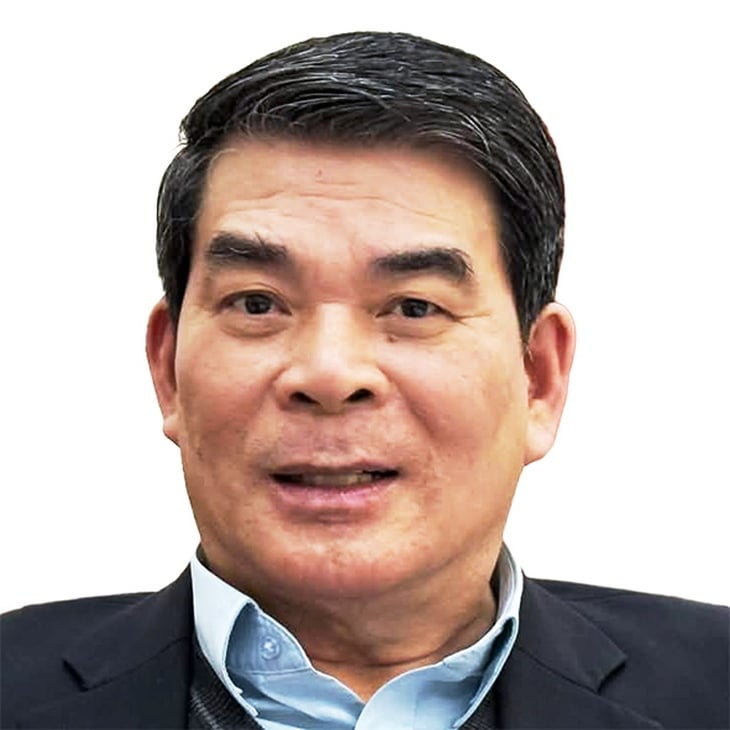 Dr. Nguyen Tien Dinh
It's crucial to identify the right job position.
* In your opinion, what solutions are needed to improve the quality of civil servants?
- The most important thing is that whether through competitive examinations, selection processes, or recruitment, all procedures must be followed correctly. At the same time, the recruitment, management, and utilization of civil servants must adhere to the principle of job position.
In reality, although the concept has been around for a long time, the definition of job positions is still not truly accurate, leading to many stages remaining unimplemented. This includes the reform of salary policies according to Resolution 27 of the Central Committee. Therefore, the most important thing is to establish standardized job positions.
Furthermore, policies are needed to attract talented individuals to the public sector to improve the efficiency of the administrative apparatus. Over the past period, the Party, the State, the Government , and local authorities have implemented numerous policies related to attracting talent to the public sector.
Specifically, since 2017, the Government has issued Decree 140 on policies to attract and recruit talented personnel from outstanding graduates and young scientists. Decree 179/2024 stipulates policies to attract and utilize talented individuals to work in agencies, organizations, and units of the Party, State, Vietnam Fatherland Front, and socio- political organizations, followed by many other mechanisms and policies.
Decree 170/2025 specifies preferential policies and mechanisms in the recruitment, selection, and appointment of civil servants, including the recruitment of experts, scientists, jurists, lawyers, outstanding entrepreneurs, etc. Many localities have also issued very attractive policies and mechanisms to attract talented individuals. The implementation of these policies has achieved certain results in recent times.
Creating an attractive work environment.
* However, in reality, attracting talented individuals to work in the civil service still faces limitations. In your opinion, what needs to be done to overcome this?
- In reality, observation shows that policies to attract talented individuals to civil service positions have offered many good incentives and met requirements. However, the issue of retaining talent in the public sector still has limitations, leading to many talented and capable individuals moving from the public sector to the private sector. There are many reasons for this, but the main one is that the working environment in the public sector for talented individuals is still not good enough.
Therefore, I believe several solutions are needed. These include ensuring that talented individuals are recruited and assigned to civil service positions within agencies and units according to their abilities and strengths. Their work process should be respectful, and their contributions and suggestions should be listened to and acknowledged. Along with creating opportunities for advancement and development, we should avoid overly rigid, bureaucratic, or restrictive regulations and working hours.
Most importantly, leaders and heads of agencies and units must always know how to listen to and respect talented people. They must create a work environment that is fair, equal, democratic, and transparent. When such an attractive work environment is created, it will help talented people choose to work there and feel secure in their jobs...

The participation of young officials brings dynamism and contributes to the innovation of management methods in administrative agencies - Photo: DANH KHANG
Research on increasing income for civil servants in Hanoi and Ho Chi Minh City.
* Many argue that further improvements to salary and benefits policies are necessary to retain talented individuals in the public sector.
- It is necessary to continue improving policies on salaries or other allowances to increase the income of talented individuals in order to retain them in the public sector.
But personally, I think that's not necessarily enough to retain talented people. Instead, I believe it's time to consider compensating them based on the specific results and products they create in order to retain talent. That would be better and fairer.
Accordingly, scientists and experts, after being appointed to civil service positions, should be considered for rewards based on the proportion of the value their work brings to practical application.
For example, a scientist or research expert who develops a major project or technology that generates 10 billion VND in revenue after application could be considered for a bonus based on the project's value, such as 3-5% or even more. This would make the project more attractive.
For civil servants performing their duties, if they produce concrete results, rewards can be linked to those results in a corresponding proportion. For leaders of agencies and units, if they lead and develop their units to a certain level, rewards can be considered based on a proportion of their achievements...
* With the two major cities of Hanoi and Ho Chi Minh City, what do you think needs to be done to attract talented people, and what specific policies and mechanisms are needed for the civil servant workforce?
Currently, both Ho Chi Minh City and Hanoi have issued policies and incentives to attract talented individuals and outstanding graduates to work in state agencies. In particular, talented individuals can be directly recruited without competitive examinations to work as officials in Ho Chi Minh City, along with many other policies to attract them, including a mechanism to increase their income by 100-300%. Furthermore, special salary and bonus frameworks are applied, based on agreements, if they achieve outstanding performance in public service recognized by competent authorities.
The Standing Committee of the Ho Chi Minh City Party Committee requests that Party committees, Party organizations, and agencies at all levels raise awareness and innovate thinking in identifying, attracting, and utilizing cadres. It emphasizes creating a working environment that is open, transparent, democratic, united, supportive, friendly, and fosters healthy competition, demonstrating respect for and appreciation of talented cadres while providing opportunities and conditions for them to dedicate themselves wholeheartedly... I highly appreciate these policies and incentives and expect them to help Ho Chi Minh City attract many talented individuals to work in its agencies and units in the coming time.
For civil servants in both cities, in addition to salaries and allowances as in other places, the National Assembly has allowed Hanoi to pay an additional income of 0.8 times the basic salary fund to civil servants and public employees. In Ho Chi Minh City, the mechanism applies a maximum additional income of 1.8 times the salary based on rank, grade, and position for civil servants and public employees. This helps to create motivation and retain civil servants, public employees, and workers, encouraging them to continue contributing to the city's development.
However, given the vast geographical area and large population, with some communes/wards having hundreds of thousands of inhabitants, the workload for civil servants in these localities, especially under the two-tiered local government model, is enormous.
Therefore, I believe that more specific policies are needed. These include further improving the additional income for civil servants and public employees in the two cities. More importantly, we should study increasing the number of civil servant positions to match the population size and workload in these two cities, especially at the commune and ward levels.
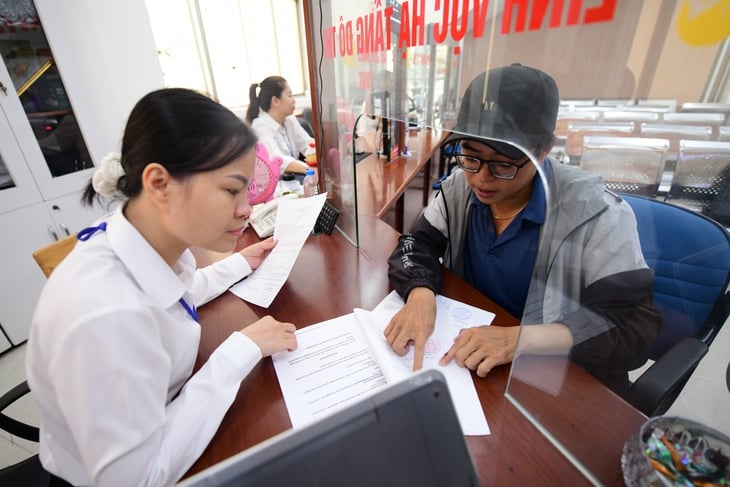
Officials at the Duc Nhuan Ward Public Administrative Service Center (Ho Chi Minh City) guide citizens through the application process - Photo: QUANG DINH
According to Dr. Nguyen Tien Dinh, research shows that the new draft has added priority categories in civil servant recruitment exams or selection processes. Specifically, young intellectuals who volunteer to work in national defense economic zones will receive an additional 1.5 points added to their professional skills exam or selection score after completing their assigned project. Along with this, the regulations regarding eligibility for civil servant positions have been revised.
Specifically, the current Decree 170 stipulates 8 categories, including civil servants working in public service units, which has been amended to civil servant status. Members of the pilot project to select young intellectuals to volunteer in communes to participate in rural and mountainous development in the period 2013-2020, who are currently employed under labor contracts at the commune level (before July 1, 2025), will be allowed to work at the commune level (from July 1, 2025).
Meanwhile, in this draft, the Ministry of Interior proposes amending the regulations to include civil servants and team members of the pilot project for selecting young intellectuals to volunteer in communes to participate in rural and mountainous development in the period 2013-2020, who will register for labor contracts to work in the communes...
Increasing civil servants' income will give them peace of mind to work.
Speaking to Tuổi Trẻ newspaper, Mr. TTH – a civil servant who previously worked in a district and, after the implementation of the two-tiered local government model, transferred to the Party Building Committee of a ward in Hanoi – said that the workload in his new ward is now two to three times greater than before. At the same time, the demands are increasingly higher, and every day he has to concentrate intensely and strive to complete all his tasks.
According to Mr. H., with over 10 years of service, his current salary coefficient is 3.33, multiplied by a 0.8 times basic salary increase (0.5 received monthly and 0.3 received at the end of the year). This income is barely enough to live on. Mr. H. said that recently, when there was news of a planned 8% increase in the basic salary from July 1st, everyone was very excited and hopeful. However, compared to the recent high inflation, the 8% increase is not as expected.
Therefore, he hopes that in the near future, salary policy reforms will be implemented soon, increasing the income of officials and civil servants so that everyone can work with peace of mind. Along with that, policies should be implemented to control prices and inflation so that salary increases truly have meaning for civil servants and public employees.
Mr. H. also hopes that the authorities will continue to consider supplementing human resources for commune-level localities, especially those with high population density and heavy workloads, and improving facilities, equipment, and the working environment.
* Dr. Nguyen Tran Nhu Khue (Deputy Head of the Commercial Law Department, Faculty of Law, Van Lang University):
The criteria, procedures, and benefits need to be more "open".
Despite its many positive new points, Decree 170 still has some shortcomings regarding the criteria and conditions for recruitment into the civil service, and does not truly create a flexible mechanism to attract talented individuals from various regions.
Specifically, although the scope of eligible candidates has been expanded, the target group for recruitment remains narrow and does not accurately reflect the human resource market. This is because talent is primarily attracted to the public sector or sectors with a state element. Meanwhile, talent in the private sector, businesses, international organizations, etc., is not clearly defined or readily available through established recruitment mechanisms.
Furthermore, the 2025 Law on Cadres and Civil Servants stipulates that eligible candidates are "experts, scientists, legal scholars, skilled lawyers, outstanding and exemplary entrepreneurs..." but does not specify the criteria for "exemplary and outstanding".
This leads to inconsistent interpretations; competent authorities will apply discretionary, unfair, and non-transparent methods in recruitment. Furthermore, although the decree emphasizes managing civil servants based on job positions, in many cases, recruitment conditions require seniority or previously held positions, reducing the openness of the labor market.
Furthermore, the current compensation system still fails to meet the needs and expectations of talented individuals. The recruitment process remains lengthy, involving many stages, and time-consuming, causing talented people to wait and potentially miss out on job opportunities elsewhere.
Therefore, several solutions are needed to simplify conditions and procedures, and expand the scope to attract talented individuals to civil service positions. This could include expanding the pool of candidates beyond the public system, adding experienced professionals from international organizations and multinational corporations to the list of eligible candidates, or individuals with recognized research products and achievements. Recruitment should be strengthened based on job positions and the actual needs of agencies and units through various methods: examinations, interviews, reputation-based selection, etc.
Finally, there is a need for more appropriate incentives and policies to attract talent, such as higher salaries and housing policies.

Officials at the one-stop service center in Van Mieu ward (Hanoi) receive and process administrative procedures for citizens - Photo: PHUC TAI
* Assoc. Prof. Dr. Cao Vu Minh (Head of the Department of Administrative and State Law, University of Economics and Law, Vietnam National University Ho Chi Minh City):
Establish standards and expand access to the private sector.
Based on the Party's guidelines, the Law on Cadres and Civil Servants of 2025 and its implementing regulations (such as Decree No. 170/2025) were issued to address obstacles in recruiting and contracting high-quality personnel in public service. However, alongside these advancements, many limitations and shortcomings related to the recruitment and contracting of high-quality personnel in public service still exist.
Therefore, in the future, the Government should study and supplement definitions and procedures to create a legal basis for recruiting talented and suitable individuals into civil service positions. Accordingly, it could be stipulated that "scientists assigned to lead particularly important national-level science and technology tasks" and "leading scientists" are those "scientists" who are eligible to be recruited into civil service positions without going through competitive examinations or selection processes.
Regarding the titles of "excellent lawyers" and "outstanding entrepreneurs" already stipulated in laws and decrees, the Government needs to promptly develop procedural regulations to recognize these individuals. This will then serve as a basis for their recruitment into civil service positions.
In addition, previously, Decree 115/2020 stipulated that "individuals currently under labor contracts performing professional or technical work in public non-business units will be given priority for recruitment as civil servants."
Both the 2025 Law on Cadres and Civil Servants and Decree 179/2024 prioritize recruiting experts and scientists into civil service positions regardless of whether they work in the public or private sector. Therefore, Decree 170 needs to be amended to abolish the regulation that only accepts high-quality personnel currently working in agencies, organizations, and units outside the public sector.
Source: https://tuoitre.vn/thu-hut-nhan-tai-lam-cong-chuc-20260317081431487.htm





























































































Comment (0)