

Prime Minister Pham Minh Chinh emphasized the importance of lifelong learning so that each individual can improve themselves, avoid self-doubt and complacency, and contribute to building a nation on par with developed countries.
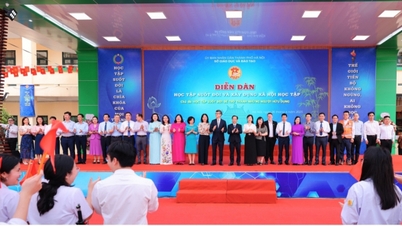
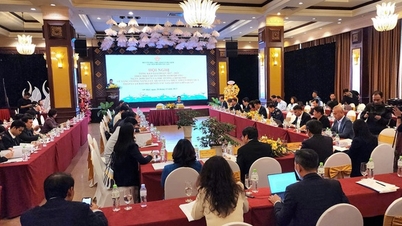
On the morning of June 10th, Prime Minister Pham Minh Chinh launched the movement "The whole country competes to build a learning society and promote lifelong learning in the period 2023-2030".
The Prime Minister assessed that the education sector has undergone significant changes, with the education network expanding throughout the country with various types of training, providing learning opportunities for people of all ages.
"The awareness of lifelong learning has been and continues to permeate every family, clan, residential area, educational institution, and region," the Prime Minister said.
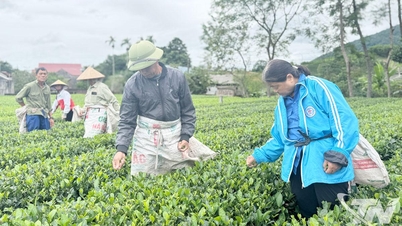
He cited the revived and strong development of the movement for competitive learning within families, villages, and communes. Urban areas have many movements for learning foreign languages and dancing among the elderly. In rural areas, people learn farming and animal husbandry skills. Classes are held on boats for students in riverside areas; Vietnamese language classes for ethnic minorities; and English classes in mountainous regions are organized in large numbers.
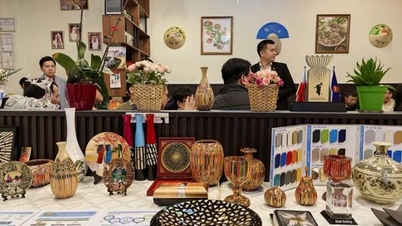
In many places, the learning movement has become a social phenomenon, such as painting villages or villages of farmers who play the violin; many people over 60 or 70 years old go to school every day, and some even 80 or 90-year-olds have completed their general education and obtained university or master's degrees.
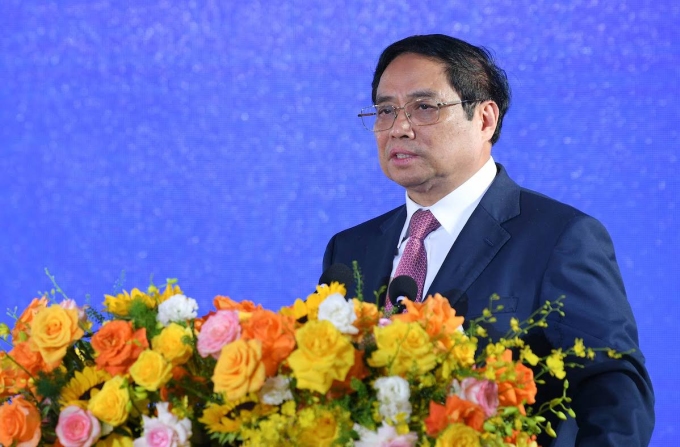
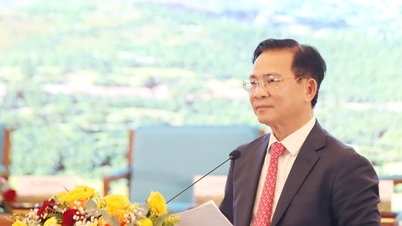
Prime Minister Pham Minh Chinh speaks at the launching ceremony of the movement "The whole country competes to build a learning society and promote lifelong learning in the period 2023-2030". Photo: MOET
According to the Prime Minister, the fourth industrial revolution demands high levels of knowledge, understanding, skills, expertise, and adaptability. Therefore, the role of learning, training, self-improvement, and skill enhancement is crucial. President Ho Chi Minh's admonition, "The world is constantly progressing; whoever does not learn will fall behind," remains just as relevant today.
The trend of lifelong learning and building a learning society has been emphasized in many countries such as the United States, Australia, Germany, South Korea, China, Japan, Singapore, and Israel. To date, more than 1,000 cities worldwide participate in "education cities" and "learning cities" initiatives.
"We must also work together with high determination and great effort so that everyone learns, every family learns, the community learns, society learns, and the whole country learns," the Prime Minister emphasized.
According to Mr. Chinh, learning aims to improve oneself in terms of morality, intellect, physical health, and aesthetics; to innovate and create, contributing to the protection and development of the country, and to improve the material and spiritual lives of the people.
"We must study so that we do not feel inferior or complacent, so that we can build a country on par with developed countries around the world. We must study to prove that our nation is not inferior to any other nation. The strength of the nation comes from its people, from its culture," the Prime Minister said.
To create further progress in building a learning society, the Prime Minister directed the development of an open and diverse education system, mobilizing contributions from the entire society.
The Prime Minister encouraged equitable development across all types of training, without discrimination between public and private institutions, joint ventures, and partnerships. Furthermore, localities should focus on strengthening the system of libraries, museums, and cultural centers; and enhance digital transformation and the application of information technology.
He also noted the importance of cooperation and learning from international experiences in building and developing a learning society, and in acquiring and developing new knowledge in the field of science and technology.
From 2005 to the present, the Prime Minister has approved the "Building a Learning Society" project three times, in stages. The Ministry of Education and Training acknowledges that the implementation of these projects has yielded many positive results. The network of continuing education institutions has been strengthened and developed, with nearly 17,500 institutions. The number of private educational institutions has increased rapidly, especially the system of computer and foreign language centers, contributing to improving the foreign language and computer skills of the people.
Another important result is the formation of a learning society model at the commune level. While other countries build learning societies at the city level and above, Vietnam has approached it at a smaller level, establishing a foundation and creating motivation to mobilize people to participate in learning. This approach has been recognized by UNESCO and other countries.
However, limitations and barriers to building a learning society in Vietnam include the lack of diverse lifelong learning activities outside of school, and the limited participation of universities in promoting learning and talent development.
Source link













































































Comment (0)