

Reviewing the responsibilities of e-commerce platform owners.
During the discussion, National Assembly Deputy Thai Thi An Chung ( Nghe An ) argued that Clause 4, Article 15 of the draft, which stipulates the responsibility of the managing entity of an intermediary e-commerce platform to "automatically review the content of information about goods and services created by sellers before allowing it to be displayed on the platform," could create difficulties for small businesses because the requirement for automatic review increases compliance costs due to the need to invest in additional machinery and technology. Therefore, the drafting agency should consider removing the phrase "automatically" to allow businesses more flexibility and autonomy in choosing review tools and methods, as long as the displayed content complies with the law.
.jpg)
Clause 6, point k of Article 15 also stipulates that the owner of an intermediary e-commerce platform must "jointly bear responsibility for compensation for damages in cases where failure to comply with or incomplete compliance with the provisions of this Article directly leads to damage to the buyer." In addition, Articles 28 and 29 also stipulate the joint liability of legal entities authorized in Vietnam for direct e-commerce platforms, intermediary e-commerce platforms, social media platforms with e-commerce activities, and multi-service integrated platforms where the platform owner does not have a presence in Vietnam.
Regarding this matter, the delegates suggested that the drafting agency review and revise the regulations to ensure that the basis for joint liability is consistent with the Civil Code and between the provisions of the draft Law. According to Clause 1, Article 351 of the Civil Code, "breach of obligation is the failure of the obligated party to perform the obligation within the specified time, to perform the obligation incompletely, or to perform the obligation incorrectly." This is the basis for liability for compensation, including joint liability. Therefore, to ensure consistency and comprehensiveness in the forms of joint liability in compensation for damages, it is necessary to clearly define the application according to the Civil Code and to be consistent with Article 34 of the Law on Protection of Consumer Rights.
Regarding Article 17, Clause 9, which stipulates the responsibilities of a large-scale digital platform integrating multiple services, the draft states: “It shall not require the integrated platform to use services provided or designated by the multi-service integration platform as a mandatory condition for integration, except in cases where there is a clear and transparent cooperation agreement; it shall not prevent the integrated platform from conducting business or entering into service contracts with other platforms outside of the multi-service integration platform.”
The delegates requested that the drafting agency explain the necessity of the aforementioned regulations, clarify the relationship of this content with the Competition Law; and at the same time, revise or remove regulations that may overlap with provisions of the Competition Law related to abuse of monopoly position, dominant market position and anti-competitive agreements, as the Competition Law already provides specific regulations.
Specifically implementing policies for the development of green e-commerce.
Representative Thai Thi An Chung emphasized that, according to a report by the Ministry of Industry and Trade , the size of Vietnam's e-commerce market in 2024 will reach approximately US$25 billion (a 20% increase compared to 2023, contributing nearly 10% of the total revenue from consumer goods and services nationwide). However, due to the nature of its operations, the larger the scale of e-commerce, the greater the amount of packaging and emissions generated by transportation. The report currently lacks specific statistics on waste and emissions from e-commerce in Vietnam, but in reality, the amount of packaging from online orders is 3-4 times greater than that from traditional shopping.
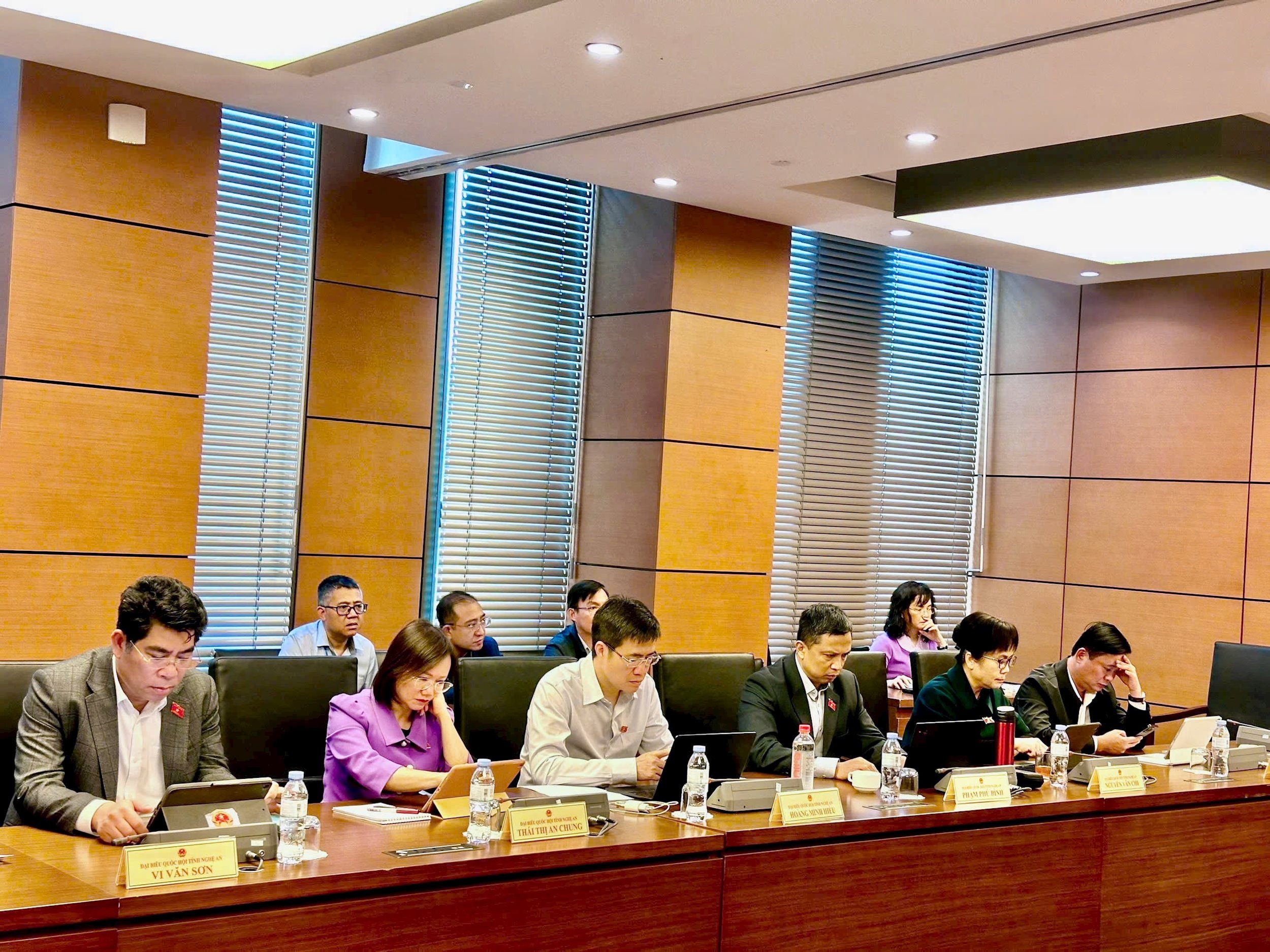
Delegates highly appreciated the drafting committee's inclusion of provisions on the development of green and sustainable e-commerce in Clause 5 of Article 35 and Article 37; which outline the direction of e-commerce development in line with the national green growth strategy, encourage businesses to minimize waste, encourage platforms to apply "green" and "sustainable" labels, and provide financial support mechanisms for environmentally friendly solutions. However, for these regulations to be effectively implemented and create substantial change, further refinement of some content is needed.
Delegates noted that current regulations are still largely directional, primarily focused on encouragement, while the initial investment costs for green solutions such as biodegradable packaging and renewable energy are often high. A purely "encouragement" policy will not be enough to motivate businesses, especially small and medium-sized enterprises, to proactively make the transition. Furthermore, regulations on "green labels" are still vague, lacking a clear legal basis, and do not specify criteria, assessment agencies, or monitoring mechanisms. This could easily lead to businesses arbitrarily affixing labels without ensuring environmental standards, causing confusion for consumers.
Delegates also argued that the draft did not clearly address the circular economy model, especially the reverse logistics system – a crucial element for recovering, sorting, recycling, and reusing packaging and products after use. Sustainable development should not only focus on using green materials but also address the recovery and recycling process, creating a circular economy in production and consumption.
Based on the above practical experience, the delegates proposed that the Drafting Committee research, supplement, and revise Article 37 in the following directions: adding a provision assigning the Government or the Ministry of Industry and Trade to preside over and coordinate with the Ministry of Natural Resources and Environment in developing and promulgating the national criteria for "green e-commerce enterprises," "green products," and "green logistics services"; clearly defining the process and authority for recognizing and monitoring the use of these labels on e-commerce platforms, in order to standardize standards, prevent "green laundering," and protect consumer rights.
Furthermore, it is necessary to concretize support mechanisms into substantive incentive policies, such as tax incentives, green credit, technical support, and trade promotion for businesses that meet the national criteria. When economic benefits are linked to achieving green standards, businesses will have a stronger incentive to invest in transformation.
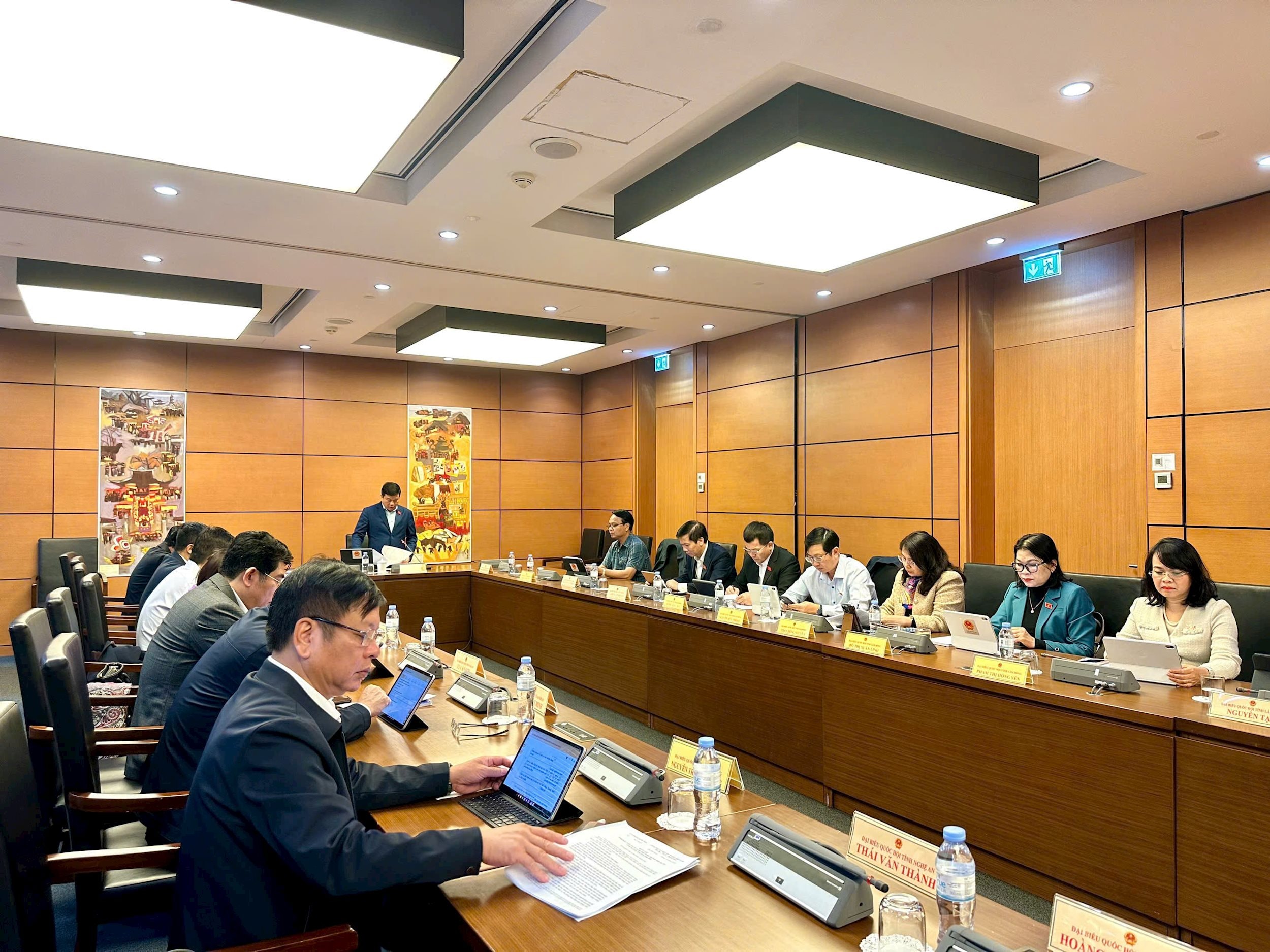
Furthermore, delegates proposed adding regulations to encourage and support e-commerce platforms, sellers, and logistics businesses in designing and operating reverse logistics systems to recover, sort, reuse, and recycle packaging and products after use in e-commerce transactions. This is crucial for promoting a circular economy, reducing emissions and plastic waste, and aligning with national commitments to green growth and net zero emissions.
Representative Thai Thi An Chung affirmed that developing green e-commerce is not only a responsibility to protect the environment but also an urgent requirement to enhance the competitiveness of businesses and the economy in the context of deep international integration, as major markets increasingly tighten environmental standards. "Completing the regulations in Article 37 will create an important legal foundation for the rapid but truly sustainable development of Vietnamese e-commerce," the representative emphasized.
Source: https://daibieunhandan.vn/thuc-day-phat-trien-thuong-mai-dien-tu-xanh-ben-vung-10394188.html

![[Image] Nearly 125,000 Hanoi students completed the Literature exam for the 10th grade entrance exam.](https://vphoto.vietnam.vn/thumb/1200x675/vietnam/resource/IMAGE/2026/05/30/1780117233041_ndo_br_thiet-ke-chua-co-ten-2-png.webp)



































































































Comment (0)