Located in the historically rich land of Tho Xuan, the birthplace of the glorious Lam Son Uprising, the Xuan Pha folk dance in Xuan Pha village, Xuan Truong commune, Tho Xuan district,
Thanh Hoa province, has become an indispensable part of the national cultural heritage. According to researchers, this performance originated during the Dinh Dynasty (968-980) and flourished during the early Le Dynasty. The Xuan Pha folk dance is notable for its five folk dances symbolizing the "Five neighboring nations offering tribute": Hoa Lang (Kingdom of Goryeo), Tu Huan (Luc Hon Nhung), Ai Lao (Thai-Lao people), Ngo Quoc (an ancient Chinese kingdom), and Chiem Thanh (Champa people). Each dance not only showcases artistic technique and aesthetics but also conveys cultural and historical stories through its costumes and movements.
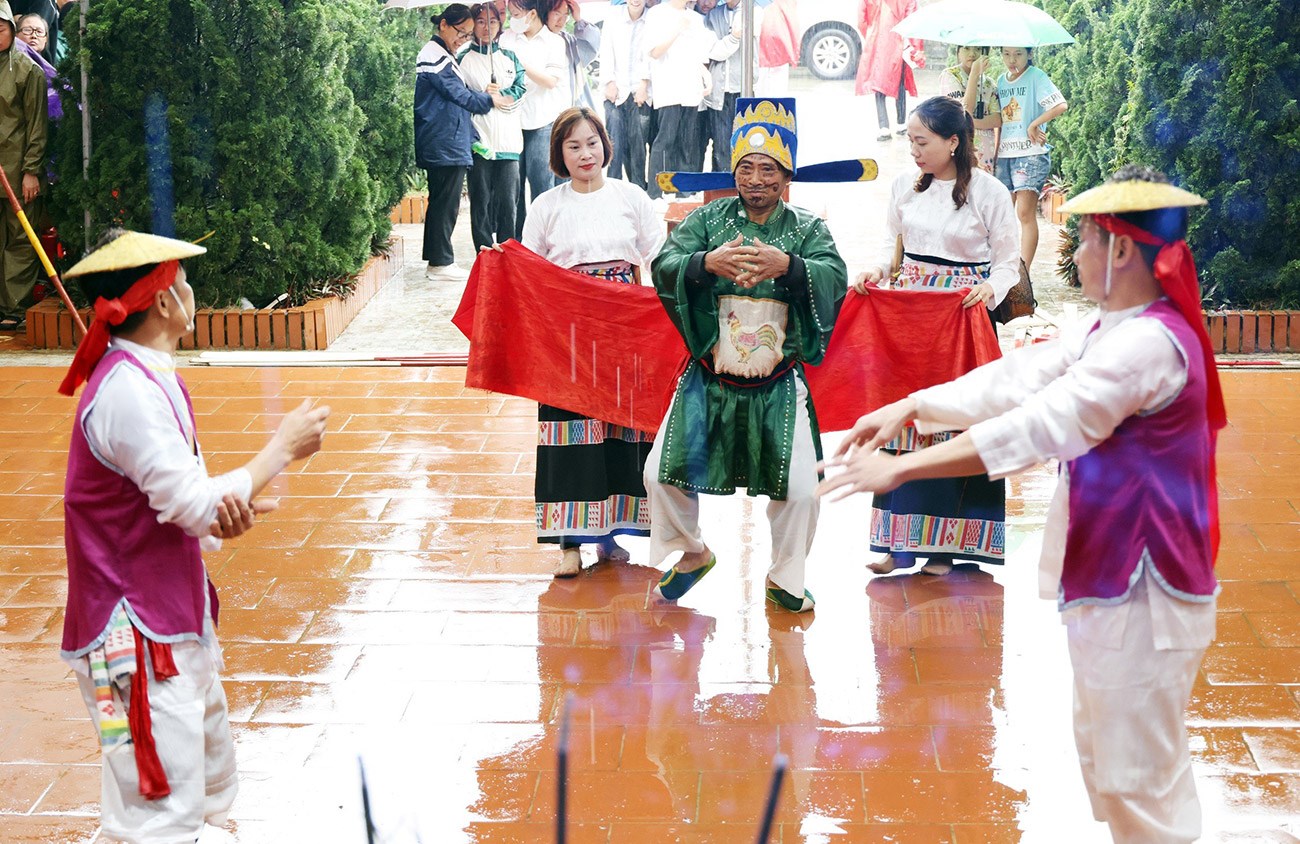 |
Every year, from the 10th to the 12th of February in the lunar calendar, the Xuan Pha performance is recreated at the Xuan Pha Temple, becoming a unique festival of the Tho Xuan region. Village artisans take turns performing various dances, from the mysterious and magnificent Champa dance, the witty Tu Huan dance, to the graceful and powerful Ai Lao dance. Considered the pinnacle of the fusion of court dance and folk performing arts, the Xuan Pha performance vividly portrays the aesthetics and creative spirit of the Vietnamese people. For thousands of years, this heritage has retained its appeal and continues to be a distinctive cultural symbol of the nation. The Xuan Pha performance is imbued with the artistic imprint of a blend of court and folk performing arts in Vietnam. The unique dances are both subtly symbolic and exude a mysterious and vibrant beauty, deeply reflecting the aesthetic concepts of the nation, while simultaneously expressing the simple and creative soul of the farmers.
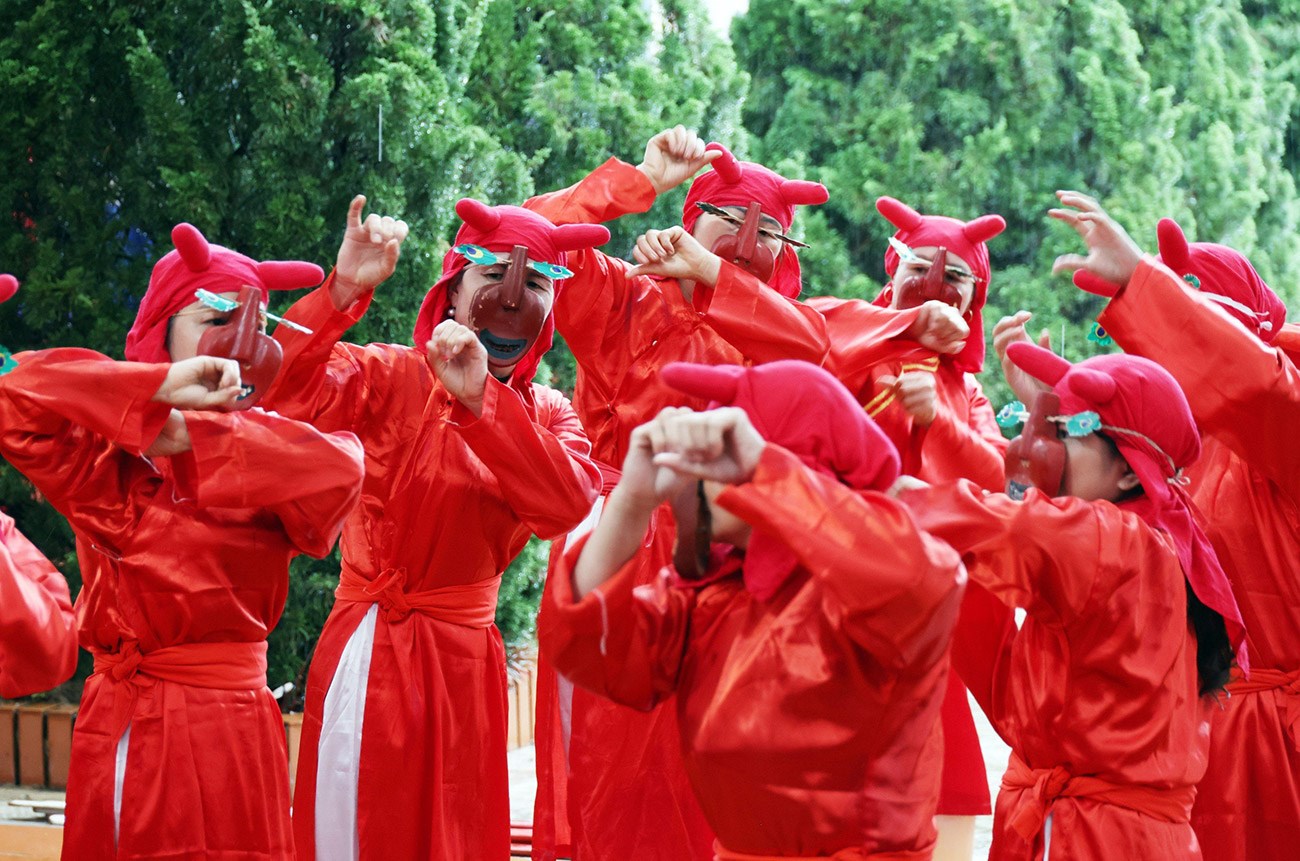 |
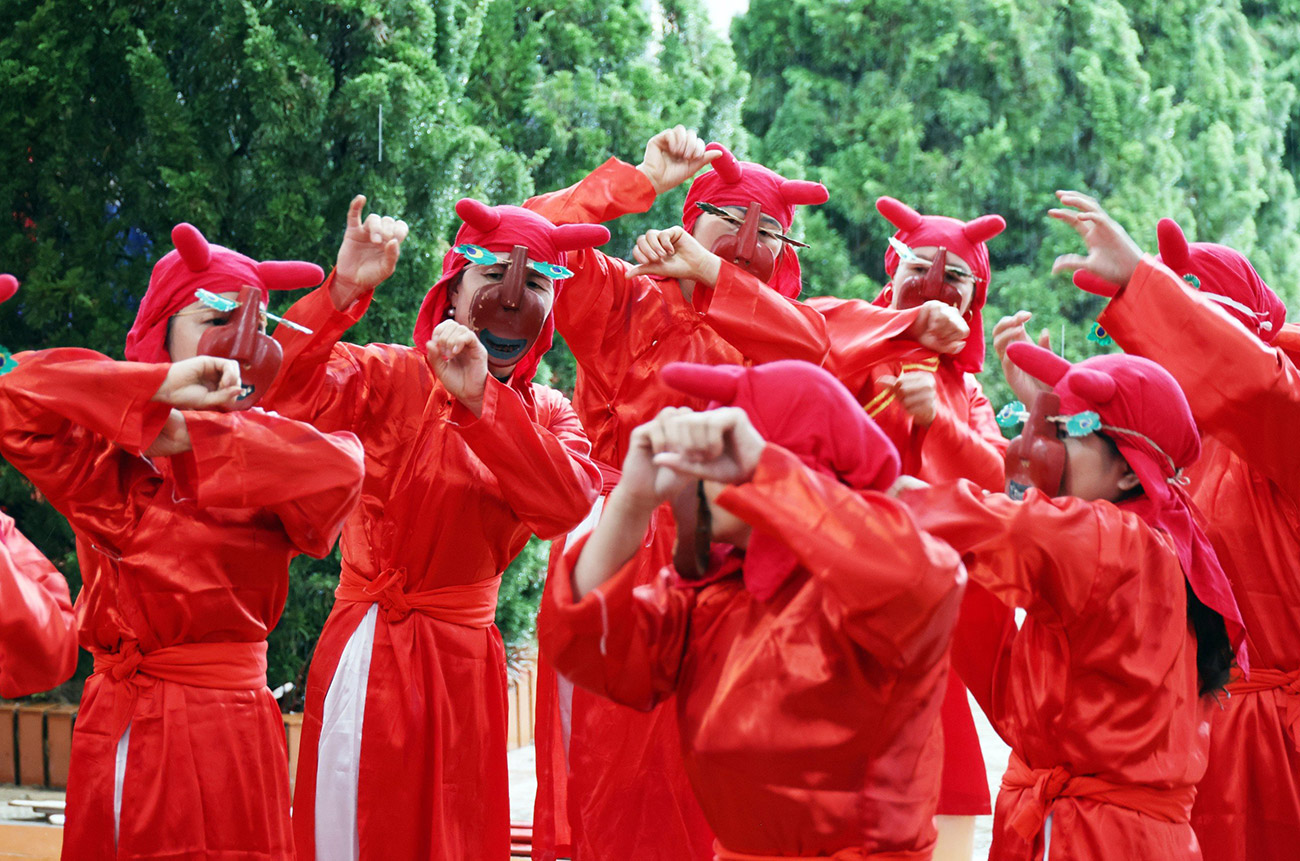
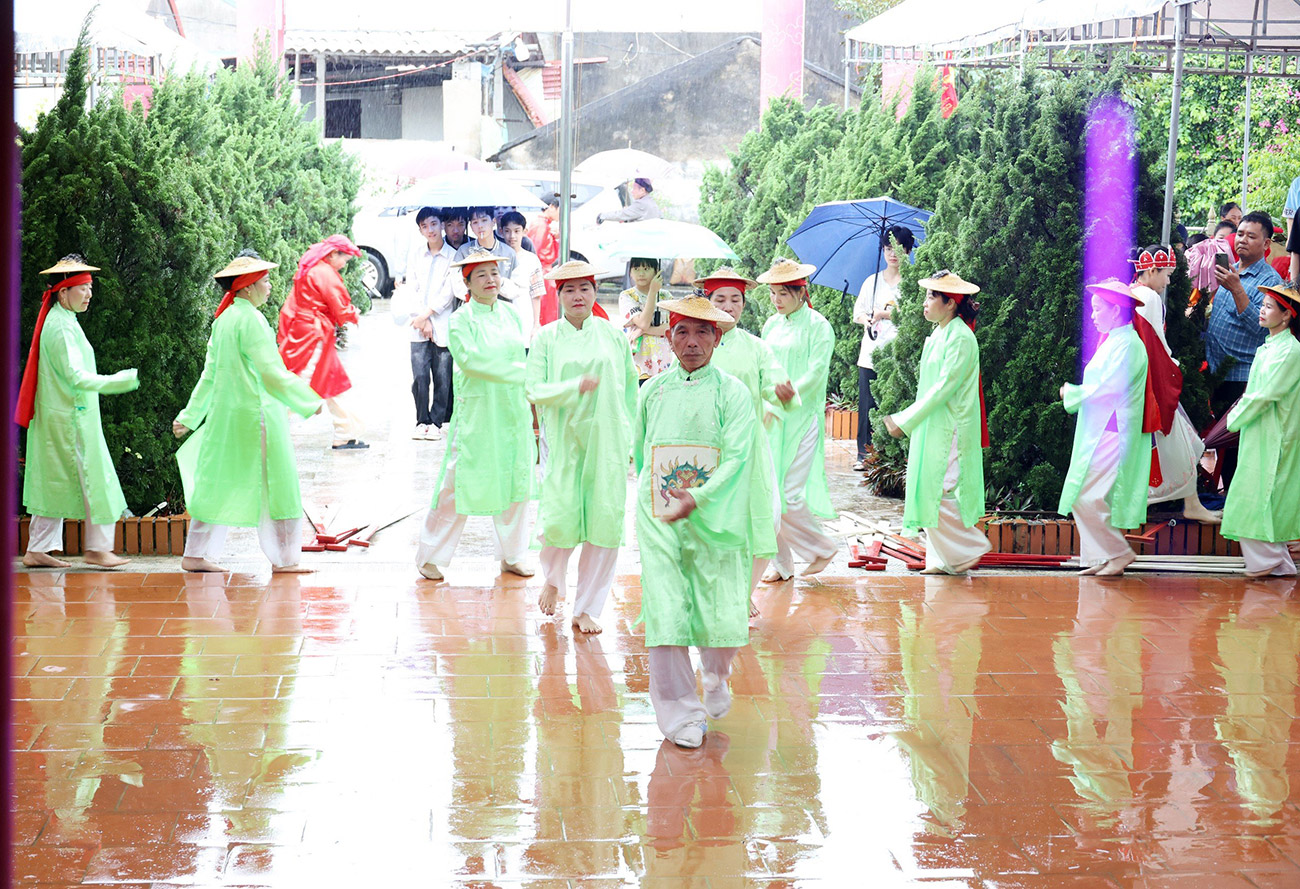
The artisans of Doai village, Xuan Truong commune (Tho Xuan district, Thanh Hoa province) recreated the Champa folk performance with vivid and distinctive imagery. The lord's costume was made from red-pink dyed silk, and the soldiers' robes were crafted from beans; all were meticulously designed. The lord and his army wore red square headscarves and robes with slanted collars, creating an imposing and magnificent appearance.
During the dance, the deity solemnly recites a eulogy, two statues respectfully offer incense, and the dance is performed in harmony with the army wearing strangely shaped wooden masks. The dance movements are reminiscent of the postures of ancient statues, a characteristic feature of Champa culture.
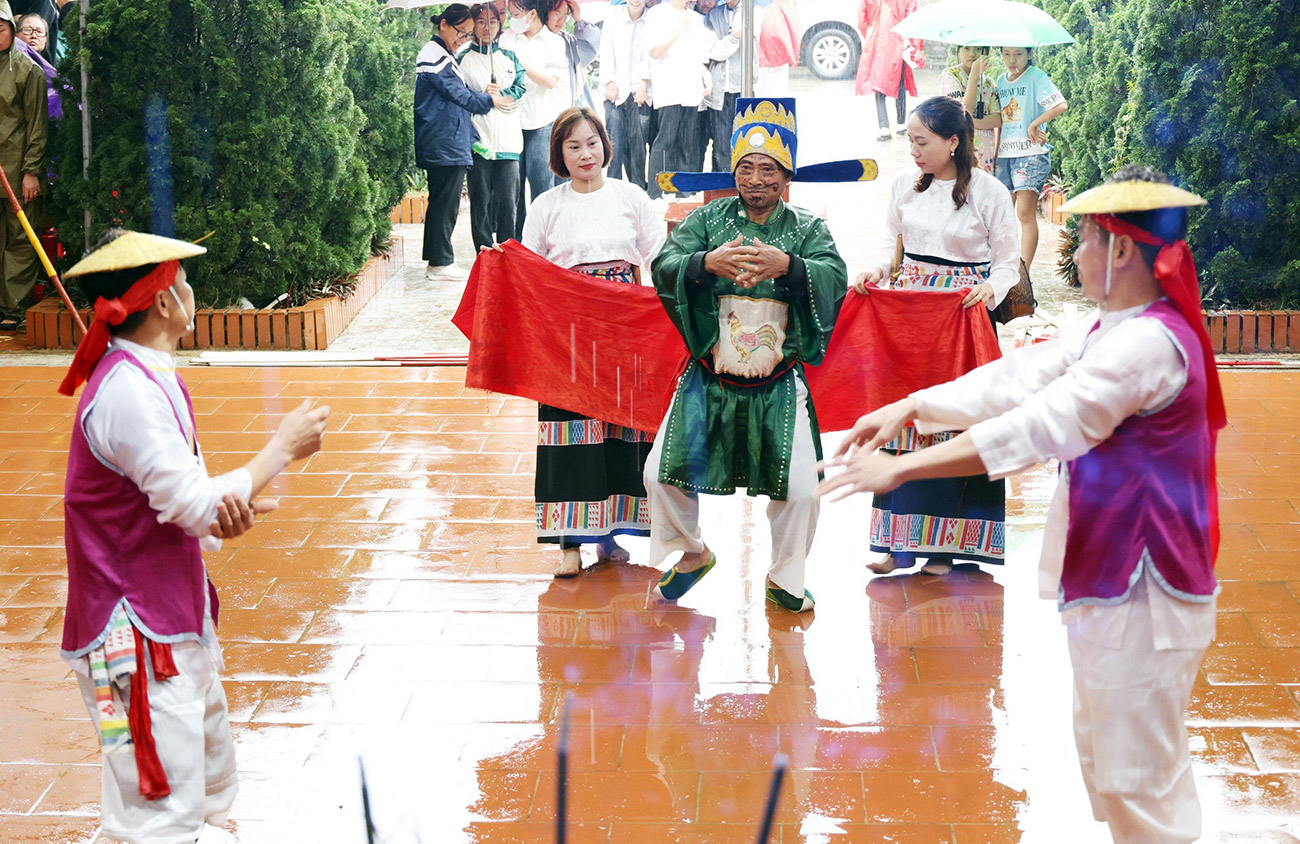
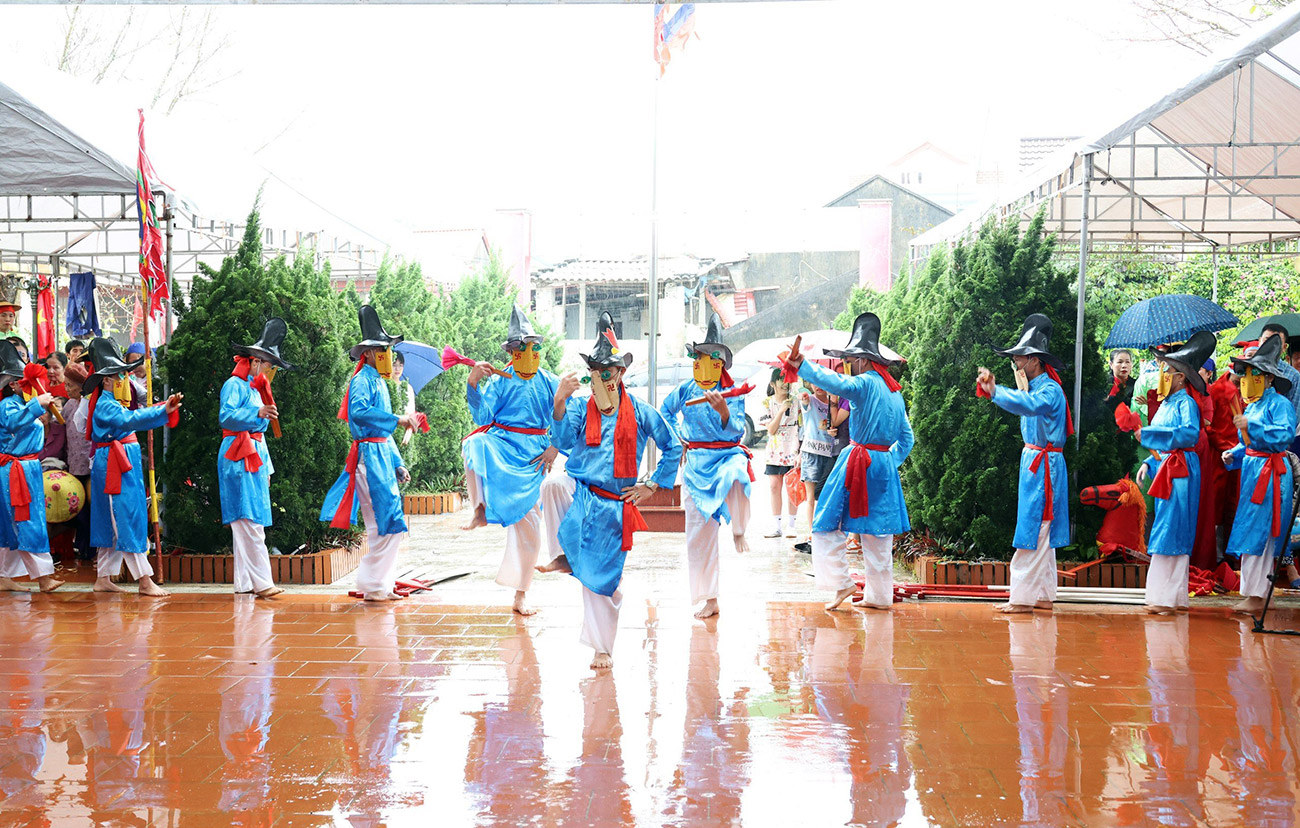
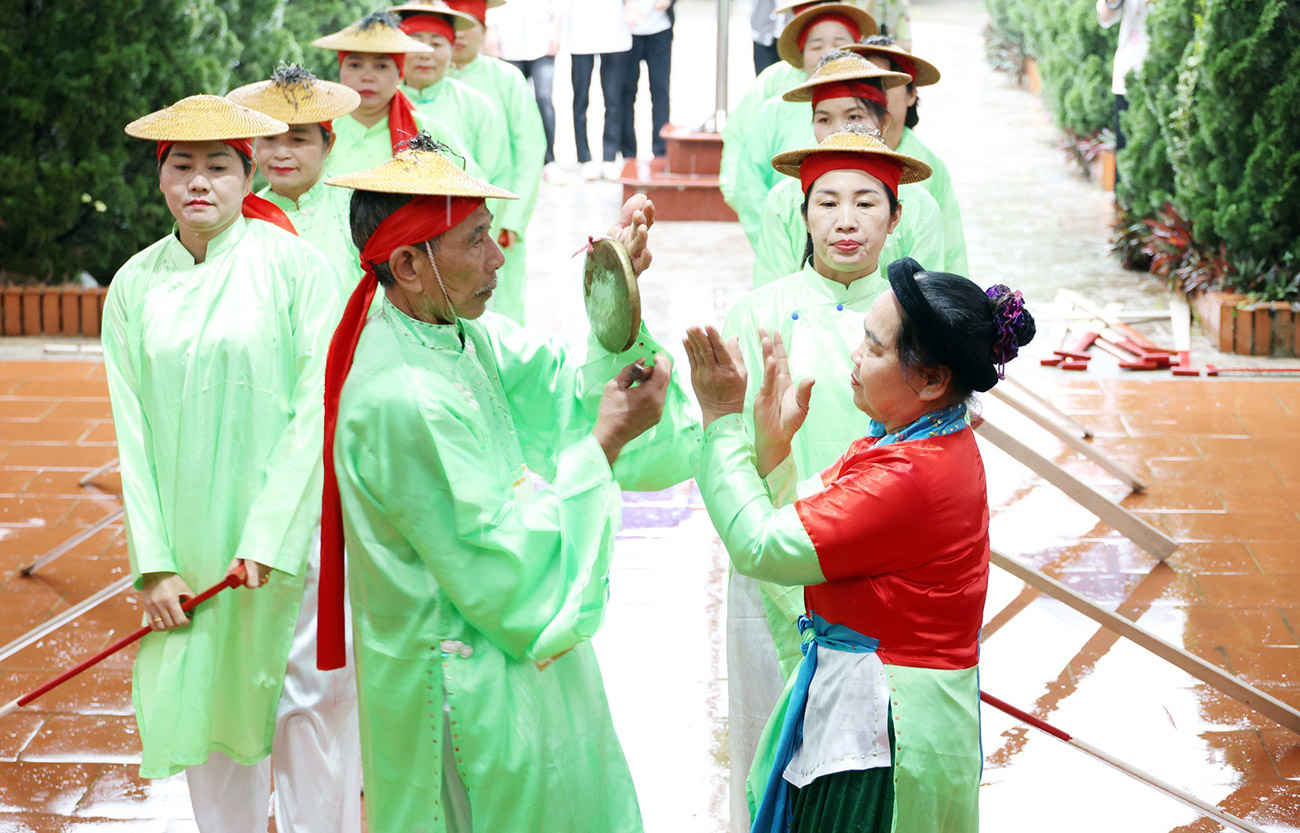
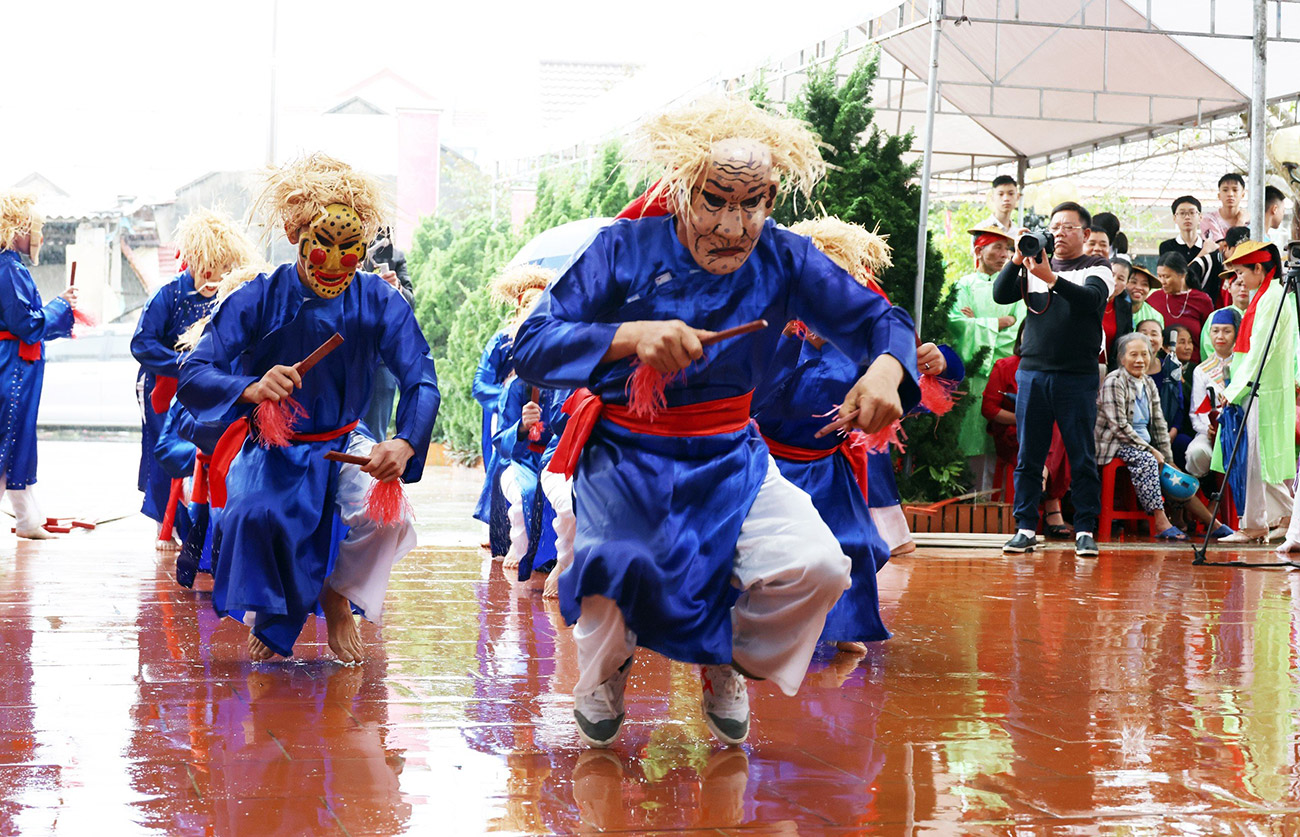
The artisans of Thuong village, Xuan Truong commune (Tho Xuan district - Thanh Hoa province) presented a vibrant performance through the Hoa Lang folk play. The performance featured characters such as the grandfather, grandson, grandmother, and ten soldiers, each dressed in distinctive costumes.
The costumes of the characters performing the Hoa Lang folk dance include long robes, tall hats made of cowhide, a fan in their left hand, and an oar in their right. Notably, the characters wear cowhide masks painted white, with peacock feathers for eyes. The lord's hat is intricately carved with a dragon, while the soldiers' hats feature moon motifs, creating an imposing and distinctly traditional cultural appearance.
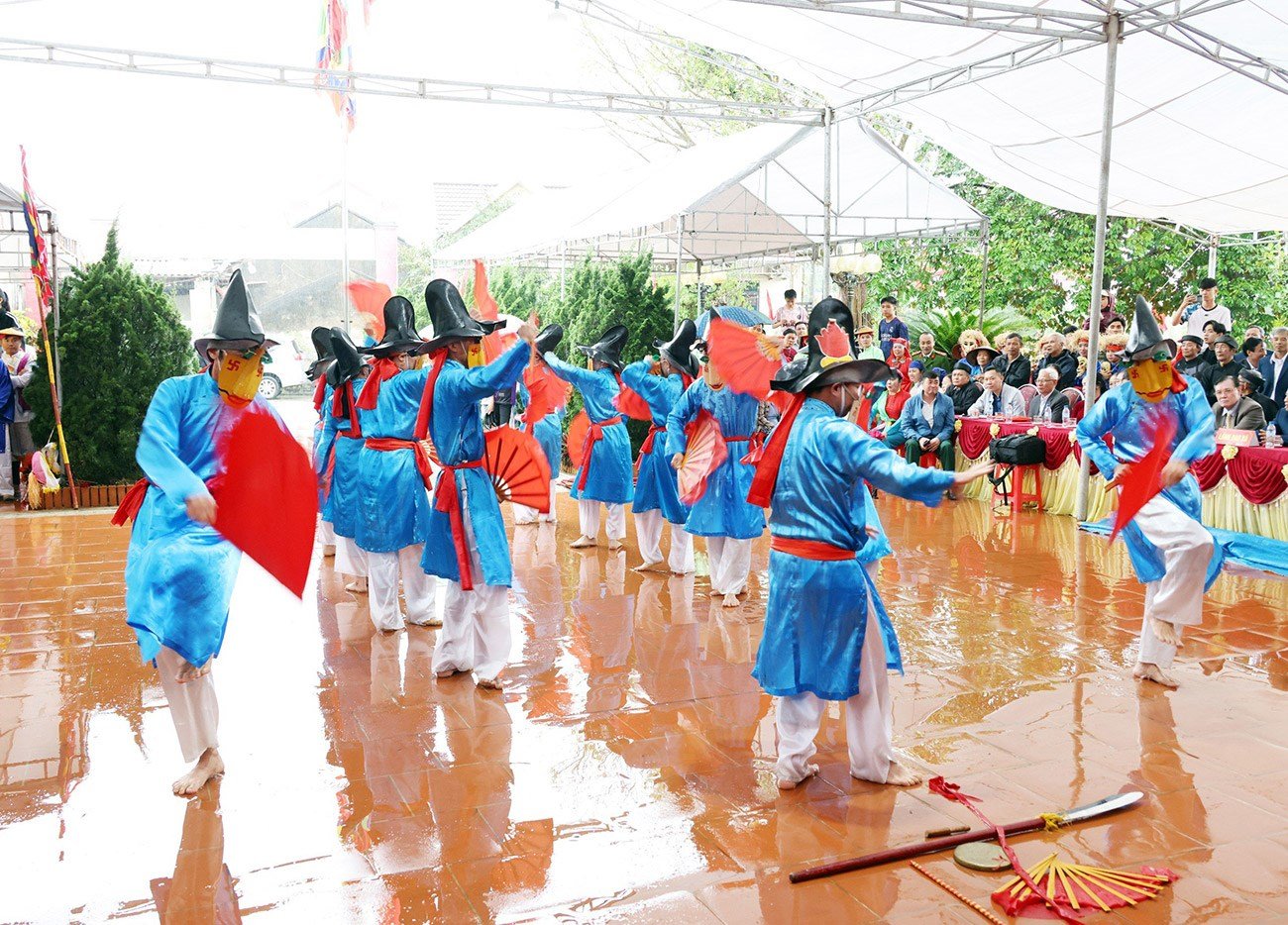 |
| The artists perform the Hoa Lang folk dance. |
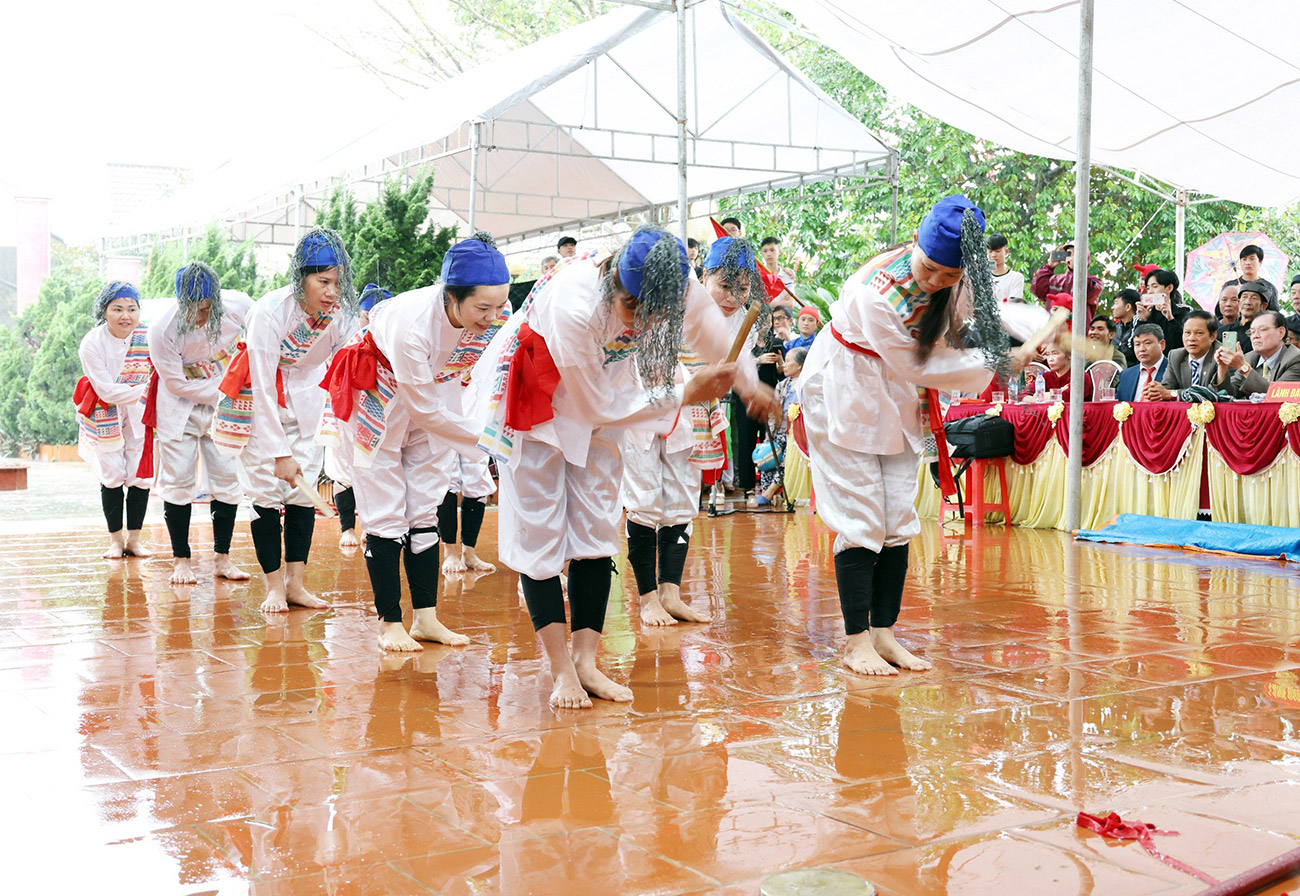
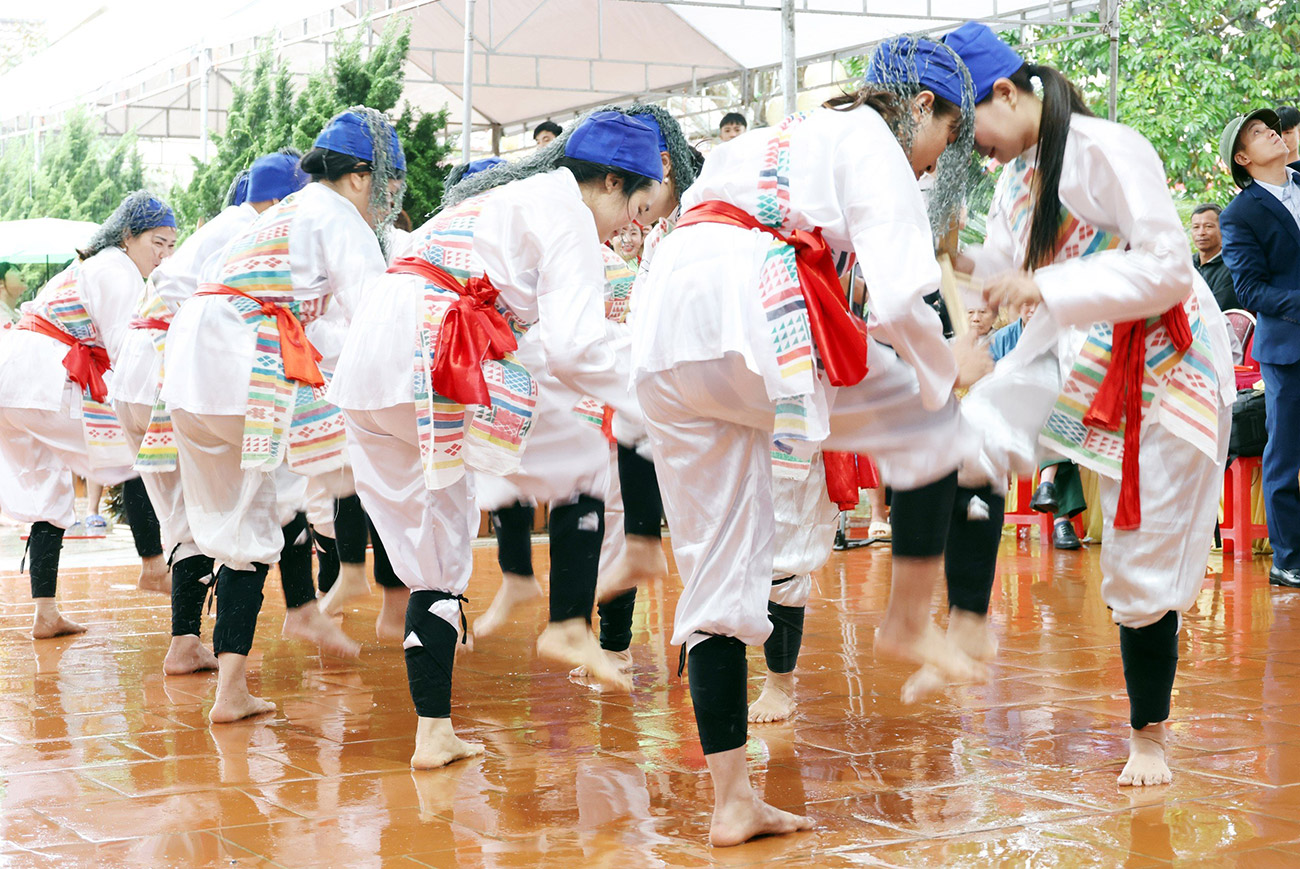
According to artisans in Xuan Truong commune, each of the five Xuan Pha folk performances has its own distinctive costumes. For the Hoa Lang performance, the performers wear navy blue robes. The Chiem Thanh performance features predominantly red costumes. Meanwhile, the Luc Hon performance is performed with indigo blue robes. The Ngo Quoc performance has sky-blue costumes, while the Ai Lao performance is unique with long trousers, a white blouse, indigo blue leggings, and a Lao-patterned brocade sash draped diagonally from the right shoulder to the left hip, creating a distinct beauty for each performance.
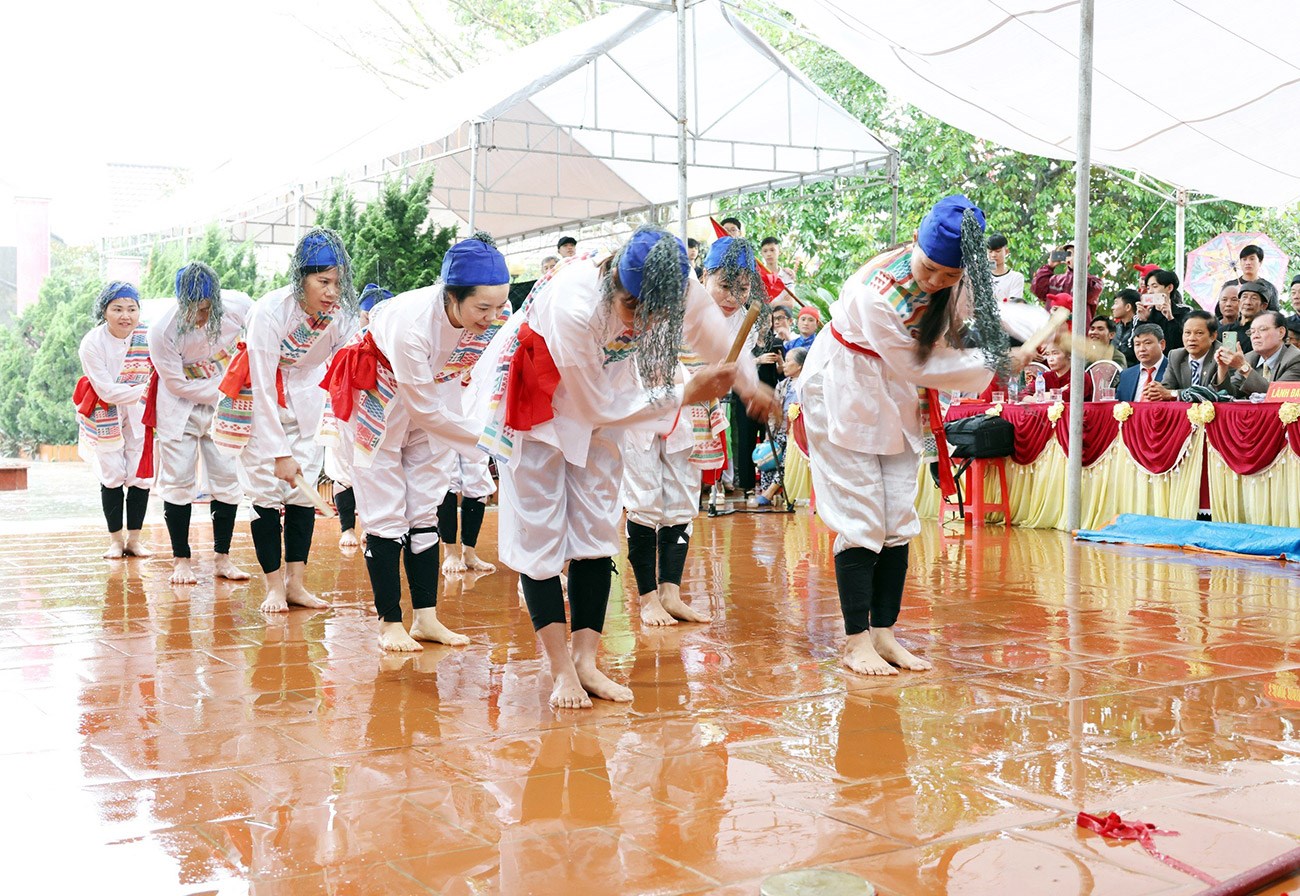 |
| The story of Ai Lao. |
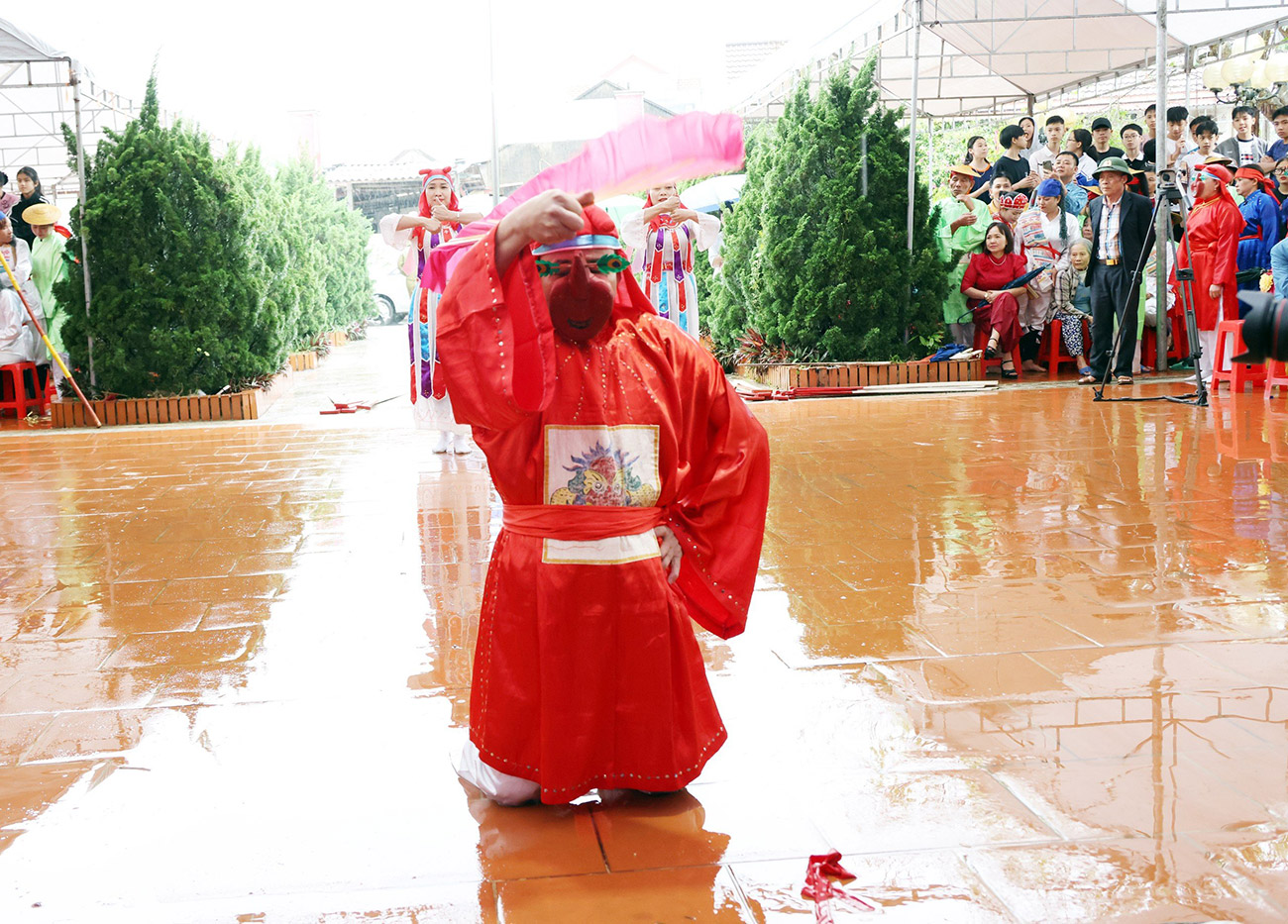
The Ai Lao dance is performed vividly and captivatingly by artisans from Yen village, Xuan Truong commune (Tho Xuan district, Thanh Hoa province). The performance includes ten soldiers along with elephants and tigers, all harmonizing to the lively sound of continuously striking bamboo cymbals. The dance movements not only symbolize the strength of hunting but also demonstrate graceful, fluid, and artistic movements.
In the dance, the lord wears a dragonfly-winged hat and a robe, exuding an air of majesty. The soldiers wear hats made from fig tree roots, wrap sashes around their shoulders, wear leg coverings, and carry bamboo spears. They line up in two rows, performing movements that mimic hunting and gathering, vividly recreating the distinctive and rich culture of this region.
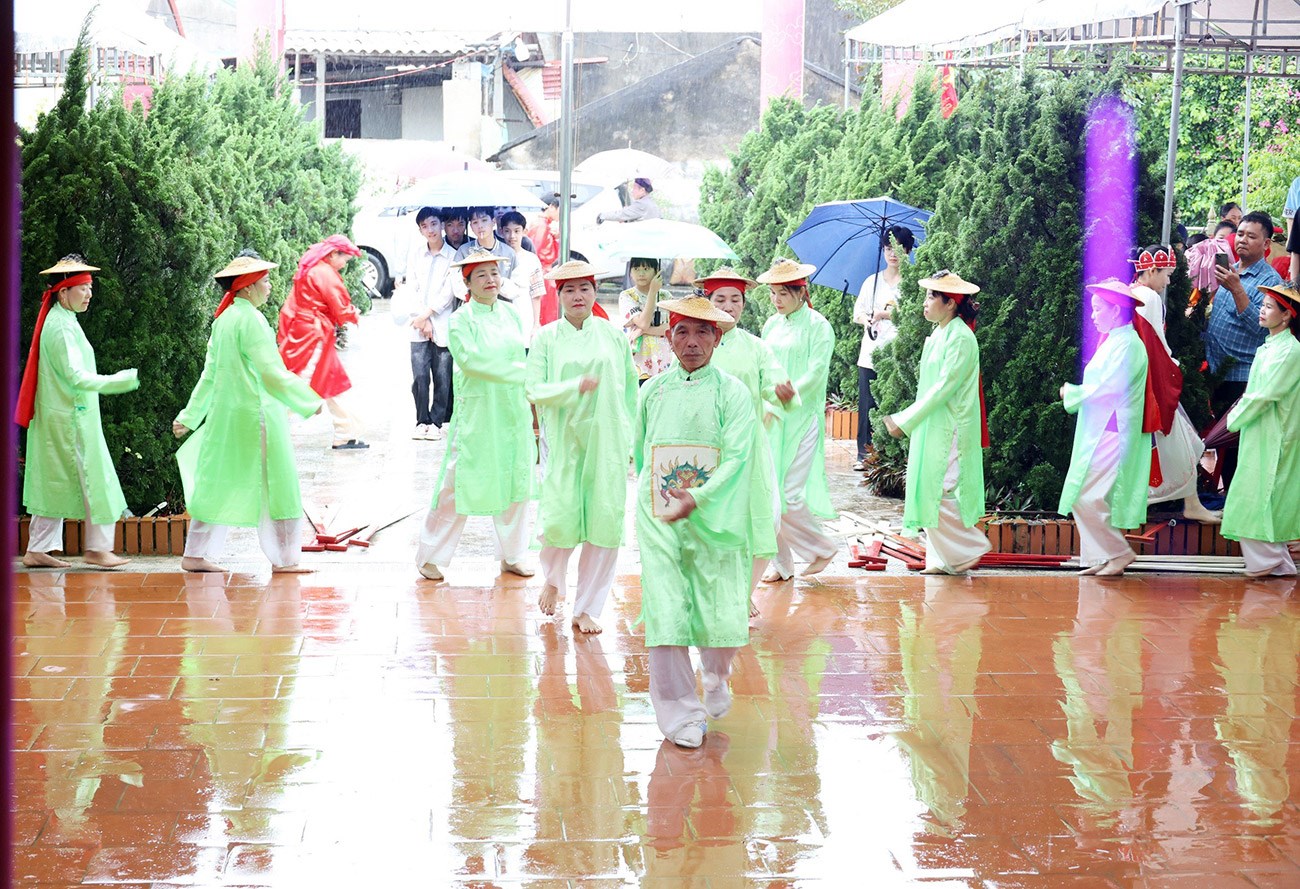 |
| The Ngo Quoc folk dance. |
The artisans of Dong village, Xuan Truong commune (Tho Xuan district, Thanh Hoa province) recreate the Ngo Quoc folk performance with captivating artistry. The performance features two fairies, a princess, and ten soldiers, all wearing soldier's hats and blue robes, and carrying oars. The opening is led by supporting characters such as a medicine seller, a candy seller, and a geomancer, each performing a lively, impromptu dance. Afterward, the stage gives way to the fairies, the princess, and the army, creating a solemn and colorful atmosphere.
The Ngo Quoc performance concludes with a boat-rowing dance accompanied by lyrical and poignant songs:
"The wind blows gently, the sails sail out to sea / He returns to the North, I remain in An Nam / Wherever it rains, lightning follows / Rain passes over Lang Son, lightning flashes through the blue clouds." 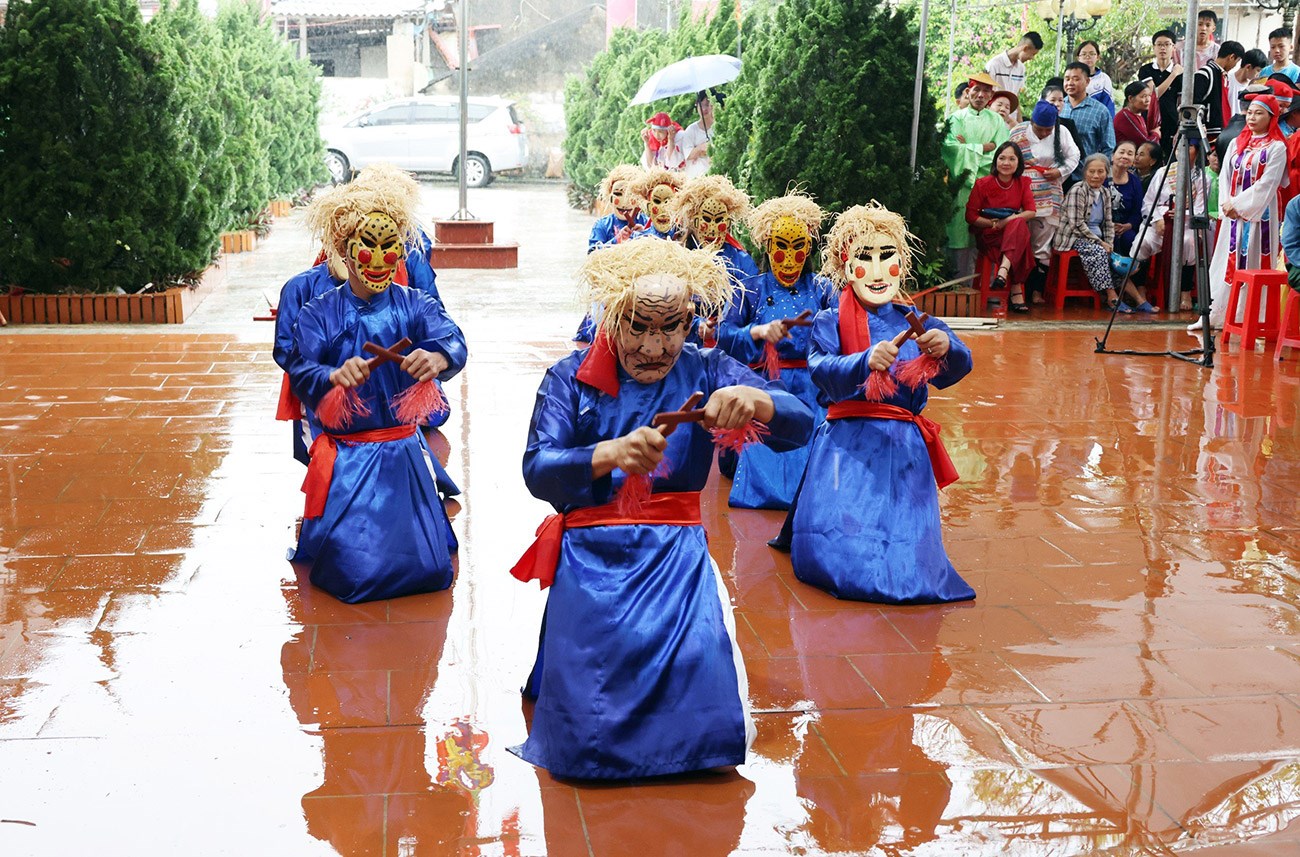 |
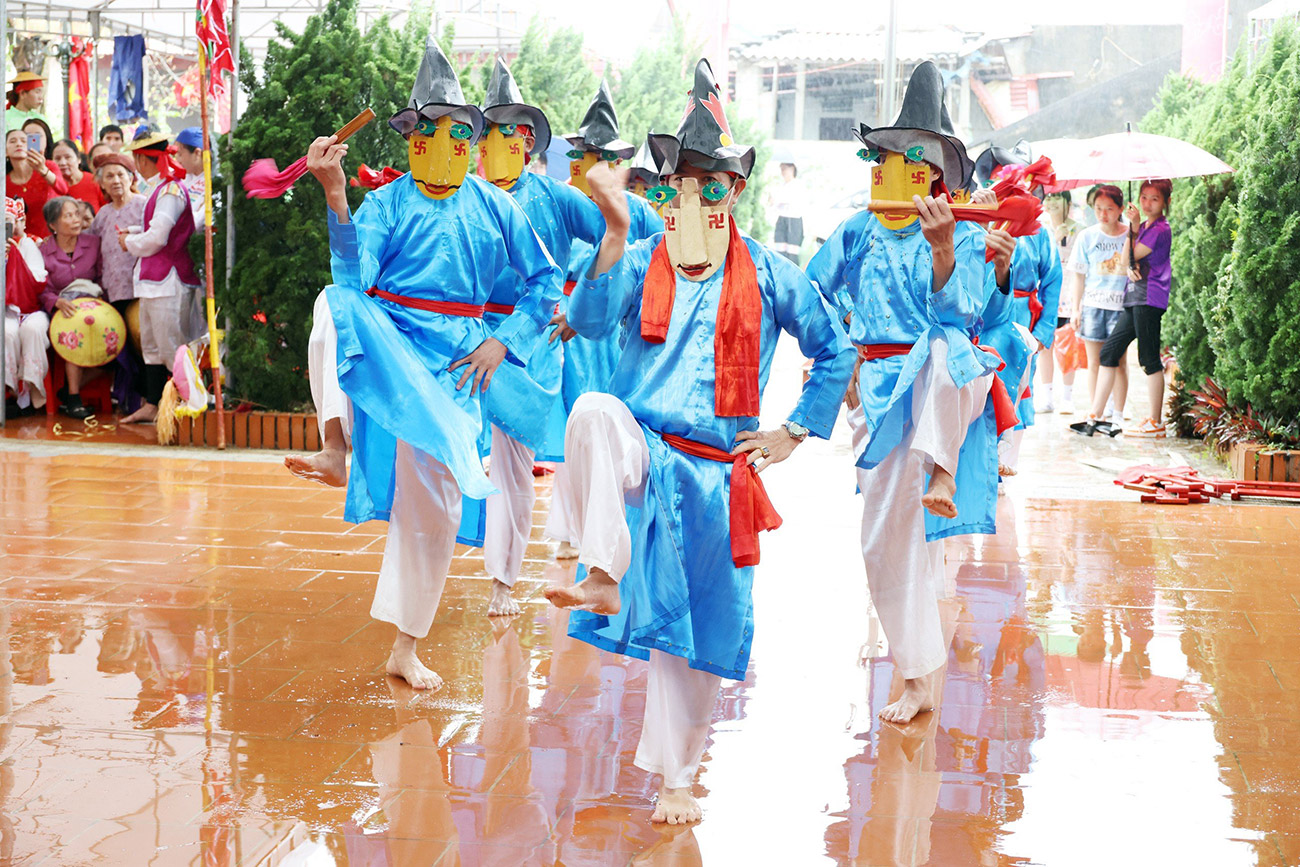
| The artisans of Trung village, Xuan Truong commune (Tho Xuan district - Thanh Hoa province) perform the Tu Huan (Luc Hon Nhung) dance with vibrancy and uniqueness. |
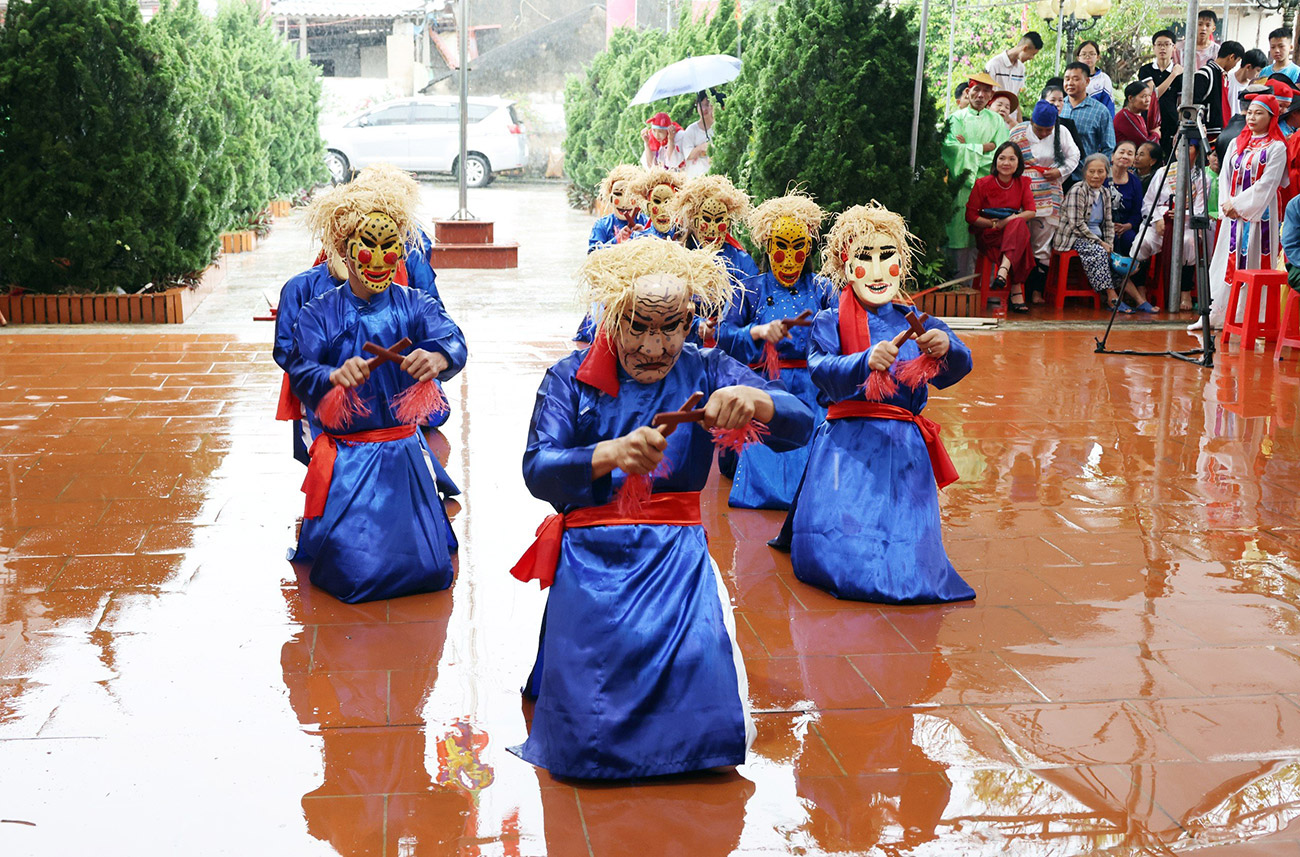
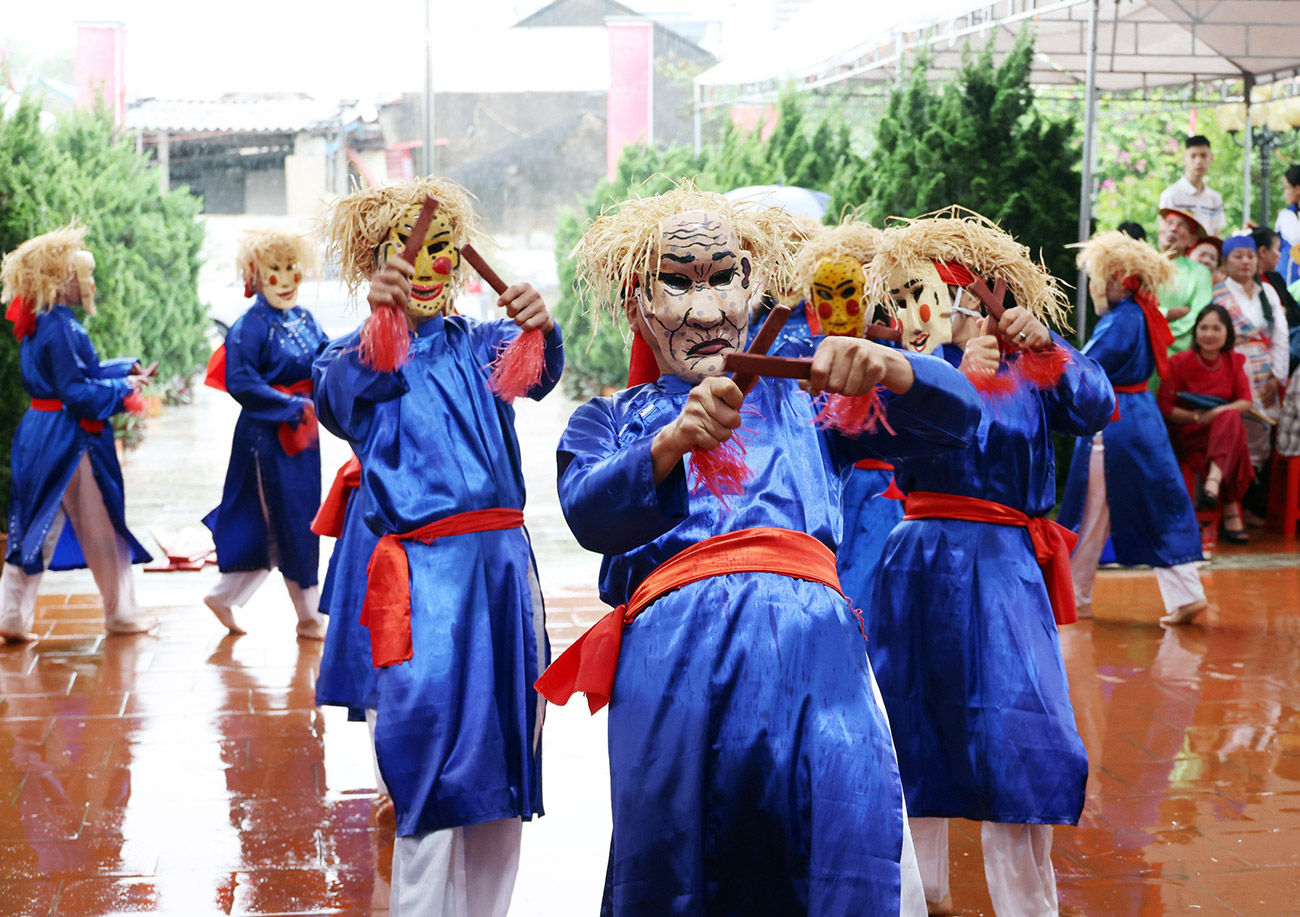
The Tú Huần performance depicts the image of the great-grandmother, mother, and ten children in five pairs, arranged according to age from youngest to oldest, with 1, 2... 5 teeth. They wear inverted woven bamboo hats with bamboo strips representing gray hair, placed over a square red cloth covering the head. Upon hearing the drumbeat, the elderly great-grandmother, accompanied by a servant holding a fan, circles twice around the temple courtyard, bowing in greeting. The mother, playing the cymbals, dances to the rhythm near the altar, kneeling and bowing.
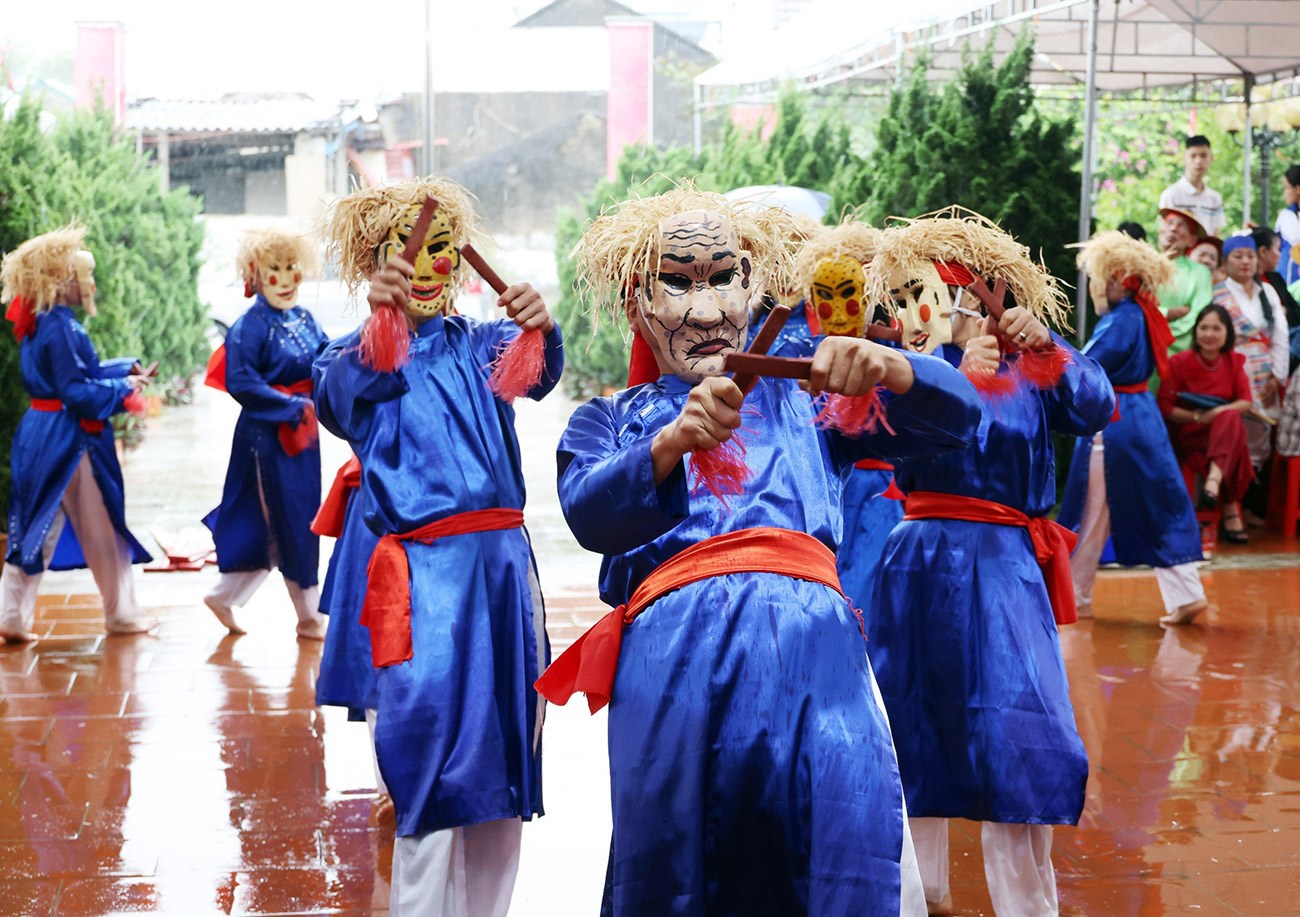 |
To the rhythm of the drums, the ten children performing the Tú Huần play divide into pairs, moving forward and backward alongside their mother as she dances. The mother plays the cymbals, dances to the rhythm near the altar, and simultaneously kneels and bows according to the ritual. The harmonious coordination and profound content of the performance create an emotionally charged spectacle, evoking the unique beauty of the nation's folk culture.
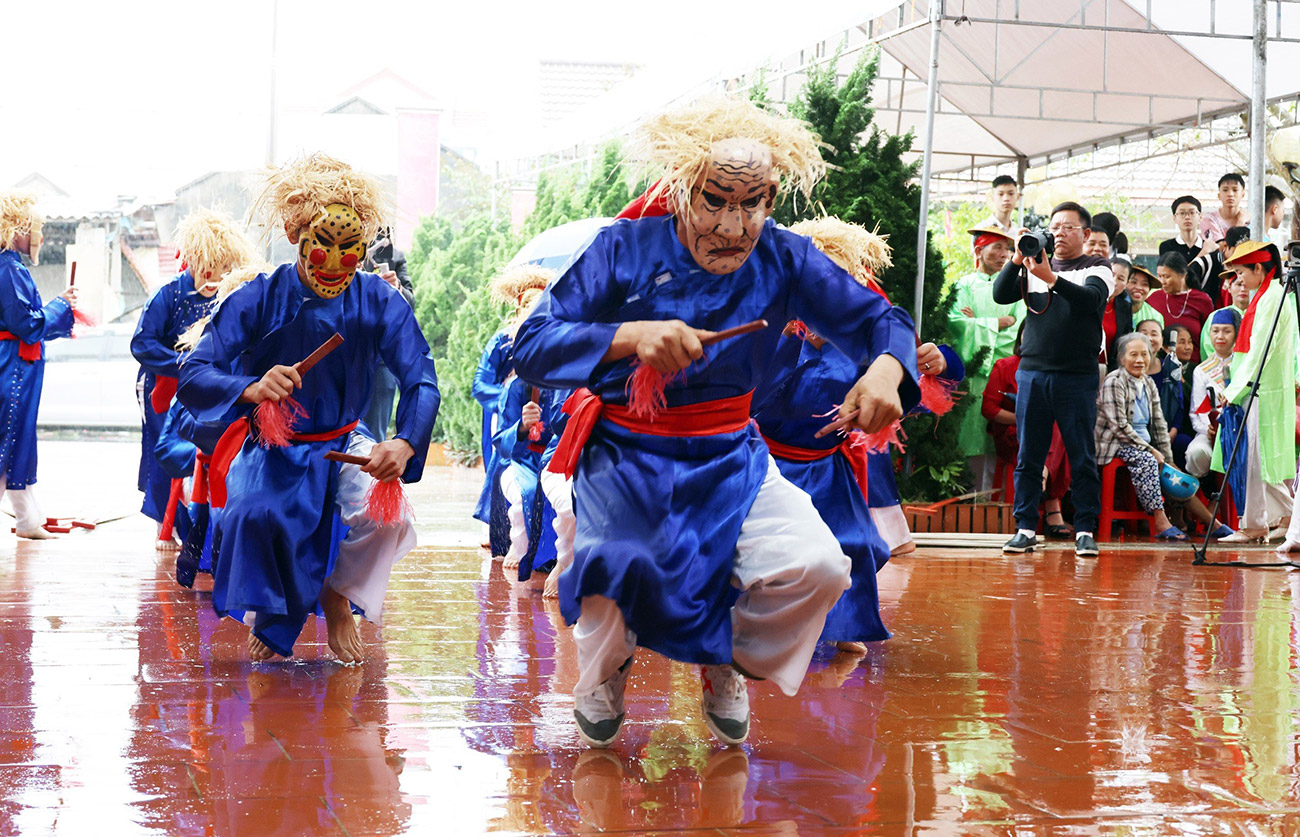 |
| The artists perform the Xuan Pha folk opera. |
The artistic imprint shines brightly through each performance of the Xuan Pha folk dance. The Xuan Pha folk dance is not just a form of performance art, but also a masterpiece, a convergence of the solemnity of court dance and the rustic, free-spirited nature of folk dance. It is the culmination of creative talent, national pride, and historical depth, offering a unique appeal that transcends the boundaries of space and time.
Each dance in the Xuan Pha performance is like a vibrant painting, recreating the diverse
diplomatic and cultural exchanges between Dai Co Viet and neighboring countries. More than just simple artistic movements, the performances convey stories of solidarity, harmony, and cultural exchange, showcasing the intelligence and talent of the Vietnamese people. With lively music, elaborate costumes, and graceful dance movements, Xuan Pha paints a world that is both solemn and mysterious, yet vibrant and dazzling. Each dance, each sound carries profound layers of meaning, evoking pride and love for the homeland. Therefore, the Xuan Pha performance is not only a precious intangible cultural heritage of Vietnam but also a symbol of the enduring nature of folk art, a treasure worthy of preservation and honor on the world cultural map. Source: https://dangcongsan.vn/multimedia/mega-story/tich-tro-xuan-pha-toa-sang-di-san-van-hoa-xu-thanh-687432.html

 Đảng Cộng Sản•09/01/2025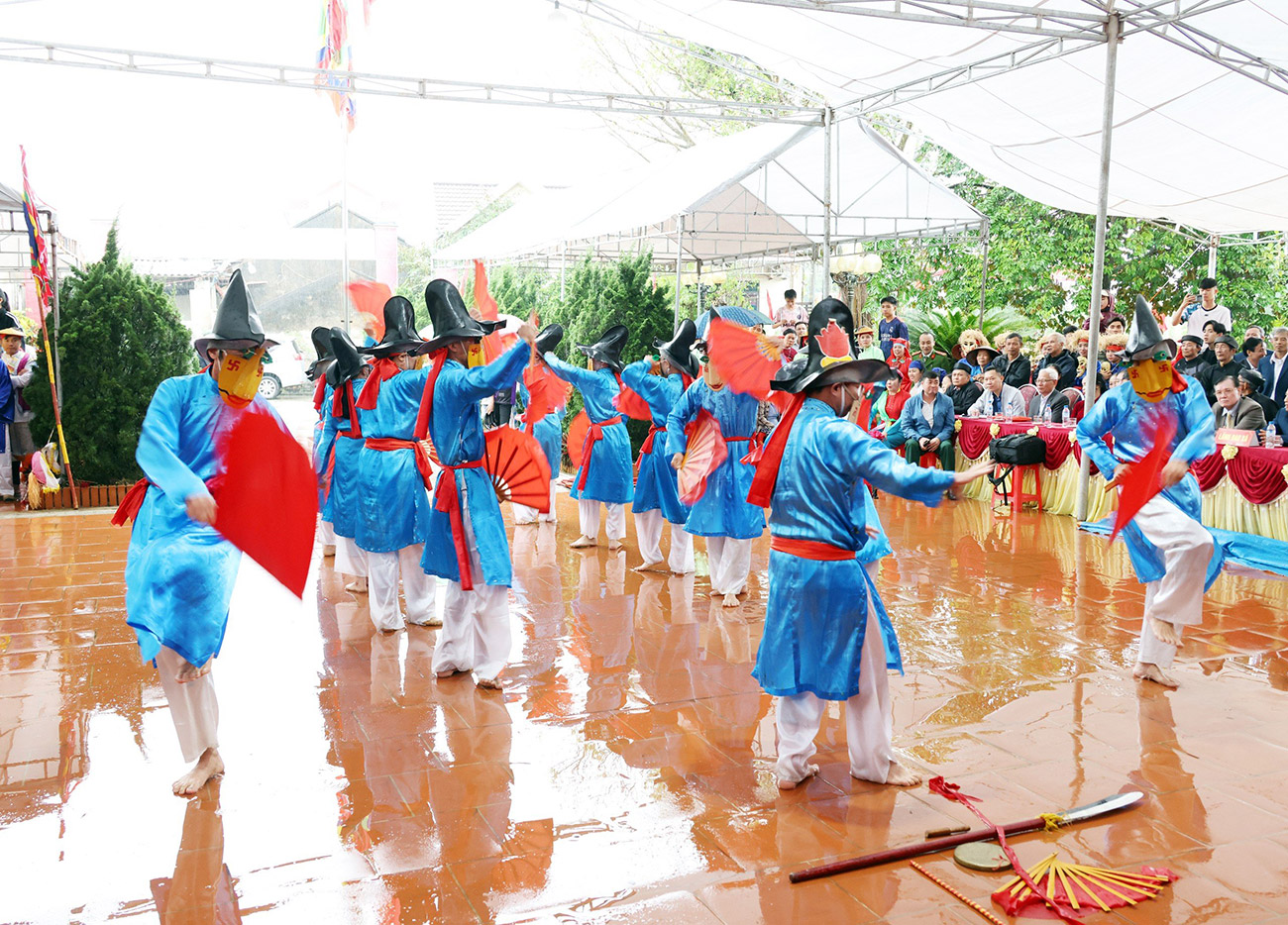
![[Photo] General Secretary and President To Lam presides over a meeting with the Central Organizing Committee.](https://vphoto.vietnam.vn/thumb/1200x675/vietnam/resource/IMAGE/2026/06/03/1780482764658_a1-bnd-4741-3342-jpg.webp)
![[Photo] Secretary of the National Assembly Party Committee, Chairman of the National Assembly presides over the meeting of the Standing Committee and Executive Committee of the National Assembly Party Committee.](https://vphoto.vietnam.vn/thumb/1200x675/vietnam/resource/IMAGE/2026/06/03/1780480353201_ndo_br_bnd-2585-jpg.webp)









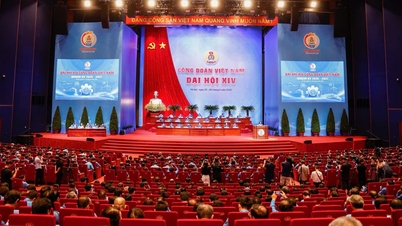
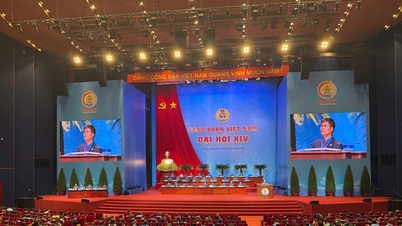
![[Photo] First session of the 14th Congress of the Vietnam Trade Union](https://vphoto.vietnam.vn/thumb/1200x675/vietnam/resource/IMAGE/2026/06/03/1780465947883_ndo_br_img-3852-jpg.webp)









![[Video] Sunset at Lap An Lagoon – Where the sun sets over the fishing nets](https://vphoto.vietnam.vn/thumb/1200x675/vietnam/resource/IMAGE/2026/05/31/1780192137701_beach-landscape-sea-water-nature-grass-745871-pxhere-com.jpeg)





















Comment (0)