

Europe is experiencing a severe early summer heatwave. The UK recorded its highest May temperatures ever, while France activated its national heat warning system for the first time in May since its establishment in 2004.
With heatwaves becoming the "new normal," the demand for cooling has also surged.
In emerging and developing economies , this means an increasing reliance on air conditioning. According to the International Energy Agency (IEA), more than 80% of electricity demand for cooling by 2050 will come from these countries.
However, using air conditioners during peak hours leads to higher electricity consumption, more greenhouse gas emissions, and further heats up urban areas due to the urban heat island effect.

The number of electric cooling devices in homes is rapidly increasing as the world gets warmer. Photo: Euronews.
Demand for air conditioners is surging globally.
The number of electric cooling devices in homes is increasing rapidly. In Europe, the number of air conditioners has more than doubled since 1990. The IEA forecasts that the European Union will have around 130 million air conditioners installed by 2030, and this number could quadruple by 2050.
In Southeast Asia, the number of air conditioners is expected to increase ninefold between 2020 and 2040 if current policies remain unchanged, according to an IEA report for 2025. In Indonesia alone, the percentage of people owning air conditioners is projected to increase from 14% in 2023 to 85% in 2050, primarily due to improved living standards.
The IEA argues that expanding access to cooling systems improves quality of life and reduces the risk of heat-related deaths, but it also creates a range of challenges for the energy system.
During the early summer heatwaves of 2025, France – where air conditioning ownership is still low – recorded evening electricity consumption that was 25% higher than the off-season average. In New York (USA), where air conditioning is much more common, evening electricity consumption increased by as much as 90%.
"These surges in cooling demand could threaten the affordability and stability of the power system, especially if there are no efficient technologies to reduce pressure on the grid," the IEA warned.
Currently, air conditioning emits approximately 1 billion tons of CO2 per year, out of a total of 37 billion tons of global emissions.
Furthermore, refrigerants such as hydrofluorocarbons (HFCs) and hydrochlorofluorocarbons (HCFCs) trap heat in the atmosphere thousands of times more effectively than CO2, contributing to climate change.
According to Clara Camarasa, an IEA expert, air conditioning "can put enormous pressure on the power grid and increase greenhouse gas emissions, thereby exacerbating the climate crisis."
She stated that the rapid increase in cooling demand could lead to the use of inefficient and energy-consuming equipment.
"Air conditioners also often require large amounts of water to operate. Some types use refrigerants that have a very high potential for global warming and are harmful to the ozone layer," she added.
In cities, air conditioning exacerbates the urban heat island effect. These systems cool the inside of buildings by releasing heat into the outside environment, causing the city to retain heat and continue radiating it, especially at night.
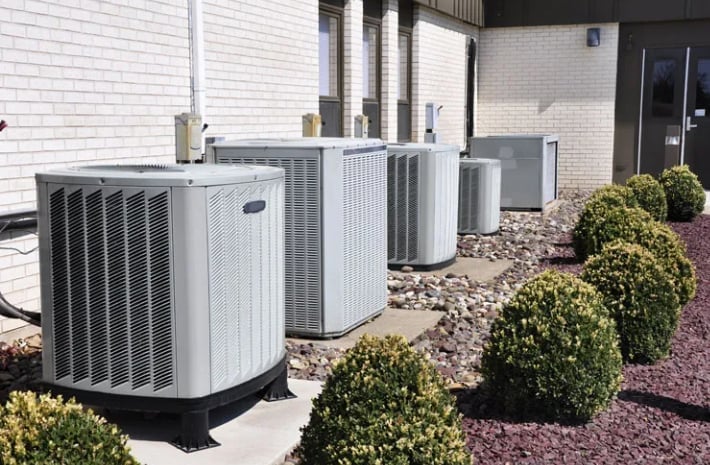
To mitigate the negative impact of increasing cooling demand, the IEA suggests that improving air conditioning efficiency is one of the most important short-term solutions. Photo: Britannica.
Changing how you use your air conditioner can significantly save energy.
To mitigate the negative impacts of increasing cooling demand, the IEA suggests that improving air conditioning efficiency is one of the most important short-term solutions.
Although the market now offers many more energy-efficient air conditioner models, the majority of units currently sold still consume more electricity than optimal levels. Notably, high-efficiency models are not necessarily significantly more expensive.
IEA analysis in Southeast Asia and Latin America shows that, for the same cost, consumers can choose air conditioner models with efficiency ranging from 3 watts/watt (W/W) to over 6 W/W – a difference of up to double the efficiency.
However, upgrading the equipment is only part of the solution. Users can also significantly reduce power consumption by increasing the temperature setting by a few degrees or by using a fan in combination with other methods.
A study on thermal sensation in Singapore showed that participants still felt comfortable, or even more comfortable, when the air conditioner was set to a higher temperature and a fan was used in conjunction with it.
This method of use results in significant energy savings. In a well-insulated building in Singapore, an average-performance air conditioner set at 26°C consumes approximately 30% less electricity than one set at 24°C.
Additionally, people can also consider using air-to-air heat pumps for cooling. These devices work similarly to traditional air conditioners, transferring heat from inside the house to the outside environment.
This means they still contribute to rising outdoor temperatures and could lead to continued increases in cooling demand. However, when used for heating, these systems are more energy-efficient and emit significantly lower emissions.
Smart urban design and buildings
The IEA argues that building design and urban planning play a significant role in controlling cooling demand.
At the building level, measures such as proper insulation and exterior shading can reduce cooling needs by up to 80%. Meanwhile, passive cooling solutions like natural ventilation can help lower indoor temperatures by up to 9°C.
As extreme heat becomes increasingly common, urban redesign is becoming more urgent. During the 2025 heatwave in Paris, nighttime temperatures in an inner-city park were up to 7°C lower than in the surrounding densely built-up area.
Paris has undergone a dramatic transformation over the past two decades to become greener. According to the International Union for Conservation of Nature (IUCN), the city has planted more than 100,000 trees since 2020, including 40,000 planted in the winter of 2023 alone.
"Policymakers need to account for the growing need for cooling with a longer-term and more comprehensive approach, including improving equipment efficiency and integrating cooling elements into building and urban design," the IEA emphasized.
People can also take advantage of air-conditioned public spaces, where many people benefit from a more efficient, centralized cooling system.
Several cities are now building "cooling spots." In Spain, a nationwide network is being rolled out, based on models already in place in Catalonia, the Basque Country, and Murcia. Barcelona alone currently has around 400 cooling spots in libraries, museums, sports centers, and shopping malls.
These spaces are typically equipped with air conditioning, seating, and free drinking water to support vulnerable groups such as the elderly, young children, or those with underlying health conditions – people who are not well-equipped to cope with high temperatures at home.
Source: https://nongnghiepmoitruong.vn/tim-giai-phap-lam-mat-hieu-qua-tiet-kiem-nang-luong-d813809.html







































































































Comment (0)