

To sell carbon credits, you first need to understand the market.
In recent years, carbon credits have been mentioned as a new opportunity to increase the value of forest resources, creating additional resources for forest protection and development. However, according to Mr. Nguyen Trung Thong, a forest carbon expert at the Forest Trends organization, this is a special type of commodity, far different from the simple understanding that simply having a forest means you can sell carbon credits.
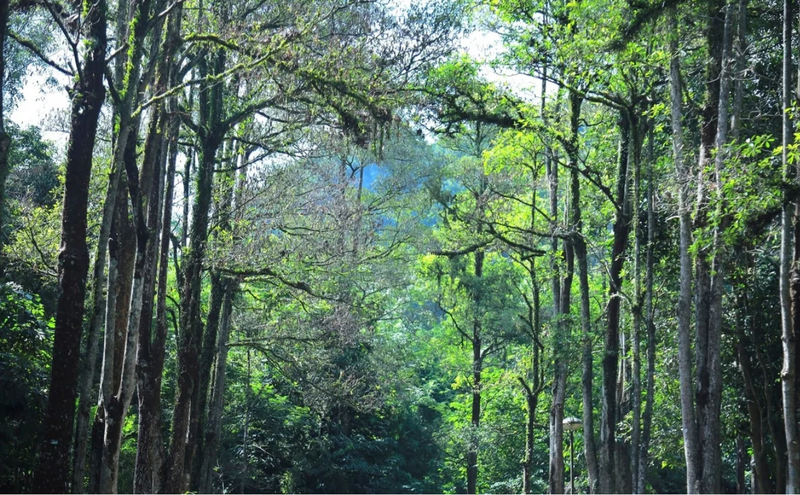
With one of the largest forest areas in the country, Nghe An possesses many advantages to participate in the carbon market. Photo: Viet Khanh
To generate a carbon credit, project owners must go through many stages, from developing the methodology, measuring and inventorying carbon, to appraisal, verification, registration, and issuance according to recognized standards. This entire process requires significant financial resources, technical expertise, and a robust monitoring system.
According to Mr. Thong, a common mistake today is that many localities or forest owners often start by asking how many carbon credits can be generated, while the more important thing is to determine who those credits will be sold to and in which market. “The market is the decisive factor in the success of a carbon project. If the demand and target buyers are not identified from the outset, it is very difficult to build an effective project,” Mr. Thong stated.
In reality, the demand for carbon credits doesn't arise automatically. Buyers are increasingly demanding higher quality credits, transparency, and the environmental and social benefits that a project provides. Therefore, market research, selecting appropriate standards, and identifying the right customer segment should be done right from the project design stage.
Previously, carbon credits were typically valued by sector, such as forestry, renewable energy, or waste treatment. However, this trend has now changed significantly. According to experts, even within the same group of forest carbon credits, there can be vast price discrepancies. The value of a credit depends on the quality of the project, certification standards, applied methodology, level of information transparency, and the ability to demonstrate effective emission reductions.
A project needs to demonstrate not only its ability to absorb or reduce greenhouse gas emissions but also its accompanying benefits, such as biodiversity conservation, livelihood creation for local communities, or improved adaptation to climate change. This is why nature-based solutions (NbS) are receiving increasing attention from international investors. These projects go beyond simply planting or protecting forests; they aim to restore ecosystems, conserve nature, and create sustainable development value for communities.
Trends in the global carbon market are also changing. Instead of simply purchasing issued credits, many businesses and investors are willing to participate from the early stages through pre-purchase agreements or long-term investments to secure a future supply of high-quality credits. This opens opportunities for forest carbon projects in Vietnam but also places higher demands on management capacity, data transparency, and the ability to meet international standards.
A great opportunity, but generating immediate income isn't easy.
Answering questions about the practical implementation of the forest carbon credit market in Vietnam, Dr. Nguyen Sy Linh, Head of the Climate Change Department, Institute for Agricultural and Environmental Policy and Strategy (ISPAE), stated that Vietnam is still in the early stages of market formation. Although carbon credits from nature-based solutions have been widely traded in many countries, Vietnam has yet to have any forest carbon projects successfully registered, issued, and traded according to independent international standards such as Verra or Gold Standard.
The emission reduction program in the North Central region, in cooperation with the World Bank, is currently the most prominent model. However, this is primarily a payment mechanism based on emission reduction results, and is not entirely equivalent to the forest carbon credit model issued and traded on the international voluntary carbon market.
According to Dr. Nguyen Sy Linh, the fact that Vietnam does not yet have a forest carbon project that publishes according to international standards is both a challenge and an opportunity. The challenge lies in the lack of practical experience, but at the same time, it opens up opportunities for localities, businesses, and forest owners to pioneer participation in the market in the initial stage.
To create a legal framework for this sector, the Government has issued Decree 180/2026/ND-CP on the development and management of forest carbon. This is considered an important step towards shaping the legal framework for the registration, verification, and trading of forest carbon credits in the future. However, according to experts, many technical guidelines and implementation procedures are still being refined. Therefore, forest owners and investors need to closely monitor the new regulations to be fully prepared before participating in the market.
Alongside the development of a carbon credit market, Vietnam is also piloting an Emissions Trading System (ETS). Under current regulations, businesses subject to emission management can choose to reduce emissions themselves, buy and sell quotas, or use eligible carbon credits to offset part of their compliance obligations. This is expected to create additional demand for carbon credits domestically. However, experts believe that actual demand will depend on the cost considerations of each individual business.
Businesses will weigh the options of investing in emission reduction technologies, purchasing emission quotas from other entities, or buying carbon credits to choose the lowest-cost solution. Therefore, the demand for carbon credits remains market-driven and does not always increase as expected. Furthermore, the domestic supply of carbon credits is currently very limited. Businesses find it difficult to determine the appropriate source, volume, and price for their purchases. This is considered one of the major challenges in the pilot phase of the carbon market in Vietnam.
Experts believe that the carbon market will certainly create more opportunities for the forestry industry and localities with large forest areas. However, carbon credits are not a "gold mine" that can be easily exploited. To turn potential into real revenue, projects need to be well-prepared from the legal and technical aspects to market strategy.
In the context of increasingly stringent international standards, projects that are high-quality, transparent, and create sustainable value for the environment and local communities will have the advantage.
Source: https://congthuong.vn/tin-chi-carbon-rung-co-hoi-lon-nhung-khong-de-thu-loi-459627.html


![[Photo] Secretary of the National Assembly Party Committee, Chairman of the National Assembly presides over the meeting of the Standing Committee and Executive Committee of the National Assembly Party Committee.](https://vphoto.vietnam.vn/thumb/1200x675/vietnam/resource/IMAGE/2026/06/03/1780480353201_ndo_br_bnd-2585-jpg.webp)


![[Photo] First session of the 14th Congress of the Vietnam Trade Union](https://vphoto.vietnam.vn/thumb/1200x675/vietnam/resource/IMAGE/2026/06/03/1780465947883_ndo_br_img-3852-jpg.webp)


















































![[Video] Sunset at Lap An Lagoon – Where the sun sets over the fishing nets](https://vphoto.vietnam.vn/thumb/1200x675/vietnam/resource/IMAGE/2026/05/31/1780192137701_beach-landscape-sea-water-nature-grass-745871-pxhere-com.jpeg)




































Comment (0)