

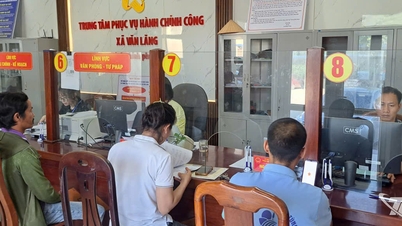
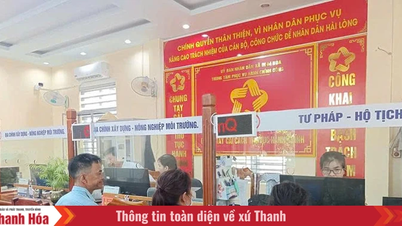
After a year of urgent and decisive implementation of the Central and Provincial Party Committee's policies on restructuring and streamlining the administrative apparatus, the two-tiered local government in Dong Thap has overcome the initial difficulties of the transition period. The new apparatus has quickly adapted, demonstrating stability, smooth operation, and prioritizing service to the people and businesses.
WHEN THE MIND IS CLEAR, THE SYSTEM FUNCTIONS.
Any organizational "reform" inevitably leads to certain psychological and human disruptions. The transition to a two-tiered local government model in Dong Thap is no exception.
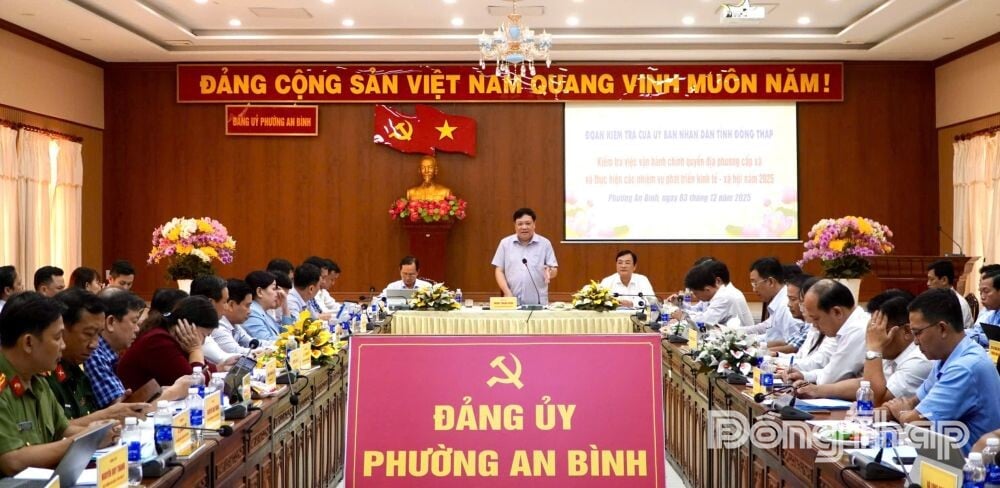
Faced with this challenge, the Provincial Party Standing Committee clearly recognized that if ideological work and personnel review were not done well, the apparatus could easily fall into a state of inertia or operate merely formally.
From the very beginning, the dissemination and promotion of the process were intensified throughout, from the provincial level down to the grassroots. With the decisive involvement of Party committees, Party organizations, the Fatherland Front, and political and social organizations, the understanding of cadres and Party members regarding the goals and significance of restructuring the apparatus has become increasingly profound.
The majority of officials expressed strong agreement, recognizing this as an essential requirement to improve the effectiveness and efficiency of operations in the new phase. Heads of agencies and units clearly demonstrated their exemplary role, proactively understanding the concerns and promptly addressing any anxieties or apprehensions of officials subject to reorganization and transfer.
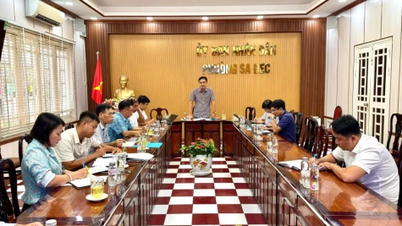
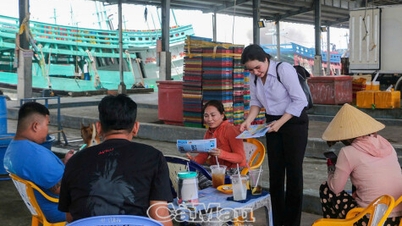
According to Nguyen Minh Tuan, Chairman of the People's Committee of My Tho commune, implementing a two-tiered local government system, the People's Committee of the commune is focusing on consolidating its organizational structure, clearly assigning tasks, and ensuring smooth and effective state management without disrupting services to the people and businesses.
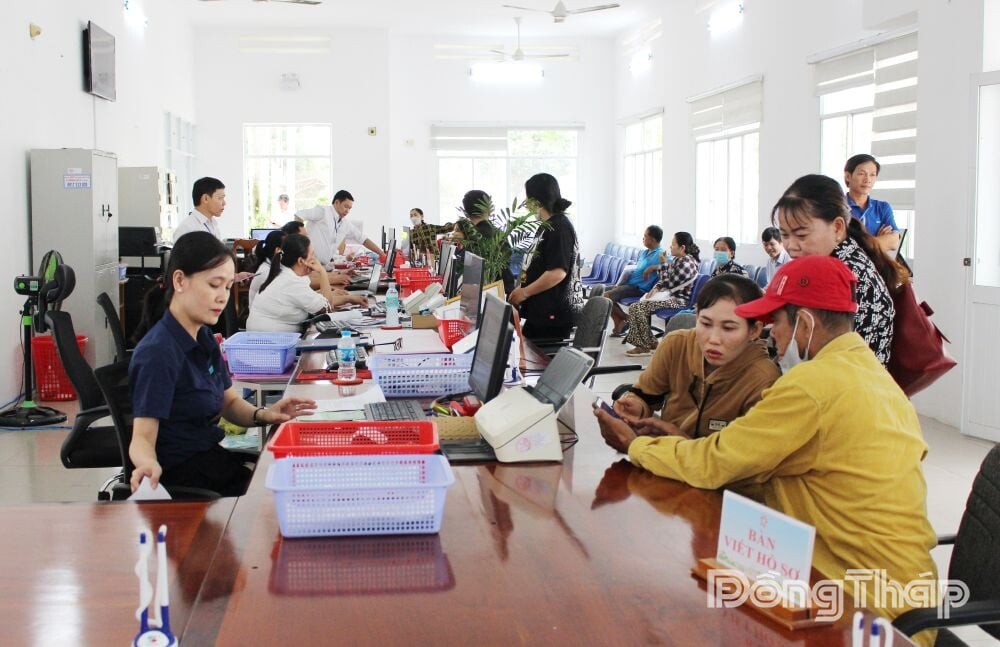
At the same time, localities are reviewing and improving working regulations, strengthening coordination among agencies, promoting the application of information technology, reforming administrative procedures, and improving the quality of handling administrative procedures.
As a result, the reorganized apparatus operates stably; its management capacity is gradually improved, contributing to promoting socio -economic development, ensuring social welfare, and maintaining national defense and security in the locality.
To ensure that the operation of the two-tiered local government system is free from legal loopholes, the Provincial Party Standing Committee and the government system at all levels have focused their efforts and urgently issued a large number of specific yet highly scientific documents.
To date, the Standing Committee of the Provincial Party Committee has issued numerous resolutions, decisions, regulations, plans, programs, and projects to directly guide and direct the process.
At the implementation level, the Provincial People's Committee issued 139 decisions, 45 plans, 61 official documents, and 2 projects...
Political responsibility has also spread strongly to the grassroots level, with communes proactively issuing 58 resolutions, 55 plans, 206 official documents, and 26 notices to manage affairs. Overall, this system of legal documents was issued very promptly and synchronously, creating a solid legal foundation for the two-tier model.
In particular, the content of all documents strictly adheres to the principle: "Clear responsibilities, clear tasks, clear timelines, clear accountability, clear authority, and clear results." This clear delineation has enhanced the effectiveness of coordination between agencies, tightened administrative discipline and order, and minimized potential conflicts and overlaps.
STANDARDIZING WORKING REGULATIONS AFTER THE MERGER
One of the key milestones affirming the stability of the apparatus is the timely issuance and implementation of working regulations. Following the merger, on August 5, 2025, the Provincial Party Committee issued Working Regulation No. 01, stipulating the working regime of the Executive Committee, Standing Committee, and Permanent Committee of the Provincial Party Committee for the 2020-2025 term.
Shortly thereafter, at the start of the new term, the Provincial Party Committee continued to issue Working Regulations No. 01 dated November 7, 2025, to be applied throughout the 2025-2030 term.
The systematic approach at the provincial level creates a ripple effect, encouraging Party committees, Party organizations, agencies, and localities to proactively review, revise, and issue new working regulations that are consistent with the new organizational structure.
These regulations focus on clarifying the principle of democratic centralism, promoting collective intelligence while emphasizing the role and responsibility of the leader. The development of these regulations is carried out openly and democratically, helping each official and civil servant clearly define the scope of their authority in performing their duties.
According to Nguyen Thanh Phong, Chairman of the Son Qui Ward People's Committee, practical implementation shows that the effectiveness of the two-tiered local government system depends greatly on the comprehensive leadership role of the Party committee and the unified and decisive management of the government.
When Party committees clearly define the direction, focus, and priorities, and the government concretizes them into clear action programs and plans with specific responsibilities assigned, the entire system operates smoothly, minimizing overlapping responsibilities and buck-passing.
The stable and smooth operation of the two-tiered local government system is a vivid testament to a modern, streamlined, effective, and efficient administration – a government truly of the people, by the people, and for the sustainable development of Dong Thap province. |
The core objective of the two-tiered government system is to bring the government closer to the people and handle tasks more quickly. To realize this, the Provincial People's Committee has issued strategic documents such as: Official Letter No. 1421 dated October 15, 2025, on strengthening the implementation of regulations on decentralization and delegation of power; Plan No. 190 dated August 29, 2025, on training and fostering cadres and civil servants; and Plan No. 347 dated October 8, 2025, on further promoting the decentralization of state management when implementing the two-tiered local government system in the province.
This strong hierarchical structure aims to ensure that tasks are carried out smoothly, without omissions or delays.
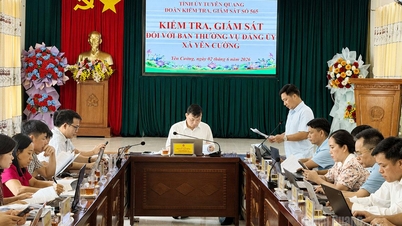
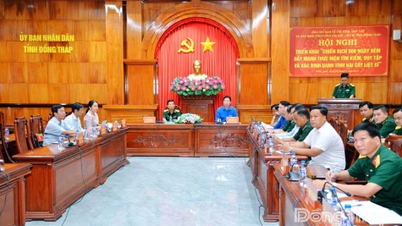
The Provincial Party Standing Committee also established 8 working groups to directly work with the Party Committees of communes and wards to assess the effectiveness of their actual operations since their establishment, listen to difficulties from the grassroots level, and report to the Central Committee for timely solutions.
At the same time, members of the Provincial Party Standing Committee assigned to specific areas regularly monitor and understand public opinion and record the reality on the ground in order to resolve difficulties as soon as they arise.
It is evident that the success of the two-tiered local government model stems from the synergy of decisive factors: the high level of political determination of the leadership; a strict legal framework with clear responsibilities and tasks; and above all, the unity and sense of responsibility of officials and Party members from the provincial to the grassroots level.
DUONG UT
(to be continued)
Source: https://baodongthap.vn/ky-1-dinh-hinh-bo-may-moi-vi-muc-tieu-phuc-vu-a241539.html


![[Photo] Delegation attending the 14th Congress of the Vietnam Trade Union visits the Mausoleum of President Ho Chi Minh.](https://vphoto.vietnam.vn/thumb/1200x675/vietnam/resource/IMAGE/2026/06/03/1780451842301_ndo_br_img-3824-jpg.webp)




















![[Infographic] The organization of the 2026 High School Graduation Examination: Essential information](https://vphoto.vietnam.vn/thumb/402x226/vietnam/resource/IMAGE/2026/06/02/1780402326179_infographic-cong-tac-to-chuc-ky-thi-tot-nghiep-trung-hoc-pho-thong-nam-2026-nhung-thong-tin-can-biet20260602062135.webp)























































Comment (0)