


The recent Conclusion No. 228-KL/TW issued by the Politburo and the Secretariat of the Central Committee directly addresses the realities of operating the two-tiered political and local government system, clearly identifying achievements, shortcomings, and immediate tasks. The overarching principle is to make the system more streamlined, stronger, and more efficient; to ensure that authority is coupled with responsibility; and to link decentralization with the conditions for implementation.
The Central Committee has urgently requested a focus on resolving the confusions and difficulties regarding decentralization and delegation of power stemming from practical situations at the local level, agencies, and units, especially at the commune level. Furthermore, there is a need to arrange, organize, and manage public offices and assets to prevent losses and waste, as well as address obstacles related to administrative procedures, human resources, finance, and digital transformation. In some areas, there is a need to further improve the management and operational skills of local officials, particularly in the fields of finance, land, planning, and information technology.
The Politburo and the Secretariat also requested that Ministers, heads of ministerial-level agencies, and Secretaries of provincial and city Party committees directly under the Central Committee fundamentally resolve all major difficulties and obstacles currently facing the country by January 2026 in order to implement the Resolution of the 14th Party Congress, focusing on economic development, improving people's lives, and addressing social security issues. Any obstacles or issues arising beyond their authority must be reported to the Central Committee for leadership and guidance.
Institutionally, the Party Committee of the Government is tasked with urgently issuing a Decree amending and supplementing several articles of decrees related to the organization of specialized agencies at the provincial, city, and commune/ward/special zone levels; and allowances for leadership and management positions at the commune level. The spirit is to quickly finalize regulations on classification and processing times for complex administrative procedures. Standard procedures should be established for procedures requiring multiple verification steps and inter-agency coordination. The responsibilities and coordination deadlines of relevant agencies must be clearly defined. Ministries and sectors must focus on resolving obstacles and difficulties based on proposals and recommendations from localities.
Another noteworthy point is the restructuring of the organization and personnel of the commune-level Military Command and the policy of deploying military officers to participate in grassroots work. This is a step aimed at strengthening capacity, discipline, and ensuring national defense and security under the new organizational structure. Simultaneously, there is a need to establish appropriate policies and regulations to ensure officers can work with peace of mind and maximize their potential.
In practice, the state administrative apparatus has undergone a transformation, reducing the number of administrative layers and intermediate levels to facilitate closer government access and faster processing of affairs. A crucial contribution to this result is the Ministry of Interior, playing a core role, which has advised on a large volume of institutional matters, from proposals submitted to the Politburo and the Secretariat to laws, resolutions of the National Assembly, and subordinate legal documents. This forms a vital legal foundation for the smooth operation of the apparatus.
These "bright spots" were acknowledged by the Government leadership. Deputy Prime Minister Nguyen Hoa Binh assessed that implementing Resolution 18-NQ/TW during this term was "a historical task," but the results were "outstanding and remarkable success." The public service has moved closer to the people, using the effectiveness of serving the people as a measure of success.
But streamlining the administrative apparatus is not just a matter of mechanical addition and subtraction. In education—a sensitive field that directly impacts people's lives—there are signs of haste in arranging schools according to a two-tiered local government model. This poses a risk to the organization of teaching and learning and the assurance of educational welfare, especially in disadvantaged areas and densely populated urban areas.
According to the Ministry of Education and Training, in some areas, the review and reorganization of public educational institutions has been carried out multiple times, but the legal basis and educational science basis for adjusting the targets for reducing the number of preschool and general education institutions in each phase have not been clearly defined.
Some localities have implemented school restructuring and reductions in a "mechanical" manner, leading to imbalances in class sizes and school locations, potentially overloading facilities and affecting the quality of teaching and learning. The rate of school mergers is high, far exceeding professional recommendations, causing imbalances in scale. Many communes and wards have merged 3 or 4 schools into one or merged schools with maximum capacity. Therefore, after restructuring, many educational institutions have a number of classes or school locations exceeding the prescribed capacity.
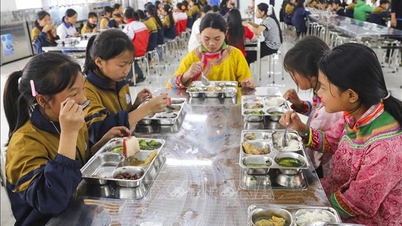
In some ethnic boarding schools, after merging with other schools, the required percentage of boarding students is no longer met. This leads to a loss of the specificity in supporting ethnic minority and mountainous regions, affecting the right to access education for students in remote areas and vulnerable groups.
This reality shows that financial autonomy cannot be used as a basis for structuring educational institutions. Education must be based on professional standards and quality. "Non-educational" criteria cannot be used to decide on educational matters.
Minister of Education and Training Nguyen Kim Son emphasized: Organizational arrangements should not be done mechanically. Each locality has different characteristics in terms of socio-economic conditions, population density, topography, and transportation. Therefore, arrangements must be based on specific realities, ensuring suitability and effectiveness.
Ultimately, streamlining the administrative apparatus is not just about organization, but about people. Deputy Prime Minister Nguyen Hoa Binh emphasized that evaluating officials must be accurate and not superficial; we must identify, attract, and retain talented individuals. We have prepared for the new era by reorganizing the administrative apparatus and personnel. Now, that apparatus and personnel must be utilized effectively in the coming period, ensuring the smooth operation of the two-tiered local government system and better serving the people. The satisfaction of the people is the measure of the effectiveness of the government's operations.
Streamlining the administrative apparatus and implementing a two-tiered local government system is correct and appropriate to the country's development requirements in the new era. Major undertakings cannot be rushed, but neither can they be delayed. As President Ho Chi Minh simply and profoundly advised: "Do everything that benefits the people, and avoid everything that harms the people." When the apparatus is streamlined, people's affairs are handled more efficiently, and their hearts are more at ease – that is the truest measure of success!
Source: https://baotintuc.vn/thoi-su/tinh-gon-bo-may-viec-dan-chay-hon-20260104082730936.htm




![[Photo] Standing Committee member of the Party Central Committee Tran Cam Tu working with the Central Inspection Committee](https://vphoto.vietnam.vn/thumb/1200x675/vietnam/resource/IMAGE/2026/05/28/1779969579668_ndo_br_bnd-2495-jpg.webp)






































































Comment (0)