

The strong message from all sides.
Hezbollah Deputy Secretary-General Naim Qassem said that Hezbollah's missile attack on Israeli territory on September 22 marked a shift to a new phase of military operations. Israel counted approximately 150 rockets launched into the north of the country on Sunday.
According to authorities, most of them were shot down by air defenses. “We have entered a new phase… Threats will not stop us: we are ready for any military scenario,” Al Mayadeen television quoted Naim Qassem as saying.
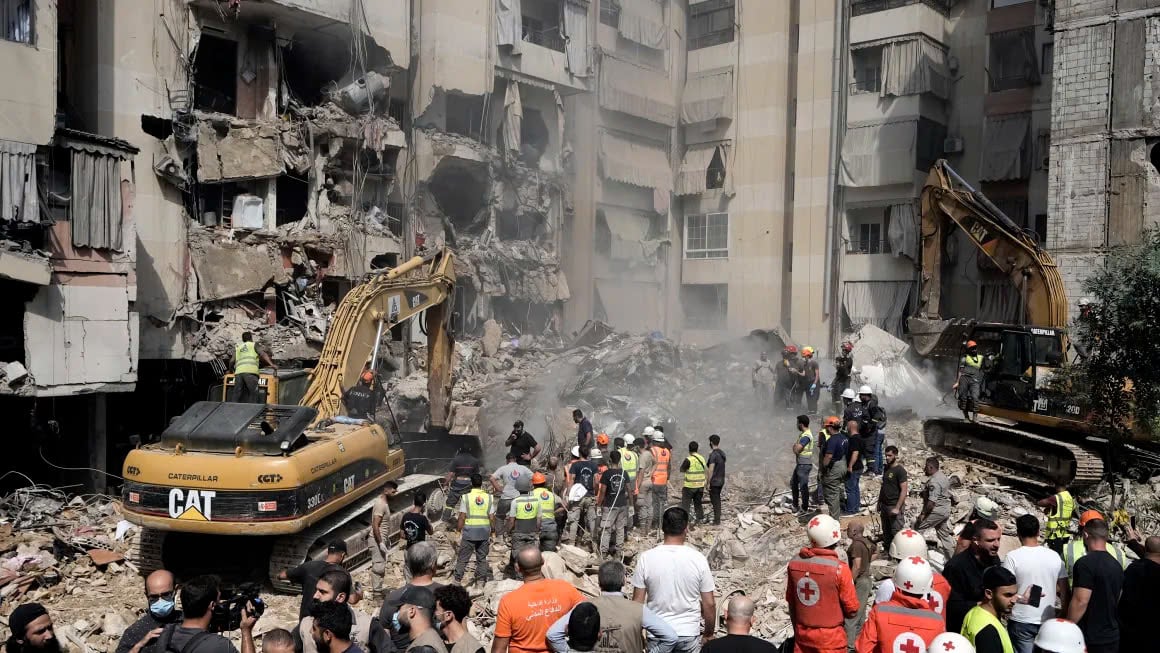
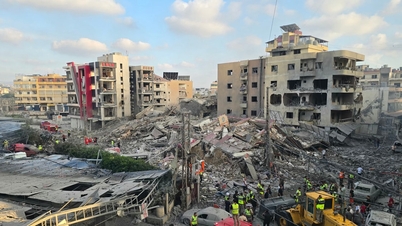
Ruin after an Israeli airstrike on the southern suburbs of Beirut, Lebanon. Photo: AP
Hezbollah's press office said on Sunday that one of the targets of the attack was in retaliation for the "massacre" that the group accused Israel of being directly responsible for, involving the bombings of pagers, radios, and electronic equipment on September 17-18. Local authorities said 37 people died and more than 3,000 were injured.
Earlier, on September 18, following the second wave of bombings involving communications equipment in Lebanon, Israeli Defense Minister Yoav Galant declared the start of a new phase of the war, shifting the focus to the northern front, namely southern Lebanon, while emphasizing that missions in the Gaza Strip "are also being carried out." Subsequently, the Israel Defense Forces (IDF) launched a series of major attacks on Lebanon; among them, the attack on the outskirts of Beirut on September 20 killed 45 people, including 16 Hezbollah members.
IDF Chief of Staff Herzi HaLevi said on Sunday that the attack sent a clear message not only to Hezbollah, but to the whole of the Middle East: “We will strike anyone who threatens the Israeli people.” He assured that “the price Hezbollah will pay will be high and the attacks will increase.” The Israeli army pledged that people in the north of the country would soon be able to return home, where they were forced to leave due to Hezbollah attacks.
Israeli Prime Minister Benjamin Netanyahu also issued a strong statement, seemingly alluding to Israel's involvement in the device explosion in Lebanon: “In the last few days, we have dealt Hezbollah some blows they couldn’t even imagine. If Hezbollah hasn’t received the message yet, I promise they will soon.” However, Israeli President Isaac Herzog told Sky News that his country was not involved in the operation and that Hezbollah has “many enemies.”
The balance of power between Hezbollah and Israel
According to Global Firepower, the IDF is the 17th strongest military in the world . The IDF currently has approximately 169,500 regular personnel and 465,000 in reserves. When the war against Hamas broke out, around 300,000 of these were mobilized. The IDF's arsenal includes armored vehicles and tanks, artillery, missiles, fighter jets, helicopters, warships, and unmanned aerial vehicles (UAVs). Tanks – crucial support vehicles for ground operations – are in service with the IDF, numbering over 2,200.
The Israeli Air Force is equipped with 340 aircraft, including 196 American F-16 fighter jets in various variants, as well as 145 helicopters. Israel also possesses a nuclear arsenal. According to estimates by the Stockholm International Peace Research Institute (SIPRI), Israel's nuclear arsenal contains approximately 80 nuclear warheads: 30 of which are air-launched bombs, and the remainder could be used as "Jericho-2" medium-range ballistic missiles, which are believed to have been deployed to a military base east of Jerusalem.
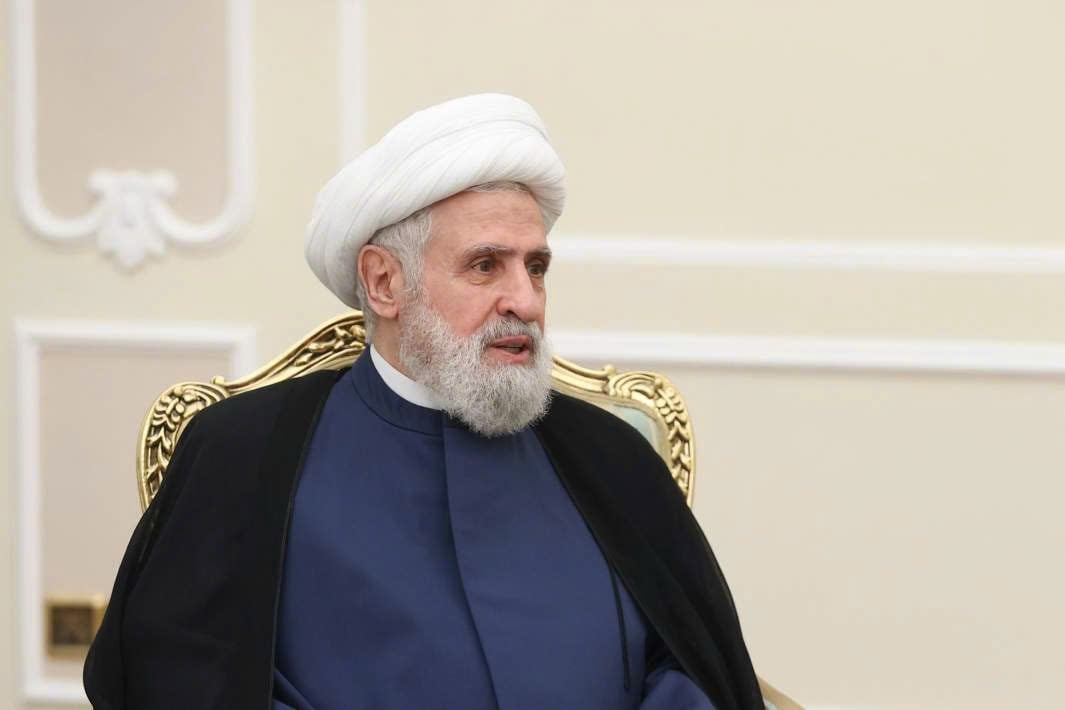
Naim Qassem, Deputy Secretary-General of Hezbollah. Photo: Global Look Press
According to IDF estimates, Hezbollah has 20-25,000 fighters in its ranks and also tens of thousands in reserves. The Israeli army identifies the Radwan Force, commanded by Ibrahim Aqil, which operates inside Israel and plans to seize border areas and communities, as the greatest threat.
The IDF estimates the unit's strength to be around several thousand well-trained fighters, some with combat experience in Syria. Hezbollah leader Hassan Nasrallah claimed in 2021 that he had 100,000 trained fighters under his command, more than the Lebanese government army (approximately 85,000).
Based on various figures, Hezbollah's arsenal is estimated to contain 100,000-150,000 Iranian and Russian-made missiles and artillery shells of various ranges, including precision missiles and unguided munitions, as well as approximately 140,000 mortar rounds. For comparison, Hezbollah's arsenal is more powerful than that of several nations' armies. Hezbollah claims its missiles are capable of striking targets anywhere in Israel.
According to the IDF, Hezbollah is also equipped with several hundred UAVs, some with a range of up to 400 km, 17 air-to-ground missile systems, and approximately 100 anti-ship missiles. Hezbollah also claims to have surface-to-air missiles that successfully shot down Israeli drones. Hezbollah does not have aircraft or armored vehicles in Lebanon; however, according to some reports, the group possesses numerous T-72 and T-54/55 tanks, currently deployed in neighboring Syria.
The risk of conflict escalating into a full-scale war remains.
The Izvestia newspaper quoted Orientalist Leonid Tsukanov as saying that, despite the escalating confrontation and loud pronouncements, neither side is ready for a large-scale war.
“The two sides continue to test each other’s strength. Hezbollah has intensified attacks on Israeli border areas, and Israel is accelerating preparations for a large-scale military operation in the border region. However, the Israeli cabinet remains ‘constrained’ in its decisions due to concerns that, after the Lebanese invasion, negotiations for the release of hostages with Hamas might be forgotten. Furthermore, many within the Israeli General Staff believe that the operation against Hezbollah will fail, and therefore, Netanyahu cannot proceed with this campaign without sufficient justification,” expert Leonid Tsukanov emphasized.
The IDF has been fighting in the Gaza Strip for almost a year and has yet to achieve the objectives set by the Israeli army. According to official data, since the operation began last October, Israel has lost 346 soldiers in the Gaza Strip. The total number of Israeli soldiers killed since the attack by the Palestinian Hamas movement on October 7, 2023, has exceeded 700. Therefore, it will be very difficult for the IDF to conduct two ground operations simultaneously.
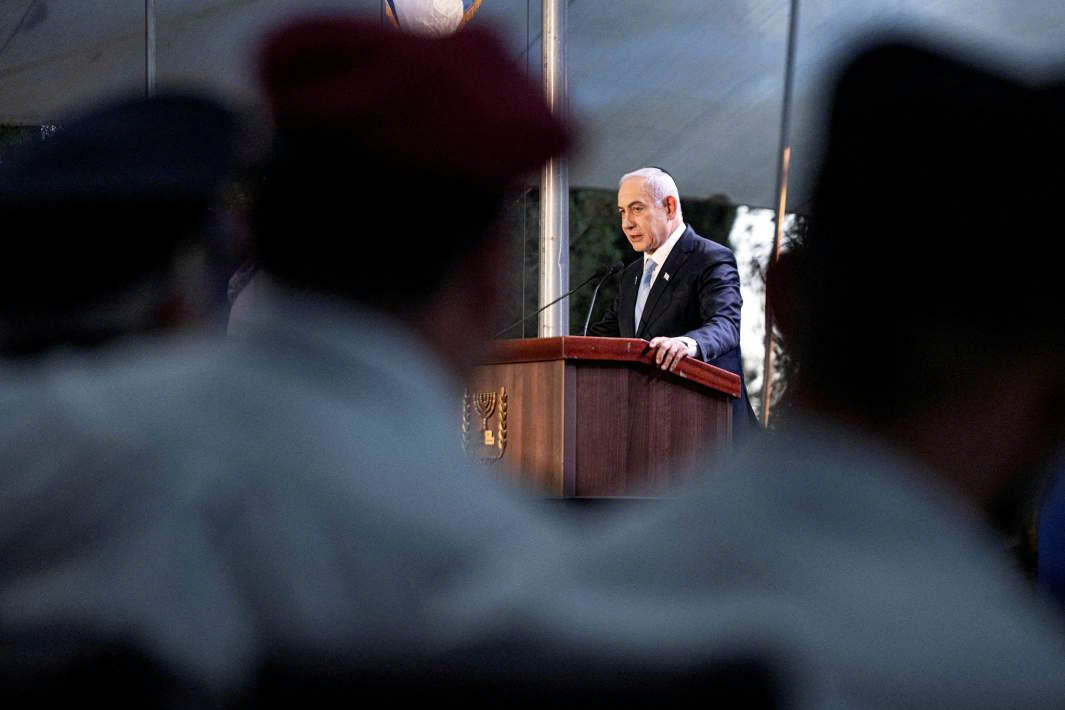
Israeli Prime Minister Benjamin Netanyahu. Photo: Reuters
Ivan Bocharov, program coordinator at the Russian Council for International Affairs (RIAC), believes that despite suffering significant losses recently, Hezbollah forces still maintain a high level of combat capability and can inflict considerable damage on the Israeli army.
“Israel will most likely try to limit airstrikes to Hezbollah military targets and prevent potential threats from the movement at minimal cost. The current possibility of escalation into a full-scale war should not be overestimated. It can also be said that Hezbollah’s ability to resist Israel has been diminished by recent events. Due to the explosion of pagers and radios, and the deaths of several Hezbollah commanders in the Beirut attack, coordination within the organization has been significantly disrupted. Israeli airstrikes on launch sites and military targets have reduced Hezbollah’s potential,” Bocharov said.
Citing military sources, The Economist reports that Israel is still preparing a ground operation in Lebanon aimed at creating a buffer zone north of the border. Although the plan is ready, the IDF lacks sufficient forces to execute it. The publication also discusses disagreements within Israel's top military and political circles. Some are calling for a faster attack to exploit the chaos within Hezbollah's ranks. Others, more cautious, including Defense Minister Yoav Galant, prefer the current strategy of slow, steady progress, forcing the Lebanese movement to reconsider its position and retreat.
Will Hezbollah's allies join the fight?
As Israel's military operations in the Gaza Strip have shown, Hezbollah should not expect special assistance from Arab countries if the IDF were to launch a ground campaign. According to expert Ivan Bocharov, countries in the Arab world are currently engaged in addressing internal issues: from peaceful resolution and post-conflict reconstruction to modernization and economic reform.
"It seems that no Arab country needs a major war in the Middle East, which would disperse resources. Therefore, one should not expect their direct involvement in the conflict or any joint action," Bocharov said.
Iran, one of Hezbollah's main allies in Lebanon, is in a unique position. Tehran is trying to find common ground in dialogue with the West and will not benefit from the tension between Israel and Hezbollah.
For Iran, it bears significant responsibility for both the potential consequences of the current escalation and what will happen to its allies. However, the reality is that Iran is not prepared for an open confrontation with Israel due to the effectiveness of its recent actions. Expert Ivan Bocharov stated: “Iran’s optimal solution might be to increase military support for Hezbollah, helping to restore its fighting capabilities, or to try to organize a demonstration, for example, with the participation of allies – non-state actors.”
Sharing this view, Farhad Ibragimov, a lecturer at the Russian University of Friendship of Peoples (RUDN), believes that Iran currently does not want a direct military conflict with Israel. “Tehran has not yet confirmed that it is ready to provide full military support to Hezbollah. Iran will send weapons, military advisors, or even some of its combat units.”
Instead, another force within the Iranian-led "Axis of Resistance," the Houthi rebels in Yemen, could intensify attacks against Israel, forcing the country to defend itself on multiple fronts, thereby indirectly relieving pressure on Hezbollah in Lebanon. The Houthi rebels in Yemen have long claimed support for Hezbollah and are ready to cooperate in combat against Israel. On September 15, the Houthi rebels announced they had launched a "hypersonic missile" at a target inside Israeli territory.
Ha Anh
Source: https://www.congluan.vn/toan-canh-xung-dot-israel--hezbollah-nguy-co-chien-tranh-toan-dien-dang-den-rat-gan-post313709.html




![[Photo] General Secretary and President To Lam presides over a meeting on preparations for the review of one year of operation of the three-tiered government system.](https://vphoto.vietnam.vn/thumb/1200x675/vietnam/resource/IMAGE/2026/06/02/1780391821195_a1-bnd-4595-9717-jpg.webp)

















































































Comment (0)