

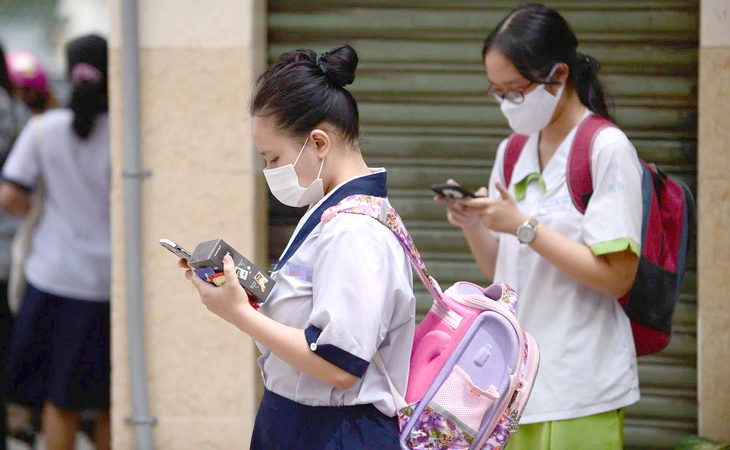
Students using mobile phones in Ho Chi Minh City - Photo: Q.D.
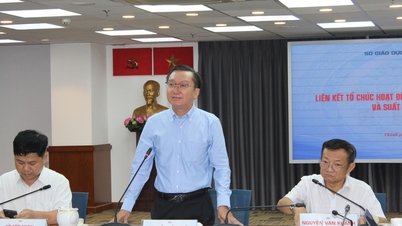
At the post-merger briefing conference, the Ho Chi Minh City Department of Education and Training announced the conclusions of Mr. Nguyen Van Hieu, the director of the department, regarding the request for the Student Affairs Department to research a plan to prohibit students from using mobile phones, except in certain cases.
This information was immediately met with enthusiastic support from the majority of parents and the public. A short poll on Tuoi Tre Online (as of 6 PM on July 10th) also recorded 1,319 out of 1,582 opinions, or about 83.3%, agreeing that it should be banned.
Banning students from using phones in school is a sound policy, but finding solutions to encourage them to voluntarily give up their phones is a matter that needs discussion.
Banning phones improves learning efficiency and enhances critical thinking.
I have witnessed firsthand the negative consequences of students overusing their phones. These include a lack of focus, reduced physical activity, diminished face-to-face communication skills, dependence on social media, and exposure to harmful and toxic content.
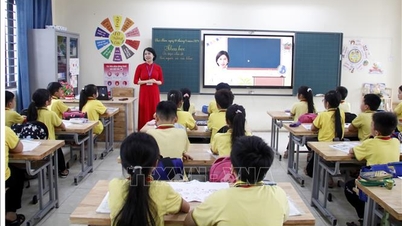
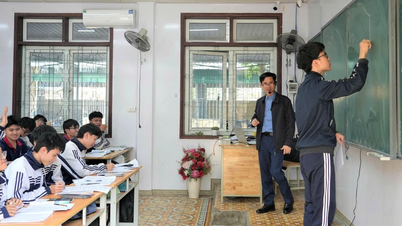
In some lessons, to better suit the lecture content, I ask students not to use their phones so that they can solve the assigned exercises on their own.
However, besides showing impatience when not having a device at hand, many students appeared confused because they were used to using their phones for research, relying on artificial intelligence applications instead of thinking and analyzing for themselves.
Therefore, I decided to implement a ban on phones in more classes, hoping to gradually bring the students back to the independent learning mindset they need.
It was very difficult at first, especially because of the students' resistance. I had to explain to them the reasons and purposes behind banning phones during class.
The pace of the lectures also slowed down, and I had to put in more effort to guide the students step by step. But as they gradually got used to it, their learning effectiveness and independent thinking skills improved.
Banning mobile phones, even during recess, is necessary for students. However, this should not be the end point, but rather the beginning of a comprehensive educational strategy.
Put down your phones, create a play area, and establish a "psychological station" for students.
If we want students to forget about their phones during recess, that time must be filled with meaningful activities where students can play, interact, and live life appropriate for their age.
We can revitalize light exercise spaces and flexible physical activity playgrounds with a variety of sports : badminton, sepak takraw, basketball, jump rope, mini volleyball, etc.
Each area needs to be planned out, with several sets of equipment prepared, so that the children can easily release their energy.
A class or group of students could be assigned to be responsible for borrowing and returning equipment, which would both raise awareness of preserving shared property and promote self-management.
For students who don't like sports, we've designed a creative recreation area with wooden tables, drawing paper, colored pencils, intellectual games like chess, checkers, Rubik's Cube, sudoku, a reading corner, and books…
From there, models such as outdoor library clubs, picture storytellers, and rivalries were developed.
Today's students also often need psychological relief. A small "psychological station" with a relaxation corner featuring sticky notes with wishes, resting chairs, and a mood board can become a healing destination, helping them release stress and share anxieties naturally, as a form of gentle therapy.
To avoid boredom, schools should also organize themed activities weekly or monthly, linked to commemorative holidays: "Traditional Games Week," "Life Skills Exchange Month," " Music Recess," "Paying Tribute to the Women Around Us," etc.
Don't do things mechanically or rigidly.
In fact, some of the above activities have already been implemented in many schools. However, for these activities to be effective and sustainable, it is essential to make students feel like they are "participants."
In many schools, activities are often designated and imposed on the classes by the school administration. Class representatives then implement them mechanically and rigidly. As a result, activities during recess, as well as themed activities, often receive little attention from students.
We should establish a recess activity committee consisting of students from all grades, with moderate supervision and support from the Youth Union/Pioneer Organization, primarily allowing students to operate independently. For weekly and monthly activities, students should propose ideas, plan, and create playgrounds, while teachers should only play a role in offering suggestions and feedback.
Only in this way can students learn self-mastery, connect with friends, and develop organizational skills.
By empowering students to experience and express their creativity on their own, they will feel valued, gain confidence, and thus actively and enthusiastically participate in recess and meaningful group activities.
Families should also have a daily schedule, avoiding everyone being glued to their phone.
If phones are banned at school, but parents allow children to use them freely all evening at home, the effectiveness is unlikely to be sustainable. Families also need to "design" a daily schedule at home that enhances interaction and communication among members, aiming to build connection and avoid a situation where each person is glued to their phone, "immersed" in their own world.
If teachers assign homework and communicate with students through group chats, parents can review it with their children. This helps children use their phones in moderation, allows parents to keep track of their children's progress and academic level, and strengthens family bonds.
Source: https://tuoitre.vn/toi-cam-hoc-sinh-dung-dien-thoai-trong-gio-hoc-thuc-hien-rat-kho-khan-20250711140429252.htm


![[Image] Central Party Office summarizes work in 2025](/_next/image?url=https%3A%2F%2Fvphoto.vietnam.vn%2Fthumb%2F1200x675%2Fvietnam%2Fresource%2FIMAGE%2F2025%2F12%2F18%2F1766065572073_vptw-hoi-nghi-tong-ket-89-1204-jpg.webp&w=3840&q=75)































































Comment (0)