

A significant milestone in the development of our nation.
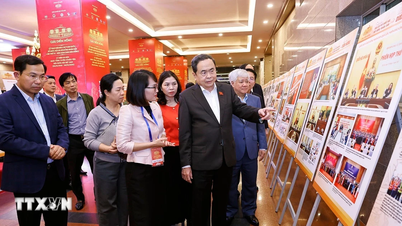
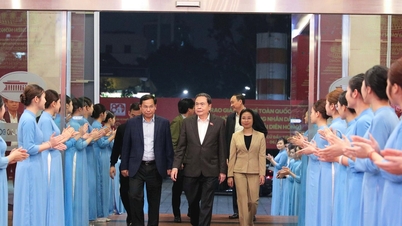
In his opening remarks at the National Assembly session, National Assembly Chairman Tran Thanh Man affirmed that drafting the Party Congress documents is an extremely important task. The draft documents for the 14th National Congress of the Communist Party of Vietnam have been revised, refined, and supplemented many times by the Document Subcommittee. The Central Committee has discussed them since the 11th, 12th, and 13th Central Committee meetings and Party congresses at all levels. Delegates have also discussed the documents, and they have now been sent out for public comment.
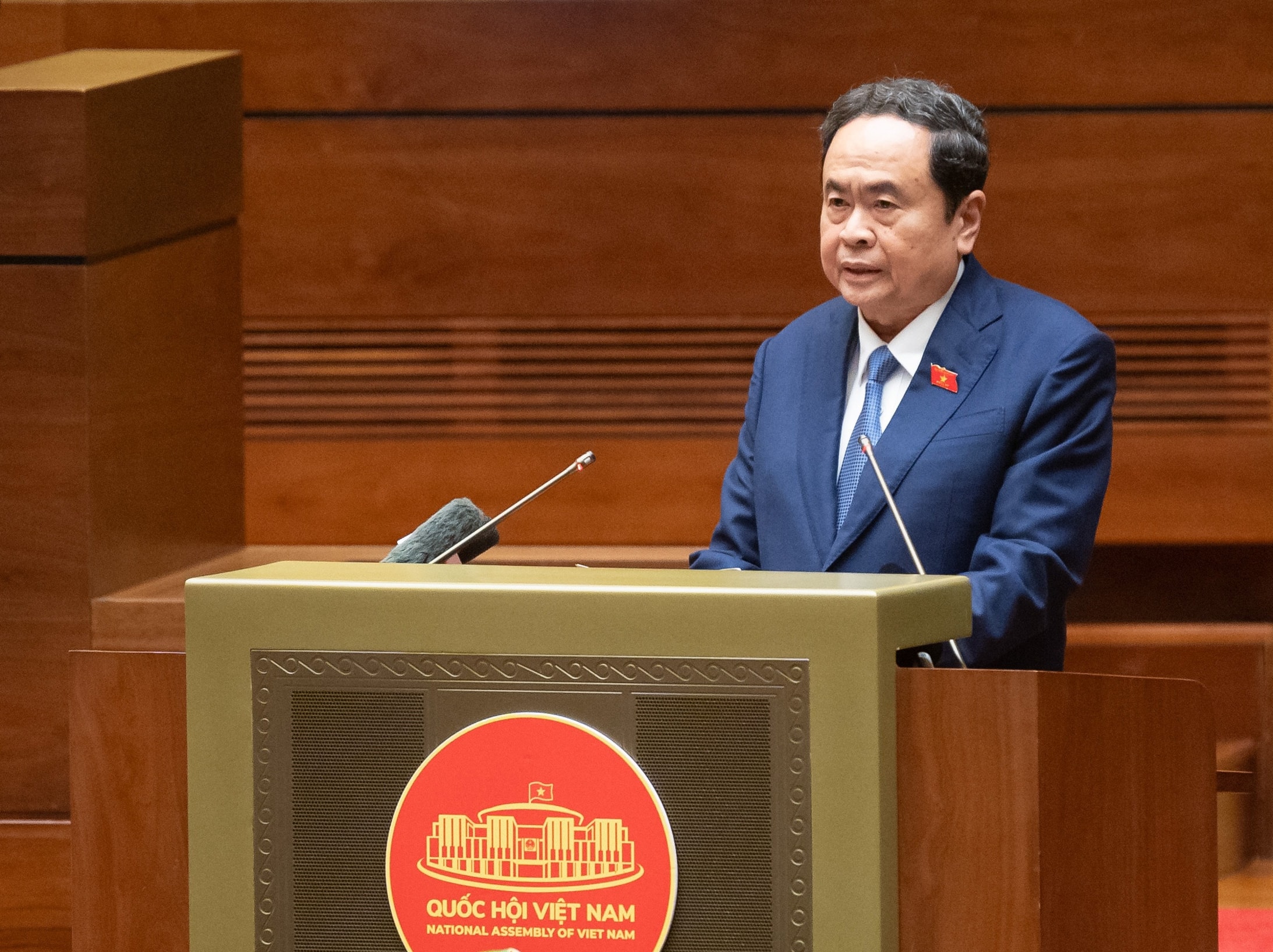
The Chairman of the National Assembly stated that the 14th National Congress of the Communist Party of Vietnam will be an important milestone on the path of our nation's development, with the significance of guiding the future, strongly arousing the tradition of patriotism, national pride, confidence, self-reliance, and self-strength, encouraging and motivating the entire Party, people, and army to continue steadfastly on the path to socialism; affirming that this is a correct, creative choice, consistent with the reality of Vietnam and the development trends of the times; strongly promoting strength and position, continuing to comprehensively and synchronously advance the reform process, and firmly protecting the socialist Fatherland of Vietnam.
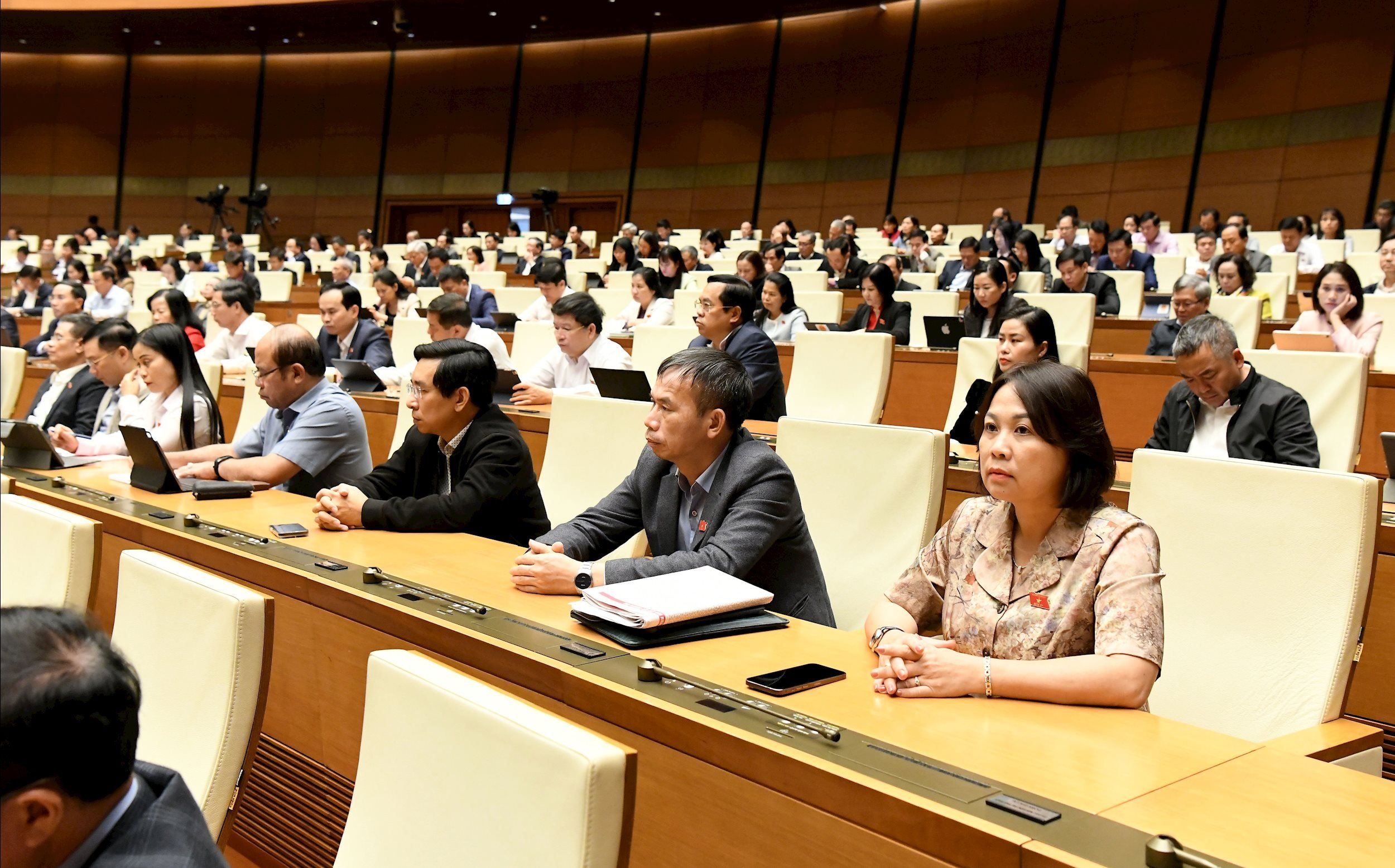
.jpg)
With a truly democratic spirit, discipline, multifaceted consideration, openness, and attentiveness, mobilizing the wisdom of the entire Party, the entire people, the entire army, intellectuals, experts, researchers, and managers, including the contributions of National Assembly deputies, the Chairman of the National Assembly stated that the Political Report of this National Party Congress will truly be a scientific work, embodying the theoretical level, intellectual prowess, and aspirations of the nation, leading the country into a new era of rapid, sustainable, prosperous, civilized, and happy development.
Towards a legal system that is easy to remember, easy to understand, and easy to implement.
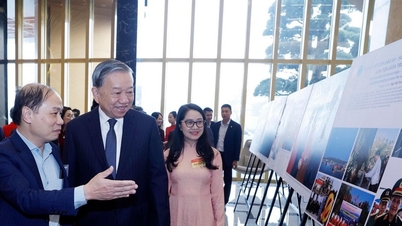
Speaking at the session, General Secretary To Lam emphasized that the voice of National Assembly deputies is not just personal opinions; it is the voice of the voters they represent, the voice of the realities of socio-economic life, national defense and security, and the voice of those who make laws.
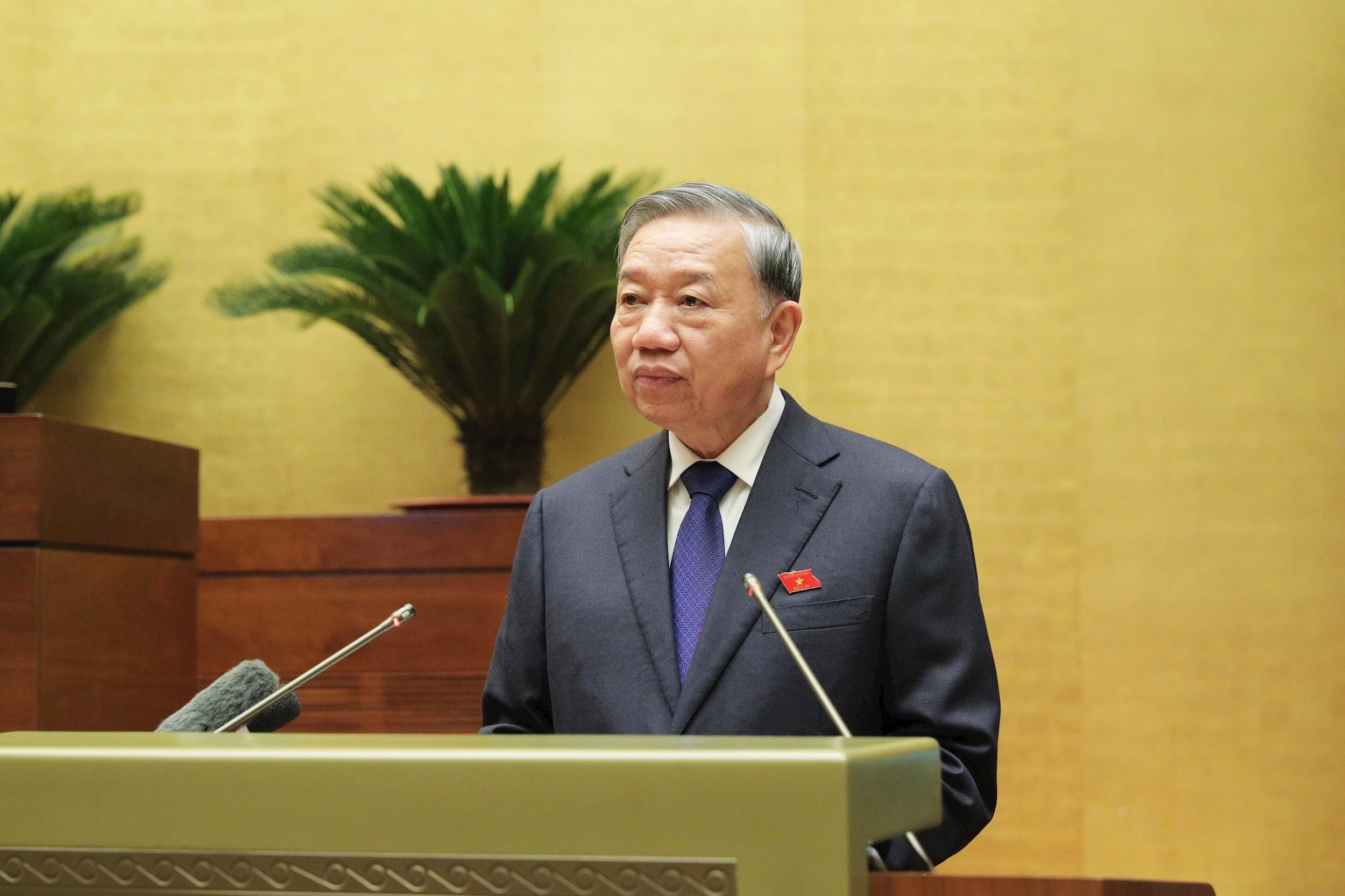
Delegates have contributed their opinions from the grassroots Party branches, Party committees of ministries and sectors, and provinces and cities. Today, in their capacity as National Assembly deputies, the highest state power body and law-making body, the delegates continue to contribute their opinions at a higher level with deeper experience and greater responsibility. The General Secretary hopes that all contributions will directly address the most fundamental issues of the institutional framework and methods of organizing and exercising state power.
The General Secretary suggested seven groups of topics for National Assembly deputies to discuss in more detail. Specifically:
Firstly , regarding institutional and legal matters, the General Secretary stated that we have enacted laws to govern society through law, building a socialist rule of law state of the people, by the people, and for the people. However, in practice, there is still a situation where "the law is correct but difficult to implement; it is clear in the National Assembly but encounters obstacles at the grassroots level."
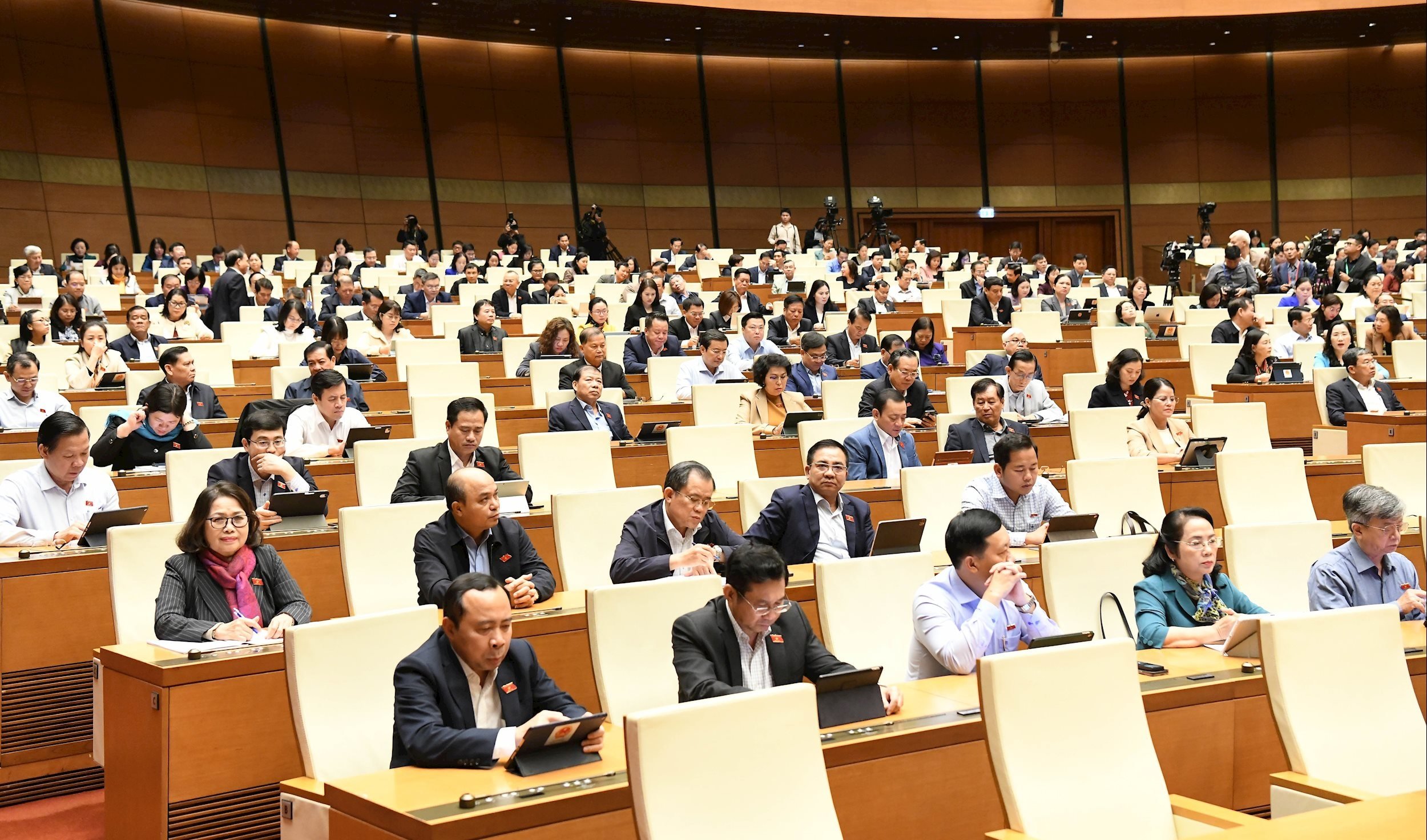
.jpg)
The General Secretary requested that National Assembly deputies focus on clearly explaining why some laws, decrees, and circulars, though meticulously drafted and extensive, are not implemented by grassroots officials, leave businesses struggling, and cause confusion among citizens? Where are the overlaps, where are the differing interpretations among ministries and agencies, and where is power granted but accountability imposed beyond their control?
“We must strive for a legal system that is easy to remember, easy to understand, and easy to implement. The wording in the law must be concise, clear, not enigmatic, and leave no room for abuse or evasion. Policies must be measurable by their impact, risk-controlling, and especially must create convenience rather than adding unnecessary procedures. A good law is not one that is well-written, but one that can be put into practice,” the General Secretary emphasized.
In addition, delegates also need to clarify what directions need to be added or adjusted in the XIV Congress Document for the law to truly be implemented. We must speak frankly to make corrections and improvements.
.jpg)
Secondly , regarding the building and perfecting of the socialist rule of law in Vietnam: A rule of law state not only has a complete legal system, but first and foremost, it is about upholding the supremacy of the constitution and laws, controlling power, ensuring transparency and accountability to the people.
The General Secretary expressed his wish that the opinions of the National Assembly deputies focus on the question of whether we have done enough to ensure that every power is bound within the framework of the law, and is exercised within its authority, for the right purpose, and in the best interests of the people. Are there still gaps that allow people to feel they can have what they want and not have it? Are there still situations where people have to "beg" for things they are rightfully entitled to? If there are no complete answers, that is precisely where the rule of law is still incomplete.
According to the General Secretary, building our rule of law state means building a strong state that does not abuse power, a state with discipline but not distant from the people, a state that acts decisively but in a humane, persuasive, and dialogue-oriented manner. Such orientations need to be clearly defined in the documents of the 14th National Congress.
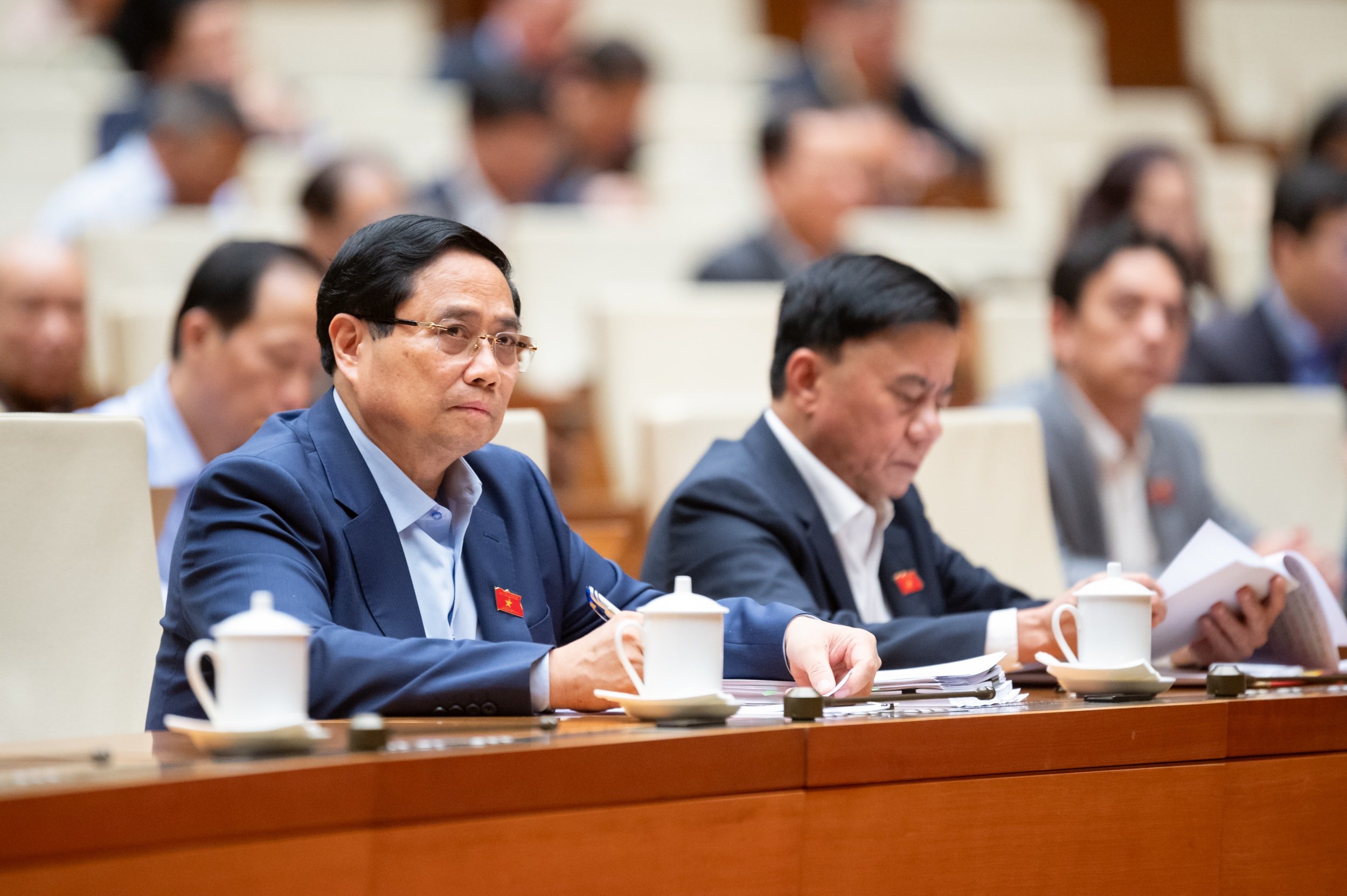
Thirdly , regarding decentralization, delegation of power, and organizational structure, the General Secretary stated that we have discussed the issue of decentralization and delegation of power for many years; there have been many resolutions and projects to streamline the apparatus, reorganize departments, and innovate the model of local government. Now, we need to answer two questions: firstly, what will be decentralized, to whom, and under what conditions? Secondly, what will the mechanism for accountability, inspection, and supervision be?
The General Secretary suggested that National Assembly deputies should directly contribute their opinions on this matter, emphasizing that if lower levels can resolve issues more quickly and be closer to the people, then authority should be boldly delegated. However, delegation of authority should not mean pushing tasks down or shifting risks; it must be accompanied by resources, personnel, tools, and a legal safety zone so that officials dare to act and take responsibility for the common good, rather than unjustly bearing personal responsibility in a way that is difficult to accomplish.
Regarding the two-tiered local government model, the General Secretary stated that we are gradually reorganizing, aiming for a streamlined, effective, and efficient apparatus. This is a very new, important, and sensitive issue, directly related to the lives of the people and officials at the grassroots level. Therefore, he requested that National Assembly deputies provide specific opinions on how the two-tiered model should be designed so that people are not alienated from the government, and public services are not disrupted, "to avoid creating more layers of bureaucratic red tape in practice."
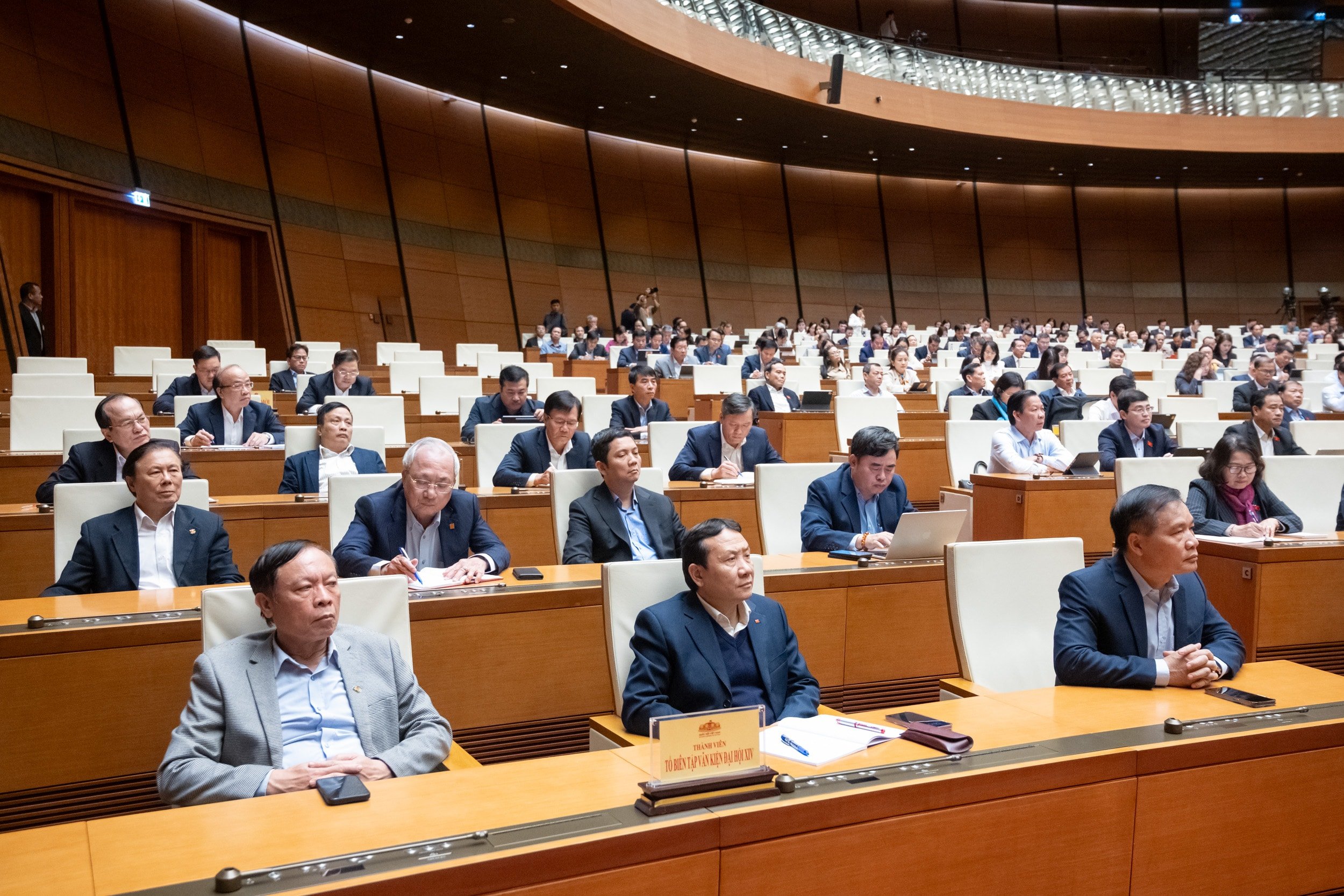
More importantly, according to the General Secretary, what powers and resources should local governments have to carry out the task of development at the grassroots level, and what additional legal framework is needed for implementing these tasks? Along with that is the relationship between the three levels of government: central, provincial/city, and local. These three levels must operate as a cohesive whole, sharing responsibilities and supporting each other, absolutely avoiding a situation where the three layers pass responsibility around, leaving the people to wander aimlessly. "National Assembly deputies visit the grassroots frequently, and they need to provide thorough feedback on these issues," the General Secretary requested.
The people are not only beneficiaries but also active participants in monitoring, providing feedback, and working alongside the government.
Fourth , regarding the organic relationship between the Party, the State, the Vietnam Fatherland Front, mass organizations, and the people. According to the General Secretary, we affirm the Party's leadership role as the decisive factor in all the victories of the Vietnamese revolution, but how should we lead? Should we lead through policies, by setting a clean example, by organizing effective implementation, by building trust among the people, or by administrative orders? The answer must be clear, transparent, and convincing to the people.
The General Secretary expressed his wish for National Assembly deputies to contribute further suggestions on mechanisms to ensure the Party exercises absolute and comprehensive leadership without interfering, justifying, or neglecting its responsibilities; the Government manages and operates according to legislation, and dares to take personal responsibility; and the Vietnam Fatherland Front and other socio-political organizations truly become reliable bridges between the Party, the State, and the people. The people should not only be beneficiaries but also active participants in monitoring, providing feedback, and accompanying the process. If we speak of putting the people at the center, we must design mechanisms that allow the people to have a genuine voice, genuine oversight rights, and genuine opportunities to participate in relevant issues.
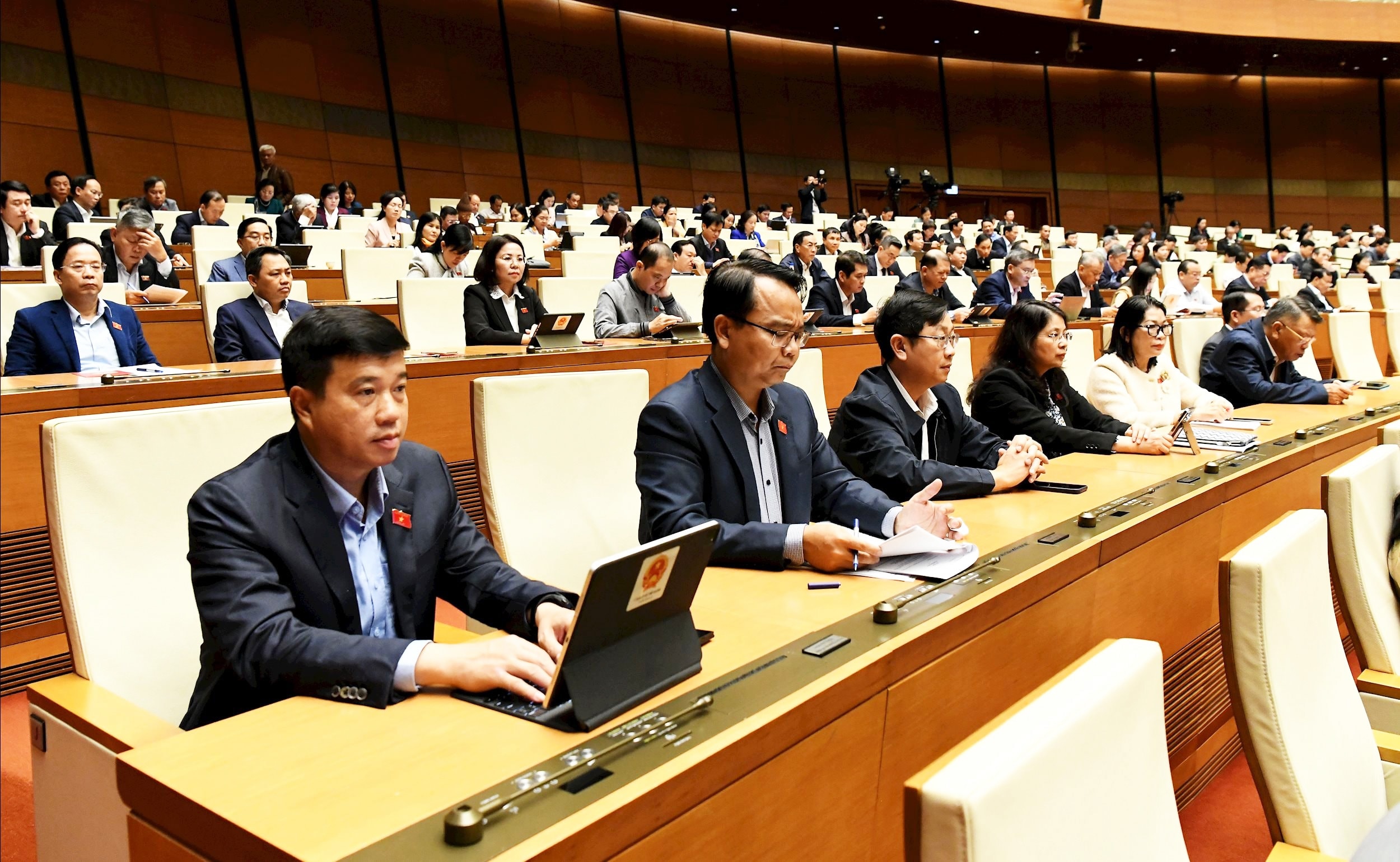
Fifth , regarding the Party's leading role in the legal system and in practical administration, the General Secretary stated that our Party is the ruling party, meaning it must bear responsibility before the people for the country's development and the people's daily lives. Governing means not only setting policies but also organizing their implementation, monitoring their execution, and being accountable for the results.
Therefore, the documents presented to the 14th National Congress cannot simply speak of strengthening the Party's leadership in a general way, but must clarify that the Party's leadership ensures that all policies and laws truly serve the people, develop the country, maintain independence, sovereignty, territorial integrity, political and social stability, and preserve national unity. The Party's leadership combats sectoral and local parochialism, group interests, negativity, corruption, and waste. The Party's leadership protects those who dare to think, dare to act, and dare to take responsibility for the common good.
The General Secretary expressed his hope that the National Assembly deputies' comments on the document would address whether it included all these elements and whether it touched upon the weaknesses that still exist in practical operation.
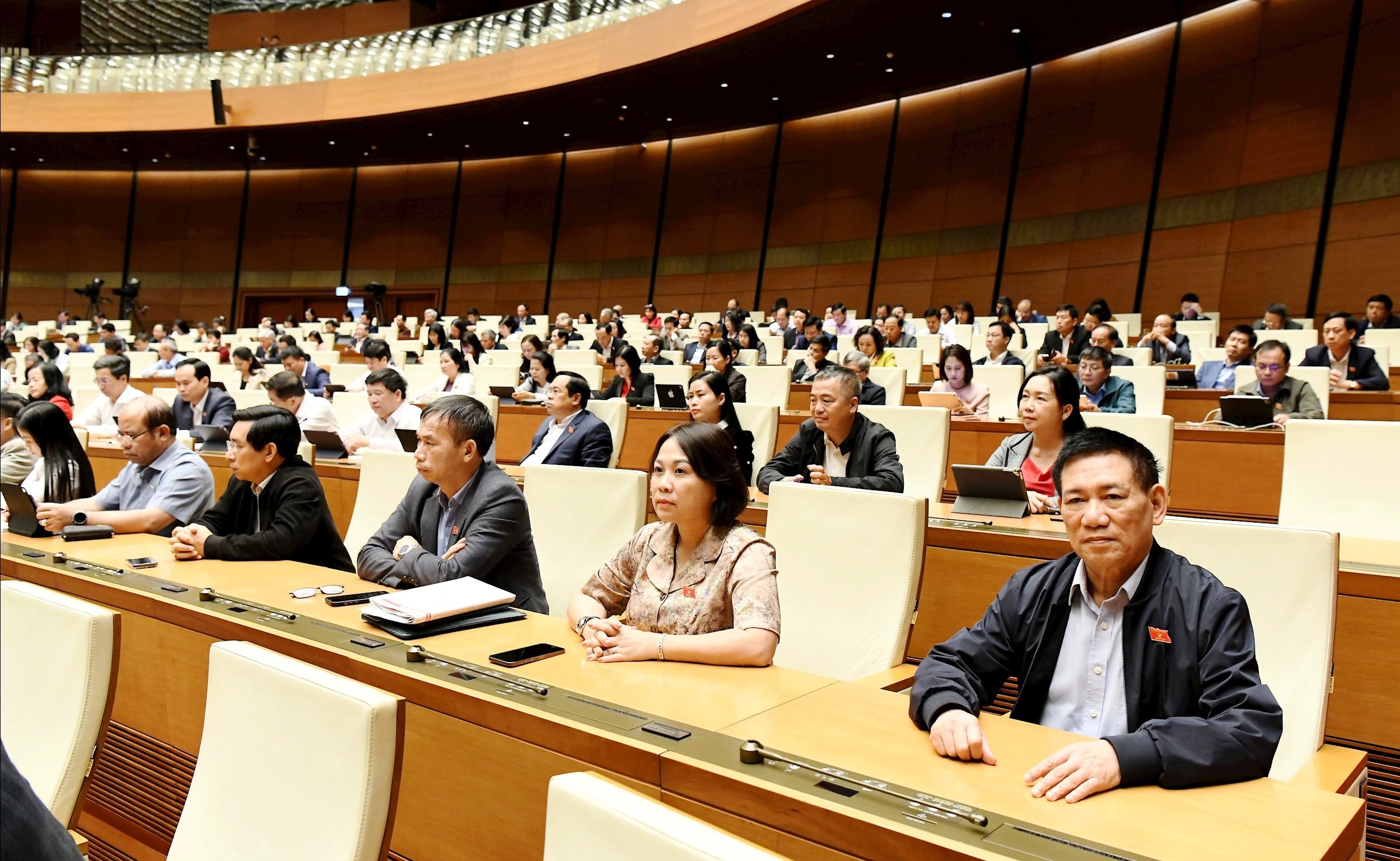
Sixth , regarding the spirit of innovation in thinking, innovation in methods, and innovation in national governance according to the principle of creation and for the people, the General Secretary clearly stated that the world is changing very rapidly, and domestic realities are also changing very rapidly. If our thinking lags behind reality, the document will become outdated immediately, even as soon as it is passed.
Therefore, the General Secretary suggested that National Assembly deputies read the document with the following in mind: are there any points where old ways of thinking, old ways of speaking, old ways of doing things still persist? Are there any points where the habit of managing in a "request-and-grant" style still remains, when the State should be playing a constructive role, serving the people and businesses?
Furthermore, it is necessary to clearly define the national governance model for the coming period: governance based on law, transparency, reliable data, modern digital infrastructure, a streamlined apparatus, honest officials, and discipline coupled with service. Such governance is development-oriented governance, not a system of granting favors and favors.
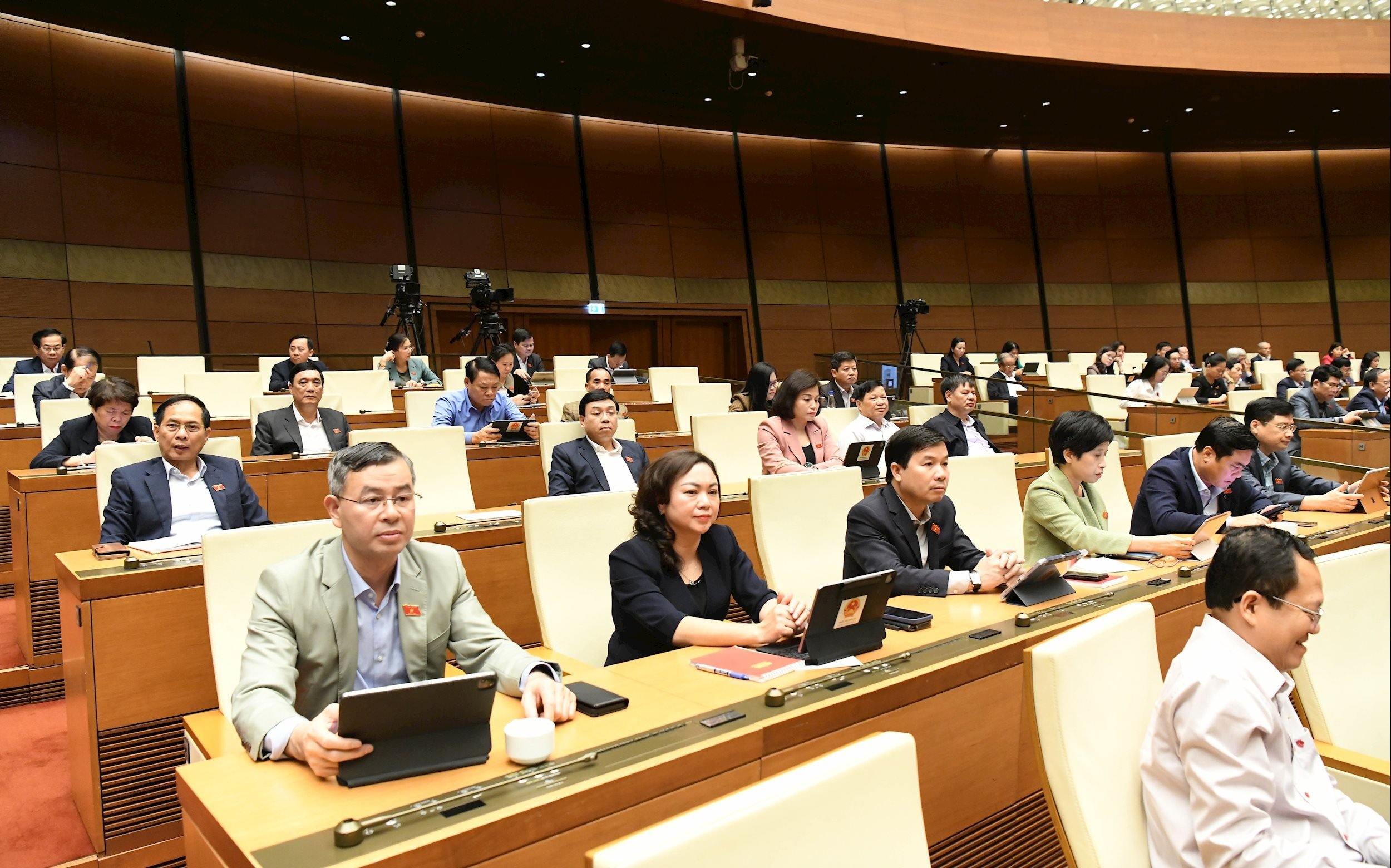
The General Secretary requested that National Assembly deputies contribute with specific examples from the sectors, localities, and fields under their responsibility. Where there are still cumbersome procedures that discourage businesses, where people are frustrated because they have to travel multiple times without getting their issues resolved, or where there is still bureaucratic maneuvering, they should frankly point out these issues without avoidance. "Only by looking directly at these shortcomings and limitations can we correct them."
On Saturday , regarding new points and breakthroughs, the General Secretary stated that the Document Drafting Subcommittee had outlined 18 new points, orientations considered breakthroughs that demonstrate a spirit of daring to innovate, daring to transform the development model, and daring to reorganize the apparatus and operating methods.
Therefore, I request that the National Assembly deputies help answer two very important questions. First, are those 18 new points sufficient in scope? Are there any points that are still at the policy or direction stage and will be studied, while society is still demanding concrete answers, a clear roadmap, and clearly defined responsibilities?
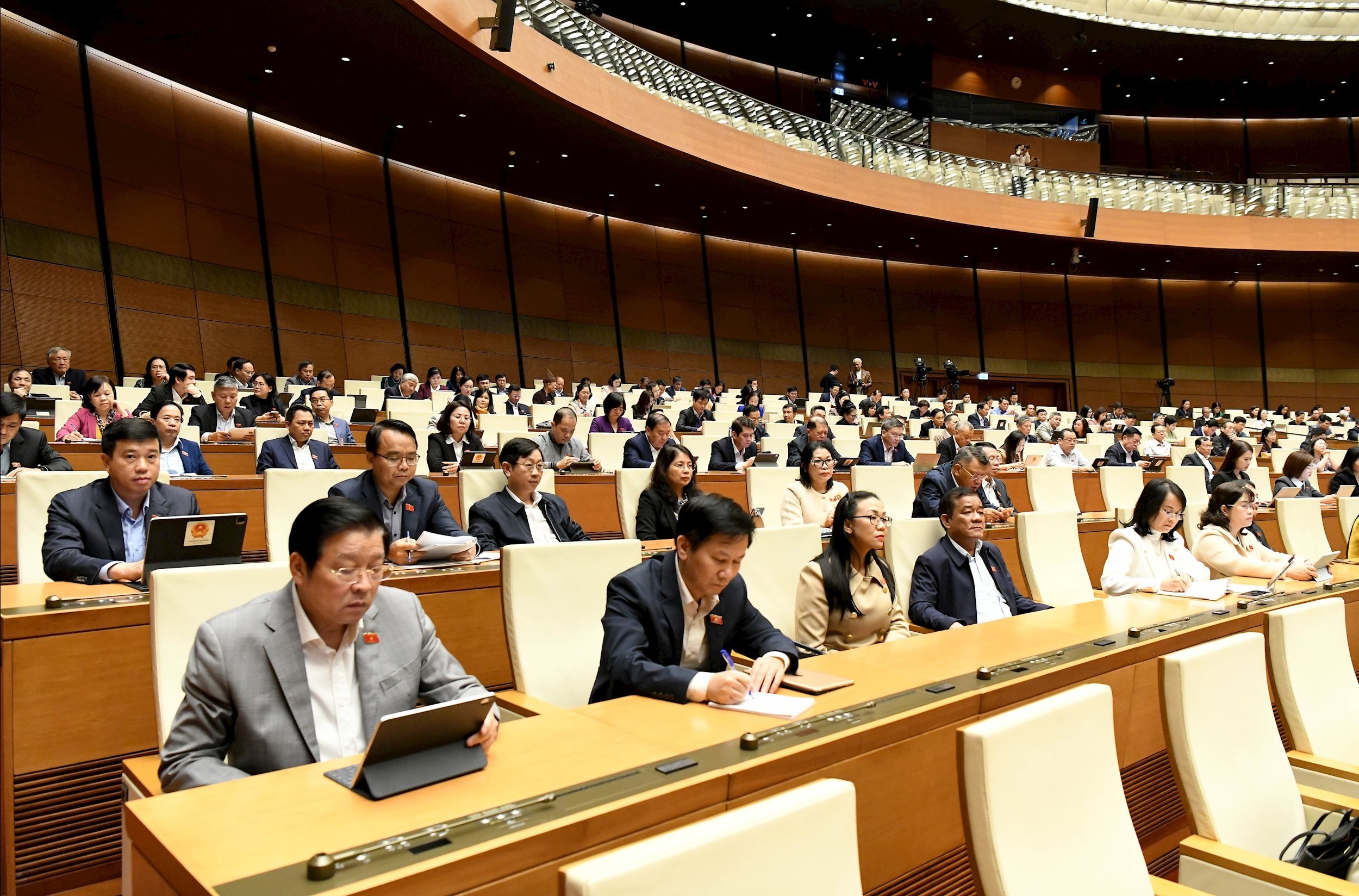
The second question, according to the delegates—those who are close to the people, understand their real lives, and understand the sentiments of the voters—are there still issues that have not been properly addressed in the document? Are there still bottlenecks that, if not resolved now, will cost us dearly in the next five years?
The Congress document is the fundamental document; we must clarify it now so that the process of institutionalization, lawmaking, and implementation will be smoother, more consistent, and less confusing later on. Conversely, if the document remains general and incomplete, when it is incorporated into law, it will lead to different interpretations, different approaches, and even application based on individual interpretations. In that case, the people will be the ones who suffer the most.
The General Secretary expressed his hope that today's discussion and subsequent rounds of consultations would be truly frank, responsible, and constructive. He emphasized that the Party, the National Assembly, the Government, and the people desire a common denominator—something very specific, very familiar, and very simple: sustainable national development; a society that is orderly, disciplined, warm, and humane; and where citizens are protected and given opportunities to rise through their own labor. Those who act in accordance with the law will be protected, and those who act wrongly will be dealt with fairly, without any forbidden zones or exceptions.
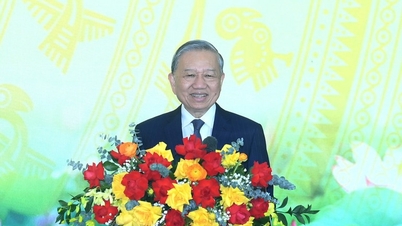
" Speak up about what you truly see, what you worry about, and what you are willing to take responsibility for."
The General Secretary also suggested that each National Assembly delegate contribute as a representative of the people, and at the same time, as a Party member, an official, and someone responsible to the country and society, with profound practical experience, to express what they truly see, what they are concerned about, and what they are willing to take responsibility for.
The General Secretary also emphasized five specific requirements. Firstly , it is necessary to provide input on the feasibility of institutions and laws.
Secondly , it involves providing input on the organization of state power, mechanisms for controlling power, and mechanisms for individual accountability.
Thirdly , provide input on decentralization, delegation of power, the two-tiered local government model, and the relationship between the three tiers of government.
Fourth , we should offer suggestions on how to foster a truly close and united relationship between the Party, the State, the Front, political and social organizations, and the people.
Fifthly , contributing to the role of the ruling power in governing and developing the country.
Sixth , suggestions should clarify and deepen the breakthrough points, not just focusing on the guiding principles, but also on the operational mechanisms.
The General Secretary expressed confidence that, with their work experience, close ties to the electorate, and strong character, the National Assembly deputies would fulfill this important responsibility very well, ensuring that their voices would be incorporated into the documents and into the lives of the people.
Immediately following General Secretary To Lam's speech, the National Assembly proceeded to discuss in groups the draft documents to be submitted to the 14th National Congress of the Party.
Source: https://daibieunhandan.vn/tong-bi-thu-to-lam-chinh-sach-ban-hanh-phai-do-duoc-bang-tac-dong-tao-ra-thuan-loi-chu-khong-tao-them-thu-tuc-10394336.html

![[Photo] Prime Minister Pham Minh Chinh attends the Conference on the Implementation of Tasks for 2026 of the Industry and Trade Sector](/_next/image?url=https%3A%2F%2Fvphoto.vietnam.vn%2Fthumb%2F1200x675%2Fvietnam%2Fresource%2FIMAGE%2F2025%2F12%2F19%2F1766159500458_ndo_br_shared31-jpg.webp&w=3840&q=75)

















































































Comment (0)