

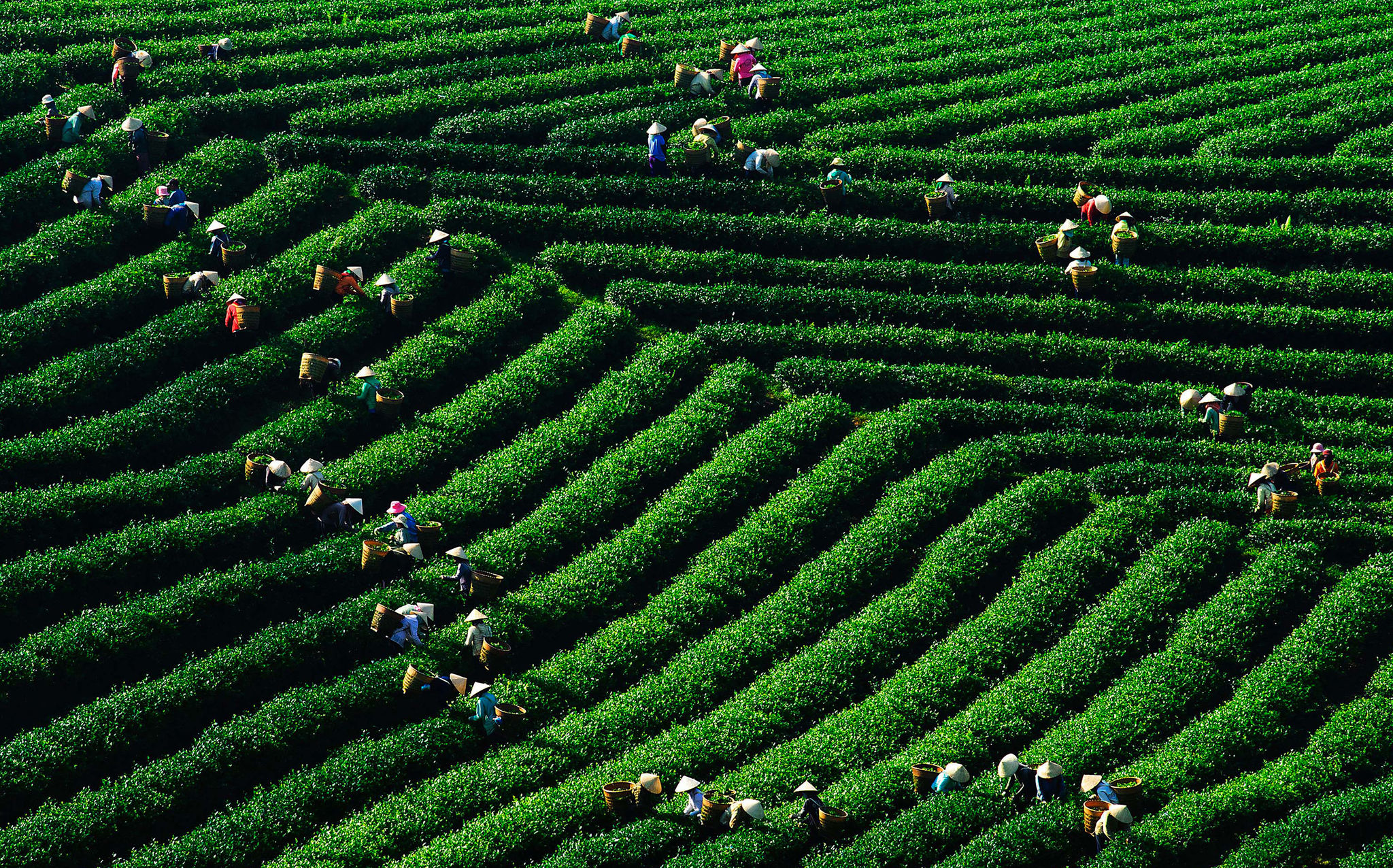
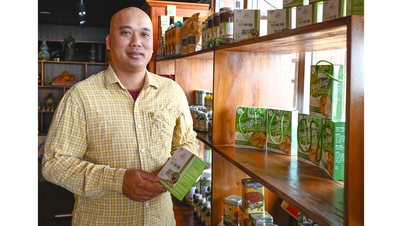
Tea has many layers of flavor – the inherent qualities of the tea. Each flavor layer has its own customer segment. Beginners will pay attention to teas in the mild flavor layer – teas with a light aroma and moderate astringency. Experienced tea drinkers prefer teas in the strong and clean flavor layer – teas with a sweet aftertaste, a thick consistency, and a full-bodied feel in the mouth. People who drink hot tea will choose different flavor layers than those who drink cold tea. Similarly, the way people choose pure tea is different from the way people choose tea with milk... "Generally, customers in the North tend to prefer teas with a clear flavor, moderate astringency, and a deep aftertaste. Meanwhile, people in the South prefer teas with a sweet aftertaste but a very strong tea body," shared Mr. Nguyen Manh Hung - Tri Viet Tea Company.
In the tea economic ecosystem, a thorough understanding of customers' tea preferences, alongside a deep understanding of the tea flavor profile, plays a strategic role. Therefore, supplying tea to the market is the result of a careful selection process – selection based on customer consumption behavior data. “In reality, customers often choose tea flavors based on their constitution and tea-drinking habits. If the customer's purpose is to drink tea to clear their mind, a strong-flavored tea with a thick body will be a suitable choice. This type of tea has a clear flavor, a deep sweet aftertaste, and a thick tea body. If the customer's purpose is simply to relax daily, then a light, less astringent tea with a mild aftertaste should be prioritized. This type of tea does not put pressure on the taste buds, helping the user to feel light and relaxed,” Mr. Hung explained. According to Mr. Nguyen Phuc Minh, a tea connoisseur in B'Lao ward, tea grown at an altitude of 800-1000 meters above sea level, combined with a mild climate and suitable soil, has a distinct quality. The tea accumulates a deep refinement – a rich, smooth, and mildly astringent taste with minimal irritation. Furthermore, the skill of the tea artisans in B'Lao has contributed to the ever-growing popularity of B'Lao tea. “Nowadays, machinery assists in many stages of tea processing. However, the skill of B'Lao tea artisans still plays a decisive role in creating the characteristic flavor of B'Lao tea,” Mr. Minh explained.
Mr. Hung believes that if the wilting process, as well as the oxidation and drying processes of the tea, are not properly controlled, the finished tea product may have a harsh taste or lose its sweet aftertaste.
Based on his observations, Mr. Minh believes that office workers tend to choose teas with a distinct flavor that promotes alertness and a long-lasting aftertaste. Students, on the other hand, prefer teas with a lighter, easier-to-drink flavor and less bitterness. According to Mr. Hung, tea consumers are shifting from "fragrant tea" to "layered flavor tea." Therefore, understanding the layers of tea flavor will give customers more choices. Customers who need a strong tea base to drink with milk should prioritize teas with the middle and middle layers. Customers who need a pleasantly cool tea should choose teas with the top and backing layers. Many experts affirm that the tea industry is no longer a linear market. It is now a convergence of a global network – a cup of tea is not just a beverage, but a point of contact between technology and health, between the individual and humanity, between art and sustainability.
Source: https://baolamdong.vn/tra-va-xu-huong-cua-nguoi-tieu-dung-441501.html
![[Image] Close-up view of the interchange connecting the two expressways and Long Thanh Airport.](https://vphoto.vietnam.vn/thumb/1200x675/vietnam/resource/IMAGE/2026/05/25/1779703378210_ndo_br_z7863716673926-224453a31600126cce10622af6290afd-4549-jpg.webp)


![[Image] Hanoi's urban life under the challenge of a "scorching hot" environment](https://vphoto.vietnam.vn/thumb/1200x675/vietnam/resource/IMAGE/2026/05/25/1779706979265_nang-nong-t5-2026-minh-duy-7-4636-jpg.webp)






















































































Comment (0)