

According to Jonathan Crickx, UNICEF spokesperson for the Palestinian territories, the situation in Gaza is very serious, especially for children.
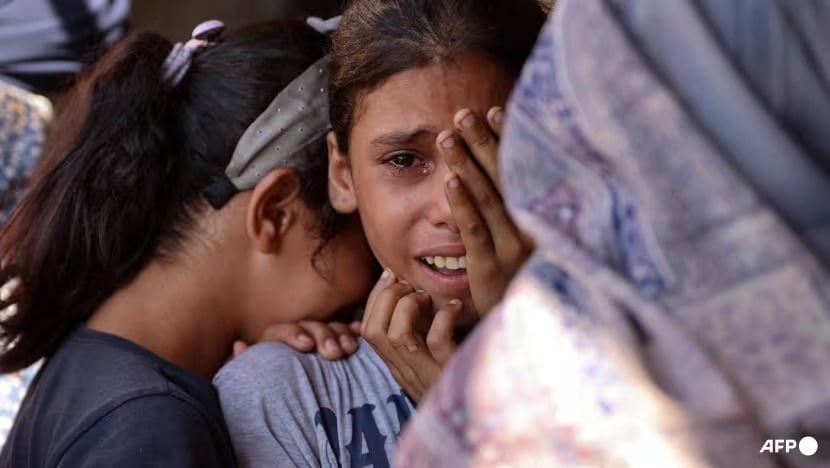
Children cry after an Israeli attack on a school sheltering displaced Palestinians in Falluja near the Jabalia refugee camp in northern Gaza Strip on September 26, 2024. Photo: AFP/Omar Al-Qattaa
Crickx recently returned from a week-long trip to Gaza and shared that most children there have not been able to attend school since the war between Israel and Hamas broke out on October 7th last year.
He said, "These children don't live like normal children; they have no education , no fun, no joy. Their faces are so sad."
Most of the children Crickx saw in Gaza were helping their families because there were no schools for them to attend. Many had to carry yellow plastic containers to fetch water, while others had to scavenge for food in garbage dumps.
He recounted the image of children as young as 5 or 6 years old wandering through large piles of garbage searching for anything edible. These children had endured violence, bombing, and insecurity for the past year.
Crickx recalled a conversation with Ahmad, a 10-year-old boy living in a refugee camp in southern Gaza. Ahmad had lost his uncle in a bombing and described in detail how the body had been dismembered.
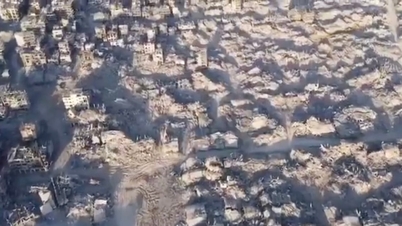
Many children in Gaza have lost at least one parent. UNICEF estimates that around 19,000 children there are without any surviving relatives. Furthermore, no schools are operational, and 85% of educational facilities have been destroyed by the conflict.
Crickx said: "An entire generation of school-aged children has been out of school for the past 12 months. Remarkably, they yearn to return to school, to see their friends and teachers... education offers them hope."
United Nations organizations and aid groups have warned of the risk of disease spread due to poor living conditions in Gaza. According to Crickx, the high population density, poor sanitation, hot weather, and lack of hygiene facilities create the perfect environment for disease outbreaks.
Many children are sick and need treatment, but most hospitals in Gaza are no longer operational. He met four children at Kamal Adwan Hospital in northern Gaza who had cancer or cardiovascular problems and needed immediate emergency care. Otherwise, they would not survive.
Cao Phong (according to AP, CNA)
Source: https://www.congluan.vn/unicef-tre-em-gaza-bi-anh-huong-nghiem-trong-boi-chien-tranh-post314698.html

![[Photo] Prime Minister Pham Minh Chinh presides over the conference announcing the establishment of the International Finance Centre in Vietnam.](/_next/image?url=https%3A%2F%2Fvphoto.vietnam.vn%2Fthumb%2F1200x675%2Fvietnam%2Fresource%2FIMAGE%2F2025%2F12%2F21%2F1766309817714_ndo_br_dsc-3400-jpg.webp&w=3840&q=75)


![[Photo] Prime Minister Pham Minh Chinh presides over a meeting on private sector economic development.](/_next/image?url=https%3A%2F%2Fvphoto.vietnam.vn%2Fthumb%2F1200x675%2Fvietnam%2Fresource%2FIMAGE%2F2025%2F12%2F20%2F1766237501876_thiet-ke-chua-co-ten-40-png.webp&w=3840&q=75)







































































Comment (0)