

On the afternoon of May 28th, the National Institute of Nutrition provided information to the press on the occasion of Micronutrient Day (June 1-2, 2026) and affirmed that the campaign to supplement high doses of vitamin A is a safe solution, while also addressing parents' concerns about the reactions of children after taking vitamin A.
The neglected immune "shield"
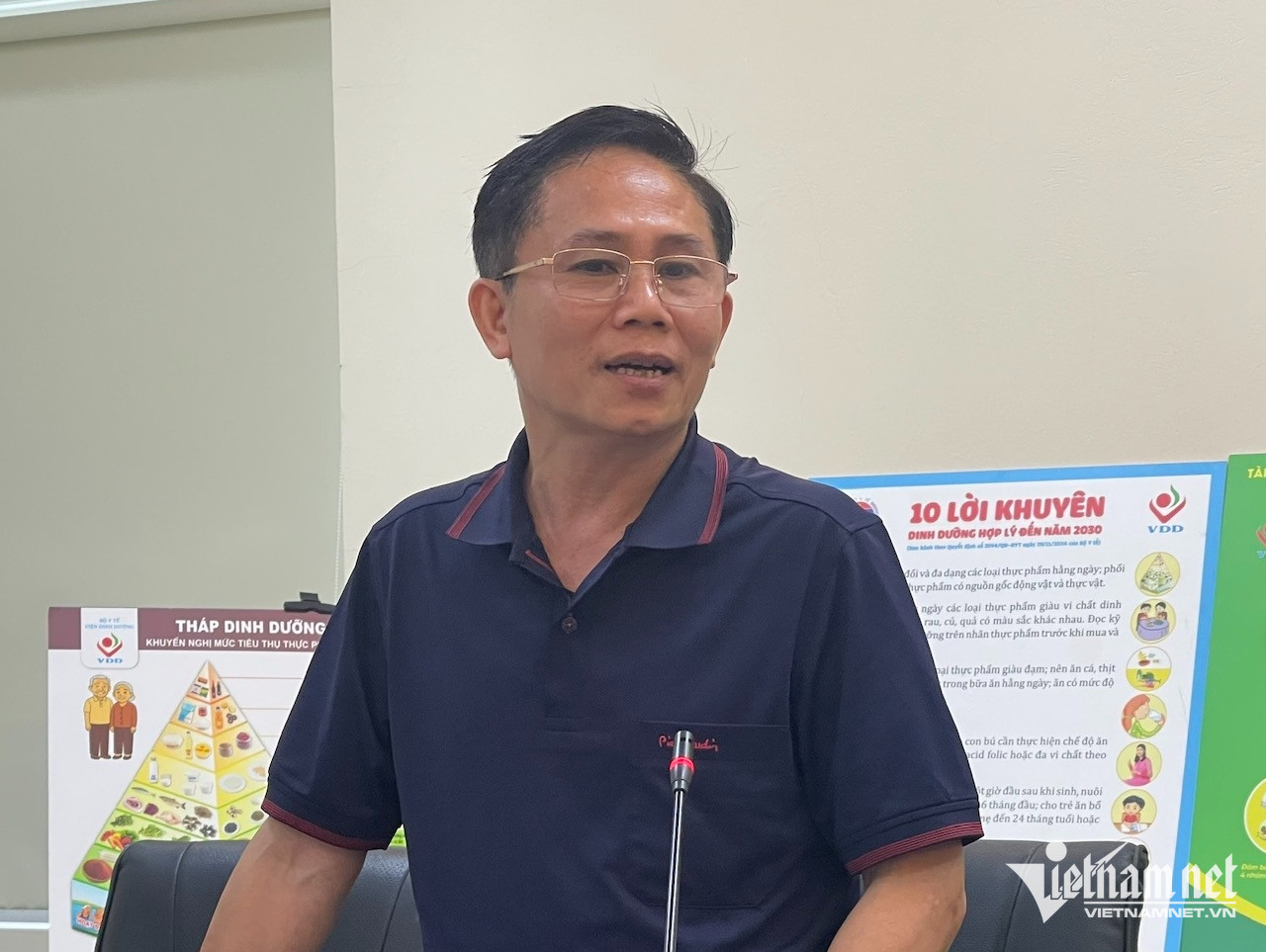
According to Associate Professor Dr. Tran Thanh Duong, Director of the National Institute of Nutrition, among essential micronutrients, vitamin A plays a particularly important role as a biological "shield" for children.
Contrary to the belief of many parents that vitamin A is only good for the eyes, this micronutrient directly participates in growth, protects the integrity of the epithelium, and activates the immune system in children.
However, the leaders of the National Institute of Nutrition are also concerned that micronutrient deficiencies (also known as hidden hunger) remain a global health challenge.
In Vietnam, according to the results of the 2020 National Institute of Nutrition's General Nutrition Survey, the rate of anemia in children aged 6-59 months is 18.1%, in pregnant women is 25.4%, and in women of childbearing age is 16.2%.
The prevalence of subclinical vitamin A deficiency in children aged 6-59 months is 8.9%, with the rate reaching 13.4% in the Northern Midlands and mountainous regions.
Is it cause for concern if a child vomits or has a slight fever after taking vitamin A?
To thoroughly address this situation, the leaders of the National Institute of Nutrition affirm that a campaign to supplement high doses of vitamin A annually is a mandatory strategy. This is considered a core public health solution to protect eyesight and support children's holistic development.
However, during these campaigns, many parents expressed concern when their children showed signs of fussiness or vomiting after taking high-dose vitamin A capsules.
Sharing his concerns, Mr. Trinh Hong Son, Director of the Communication Center at the National Institute of Nutrition, acknowledged that after receiving a sudden high dose of vitamin A, a small percentage of children may experience mild, temporary side effects including: mild nausea, slight vomiting, slightly loose stools, fussiness, mild fever, or a slight bulging of the fontanelle (in younger children).
"Typically, these symptoms will disappear completely on their own after 24 to 48 hours without any medication. Mothers should breastfeed more often and ensure their babies drink enough water."
"If symptoms do not improve after 48 hours, or if the child has a very high fever or vomits continuously, parents should take the child to a medical facility for examination," Dr. Son emphasized.
Source: https://vietnamnet.vn/tre-quay-khoc-phat-sot-sau-uong-vitamin-a-co-dang-lo-2520295.html





























![[Photo] Reception to welcome General Secretary and President To Lam and his wife on their State visit to the Philippines](https://vphoto.vietnam.vn/thumb/1200x675/vietnam/resource/IMAGE/2026/06/01/1780295488620_vna-potal-chieu-dai-chao-mung-tong-bi-thu-chu-tich-nuoc-to-lam-va-phu-nhan-tham-cap-nha-nuoc-toi-philippines-8798060-7855-jpg.webp)






























































Comment (0)