

Establishing a network to disseminate digital skills down to the grassroots level.
According to the "Training Human Resources for Digital Transformation in Dong Nai City, giai đoạn 2026-2030, with a vision to 2035" project recently approved by the City People's Committee on May 20th, the local government has identified the task of developing digital skills not only for officials or businesses but also to spread to every citizen and every residential area.
With a population of approximately 4.5 million people, Dong Nai considers " popularizing digital skills in the community as an urgent task to ensure no one is left behind ," actively building a generation of digital citizens and creating momentum for the development of the digital economy and digital society.
One of the key foundations for implementing the aforementioned task is the nationwide network of community-based digital technology groups. To date, Dong Nai has established 1,774 community-based digital technology groups with 10,330 members in hamlets and neighborhoods. These groups serve as an "extended arm" bringing digital skills closer to the people, especially at the grassroots level.
Through these groups, people are guided on using online public services, cashless payments, skills to ensure personal information security, and accessing essential digital platforms.
On the other hand, Dong Nai province, in coordination with the Ministry of Science and Technology, has implemented "Training courses on digital transformation and digital skills" on MOOCs at chuyendoiso.mobiedu.vn for 14,156 people. The participants were diverse, ranging from officials and civil servants to members of community digital technology teams and digital transformation personnel at the grassroots level.
Notably, the locality also organized training sessions to disseminate knowledge and skills in applying artificial intelligence (AI) to over 29,500 officials, civil servants, and citizens through both in-person and online formats on YouTube and Facebook. Popular AI tools such as ChatGPT, Gemini, and NotebookLM were included in the training content to help learners quickly adapt to the digital work environment.
In addition, Dong Nai implemented three courses on "Protecting personal information security in the digital environment," "Popularizing knowledge and skills in AI application," and "Guidance on using public services and cashless payments" on the Ministry of Public Security's website binhdanhocvuso.gov.vn, attracting more than 89,500 participants including officials and citizens.
Specifically on the city's "Digital Literacy Platform," 20,509 city and commune-level officials and civil servants have been assessed on AI skills and issued electronic certificates.
In addition, Dong Nai has trained 119 core digital transformation experts at various units to lead implementation at the grassroots level.

Promoting digital literacy and enhancing digital skills for all population groups.
Dong Nai's digital skills popularization project targets all segments of the population, especially vulnerable groups, those in remote areas, and ethnic minorities.
According to the assessment of the Dong Nai City People's Committee, the "digital literacy" campaign is being implemented in a humane way, with the people at the center. Popularizing digital skills not only helps people use online public services more conveniently but also enhances their ability to protect themselves in cyberspace, expanding opportunities to access jobs and the digital economy.
According to statistics from the Dong Nai City People's Committee, the digital skills training courses on the "Popular Education Digital" platform for community digital technology groups recorded 23,415 learning sessions from 6,478 registered accounts, of which 22,146 completed the courses, achieving a completion rate of 94.58%. For the general public, there were 26,226 participations in digital skills courses.
In particular, Dong Nai has implemented basic digital literacy programs for more than 2,500 ethnic minority people in the areas of Tan Phu, Dinh Quan, Thong Nhat, Cam My, Xuan Loc, Long Khanh, and Trang Bom.
At the same time, the "Digital Popular Education" platform was disseminated to nearly 200 influential figures among ethnic minorities and more than 100 religious dignitaries belonging to the Executive Board of the Vietnam Buddhist Association in the city.
During the period 2026-2030, Dong Nai aims for at least 50% of the working-age population to possess basic digital skills; and 100% of members of community digital technology groups to receive regular training on online public services and personal information security.
The locality also aims for 100% of primary school students to be equipped with digital knowledge and skills for learning, research, and creativity; and at least 50% of workers in high-tech enterprises and cooperatives to be provided with basic digital skills.
To realize these goals, Dong Nai will continue to innovate its communication methods through multi-platform campaigns on Zalo OA, Facebook, and TikTok; maintain the annual "Dong Nai City Digital Transformation Day"; and provide free basic digital skills courses for citizens through mass open online learning platforms (MOOCs).
Besides "building," the locality also pays special attention to the "prevention" aspect, considering information security skills as an essential capability for every citizen in the digital environment. Accordingly, training programs on AI, digital data, and online public services are all linked to content on protecting personal data and preventing risks in cyberspace.
The project sets a vision for 2035, aiming for at least 80% of the working-age population to achieve advanced digital skills, enabling them to protect themselves and operate effectively in the digital environment.
By actively implementing the Digital Transformation Human Resource Training Project, Dong Nai hopes to become a center for training high-quality digital human resources in the Southern key economic region.
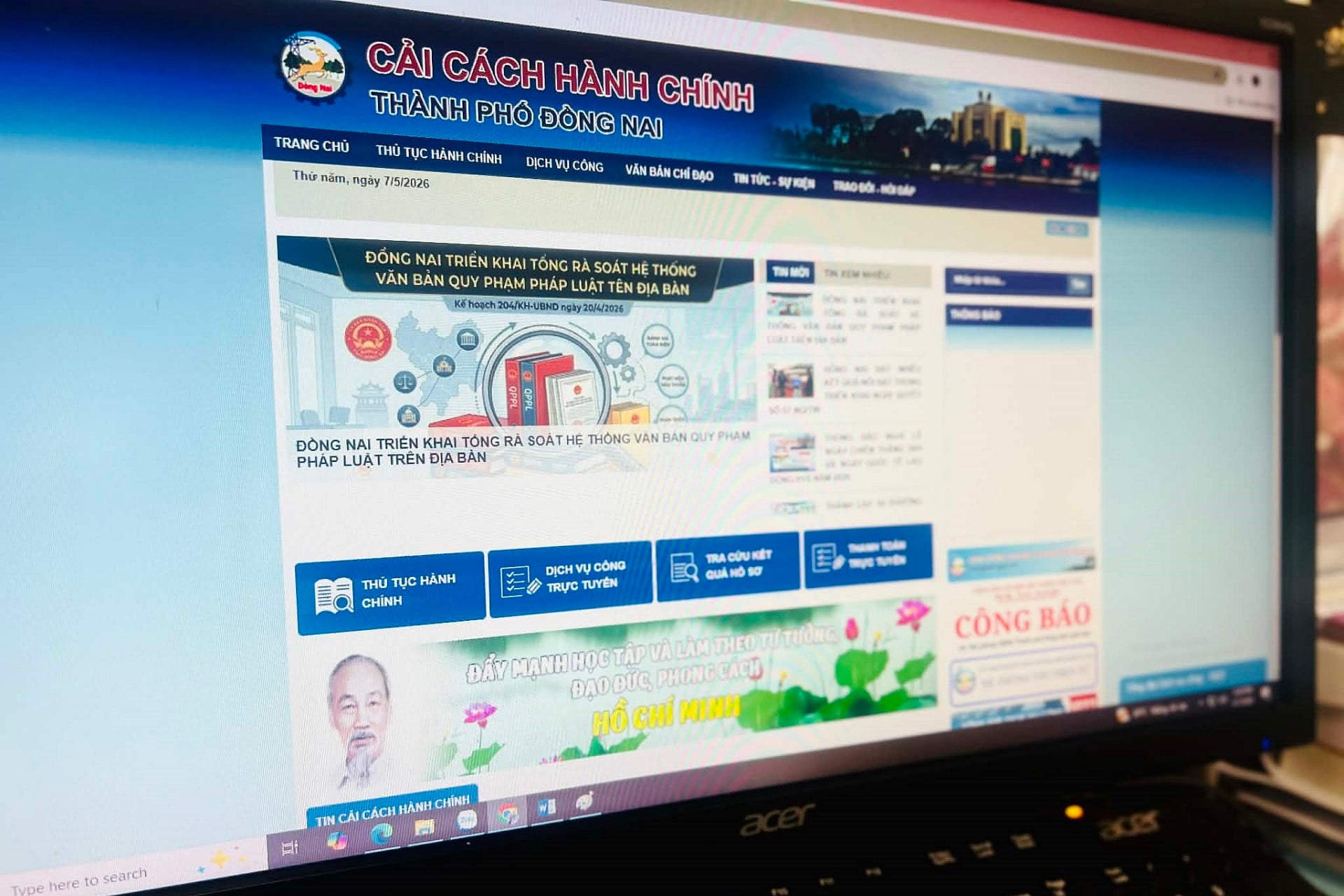
Source: https://vietnamnet.vn/pho-cap-ky-nang-so-cho-4-5-trieu-dan-dong-nai-2520733.html


























![[Photo] Reception to welcome General Secretary and President To Lam and his wife on their State visit to the Philippines](https://vphoto.vietnam.vn/thumb/1200x675/vietnam/resource/IMAGE/2026/06/01/1780295488620_vna-potal-chieu-dai-chao-mung-tong-bi-thu-chu-tich-nuoc-to-lam-va-phu-nhan-tham-cap-nha-nuoc-toi-philippines-8798060-7855-jpg.webp)































































Comment (0)