

An artificial intelligence system developed by a team of Chinese scientists could help locate potentially massive rare earth deposits in the Himalayas.
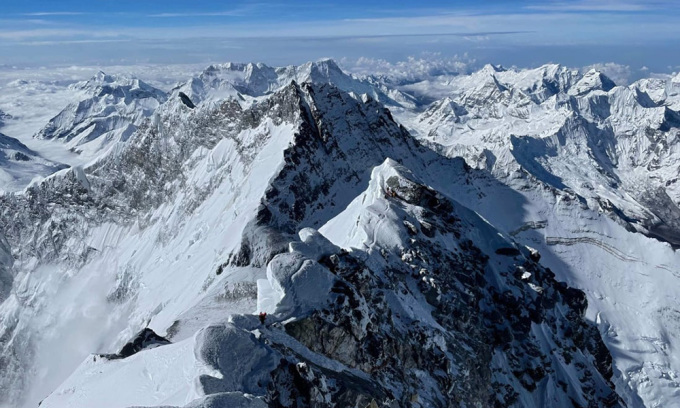
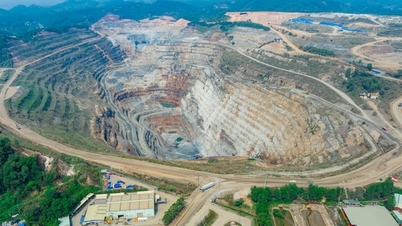
Locating and extracting minerals in the Himalayas is a major challenge. Photo: AFP
Chinese geologists have discovered a massive potential reserve of rare earth elements in the Himalayas, potentially solidifying China's position as the world's leading supplier of these elements. The mineral deposit is believed to stretch over 1,000 kilometers, but locating it in such a vast and remote area could take years, even decades, the South China Morning Post reported on June 21.
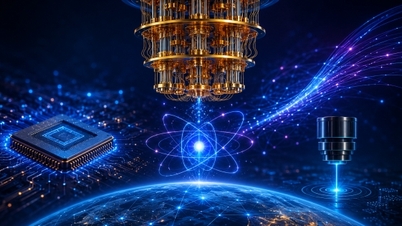
One possible solution is to use artificial intelligence (AI). Since 2020, a team of scientists from the University of Geosciences of China has developed an AI system that can automatically process almost all raw data collected by satellites and other vehicles to pinpoint the location of rare earth deposits on the Tibetan Plateau.
"Rare earth metals are irreplaceable in industries such as new materials, new energy, defense and military technology, and information technology, becoming a strategically important resource in global competition," Professor Zuo Renguang wrote in a study published in the journal Earth Science Frontiers last week.
The AI will search for a unique type of granite with a lighter-than-normal color tone. It may contain rare earth elements such as niobium and tantalum, commonly used in high-tech products, and also a significant amount of lithium, a key component in electric vehicle production.
Chinese geologists have found such granite in many parts of the Himalayas, including around Mount Everest, but previously believed they contained no exploitable material. About 10 years ago, they stumbled upon the presence of rare earth elements and lithium in some rock samples collected nearby.
China currently has a large rare earth production base in Inner Mongolia and other facilities further south in provinces such as Guangdong, Jiangxi, and Sichuan. However, scientists believe that rare earth reserves in the Himalayas could equal, or even exceed, those in these locations, helping China solidify its position in the world.
China once held a dominant position, possessing approximately 43% of global rare earth reserves in the 1980s and 1990s, but this figure declined to around 36.7% in 2021. Meanwhile, rare earth resources outside of China increased significantly, from 40 million tons to 98 million tons.
Over two years ago, when Zuo's team began developing the AI, the system was trained using a limited dataset, such as satellite imagery, to identify light-colored granite. Initially, the AI only had an accuracy rate of about 60%, but the research team gradually expanded the system's knowledge by increasing the accuracy of the algorithms.
The team provided the AI with additional datasets including data on the chemical composition of rocks and minerals, magnetism, spectroscopic data collected by the aircraft, and geological maps of the Tibetan Plateau. They found that the AI system was capable of rapid self-development, achieving an accuracy rate of over 90% within a few months.
Thu Thao (According to SCMP )
Source link

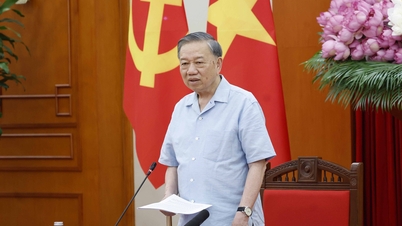
![[Photo] General Secretary and President To Lam presides over a meeting on preparations for the review of one year of operation of the three-tiered government system.](https://vphoto.vietnam.vn/thumb/1200x675/vietnam/resource/IMAGE/2026/06/02/1780391821195_a1-bnd-4595-9717-jpg.webp)

































































Comment (0)