

Recent developments have revealed certain limitations to the use of military force, while also raising questions about the future trends in the regional and international security environment.
Limits of power and strategic adjustments
Currently, it is difficult to make a definitive prediction about the long-term state of the Middle East after tensions surrounding Iran subside. Whether a “new order” will emerge, and if so, what its characteristics will be, remains an open question. However, the fact that an extreme escalation scenario, including apocalyptic warnings, has not materialized allows for some important conclusions to be drawn, not only for the region but also for the global power structure.
.png)
First, recent events have once again demonstrated the practical limitations of using military force when vital interests are not directly threatened. Despite possessing a significant technological advantage and combat capability, the US was unable to quickly achieve its strategic objectives against Iran. This not only reflects the complexity of modern warfare but also demonstrates the effectiveness of asymmetrical defense strategies.
In this context, Washington effectively has only two options: either continue escalating, or adjust its objectives and accept a certain degree of compromise. The avoidance of extreme measures, particularly nuclear weapons, demonstrates the political and strategic limits of military power, even for a leading superpower. Previous tough statements, therefore, were more of a deterrent than a reflection of a genuine will to act.
This choice also highlights a fundamental difference from historical moments like 1945. At that time, the use of nuclear weapons occurred in the context of a world war drawing to a close and was linked to broader geopolitical calculations. In the current situation, the level of risk does not reach the same threshold, making extreme decisions less strategically sound.
The direct consequence is that the image of America's "absolute security commitment" to its partners and allies is being questioned. When the strongest measures are not used even in situations of high tension, countries dependent on Washington's security umbrella are forced to reassess the reliability of those commitments. This is particularly evident in the Middle East, where some allies have faced significant military responses without receiving adequate protection.
The impact of this perception is not limited to the region. In Europe, particularly in countries close to Russia's sphere of influence, confidence in external security guarantees may also be adjusted. Once commitments are no longer considered absolute, the strategic behavior of nations will shift towards greater caution, or conversely, greater autonomy in protecting their interests.
The fragmented international order and the risk of prolonged escalation.
Secondly, what has transpired shows that international politics is still operating in a state fraught with the potential for large-scale conflict. Although the worst-case scenario has been avoided, the trend of strategic competition between great powers has not diminished. On the contrary, it may continue in an increasingly fragmented and unpredictable environment.
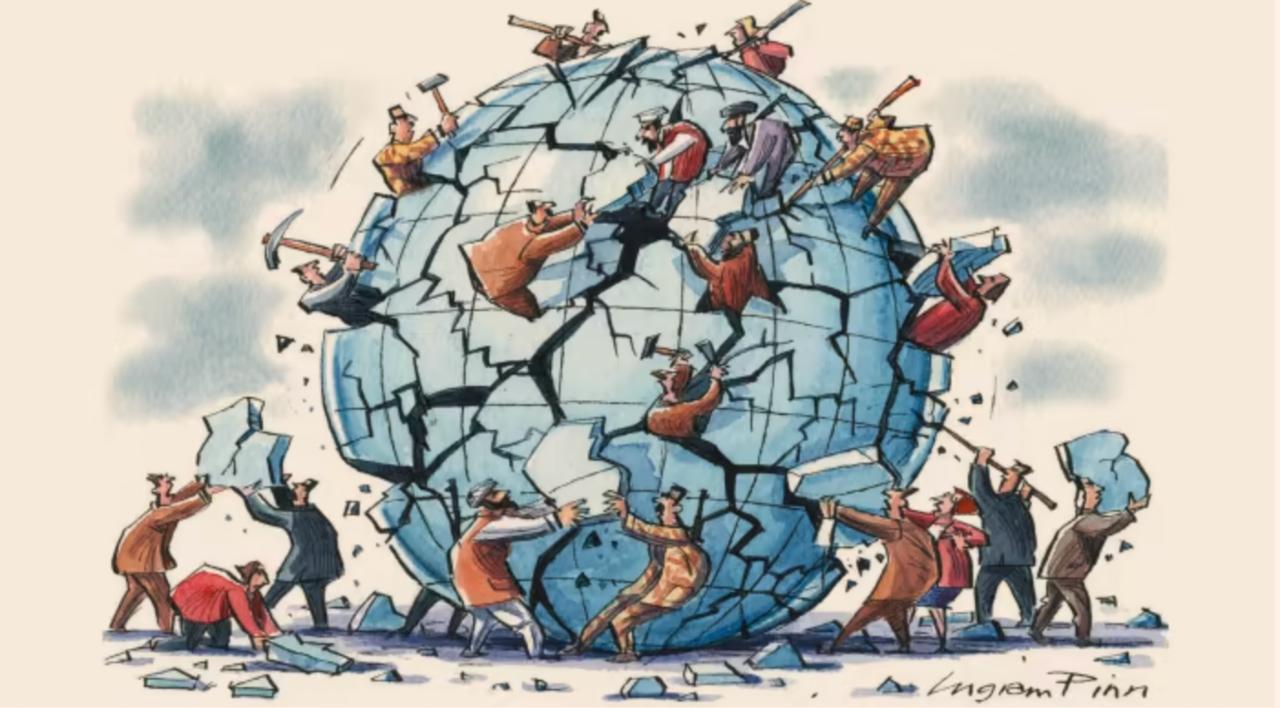
One key factor is the increasingly pragmatic approach in U.S. foreign policy. Strategic decisions appear to be weighed more heavily on the basis of concrete cost-benefit analysis, rather than symbolic goals like prestige or status. This explains why tough rhetoric can be accompanied by a willingness to compromise in practice.
This approach has a double-edged sword. On the one hand, it reduces the risk of uncontrolled escalation, as extreme decisions are only considered when core interests are directly threatened. On the other hand, it weakens the deterrent effect of security commitments, as partners are no longer certain that the U.S. will act in every situation.
Against this backdrop, other major powers tend to adjust their strategies. China and Russia, for example, are increasingly focusing on economic and investment interests in their relations with the US, while also taking advantage of the strategic space opened up by Washington's caution. Instead of direct confrontation, competition unfolds on multiple levels, from economics and technology to regional influence.
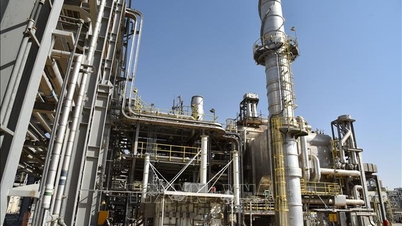
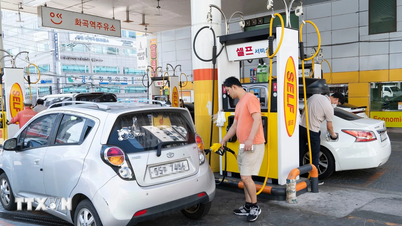
For the Middle East, any upheaval involving Iran has far-reaching implications for global energy markets. An extreme scenario, such as the complete collapse of Iran, would have unpredictable consequences, not only for the region but also for the global economy. Therefore, avoiding escalation to the maximum extent is not only a strategic choice for the United States, but also an objective requirement of the international system.
However, that doesn't mean the risk has disappeared. On the contrary, as major powers continuously test each other's limits without crossing a "red line," a prolonged state of tension can develop. In that state, local crises can still erupt and spread, especially when miscalculations occur.
In the long term, the question is whether the United States can maintain its current global position. If its relative power declines or the cost of maintaining it increases, Washington may face more difficult choices. Situations where core interests are directly threatened may then occur more frequently, increasing the risk of resorting to strong measures.
In other words, the current period can be seen as a transitional phase: where the old rules have not completely disappeared, but the new rules have not yet clearly taken shape. In that gap, the behavior of nations is more flexible, but at the same time also carries more risks.
It can be asserted that recent developments demonstrate a profound shift in the international security environment. The limits of power, adjustments in strategic calculations, and the fragmentation of the global order are simultaneously shaping a new picture where stability is no longer the default state, but the result of fragile and ever-changing balances.
Source: https://congluan.vn/trung-dong-sau-con-song-du-10337771.html

![[Photo] The General Secretary, President and his wife lay flowers at the Ho Chi Minh Monument in Manila.](https://vphoto.vietnam.vn/thumb/1200x675/vietnam/resource/IMAGE/2026/05/31/1780219759477_anh-man-hinh-2026-05-31-luc-16-29-07.png)









![[Video] Sunset at Lap An Lagoon – Where the sun sets over the fishing nets](https://vphoto.vietnam.vn/thumb/340x192/vietnam/resource/IMAGE/2026/05/31/1780192137701_beach-landscape-sea-water-nature-grass-745871-pxhere-com.jpeg)






























































Comment (0)