

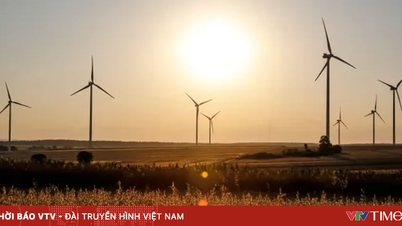
According to the report, nuclear power capacity is expected to continue expanding, accounting for 10% of China's total electricity production by 2035, up from 5% in 2021, and equivalent to a reduction of 900 million tons of carbon dioxide.
The proportion of nuclear power generation is projected to reach 18% by 2060, equivalent to the current average of members of the Organization for Economic Cooperation and Development (OECD).
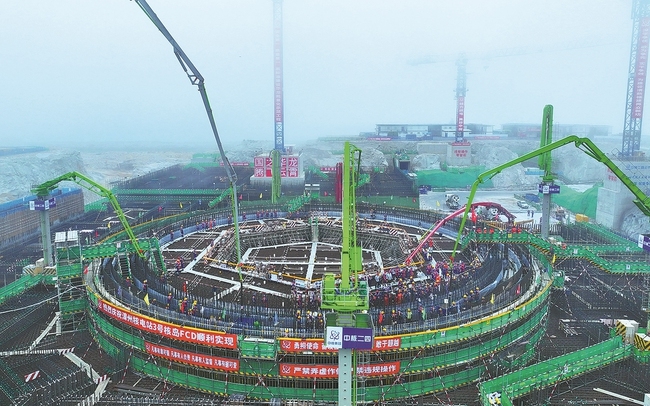
Zhang Tingke, Vice Chairman and Secretary-General of the China Nuclear Energy Association, said on Monday that the Chinese government has been actively, safely, and orderly developing nuclear energy in recent years, with the scale and speed of nuclear power development entering a new normal.
According to the Green Book, China's nuclear power output has continued to increase over the past few years, and future growth in electricity supply will mainly come from non-fossil fuel sources in the context of the green energy transition.
China's nuclear power output reached 433.37 billion kWh in 2023, ranking second worldwide and equivalent to a reduction of over 130 million tons in standard coal burning compared to coal-fired power generation.
In 2023, China's ongoing nuclear power projects were progressing steadily, with construction beginning on five new nuclear power units.
The report stated that investment in nuclear power plant construction reached 94.9 billion yuan (US$13.11 billion) in 2023, the highest level in five years.
According to CITIC Securities, the accelerated approval process for nuclear power projects is expected to drive growth in China's related industrial chain, further facilitating the country's goal of reducing carbon emissions sooner than planned.
Wang Shoujun, chairman of the China Nuclear Association, said that after more than 30 years of development, China has risen from a "newcomer" to a pioneer in the nuclear power industry, achieving tremendous progress in the localization of nuclear technology, including the design of the third-generation Hualong One pressurized water nuclear reactor – a reactor with Chinese intellectual property rights – which is also one of the most widely accepted third-generation nuclear reactors.
Source
![[Photo] Secretary of the National Assembly Party Committee, Chairman of the National Assembly presides over the meeting of the Standing Committee and Executive Committee of the National Assembly Party Committee.](https://vphoto.vietnam.vn/thumb/1200x675/vietnam/resource/IMAGE/2026/06/03/1780480353201_ndo_br_bnd-2585-jpg.webp)
![[Photo] First session of the 14th Congress of the Vietnam Trade Union](https://vphoto.vietnam.vn/thumb/1200x675/vietnam/resource/IMAGE/2026/06/03/1780465947883_ndo_br_img-3852-jpg.webp)

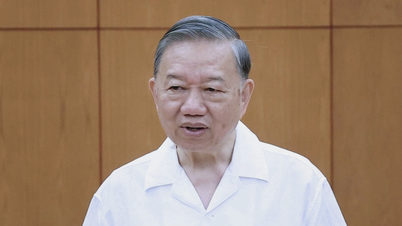
![[Photo] General Secretary and President To Lam presides over a meeting with the Central Organizing Committee.](https://vphoto.vietnam.vn/thumb/1200x675/vietnam/resource/IMAGE/2026/06/03/1780482764658_a1-bnd-4741-3342-jpg.webp)

































![[Video] Sunset at Lap An Lagoon – Where the sun sets over the fishing nets](https://vphoto.vietnam.vn/thumb/1200x675/vietnam/resource/IMAGE/2026/05/31/1780192137701_beach-landscape-sea-water-nature-grass-745871-pxhere-com.jpeg)























Comment (0)