

With this new policy, Trump is unilaterally breaking the trade agreement between the US and the EU signed last summer, which stipulated a reciprocal tariff rate of only 15%.
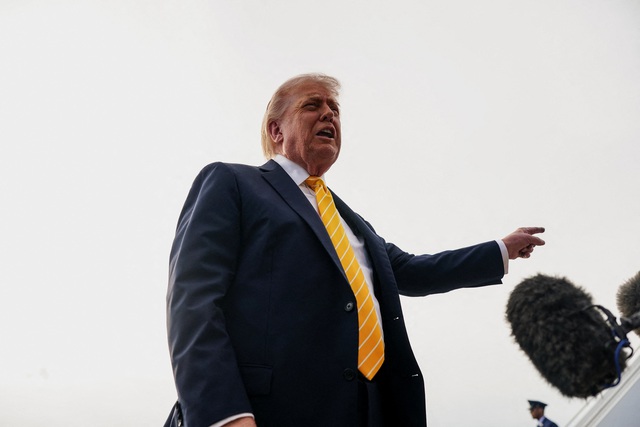
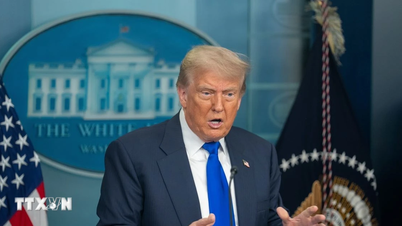
President Trump
Photo: AP
Not all of the accusations Trump made as justifications for this policy were unreasonable. To date, the agreement has not been ratified by the EU. The two sides remain deeply divided on the EU's taxation of American high-tech companies, and on the EU's trade barriers and obstacles to American cars and trucks... But from the perspective of the time Trump made this decision, these reasons may not have been entirely decisive.
Currently, President Trump faces numerous difficulties and dilemmas, both domestically and internationally. The U.S. Supreme Court has ruled against his protectionist trade tariff policies. The war with Iran has not been a victory for the United States as President Trump has consistently claimed. Inflation in the U.S. is rising. Washington has also failed to end the Ukraine conflict as Trump once declared. Russia and China continue to be partners and rivals challenging America's role and influence in global politics .
Against this backdrop, EU and NATO member states in Europe are not standing shoulder-to-shoulder with the US in the Iran conflict. Most recently, Trump was particularly angered by statements from German Chancellor Friedrich Merz. Therefore, this decision is both an act of venting his anger at the EU and Germany, and a way to extricate himself from his current domestic difficulties and dilemmas, circumventing the Supreme Court ruling to impose protective tariffs in a different way and exploiting the populist effect of the "America First" slogan.
The US is withdrawing 5,000 troops from Germany.
Source: https://thanhnien.vn/trut-gian-and-tu-giai-cuu-185260503212142182.htm

![[Photo] General Secretary and President To Lam receives Amazon's Senior Vice President David Zapolsky](https://vphoto.vietnam.vn/thumb/1200x675/vietnam/resource/IMAGE/2026/05/22/1779466547770_a1-bnd-3513-6601-jpg.webp)

![[Podcast] World News May 22: China affirms strong retaliation if EU deploys new trade tools](https://vphoto.vietnam.vn/thumb/402x226/vietnam/resource/IMAGE/2026/05/22/1779440549660_khung-thumbnail-tham-khao-tu-mau-cu-500-x-500-px-900-x-600-px.png)






























































Comment (0)