

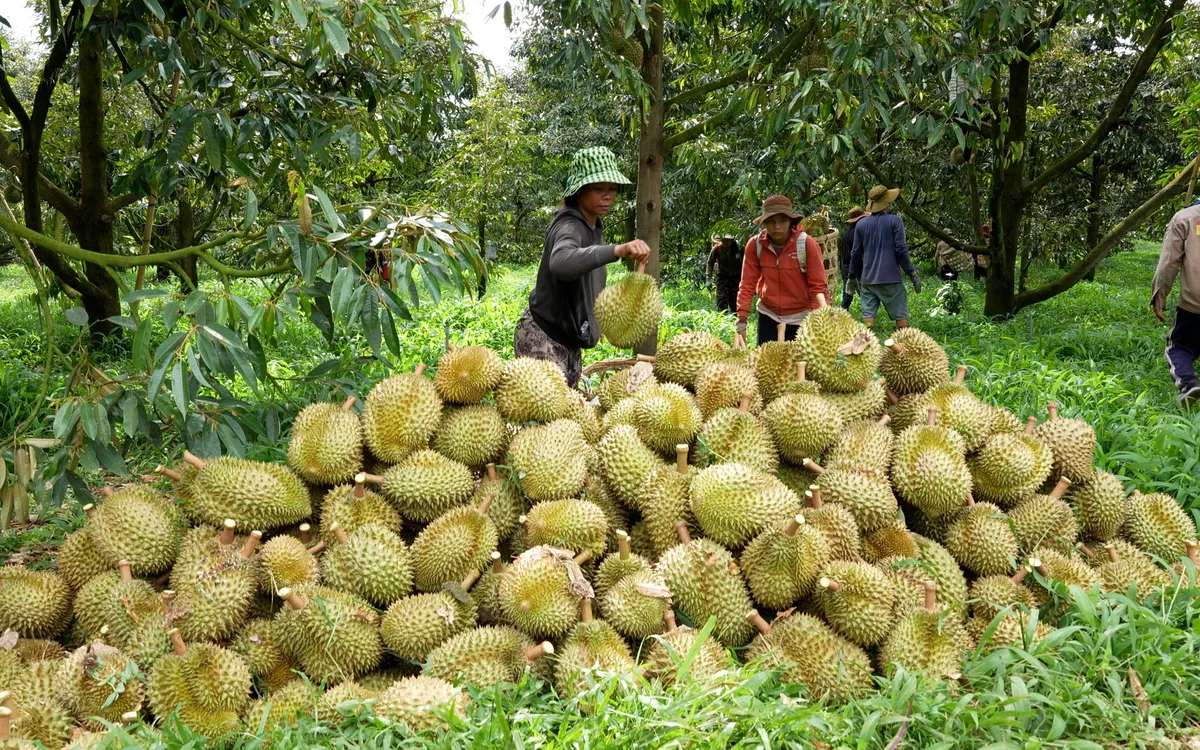
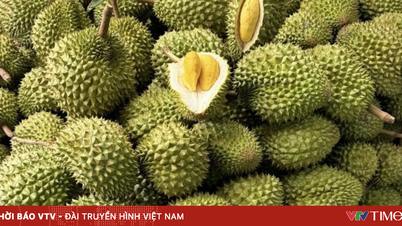
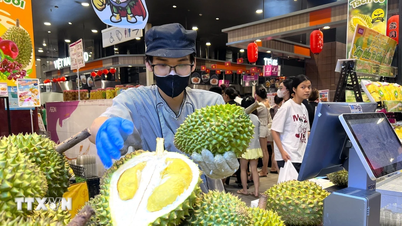
For many years, the growing area code (MSVT) and the packing facility code (CSĐG) have been considered mandatory "passports" for Vietnamese agricultural exports. However, with the rapid development of the fruit and vegetable industry, especially in sectors such as durian, banana, mango, and dragon fruit, the pressure to manage these products is increasing as importing markets continuously tighten requirements on plant quarantine, food safety, and traceability.
In this context, the Government's issuance of Decree No. 38/2026/ND-CP on the import of potted plants, management of planting area codes and packaging facility codes is considered an important institutional step towards standardizing, increasing transparency, and improving the efficiency of state management of agricultural production for export.
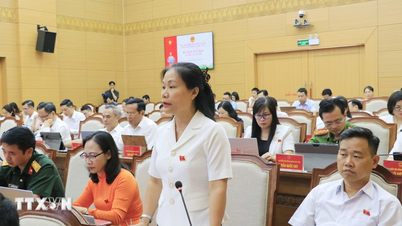
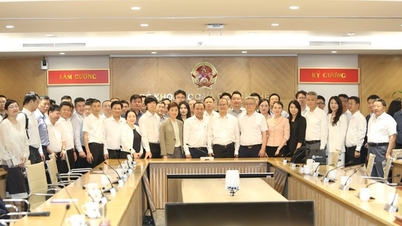
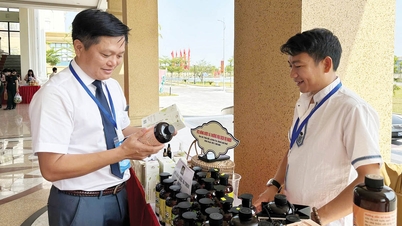
Immediately after the Decree was issued, the Ministry of Agriculture and Environment organized an implementation conference chaired by Deputy Minister Hoang Trung, with the participation of many localities, industry associations, export businesses, and specialized agencies.
The conference was not only an activity to disseminate legal regulations but also considered a forum to unify understanding across the industry regarding the need to shift strongly from a "number assignment" mindset to "managing and maintaining numbers in a substantive and sustainable manner".
No longer just a formal "passport".

According to the Ministry of Agriculture and Environment, by May 2026, the whole country will have 9,546 planting area codes and 1,525 packaging facility codes serving exports to many major markets.
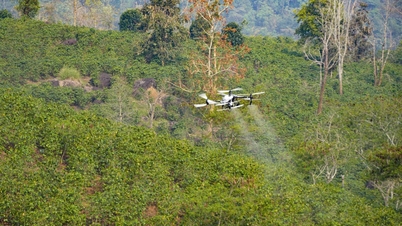
Previously, many places considered the planting area code primarily as a requirement for completing export documentation. However, the nature of the coding system has now changed significantly. Importing markets such as China, the United States, Japan, South Korea, and Australia not only require codes but also demand continuous maintenance of technical conditions related to pests, pesticide residues, packaging conditions, and traceability.
According to the Ministry of Agriculture and Environment, by May 2026, the whole country will have 9,546 planting area codes and 1,525 packaging facility codes serving exports to many major markets. The Chinese market alone currently has 4,323 approved planting area codes and 1,332 approved packaging facility codes.
However, alongside this rapid development comes an increasing risk of violations. From 2025 to the present, 403 growing area codes and 240 packaging facility codes have received non-compliance warnings from China; of which 167 growing area codes and 99 packaging facility codes have been suspended or revoked.
These figures show that the current coding system is no longer a mere "export procedure" but has become a tool for controlling the quality and national reputation of exported agricultural products.

Deputy Minister of Agriculture and Environment Hoang Trung emphasized that if the codes for growing areas and packaging facilities are not properly managed, even a few violations could affect the entire industry and potentially damage national reputation.
Speaking at the conference on the implementation of Decree 38/2026/ND-CP, Deputy Minister Hoang Trung emphasized that if the codes for growing areas and packaging facilities are not properly managed, even a few violations could affect the entire industry, potentially impacting national reputation and the ability to maintain export markets.
One of the issues of great interest to many localities at the conference was the mechanism for decentralizing the management of MSVT and CSĐG. In fact, decentralization to localities has been implemented for many years through specialized guidelines. The Ministry plays the role of building institutions, providing technical guidance, negotiating with importing countries, and coordinating post-inspection; while localities directly conduct on-site inspections, issue and manage codes within their areas.
However, prior to Decree 38/2026/ND-CP, this mechanism was primarily implemented based on administrative guidelines and lacked a complete legal framework at the government decree level.
Shift strongly towards substantive and sustainable management.
A notable point of Decree 38/2026/ND-CP is that, for the first time, the responsibilities and powers of each level are clearly defined in a unified government decree, from receiving applications, checking, issuing codes to monitoring, suspending, restoring or revoking codes.
According to regulations, the provincial People's Committee is responsible for organizing the issuance and management of vehicle registration certificates and vehicle inspection certificates within its jurisdiction; directing specialized agencies to inspect, supervise, conduct post-inspection, and handle violations; and allocating resources, personnel, and funding to maintain management activities.
This reflects a new management perspective that emphasizes accountability in the local area, with local authorities directly "monitoring the growing regions and packaging facilities," overseeing the maintenance of technical conditions, and promptly addressing violations at the grassroots level.
Another important message emphasized at the conference was the need to shift from a "issue as many identification numbers as possible" mindset to a "sustainable numbering system."
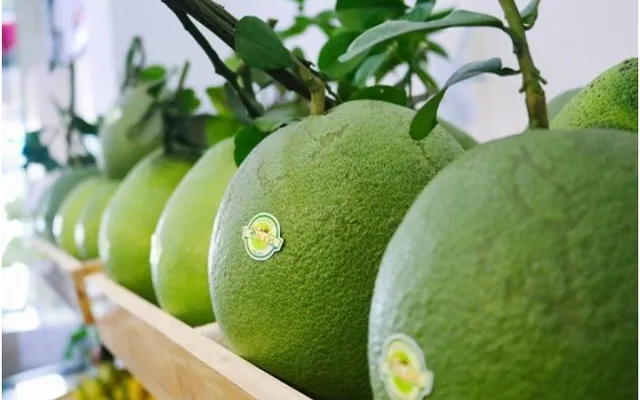
The Ministry of Agriculture and Environment will accelerate digital transformation and build a national database of planting area codes and packaging facility codes; moving towards digitizing the entire process.
In reality, some areas still prioritize quantity over quality, focusing on obtaining codes without paying sufficient attention to post-inspection. Production logs, traceability, pest control, and pesticide residue monitoring are often merely superficial, leading to many codes being flagged or temporarily suspended.
Decree 38/2026/ND-CP also, for the first time, provides relatively comprehensive regulations on the mechanisms for suspending, restoring, and revoking registration numbers, with clear procedures, forms, and processing deadlines, creating a legal basis for enhancing transparency and accountability in management.
In addition, the Ministry of Agriculture and Environment will promote digital transformation and build a national database on planting area codes and packaging facility codes; moving towards digitizing the entire process from receiving applications, conducting field inspections, issuing codes to monitoring, warning, and handling violations.
This is not only a domestic management requirement but also an inevitable trend in global agricultural trade as importing markets increasingly value information transparency, electronic traceability, and supply chain responsibility.
It can be said that Decree 38/2026/ND-CP is not only a legal document on the management of planting area codes or packaging facilities, but also opens a new phase for thinking about managing agricultural exports towards a more professional, transparent, and responsible approach to the international market.
Source: https://vtv.vn/tu-cap-ma-so-den-giu-uy-tin-nong-san-viet-100260515104347387.htm


![[Image] Close-up view of the interchange connecting the two expressways and Long Thanh Airport.](https://vphoto.vietnam.vn/thumb/1200x675/vietnam/resource/IMAGE/2026/05/25/1779703378210_ndo_br_z7863716673926-224453a31600126cce10622af6290afd-4549-jpg.webp)













































































Comment (0)