

(NLĐO) - The success of university autonomy will make a significant contribution to improving the quality of human resources, promoting innovation, and developing the economy and society.
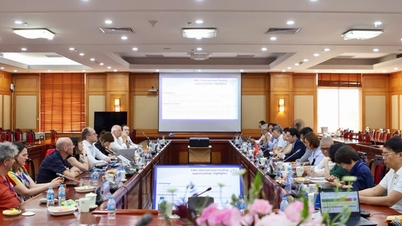
The Vietnam Higher Education Quality Assurance Network Club, in collaboration with Hung Vuong University in Ho Chi Minh City, recently organized a workshop titled "Innovating University Governance Based on University Autonomy and Quality Assurance".
Speaking at the conference, Dr. Tran Viet Anh, Vice Rector in charge of Hung Vuong University in Ho Chi Minh City and Vice President of the Club, stated that university governance based on autonomy is not only an inevitable trend but also an important solution to help universities flexibly adapt to the rapid changes in society, thereby optimizing resources and enhancing competitiveness. However, to implement this effectively, a close combination of factors is needed, such as: digital transformation in governance and teaching, ensuring the quality of education and training, international cooperation, and developing training programs towards sustainability, mobilizing and managing resources in a sustainable manner.
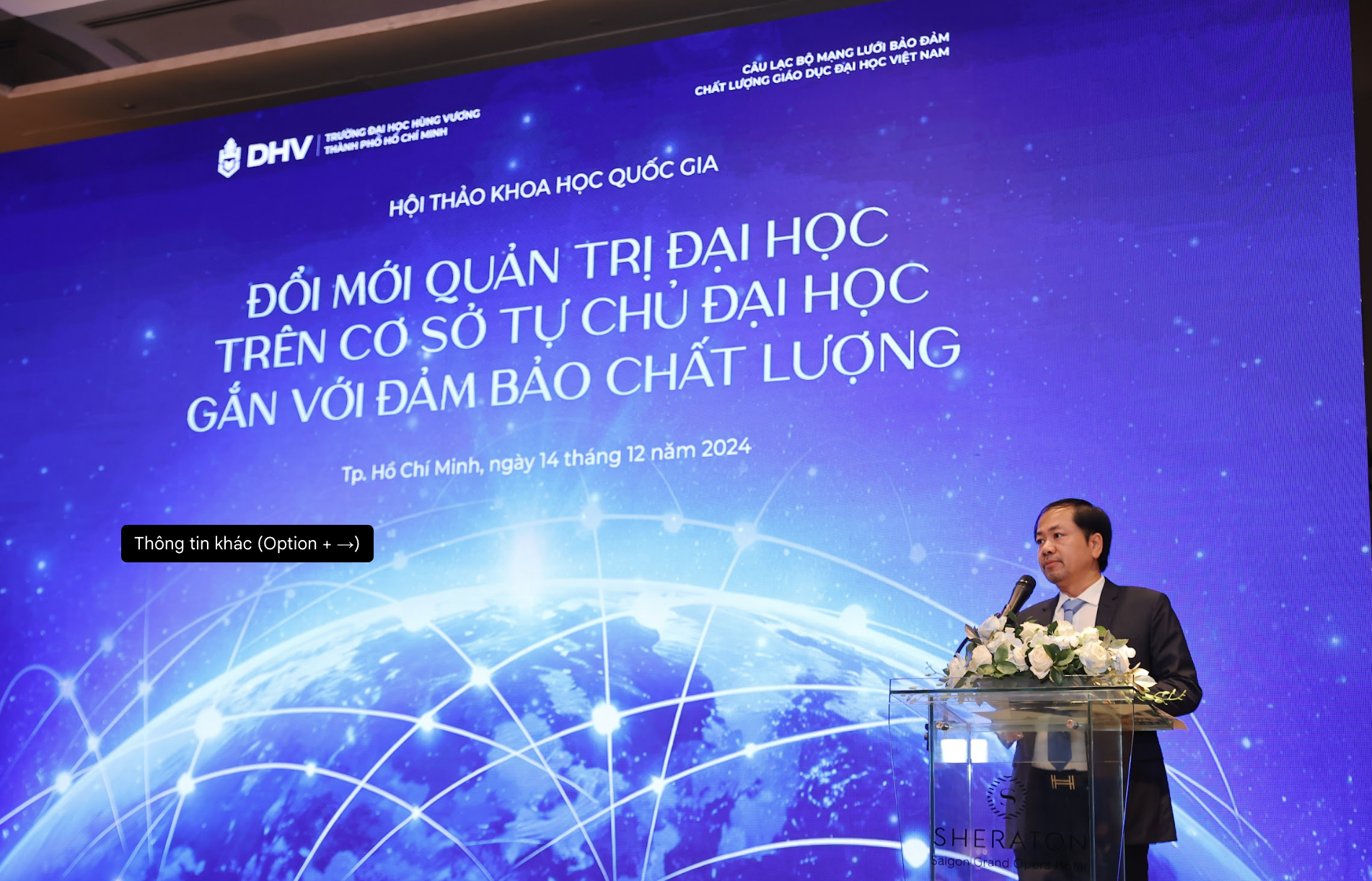
Dr. Tran Viet Anh speaking at the conference.
Referring to the process of university autonomy in Vietnam, Dr. Nguyen Thi Thu Ha from the University of Transport Technology stated that currently, about 30 public higher education institutions are implementing autonomy and have achieved certain successes. The position of autonomous universities in the national education system has been strengthened, gaining further impetus for development, having a profound impact on society, creating more flexible revenue sources, increasing the income of lecturers, and facilitating easier integration. However, the implementation of autonomy has also revealed limitations and shortcomings, such as an inconsistent legal framework, some pilot higher education institutions not adequately prepared for autonomy, and many higher education institutions misunderstanding and misusing the right to autonomy as the right to "decide everything" without paying attention to legal regulations…

Professor Nguyen Dinh Duc assessed university autonomy as a "contracting out" system.
Professor Nguyen Dinh Duc, Chairman of the University Council - University of Technology (Vietnam National University, Hanoi ), and Head of the Club, assessed "university autonomy as similar to a 100-point contract system," but noted that university autonomy is also giving rise to many problems and shortcomings. He also argued that while autonomy is clearly defined for public universities, it remains inadequate and not fully implemented for private universities. According to him, there needs to be a clear delineation of authority and responsibility between the university owner and the board of directors.
Regarding the changes in educational quality in the context of globalization – challenges and opportunities, Dr. Nguyen Minh Huyen Trang, Head of the Student Affairs Department of the Vietnam National University Ho Chi Minh City, stated that maintaining and ensuring educational quality, as well as adapting to and responding to change, inevitably involves facing challenges. These difficulties stem not only from the complex nature of changes in educational quality within the context of globalization but also from external factors and the limitations of the relevant agencies and organizations.
At the workshop, discussions also focused on evaluating and developing higher education in Vietnam, including: the international approach and integration of Vietnamese higher education, standards and quality of higher education, digital transformation and technology application in education, and the management and autonomy mechanisms of universities, with key points such as international approach and integration, standards and quality, digital transformation and technology application, and management and autonomy mechanisms.

Delegates attending the workshop
The presentations and discussions also highlighted the significant achievements of Vietnamese higher education thanks to the implementation of autonomy, such as strengthening self-governance capacity, mobilizing social resources, improving quality, and international integration. However, many difficulties and shortcomings still need to be overcome, such as the failure to fully utilize the role and responsibilities of universities, especially public universities; the governance and financial mechanisms are not flexible enough and do not create strong incentives for innovation; and the quality of training and the ability to meet societal needs remain limited.
The main recommendations address the need to improve the institutional and legal framework on university autonomy, clarifying the roles and responsibilities of stakeholders; creating conditions for public universities to truly exercise autonomy while ensuring quality; encouraging and facilitating the strong development and healthy competition of private universities; and promoting cooperation and linkages between universities and businesses and social organizations.
In his concluding remarks, Professor Nguyen Dinh Duc emphasized that the success of university autonomy will make a significant contribution to improving the quality of human resources, promoting innovation, and fostering socio-economic development.
Focusing on the topic of university autonomy reform in Vietnam, Mr. Duc argued that it is necessary to determine who is more powerful, the rector or the chairman of the university council, in order to establish a hierarchical structure. The chairman of the university council is responsible for strategy and appointing the rector, but within the university, the rector holds the official seal. If the rector and the chairman of the university council are united, the university will develop, and vice versa.
Source: https://nld.com.vn/tu-chu-dai-hoc-con-nhieu-bat-cap-196241215100842943.htm


































![[Photo] Prime Minister Pham Minh Chinh receives the Chinese Ambassador to Vietnam](https://vphoto.vietnam.vn/thumb/1200x675/vietnam/resource/IMAGE/2026/04/05/1775397481797_ndo_br_dsc-5512-jpg.webp)




























































Comment (0)