

 |
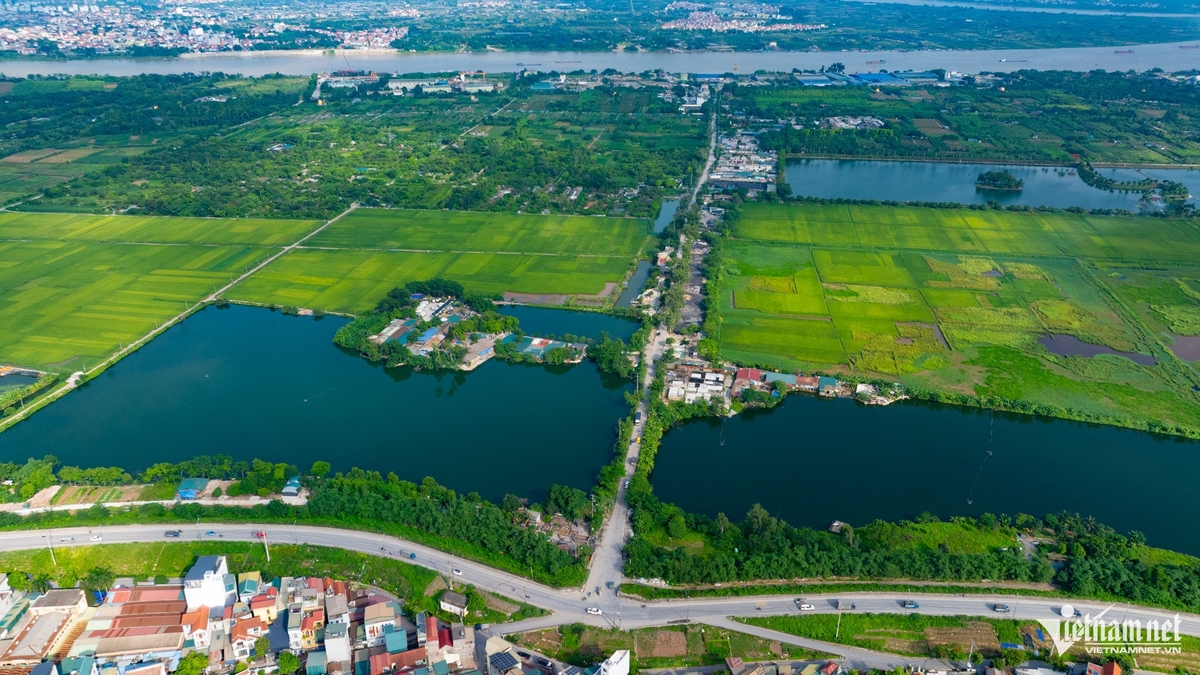
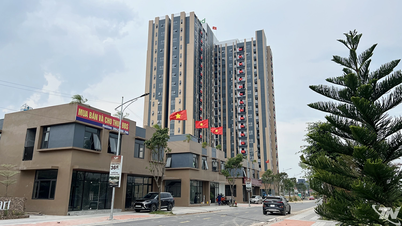
| The southern region plays a key role in the province's growth, concentrating key industrial zones, clusters, and logistics systems. Photo: Provided |
Southern industry is the driving force of growth.
Following the administrative unit merger, Thai Nguyen entered a crucial transformation phase, simultaneously expanding its scale and restructuring its economic space towards clear linkages and roles. Two prominent development poles emerged within the province: industry in the south and forestry in the north, connected by agricultural and intermediate service sectors.
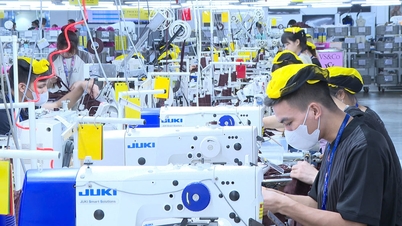
The southern region continues to play a key role as the province's growth engine, home to important industrial parks, clusters, and logistics service systems.
The province's economic growth in 2025 is projected to reach 6.33%, with the industrial and construction sector growing by 6.43% and the service sector by 7.55%. Notably, in the first quarter of 2026, the province's GRDP is expected to increase by 8.55%, with the industrial and construction sector alone growing by 9.83%, continuing its leading role in the economy. These figures clearly reflect the role of industry not only in terms of growth scale but also in its qualitative shift, from expanding production to increasing added value, applying technology, and embracing green transformation.
According to the new development plan, the Southern industrial sector is identified as a processing and value chain coordination center, especially in the fields of processing, manufacturing, high technology, and supporting industries. The development space is reorganized in a more rational way, with the Southern region focusing on high-tech industries, while other regions develop agricultural and forestry processing, forming a network of interconnected production rather than a dispersed one.
Mr. Nguyen Tien Cuong, Deputy Director of the Department of Industry and Trade, stated: In the development plan for industrial zones and clusters, the southern region continues to play the role of an industrial growth pole, while also serving as a processing and manufacturing center associated with high technology and green transformation. This region will also strengthen linkages with the North to form a continuous supply chain, with the North providing a stable source of forestry raw materials for processing, contributing to the sustainable development of the forest economy.
Northern forestry: the "pillar" of the green economy.
The northern region plays a particularly important role in the post-merger development structure, as its forest and ecological advantages become the foundation for a sustainable economic direction, while also opening up significant opportunities to attract investment in wood processing, forestry products, and medicinal herbs.
With its vast forest ecosystem, this area plays a dual role: regulating the climate, protecting water resources, and gradually becoming a strategic raw material source for the processing industry. After the merger, the total forest land area reached a large scale, nearly 600,000 hectares, forming a continuous forest area, facilitating concentrated, large-scale, and more stable production. This is an important condition for attracting investors in deep processing, developing the forest product value chain, and the forest economy.
 |
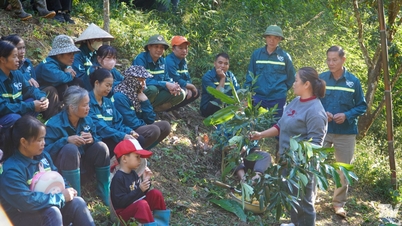
| Forestry is developing in a direction that enhances the value of planted forests, linked with environmental protection and sustainable development, maintaining the forest cover rate of the entire province above 60%. |
Based on that foundation, the province has shifted strongly from exploitation to sustainable forest economics, focusing on increasing value rather than just increasing production. Currently, the province has approximately 16,000 hectares of large timber forests, over 5,000 hectares of cinnamon, along with over 37,532 hectares of FSC-certified forests and nearly 42,060 hectares of large timber forests, creating a foundation for the formation of standardized raw material areas to meet processing requirements and export markets.
Furthermore, the province is orienting the development of forest value chains linked to deep processing, native trees, medicinal plants, and high-value forest products such as cinnamon and star anise. The formation of concentrated, certified, and traceable raw material areas is opening up opportunities to attract businesses to invest in wood processing, forest product refining, and biotechnology, making the northern region a center for supplying green raw materials for the province and the region.
Mr. Nguyen Van Phuc, Business Director of Hoang Anh Paper Production and Trading Joint Stock Company ( Bac Ninh province), said: After surveying and deciding to invest in Quang Chu Industrial Cluster, the company highly appreciates the infrastructure, land availability, and especially the stable source of forestry raw materials. This is an important factor to confidently expand production in the long term.
Forming a continuous value chain
Following the merger, Thai Nguyen shifted from developing according to individual sectors to organizing its economic space based on interconnected value chains, where the southern industry and the northern forestry sector become two complementary poles within a unified structure. Forestry provides a stable source of raw materials for the processing industry, especially plantation timber and sustainable forest products. Conversely, the southern industry undertakes deep processing, enhancing product value and expanding consumer markets, creating a driving force for standardizing the raw material supply area.
Mr. Ha Duc Thuong, from Na Don village, Thanh Mai commune, shared: "My family has about 3 hectares of planted forest. After the merger, timber sales have become easier, the output is stable, and the value has improved. When the locality oriented the development of an industrial cluster associated with wood processing, forest growers felt secure in expanding production."
From a business perspective, Mr. Nguyen Van Phuc, Business Director of Hoang Anh Paper Production and Trading Joint Stock Company (Bac Ninh province), shared: "We highly appreciate the potential of forestry raw materials in northern Thai Nguyen, considering this an important factor for expanding production and participating more deeply in the supply chain."
 |
| The timber processing industry accounts for a high proportion of the processing sector's structure, contributing to increasing the value of plantation timber and developing a sustainable forest economy. |
This linkage is forming key flows: raw materials - processing, ecology - environment, and technology - market, creating an interconnected economic system in which the sectors complement and promote each other.
Thai Nguyen is entering a new phase of development with a focus on reorganizing its economic space towards greater integration, harmony, and sustainability. Within this structure, industry, agriculture, and forestry are linked in a unified value chain; concentrated production areas form the foundation; processing industries play a leading role; and the ecological space ensures long-term balance. This forms the basis for the province's transition from a traditional industrial hub to a green, multi-polar, and regionally integrated economic model in this new development phase.
Source: https://baothainguyen.vn/kinh-te/202605/tu-dat-thep-den-vung-nguyen-lieutap-trung-b20714b/


















































































Comment (0)