

From the Era of Independence and Freedom...
In 1858, the French colonialists launched their invasion of Vietnam. This was the first time our people had to confront an invading force from the West, with a different and more developed mode of production and social system. The people's struggles and the resistance of the Nguyen dynasty's army, which was in decline, continuously erupted in the central, southern, and northern regions, but were all suppressed and failed. In 1884, the Nguyen dynasty was forced to sign the Patenotre Treaty, acknowledging French protection. Our people once again suffered the loss of their country and endured hardship.
Unwilling to lose their independence and freedom, peasant uprisings, uprisings by patriotic scholars and intellectuals in the Can Vuong movement, based on feudal ideology; and movements based on bourgeois democratic ideology led by Phan Boi Chau, Phan Chu Trinh, and Nguyen Thai Hoc, with different organizational forms and methods, all broke out, but ultimately were suppressed and failed by the French colonialists.
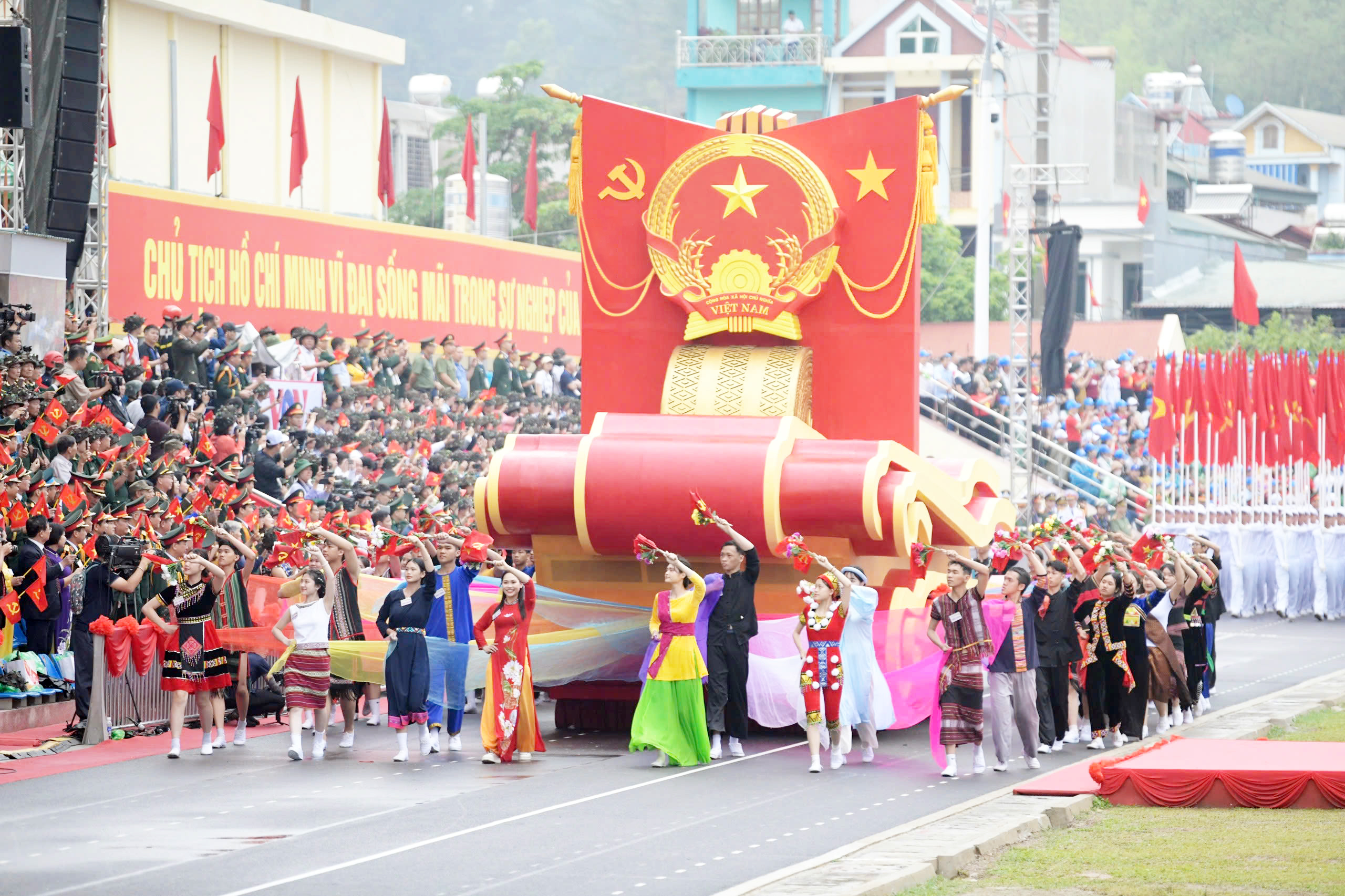
The 70th anniversary of the Dien Bien Phu Victory, one of the milestones of the era of independence, freedom, and progress towards building socialism.
PHOTO: GIA HAN
In that context, Nguyen Tat Thanh (later renamed Nguyen Ai Quoc, Ho Chi Minh ) set out to find a way to save the country and found the correct path to national salvation. This was to build a Communist Party based on the foundation of Marxism-Leninism, with creative application tailored to the country's circumstances, uniting the entire population, strongly promoting patriotism and national pride to create invincible strength to achieve victory in the struggle for national liberation.
In 1945, after 15 years of steadfastly following the path chosen since its founding (1930), correctly identifying and resolutely carrying out the two tasks of national liberation and democracy, overcoming countless difficulties, challenges, sacrifices, and losses, the Indochinese Communist Party (now called the Communist Party of Vietnam ), headed by leader Ho Chi Minh, led the entire nation to achieve the great victory in the August Revolution, opening a new era in the Ho Chi Minh era: the era of independence, freedom, and progress towards building socialism.
In the Declaration of Independence, personally drafted and read by President Ho Chi Minh at the Independence Day ceremony on September 2, 1945, in Ba Dinh Square, Hanoi, before tens of thousands of attendees, he quoted the American Declaration of Independence of 1776 when addressing the fundamental rights of human beings. Building on the spirit of the American Declaration of Independence, President Ho Chi Minh creatively developed and made remarkable progress regarding human rights, as expressed in the opening sentence of the Vietnamese Declaration of Independence: "All men are created equal. They are endowed by their Creator with certain unalienable rights; among these are the right to life, liberty, and the pursuit of happiness." He affirmed: "Broadly speaking, this sentence means that all nations in the world are born equal, and every nation has the right to life, happiness, and freedom." Furthermore, he cited the content related to human rights as expressed in the Declaration of Human Rights and Citizen Rights of the French Bourgeois Revolution of 1791: People are born free and equal in rights and must always remain free and equal in rights. From this, President Ho Chi Minh affirmed: These are undeniable truths.
President Ho Chi Minh intentionally quoted two famous declarations from the United States and France to make people understand that: America, a country proud of its democracy, a leader in the capitalist world, and with great influence globally; France, also proud of its long-standing civilization and culture, and possessing the second-largest number of colonies in the world, including Vietnam; their ancestors had already made declarations about human rights, so why did they not acknowledge the human rights and the right to independence and freedom of other countries, instead sending troops to invade, oppress, and dominate them? From this strong, logical, and reasonable argument, President Ho Chi Minh affirmed: "Vietnam has the right to enjoy freedom and independence, and in fact has become a free and independent country. The entire Vietnamese people are determined to dedicate all their spirit and strength, lives and property to uphold that right to freedom and independence."

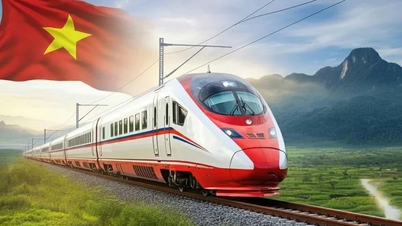
North-South High-Speed Railway Project
ILLUSTRATIVE PHOTO: AI
Despite reason and morality, the aggressive French colonialists invaded Vietnam once again, aiming to impose their rule on the Vietnamese people. Unwilling to be subjugated, President Ho Chi Minh, on behalf of the entire Vietnamese nation, expressed his determination: "We would rather sacrifice everything than lose our country, than be enslaved… Regardless of gender, age, religion, political affiliation, or ethnicity, anyone who is Vietnamese must rise up to fight the French colonialists and save the Fatherland."
Carrying that spirit and determination, the entire Vietnamese people, under the leadership of the Party, headed by President Ho Chi Minh, overcame all difficulties and hardships, accepted sacrifices and losses, and waged a protracted, all-encompassing resistance war against foreign aggression, relying primarily on their own strength to protect the newly won national independence. The historic victory at Dien Bien Phu (May 7, 1954) and the signing of the Geneva Accords on the cessation of hostilities in Vietnam, Laos, and Cambodia (July 21, 1954) gloriously concluded the long-term resistance war against French colonial aggression.
However, half the country remained unliberated, peace was not achieved, and national independence was incomplete due to the US imperialists and the Saigon government's conspiracy to permanently divide Vietnam. The people of both North and South Vietnam had to continue their resistance against the world's most powerful economic and military empire to protect national independence and unity. The entire nation rose up, united in battle with the spirit that: "The war may last 5, 10, 20 years, or even longer, but 'Nothing is more precious than independence and freedom.' On the day of victory, we will rebuild the country in a more dignified and beautiful way." After 21 years of arduous resistance and immense sacrifices, our army and people achieved final victory, reuniting the country.
National independence was protected, and the entire country moved forward to build socialism. A bright future had opened up. However, the country had to face the severe consequences of 30 years of continuous war, the sabotage of reactionary forces within the country, the blockade and embargo of imperialism, a significant decrease in foreign aid, and the continued struggle against invasion, protecting sovereignty and territorial integrity on the southwestern and northern borders. Furthermore, mistakes and shortcomings in leadership and national development after the war gradually plunged Vietnam into a socio-economic crisis, threatening the very survival of the regime.

Vietnam is facing a historic opportunity to usher the country into an era of development and prosperity.
PHOTO: NHAT THINH
In that context of severe difficulties, a strong, historic decision was required to lead the country out of crisis. At the end of 1986, the Communist Party of Vietnam held its Sixth National Congress. With the motto: "Looking directly at the truth, assessing the truth correctly, speaking the truth clearly," the Congress laid down a comprehensive reform policy for the country and international integration. This included reforming thinking, economic management, politics, society, national defense, security, and foreign relations; reforming leadership methods, enhancing the capacity and fighting strength of the Party; decisively breaking away from the centrally planned, bureaucratic, and subsidized economy, and transitioning to a multi-sector commodity economy operating under a market mechanism with state management oriented towards socialism; building a socialist rule of law state, and improving the efficiency and transparency of the state apparatus. Focus on economic reform based on gradual political reform…
After nearly 40 years of implementing the Doi Moi (Renovation) policy under the leadership of the Party, Vietnam's country, society, and people have undergone tremendous transformation. Economically: the average growth rate during the 2016-2024 period exceeded 6% per year. The size of the economy reached approximately US$450 billion, placing Vietnam among the 35 largest economies in the world. Per capita income reached approximately US$4,400, moving Vietnam from a low-income to a middle-income country. The poverty rate decreased rapidly, and people's living standards improved significantly. Education and healthcare developed. National defense and security were maintained and strengthened. Diplomatic relations expanded, and Vietnam's position in the world was enhanced. The socialist rule of law continues to be built and perfected. Understanding of socialism and the path to socialism is becoming increasingly clearer. Never before has our country possessed such a foundation, potential, prestige, and international standing as it does today. This demonstrates that the Party's reform policies and the path of national development chosen by the Party, President Ho Chi Minh, and our people are correct, appropriate to Vietnam's conditions and circumstances, and in line with the trends of the times.
...Towards the Era of National Resurgence
An era is understood as a historical period marked by significant characteristics or events that greatly influence the development of society, culture, politics, and nature. An era of progress represents a strong, positive movement, based on favorable subjective and objective conditions, to overcome challenges, surpass oneself, realize aspirations, and reach set goals. The era of progress for the Vietnamese nation is an era of prosperous development under the leadership of the Communist Party of Vietnam, aiming to build a socialist Vietnam that is wealthy, strong, democratic, just, and civilized. All citizens will enjoy a comfortable and happy life , receive support for development and enrichment, and make increasingly significant contributions to society and the country.
The immediate goal in the new era is that by 2030, Vietnam will be a developing country with a modern industrial base and a high-middle income; by 2045, it will become a developed socialist country with a high income; strongly fostering national pride, self-reliance, self-confidence, self-strength, and the aspiration for national development; and closely combining national strength with the strength of the times. The beginning of this new era is marked by the 14th National Congress of the Party, where all Vietnamese people will unite, seize opportunities and advantages, overcome risks and challenges, and lead the country to comprehensive, strong, breakthrough, and take-off development.
The conditions for the country to enter an era of progress can be summarized as follows: 1. The achievements gained after nearly 40 years of implementing the reform process under the leadership of the Party have helped our country accumulate strength and momentum for breakthrough development in the next phase. 2. Independence, sovereignty, unity, and territorial integrity have been maintained; national and ethnic interests have been ensured. The size of the economy has increased tenfold compared to the year the reform began. Vietnam has diplomatic relations with 193 countries that are members of the United Nations; it has strategic partnerships and comprehensive strategic partnerships with all the major powers in the world and the region. 3. The political, economic, cultural, social, scientific and technological, defense, and security potential has been continuously enhanced; Vietnam actively contributes to maintaining peace and stability in the region and the world. 4. The epochal transformation of the world brings new opportunities and advantages. The Fourth Industrial Revolution, especially artificial intelligence and digital technology, offers developing countries the chance to seize opportunities and lead the way in development. This is the moment when the Party's will blends with the people's aspirations in building a prosperous and happy nation. These are the necessary conditions.
In addition, there are the necessary conditions to usher the country into a new era of national development, following the era of independence, freedom, socialist construction, and reform.
Firstly, continue to innovate leadership methods and enhance the Party's leadership and governance capacity. Secondly, build and perfect the socialist rule of law state of the people, by the people, and for the people, addressing the biggest bottleneck, which is the institutional framework, to pave the way for development. Thirdly, streamline the Party apparatus, the agencies of the National Assembly, the Government, the Fatherland Front, and political and social organizations to increase efficiency and effectiveness. Fourthly, strengthen the fight against waste, as well as the fight against corruption and negative practices, and practice thrift. Fifthly, accelerate digital transformation to seize opportunities from the Fourth Industrial Revolution, meeting the requirements of a civilized, modern, and deeply integrated country. Sixthly, build a team of cadres, civil servants, and public employees with sufficient moral character and competence, who dare to think, dare to act, dare to innovate, dare to take responsibility, and effectively meet the new demands. Seventh, promote economic development with high labor productivity and efficiency, shift the model from extensive to intensive development, continue to consider the private sector as an important driving force; prioritize the application and development of science and technology, and innovation as the main driving force for development.
On that journey, the era of independence and freedom served as a foundation and a bridge to the era of national progress in the Ho Chi Minh era.
Thanhnien.vn
Source: https://thanhnien.vn/tu-ky-nguyen-doc-lap-den-ky-nguyen-vuon-minh-185250101155042499.htm

![[Photo] Prime Minister Pham Minh Chinh presides over the conference announcing the establishment of the International Finance Centre in Vietnam.](/_next/image?url=https%3A%2F%2Fvphoto.vietnam.vn%2Fthumb%2F1200x675%2Fvietnam%2Fresource%2FIMAGE%2F2025%2F12%2F21%2F1766309817714_ndo_br_dsc-3400-jpg.webp&w=3840&q=75)

![[Photo] Prime Minister Pham Minh Chinh presides over a meeting on private sector economic development.](/_next/image?url=https%3A%2F%2Fvphoto.vietnam.vn%2Fthumb%2F1200x675%2Fvietnam%2Fresource%2FIMAGE%2F2025%2F12%2F20%2F1766237501876_thiet-ke-chua-co-ten-40-png.webp&w=3840&q=75)






















































Comment (0)