

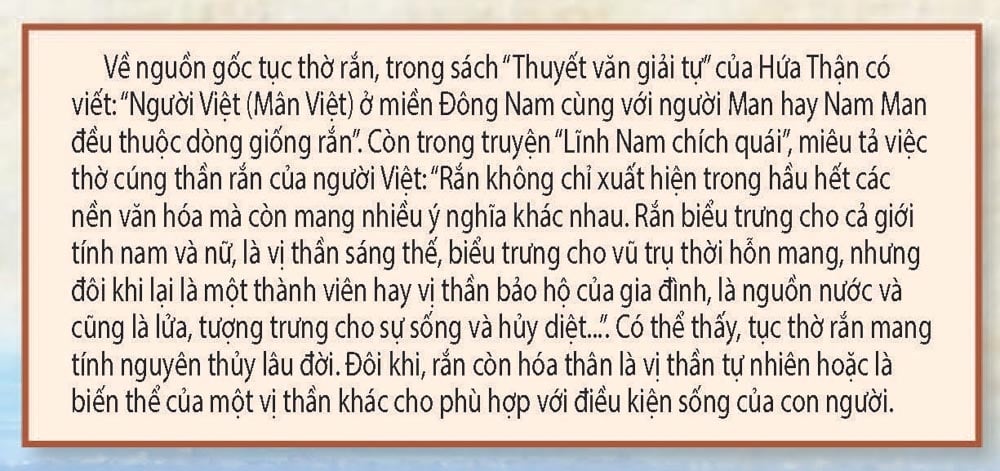
( Quang Ngai Newspaper) - Since ancient times, when Vietnamese people first set foot on Ly Son Island, they have lived, integrated, and interacted with the indigenous Cham culture, including the custom of worshipping the Naga serpent god. This is the deity who protects water sources and ensures favorable weather conditions.
In the minds of the people of Ly Son, when a snake appears in a deserted forest near a sacred shrine or temple, they believe it is a deity residing in the form of a snake. Therefore, they should not throw stones at it, beat it with sticks, or loudly curse it. Some people, upon seeing a snake at a shrine or temple, must enter the shrine to light incense and pray for the snake god's protection and safety, so as not to be punished.
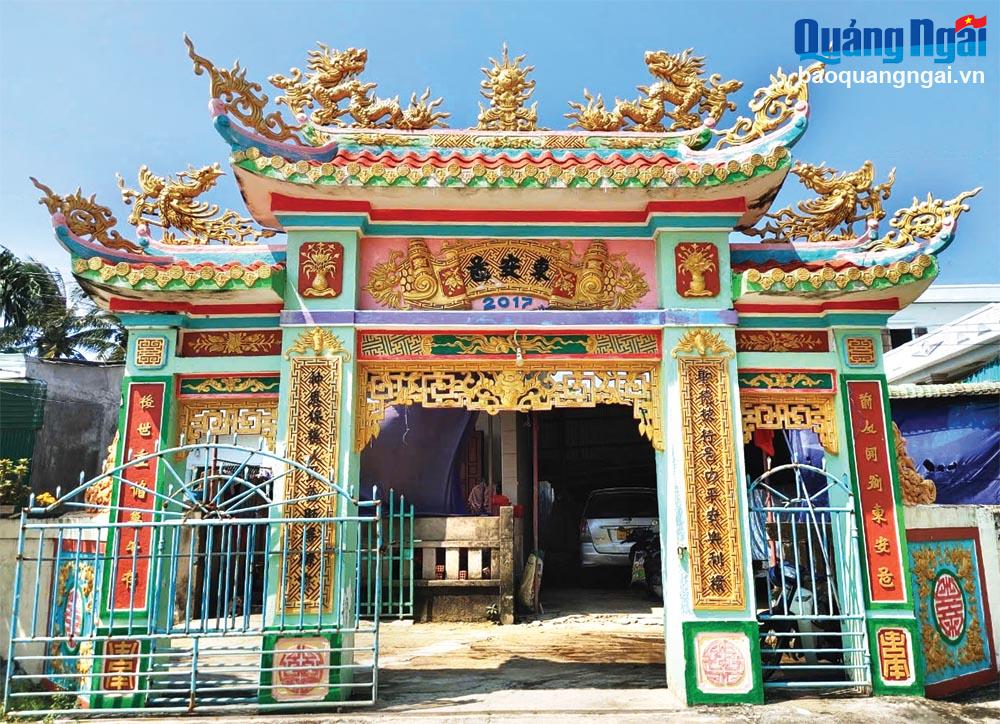 |
| The main triple-arched gate leads into the Dun Palace - the shrine dedicated to the goddess U Linh Xa Nu Vuong. |
For fishermen, when they encounter sea snakes while diving, they call them "dẹn." A "dẹn" is about the size of a thumb, over 1 meter long, with black and white stripes on its skin. It's a highly venomous sea snake, and a bite can be life-threatening. The people of Lý Sơn believe that if you encounter a sea snake at sea, you shouldn't fish or attack it. In their minds, sea snakes are a variant of the "thồng luồng" (a mythical serpent), a "sea ghost" underwater omen, signaling bad luck. They believe that this area will be devoid of fish and squid, forcing them to move their boats elsewhere. At the end of each fishing trip, fishermen prepare offerings – betel leaves, wine, boiled rooster, and fruit – to bring to the Đụn shrine to worship the snake god, a ritual called "câu trận" (worshiping the snakes) to ward off bad luck.
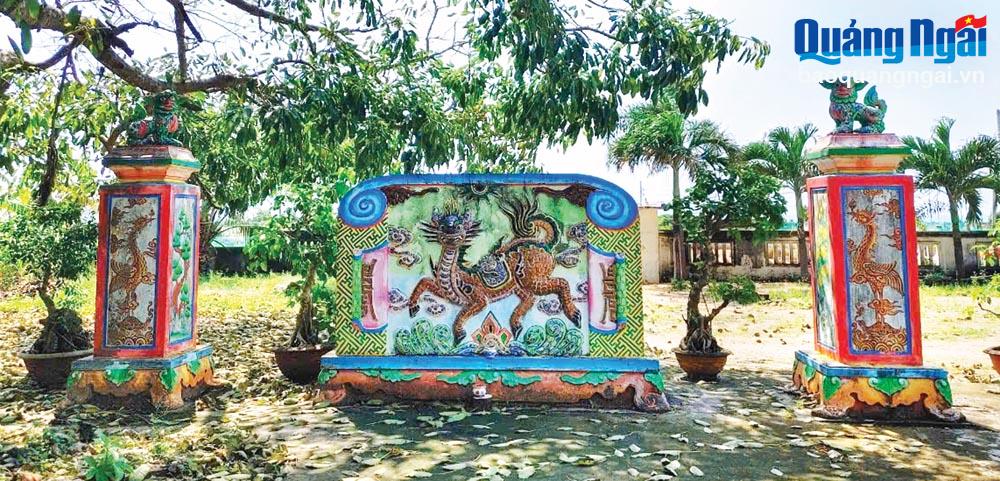 |
| A screen wall stands guard on the sacred axis of the Dun Shrine, surrounded by many ancient banyan trees over a hundred years old. |
Dinh Đụn is a place of worship for the residents of An Vĩnh village, known as the temple of the divine snake. Perhaps, when the Champa people still resided on Lý Sơn Island, they built this temple to worship the Naga serpent god. Later, Dinh Đụn was abandoned and taken over by the Vietnamese. The main deity worshipped at Dinh Đụn is the goddess U Linh Xà Nữ Vương (the snake goddess). Dinh Đụn is surrounded by many ancient trees over a hundred years old, creating a dense, sacred space that many people fear and dare not approach. Elderly villagers recount that during a ceremony, they saw a strange snake; no one knew what kind of snake it was, and no one dared to harm it, believing it to be a "divine manifestation" to protect the villagers. After some time, a "mound of earth" rose within the temple grounds, a sign of a sacred area, so the villagers named the temple Dinh Đụn (the mound of earth). Initially, the Dinh Dun temple was built with bricks and mortar mixed with molasses. Later, the villagers of An Vinh renovated it in the style of a three-bay, two-wing house, reflecting traditional religious architecture. In 2017, the villagers contributed money to comprehensively renovate the Dinh Dun temple, including the main hall and the rear sanctuary, in the style of a double-layered roof with a gable. The rear sanctuary is where the goddess statue is worshipped, with a divine title in Chinese characters, and is mentioned in the ceremonial text: "U Linh Xa Nu Vuong, the revered goddess, originally bestowed with the title of Duc Bao Trung Hung Linh Pho Ton Than, further honored with the title of Trinh Huyen Trung Dang Than."
 |
There are quite a few mystical stories from the early days of land reclamation associated with the Dun Shrine. Previously, the shrine had no statue, so the villagers had to pray to the gods to erect a statue for the goddess. However, because the then-chief priest lacked sufficient virtue, his prayers were not answered. A few years later, a new chief priest, respected by the villagers, took over, and only then did the spirits grant permission for the statue to be carved. The statue of the goddess U Linh Xa Nu Vuong at the Dun Shrine was commissioned from Thua Thien Hue province and then brought to be enshrined in the inner sanctuary. Since the statue was erected, the villagers of An Vinh say that for many years the goddess has blessed them with bountiful harvests, especially in the fishing industry, where they have had abundant catches of fish and shrimp.
Another noteworthy point is that the worship of the Goddess of the Serpent Queen plays a significant role in the system of deities worshipped on the island. This is because, during important ceremonies held at the village temple, the Goddess of the Serpent Queen is invoked before the powerful Thunder God, the Jade Scale God of the South Sea, the Lord God, the Venerable Fish God, and many other deities.
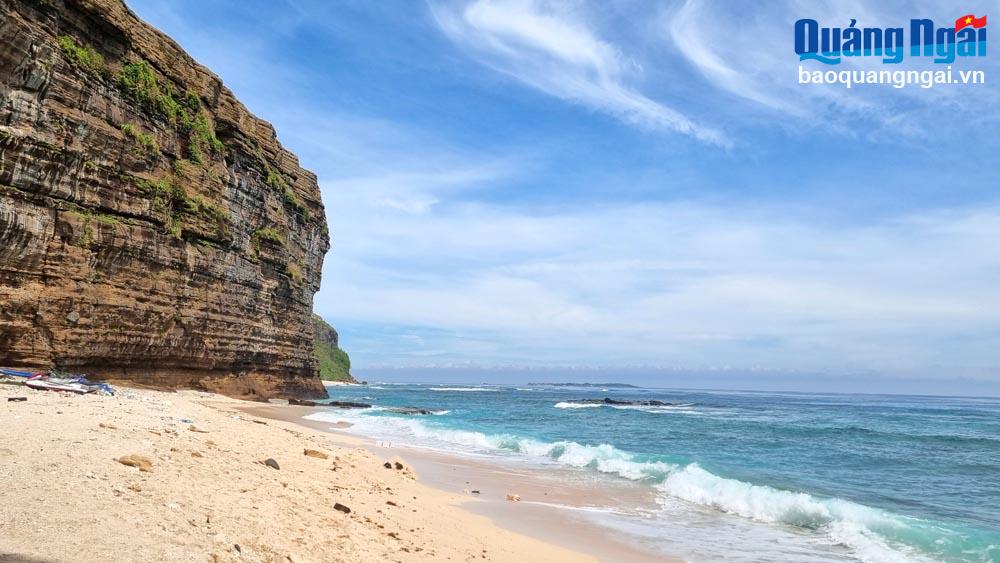 |
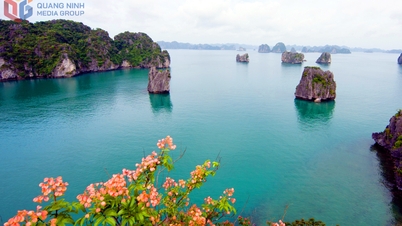
| Hang Cau Cave, Ly Son Island. Photo: THANH PHUONG |
In the beliefs of the people of Ly Son Island, the Serpent Queen is sometimes also the embodiment of the five elements of the Five Elements: Metal, Wood, Water, Fire, and Earth—the five sacred and revered deities. These are five natural elements that directly influence life, personified by the Vietnamese people and worshipped alongside the Serpent Queen to regulate and suppress all calamities, bringing peace and tranquility to the people as they settle and establish villages.
Despite the many changes and transformations of life throughout the ages, the worship of the goddess U Linh Xà Nữ Vương (Queen of the Serpent Spirits) still plays an important role in the religious life of the people of Lý Sơn Island.

Text and photos: VO MINH TUAN
RELATED NEWS AND ARTICLES:
Source: https://baoquangngai.vn/van-hoa/202502/tuc-tho-than-ran-tren-dao-ly-son-c1a334a/



























![[Video] Sunset at Lap An Lagoon – Where the sun sets over the fishing nets](https://vphoto.vietnam.vn/thumb/1200x675/vietnam/resource/IMAGE/2026/05/31/1780192137701_beach-landscape-sea-water-nature-grass-745871-pxhere-com.jpeg)


















Comment (0)