

In Hanoi, the National Children's Hospital has admitted several children with acute myocarditis in critical condition, but the initial symptoms resemble those of a common fever or flu, leading parents to underestimate the severity of the condition.
A 4-year-old girl, experiencing abdominal pain, fever, and vomiting, was brought to the National Children's Hospital by her parents on August 3rd. There, the child was very tired and had pale lips, so doctors ordered monitoring and an echocardiogram, which revealed abnormal heart function.
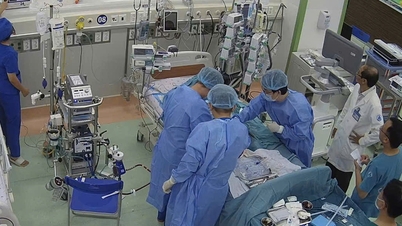
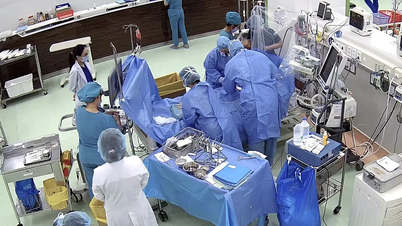
The results showed severely reduced cardiac function, arrhythmias, and elevated cardiac enzyme levels, confirming acute myocarditis with cardiogenic shock. The doctors consulted and decided to place the child on ECMO (extracorporeal membrane oxygenation) to support the weak and severely arrhythmic heart.
On August 13th, Dr. Tran Ba Dung, Head of the Intensive Care Unit of Internal Medicine, stated that after 5 days of using ECMO in combination with other medications, the child's condition gradually improved. Currently, the child has been weaned off ECMO and the ventilator, is breathing oxygen, and vital functions are stable. However, the patient still needs to be monitored for cardiac recovery and must adhere to regular follow-up appointments.
Lying in the bed next to her, a 13-year-old girl was experiencing a similar condition. Ten days prior, she had developed a sore throat, dry cough, stomach pain, and nausea. Her parents, being complacent, self-medicated at home, but she only got worse. When she was finally examined at the National Children's Hospital, she showed signs of rapid breathing, a fast heart rate, and low blood pressure.
The child was immediately given cardioversion, cardiac support medications, antiarrhythmic drugs, and intubated. After a multidisciplinary consultation, doctors diagnosed the child with cardiogenic shock and acute myocarditis, and prescribed mechanical ventilation and ECMO for 5 days. Currently, the child is breathing spontaneously, has no neurological sequelae, and the prognosis for recovery is good, but long-term cardiovascular monitoring is still required.
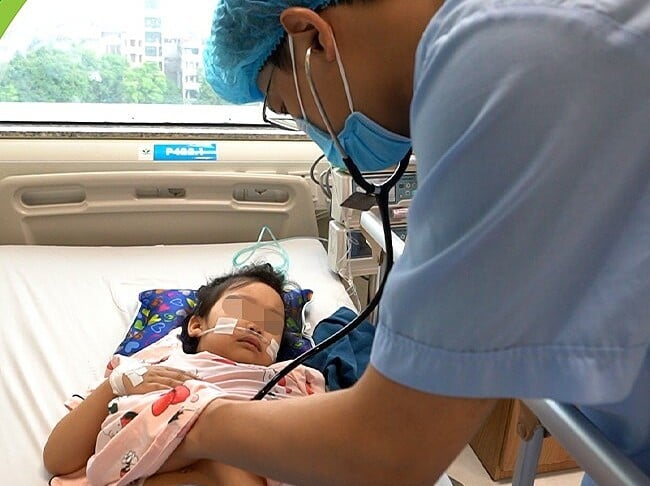
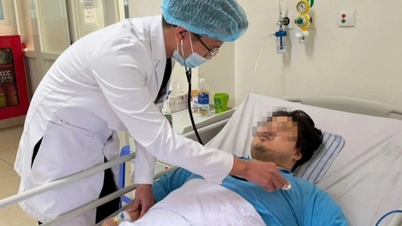
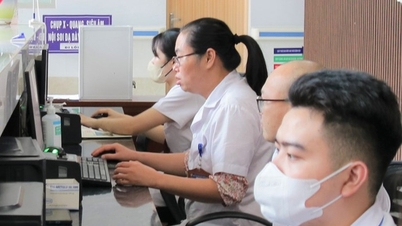
A doctor examines a child with myocarditis. Photo: Provided by the hospital.
Myocarditis is an inflammatory condition accompanied by necrosis of myocardial cells. Many factors can cause myocarditis in children, including infections (viruses, bacteria, fungi); poisoning; certain autoimmune diseases (Lupus, Kawasaki disease); or hypersensitivity to certain medications. The incidence of myocarditis in children is approximately 1-2 per 100,000. At the National Children's Hospital, an average of 15 children with acute myocarditis (with cardiogenic shock) are admitted to the Intensive Care Unit annually.
According to Dr. Luong Minh Canh, from the Cardiovascular Center, the symptoms of the disease are often atypical, with about half of the children showing signs of a viral infection a few weeks before the onset of the illness. Afterward, children may experience fatigue, abdominal pain, nausea, vomiting, diarrhea, fever, and cough.
"However, if the child has other symptoms such as rapid breathing, chest pain, difficulty breathing, rapid heartbeat, pale lips and skin, etc., they should be taken to the hospital immediately," Dr. Canh advised.
Symptoms of myocarditis in children are diverse and nonspecific, making early diagnosis challenging for clinicians. Previously, the mortality rate for acute myocarditis in children was very high, but now, thanks to interdisciplinary collaboration and ECMO support, many children have been saved. According to research from the Department of Intensive Care Medicine, the survival rate for pediatric myocarditis patients supported by ECMO is approximately 60%.
Most children with acute myocarditis will recover completely, but this group should limit strenuous activity and avoid contact sports for about 3-6 months. They also need regular follow-up appointments as directed by their doctor.
Le Nga
Source link

![[Photo] General Secretary and President To Lam presides over a meeting on preparations for the review of one year of operation of the three-tiered government system.](https://vphoto.vietnam.vn/thumb/1200x675/vietnam/resource/IMAGE/2026/06/02/1780391821195_a1-bnd-4595-9717-jpg.webp)



















































































Comment (0)