1. The Indonesian U22 team ended the SEA Games 33 in an unexpected way, winning against Myanmar 3-1 but still being eliminated in the group stage.
The scoreboard showed victory, but in the overall picture, it was the culmination of a fragmented journey, miscalculations, and decisions made too late.

U22 Indonesia struggled to break through the defense. Photo: ANTARA
Entering the final matchday, Indonesia is under pressure to win convincingly in order to compete for a semi-final spot as the best-performing second-placed team in the group.
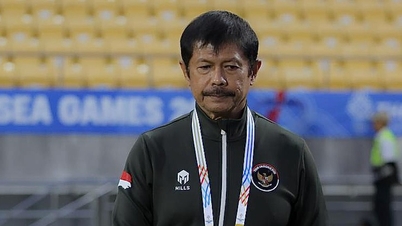
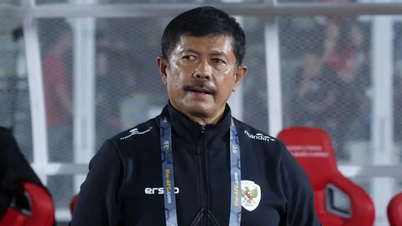
That pressure forced coach Indra Sjafri to change. He abandoned his previous three-centre-back formation, switching to a more attacking 4-2-3-1, increasing pressure from the start and requiring his players to press high, pushing the pace of the game to the maximum.
U22 Indonesia played more proactively and controlled the game more than in their opening match, but the familiar problem repeated itself: difficulty in breaking the deadlock.
The pressure exerted by the Indonesian U22 team only lasted for the first few minutes, after which the Myanmar U22 team took the initiative and scored the opening goal.
The equalizer, making it 1-1, only came at the end of the first half, like a gift from heaven. For most of the match, the Indonesian U23 team's attacking moves lacked the necessary cohesion.
2. "Garuda Muda" relies primarily on long balls, corner kicks, and deep throw-ins, rather than open, tactically in-depth passing combinations.
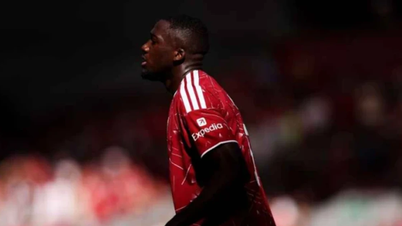
In that context, Jens Raven should have been the solution sooner. The striker, considered the biggest hope in the attack, was only brought on in the final stages of the match.

Jens Raven has very little time. Photo: Bola
When Raven appeared, the game immediately changed; the U22 Indonesian team had clearer targets in the penalty area, and their crosses became more purposeful.
Two late goals in the 89th minute and injury time are direct evidence of his impact. But it all came too late. Those goals helped Indonesia win the match, but they weren't enough to change their fate.
That delay reflects a bigger problem. The Indonesian U22 team didn't lose the decisive match, but rather lost due to poor timing.
The previous defeat in the opening match forced the team into a "gamble" in the final round. When they needed an early goal, they scored late.
When it came to accelerating from the start of the tournament, Indonesia only truly exploded in the final minutes of the group stage.
3. The tension following the match against U22 Myanmar , with players reacting to the referee, Rafael Struick receiving a red card (after the match had ended), and unnecessary clashes, further highlighted the helplessness of a team that felt they had tried their best but still couldn't make it in time.
The chaos contrasts sharply with the image of Raven weeping with regret. He had tried his best, but he had too little time.

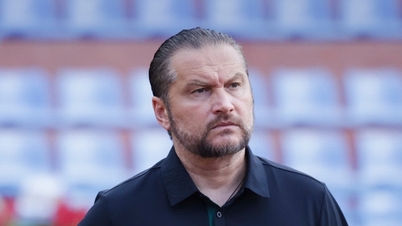
Indra Sjafri made many mistakes. Photo: Bola
Indonesia's U22 exit from the tournament is not regrettable. Fans only feel sorry for Raven, as "Garuda Muda" and Indra Sjafri did not deserve his tears.
After being eliminated, coach Indra Sjafri publicly apologized to the fans and took full responsibility. Few accepted that.
Sjafri, from a hero at the 32nd SEA Games, became a villain after two years. He made mistakes in everything from preparation and opponent analysis to player selection – including Raven. Furthermore, after the loss to the U22 Philippines, he publicly criticized his own players.
The 2025 SEA Games serve as a warning: youth football needs not only talent, but also precision in selecting the right players and the right timing.
For the Indonesian U22 team, Jens Raven was the key. But when Sjafri inserted the key into the lock too late, the door was already closed.
Watch SEA Games 33, stand alongside the Vietnamese Sports Delegation, in its entirety onFPT Play, at: http://fptplay.vn |
Source: https://vietnamnet.vn/u22-indonesia-roi-sea-games-33-dung-khoc-cho-garuda-muda-2472074.html





















![[Photo] Reception to welcome General Secretary and President To Lam and his wife on their State visit to the Philippines](https://vphoto.vietnam.vn/thumb/1200x675/vietnam/resource/IMAGE/2026/06/01/1780295488620_vna-potal-chieu-dai-chao-mung-tong-bi-thu-chu-tich-nuoc-to-lam-va-phu-nhan-tham-cap-nha-nuoc-toi-philippines-8798060-7855-jpg.webp)





















































Comment (0)