

Failed to convince the people.
The draft Law on Road Traffic Order and Safety was presented at the National Assembly session on November 10th. Article 8 of the draft law stipulates prohibited acts, including "driving a vehicle while having alcohol in the blood or breath." This also serves as the basis for law enforcement to stop vehicles for inspection and control.
Reviewing the draft law, the National Assembly's Committee on National Defense and Security stated that some members of the Committee suggested reconsidering this content because it is "too strict and not truly in line with the culture, customs, and traditions of a segment of the Vietnamese population, affecting the socio -economic development process of many localities."
These members suggested consulting international experience and establishing appropriate alcohol concentration levels for each type of vehicle, ensuring consistency with the provisions of the Criminal Code.
However, some other members of the Committee agreed with the Government 's proposal because this content is already stipulated in Clause 6, Article 5 of the Law on Prevention and Control of Harmful Effects of Alcohol (strictly prohibiting driving vehicles with alcohol in the blood or breath) and its effectiveness has been proven in practice.

A proposal to consider a regulation "prohibiting people with alcohol in their system from driving" (Photo: Pham Tung).
Regarding this controversial issue, in an interview with Nguoi Dua Tin , Dr. Nguyen Xuan Thuy, a traffic research expert, stated that drinking alcohol should not be widespread because it causes hallucinations, affects the nervous system, and leads to traffic disasters. “We have been strict on this issue; Government Decree 100 has introduced many penalties, including the absolute prohibition of drinking alcohol while driving,” Dr. Thuy said.
However, according to Mr. Thuy, the ban does not mean people will stop drinking alcohol; it is still widely consumed because it is a habit and a way for people to live a normal, unconstrained life.
The traffic expert also analyzed the drawbacks of a complete ban on drinking and driving:
Firstly, it's impractical. According to Mr. Thuy, Vietnam is a country with many festivals, and its cuisine is a cultural tradition and custom that has existed for thousands of years, where drinking alcohol is a must during meals. Therefore, the combination of culture, habits, and traditions makes an absolute ban impossible.
Secondly, an absolute ban is also unreasonable because other countries have their own regulations, such as Thai law which stipulates that a driver is considered drunk when : a person aged 20 or older has a blood alcohol concentration exceeding 50 mg/100 ml.
Individuals under 20 years of age or those using temporary driver's licenses who have a blood alcohol concentration exceeding 20 mg/100 ml will be subject to testing . Furthermore, refusing to take a breathalyzer test will be considered as having consumed alcohol.
In Singapore, the legal limit for blood alcohol concentration while driving is 0.35 mg/liter of breath and 80 mg/100 ml of blood.
Driving under the influence of alcohol can result in fines of up to $10,000 (approximately 230 million VND) and one year in prison for a first offense.
Repeat offenders may face fines of up to $20,000 and imprisonment for up to two years. Offenders will also be banned from driving for at least two years, or at least five years for repeat offenders. The driving ban may be longer if the driver poses a danger.
In China, a driver is considered to be "driving after drinking alcohol" when their blood alcohol concentration is between 20 mg/100 ml and less than 80 mg/100 ml.
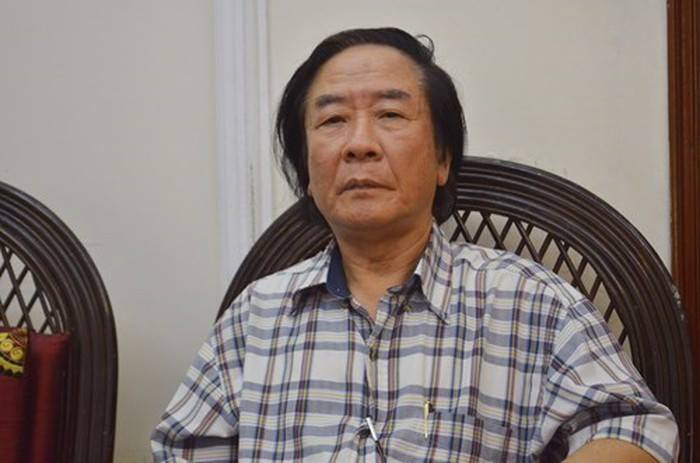
Transportation expert Nguyen Xuan Thuy.
"It's clear that countries are aware of the harmful effects of alcohol, but they also understand the limits of what constitutes drunkenness and what doesn't. If you drink more than the legal limit, you're drunk, you lose control of the steering wheel and cause an accident, then punishment is justified. But if you drink below the legal limit, you shouldn't be punished or strictly prohibited. Because if you strictly prohibit it, it will cause public resentment and is impractical," Mr. Thuy observed.
At the same time, he calculated that if the ban were absolute, the number of people penalized for drunk driving would be 5-7 times higher than when there were specific regulations. This is unscientific and unconvincing to the public.
"People say, 'You should only be fined if you drink excessively. If you drink a little, like a little herbal wine or some other beverage with a little alcohol in it today, or if you drink today but the alcohol level is still detected tomorrow, it won't affect your driving ability,'" Mr. Thuy cited as an example and expressed his view that absolute penalties should not be imposed.
From a rational, practical, and scientific standpoint, Mr. Thuy believes that regulations should only be implemented to prohibit or penalize alcohol consumption exceeding the permitted limit, rather than the current extreme measures.
"I suggest that the level should be 50mg/100ml of blood, as in Thailand, which would be appropriate," Mr. Thuy shared, adding that international experience and public opinion should be consulted.
Impact on legitimate needs
According to Lieutenant Colonel, Doctor Nguyen Huy Hoang - Vietnam-Russia Hyperbaric Oxygen Center, Ministry of National Defense, consuming alcohol in moderation still has health benefits, improving digestion and blood circulation (at low levels)... At the same time, it supports economic development, attracting more customers to restaurants and eateries.
According to Dr. Huy Hoang, the current absolute ban on alcohol is aimed at changing the long-standing habit of Vietnamese people of driving after consuming alcohol. Therefore, it must now be completely banned.
However, according to the doctor, this ban is being implemented drastically to change the habit of "don't drink and drive," but this should only be a transitional phase, and penalties should only be imposed after the practice of exceeding the permitted limit has been established. "Because it's a necessary human need and essential for economic development," Dr. Hoang said, giving an example from his own experience: "Like me, now when I drive, I don't dare touch a drop of alcohol. This is inconvenient, affects people's legitimate needs, and will also impact the businesses of restaurants and bars."

Dr. Huy Hoang shared: "Like me, now when I drive, I don't dare touch a single drop of alcohol or beer."
Dr. Hoang also suggested that when determining the permissible threshold for driving under the influence of alcohol, it is necessary to establish standards by referencing regulations in other countries around the world.
"Developed countries have established and implemented regulations, so I think we should regulate alcohol consumption at a low permissible level to ensure safe driving," said Dr. Hoang.
According to the World Health Organization (WHO) standards, one standard drink unit contains 10g of alcohol, equivalent to: 1 shot of 40% spirits (30ml); 1 glass of 13.5% wine (100ml); 1 pint of draft beer (330ml); or 3/4 of a bottle (can) of 5% beer (330ml) .
Even experts and doctors cannot say exactly how long it takes for alcohol to disappear from the blood and breath after drinking. This is because the time depends on many factors such as: the amount consumed, the type of alcohol, the alcohol content, the duration of drinking, and whether it was consumed on an empty stomach or after a meal. One thing is certain, however: the more alcohol you drink, the higher the alcohol concentration in your body.
Furthermore, alcohol concentration also depends on each individual's body and medical condition. Some people may have alcohol in their blood and breath the next morning even after drinking the night before, while others may not.
For individuals with a normal metabolism, the liver will absorb and metabolize one unit of alcohol in one hour. However, it takes the body another 1-2 hours to completely eliminate one unit of alcohol.
People with impaired liver function or slower metabolisms will take longer.
That's unrealistic!
Earlier, during a group discussion, National Assembly Deputy Pham Nhu Hiep , Director of Hue Central Hospital, also expressed concerns about the absolute ban on driving with any alcohol in the blood. Mr. Hiep acknowledged that driving after consuming alcohol should be penalized. "However, I'm concerned that if people drink alcohol in the evening and then drive to work the next morning with alcohol in their blood, they might be fined. Or, if they drink at lunchtime and then drive at night, they might still be fined because there's still alcohol in their blood," Mr. Hiep said.
National Assembly Deputy Nguyen Quang Huan (Binh Duong delegation) wondered whether international experience had been considered when the regulation prohibiting drivers from operating vehicles with alcohol in their blood was being implemented, as such a regulation is impractical.
Mr. Huan cited the example of Finland, where if you drink one bottle of beer within an hour, the stimulant will no longer have enough effect and you can still drive. If you drink two bottles of beer, you can drive after three hours.
"In our country, it's absolutely forbidden. For example, if we had a party last night, the alcohol level would still be present this morning, resulting in a violation. That's unrealistic. If you drank a little last night, you're still sober and can still give a speech at the meeting this morning, so what's the problem?" Mr. Huan stated.
National Assembly Deputy Pham Duc An (Hanoi delegation) suggested that a permissible percentage of alcohol in drivers' breath and blood should be studied. "It's not necessary to penalize every driver for any level of alcohol. Laws in other countries generally have certain limits, and we should also study that," he proposed .
Source


![[Photo] First session of the 14th Congress of the Vietnam Trade Union](https://vphoto.vietnam.vn/thumb/1200x675/vietnam/resource/IMAGE/2026/06/03/1780465947883_ndo_br_img-3852-jpg.webp)




























































































Comment (0)