

A strong legal services market is essential.
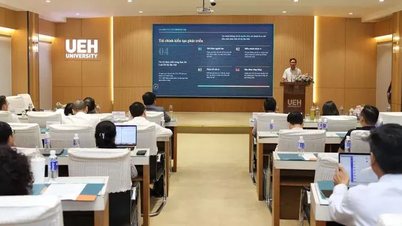
Speaking at the workshop, lawyer Phan Trung Hoai, Vice President of the Vietnam Bar Association , suggested that the draft Law on Special Cities needs a sufficiently strong legal framework to develop and expand the legal services market in Ho Chi Minh City, commensurate with its role as a special city.
In particular, the focus should be on building large-scale law firms with mechanisms and capital accumulation capabilities, supported by appropriate credit and tax policies. This will be the foundation for forming leading legal practice organizations with sufficient competitiveness at the international level.
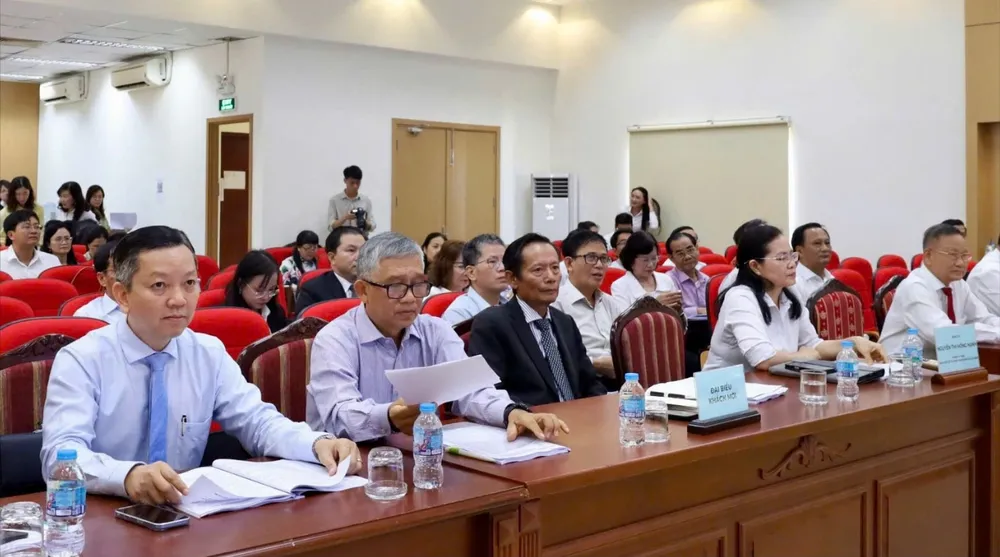
Sharing the same view, according to lawyer Nguyen The Phong of the Ho Chi Minh City Bar Association, when building a special urban model, it is necessary to fully recognize the role of the legal services market as an important component in the overall economy and the goods and services market of the city.
Currently, the Ho Chi Minh City Bar Association has approximately 10,000 active lawyers in more than 2,500 law firms, along with nearly 900 practicing lawyers. This is a very large legal services market, providing a wide range of legal services to individuals and businesses.
Lawyer Nguyen The Phong analyzed that legal relationships arising in the "special urban area of Ho Chi Minh City" will become increasingly diverse and complex, along with higher demands on governance, investment, international cooperation, and dispute resolution. In this context, the advisory, supportive, and collaborative role of the legal team becomes even more necessary.
Regarding the issue of perfecting the legal framework, lawyer Ha Hai, Deputy Head of the Ho Chi Minh City Bar Association, believes that in order to achieve socio-economic development goals, a safe investment environment must be built on the basis of a solid legal framework.
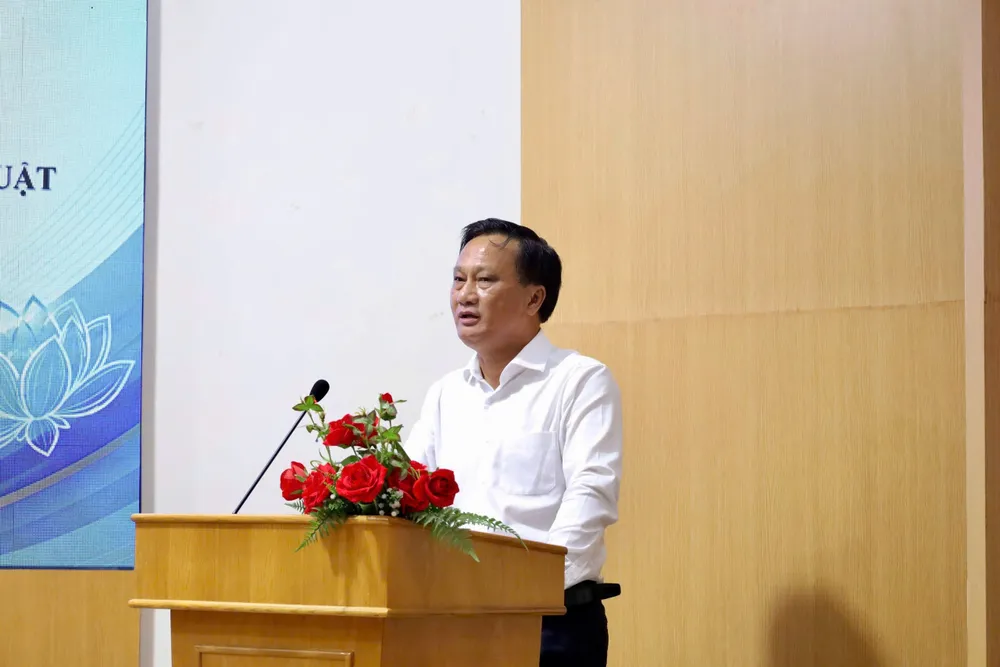
One of the areas requiring further study in the draft law is the mechanism for consulting with legal experts through independent advisory organizations. Lawyer Ha Hai cited that the draft law already mentions "hiring consulting organizations" and "providing independent opinions" in the field of equipment pricing. This demonstrates the necessary role of independent advisory organizations in the decision-making process.
Therefore, consideration should be given to expanding the scope of application, requiring city government agencies to consult with legal experts for projects of significant value or with complex legal implications. Early consultation will help mitigate unnecessary legal risks.
Encouraging innovation through mechanisms to protect officials.
Lawyer Nguyen The Phong believes that special urban areas urgently need dedicated individuals who dare to think, dare to act, and dare to take responsibility.
Meanwhile, the draft currently contains rather narrow provisions regarding the scope of cases exempted from liability or legal responsibility. This will not truly encourage officials to take responsibility.
Therefore, the Urban Planning Law particularly needs to clearly stipulate the mechanism for excluding liability for officials when implementing pilot mechanisms and policies, or implementing breakthrough solutions for handling state administrative tasks, when the results fail or the effectiveness is not as expected.
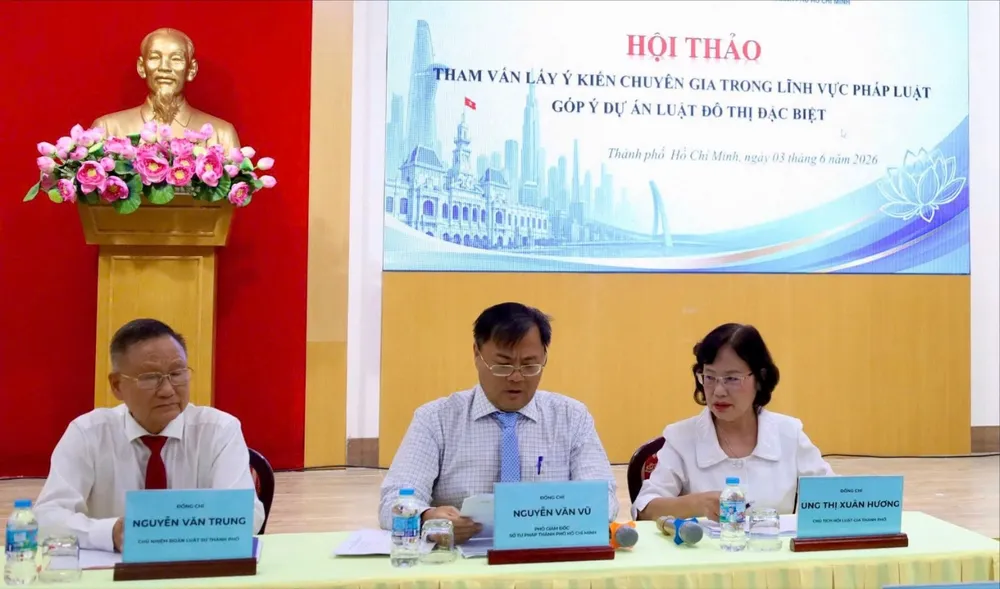
Furthermore, special urban areas demand even higher standards from leaders and officials; if someone fails to shoulder the responsibility or meet the requirements and tasks, a mechanism for replacement is necessary.
Lawyer Nguyen The Phong proposed that the draft should include additional regulations on personnel matters, specifically regarding the authority to decide on the rotation and reassignment of officials and civil servants in a swift, decisive, timely, and sufficiently effective manner. Those who are capable should be invested in, trained, developed, and assigned tasks. Those who do not meet the job requirements should have a mechanism for immediate rotation and reassignment.
Building "defensive spaces" through urban design.
At the seminar, lawyer Phan Trung Hoai proposed creating a "defensive space" and a safe environment through urban design in new housing projects in Ho Chi Minh City.
He stated that in many large cities, including Hanoi and Ho Chi Minh City, the planning and demarcation of boundaries between public and private spaces are still not clearly defined. Meanwhile, criminological studies show that living environment and residential space have a certain impact on the risk of committing illegal acts.
Currently, housing projects in Ho Chi Minh City are mainly developed in two types: low-rise housing and high-rise apartments. However, urban design efforts over the years have not adequately addressed the factor of crime prevention through the living environment.
The draft law needs to create a legal framework for Ho Chi Minh City and other special urban areas to research, develop, and issue a "Guideline for Crime Prevention through Environmental Design (CPTED)", similar to the experience of some cities around the world, including Singapore.
Source: https://www.sggp.org.vn/can-thi-truong-dich-vu-phap-ly-tuong-xung-do-thi-dac-biet-post855711.html
![[Photo] General Secretary and President To Lam presides over a meeting with the Central Organizing Committee.](https://vphoto.vietnam.vn/thumb/1200x675/vietnam/resource/IMAGE/2026/06/03/1780482764658_a1-bnd-4741-3342-jpg.webp)
![[Photo] Secretary of the National Assembly Party Committee, Chairman of the National Assembly presides over the meeting of the Standing Committee and Executive Committee of the National Assembly Party Committee.](https://vphoto.vietnam.vn/thumb/1200x675/vietnam/resource/IMAGE/2026/06/03/1780480353201_ndo_br_bnd-2585-jpg.webp)
![[Photo] First session of the 14th Congress of the Vietnam Trade Union](https://vphoto.vietnam.vn/thumb/1200x675/vietnam/resource/IMAGE/2026/06/03/1780465947883_ndo_br_img-3852-jpg.webp)




























![[Video] Sunset at Lap An Lagoon – Where the sun sets over the fishing nets](https://vphoto.vietnam.vn/thumb/1200x675/vietnam/resource/IMAGE/2026/05/31/1780192137701_beach-landscape-sea-water-nature-grass-745871-pxhere-com.jpeg)






















Comment (0)