

The special role of data
According to Mr. Nguyen Phu Tien, Deputy Director in charge of the National Digital Transformation Department, data is a new resource in the digital space. State agencies are actively building and opening up this resource to develop digital government, digital economy , and digital society.
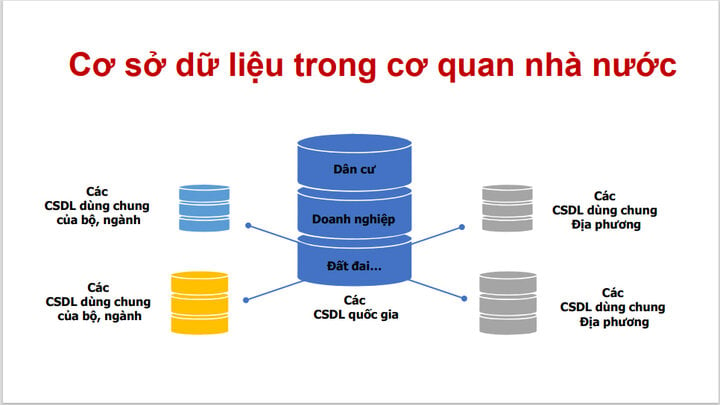
Databases are being actively built and operated to promote the national digital transformation process.
The National Digital Transformation Program until 2025, with a vision to 2030, clearly states the objective: By 2025, 100% of national databases forming the foundation for the development of e- government , including national databases on population, land, business registration, finance, and insurance, will be completed and connected and shared nationwide.
Gradually opening up data from government agencies to provide timely public services, with a one-time declaration for the entire service lifecycle for citizens and socio-economic development.
By 2030, a data platform for key economic sectors will be established based on data from government agencies and the Internet of Things (IoT) infrastructure, enabling widespread connectivity and sharing among government agencies, reducing administrative procedures by 30%; opening data to organizations and businesses, and increasing innovative data-driven services for citizens and businesses by 30%.
Mr. Tien stated that, in order to effectively utilize and leverage data in digital transformation, several important tasks will be implemented in the coming period, including: managing and administering digital data and databases; developing a national database; ensuring data connectivity and sharing; deploying a digital platform for data collection and management; and promoting and exploiting the potential of big data to create momentum for socio-economic development.
Sharing the view that data is a new, unlimited resource, and the more it is exploited and used, the more data expands and increases in value, Mr. Nguyen Duc Kien, Deputy General Director of VNPT Information Technology Company, further analyzed: " Digital transformation is a comprehensive and holistic process of changing individuals and organizations in their way of life, work, and production methods based on digital technology and digital data."
Data is the "heart" of digital transformation. Data infrastructure is a key element for digital transformation. Leveraging and connecting data is the lifeblood of the national digital platform, contributing to improved government efficiency, and serving as a tool to measure and monitor digital transformation implementation, thereby creating new opportunities to reshape competitive advantages and promote socio-economic development .
Mr. Duong Cong Duc, Director of the Smart City Center, Viettel Enterprise Solutions Corporation, also believes that digital transformation is essentially a process of building, creating, and exploiting digital data, ensuring that the data is "accurate - complete - clean - active," providing information, supporting decision-making, and applying it to living, production, business, and management processes to create many new values.
" In the UK, an employee can help the government save millions of pounds in just 15 minutes by detecting duplicate expenditures in government spending data ," Mr. Duc cited as an illustrative example.
What needs to be done to leverage the role of data in digital transformation?
Recognizing that data is the "key" to driving digital transformation, Lao Cai province has finalized its provincial data strategy.
According to Mr. Vu Hung Dung, Director of the Department of Information and Communications of Lao Cai province, the province's data strategy brings many benefits to the locality, such as: helping agencies in the province recognize the effectiveness of using specialized data, shared data, and open data in developing digital government and smart cities, digital economy, and digital society.
This contributes to increasing the productivity and quality of service provided by agencies to citizens and businesses; reduces overlapping investments in systems/software; and minimizes data fragmentation and disorganization.
In particular, the provincial data strategy helps Lao Cai identify a new approach to digital transformation planning. The province's information technology development plan must be based on the needs for data management, use, and exploitation. Only then can it be determined which systems/software need to be invested in.
However, Director Vu Hung Dung also frankly pointed out some difficulties and challenges encountered in building the data strategy for Lao Cai province in the past period.
Accordingly, the central government has not yet issued a national data strategy, and ministries and sectors have not fully issued their respective data strategies, nor have they fully issued lists of shared databases and open data; nor have they fully issued lists of specialized systems/software that local authorities need to implement, thus causing difficulties in clearly defining the basis for implementation.
Furthermore, the majority of state agencies in the province lack a comprehensive understanding of the overall data landscape of their respective sectors, impacting data collection and surveying efforts. Many agencies are also struggling to identify specific problems that can be effectively solved through data analysis and forecasting.
" This is a new initiative; no province or city in the country has done it before. Therefore, we mainly consulted documents and developed it based on the perspective of solving the problems we identified."
"We have reviewed all documents and guidelines from the Government and relevant ministries and agencies regarding data development to ensure that the Data Strategy complies with national and ministerial guidelines, " the Director of the Department of Information and Communications of Lao Cai province shared the experience of implementation in the locality.
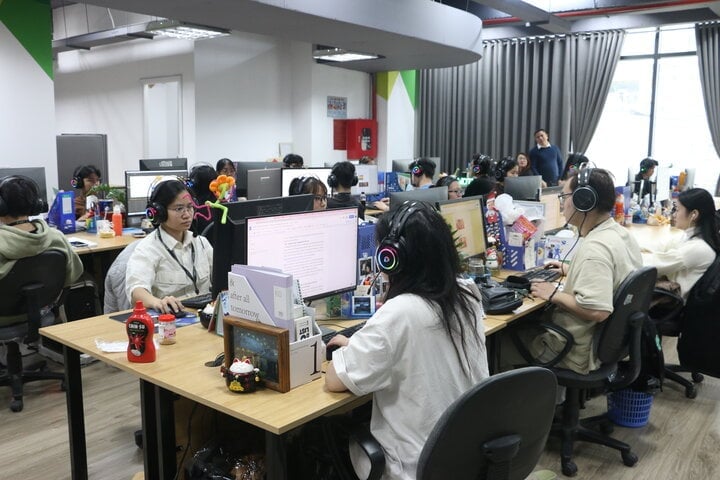
Data is only valuable when it is exploited and used in real life.
From the perspective of a business that has supported many localities in exploiting and promoting the role of data in digital transformation, Mr. Duong Cong Duc noted several challenges with data building and exploitation issues such as: limited data sharing due to lack of regulations; lack of cooperation mechanisms; lack of trust; unreliable data quality; and lack of interaction.
Regarding recommendations on data exploitation mechanisms and policies to accelerate the National Digital Transformation Strategy, Mr. Duc suggested that it is necessary to review and improve laws and policies related to digital data to protect personal data and ensure its proper use.
Simultaneously, ensure the development of telecommunications infrastructure, cloud computing, IoT (Internet of Things), and AI (artificial intelligence), and popularize mobile and internet access to enable widespread access to digital data for the public; build a close collaborative environment between the government and businesses, encouraging businesses to participate in data sharing; and train human resources with knowledge and skills related to digital data.
Viewing data connectivity and interoperability as the responsibility of both the government and businesses, Mr. Le Hong Quang, Permanent Deputy General Director of MISA Joint Stock Company, analyzed: " If businesses cannot connect and utilize databases, they cannot create good products, cannot optimize operations, and cause waste for society."
To facilitate data exploitation for businesses, the government needs to clearly define which businesses are eligible to connect to and utilize this data.
The General Department of Taxation, the Social Insurance Agency, the Ministry of Education and Training, etc., are building a national database that allows many businesses and individuals to proactively connect, contribute, and utilize the data, making the database more complete, enabling businesses to provide better services, and making things more convenient for the people.
However, currently, many business connectivity needs remain unmet, or some databases have exclusive access, directly impacting the interests of businesses and citizens .”
" Building a national database must be considered a shared responsibility of the government, intermediary data connection units, and organizations and individuals contributing data."
"Technology businesses should be allowed to connect as long as they meet certain standards set by the government, without monopolizing access to diversify data; businesses and individuals should be allowed to exploit data when they meet the conditions, because data only has value when it is exploited ," Mr. Quang recommended.
Hien Minh
Source


![[Photo] Prime Minister Pham Minh Chinh presides over a meeting on private sector economic development.](/_next/image?url=https%3A%2F%2Fvphoto.vietnam.vn%2Fthumb%2F1200x675%2Fvietnam%2Fresource%2FIMAGE%2F2025%2F12%2F20%2F1766237501876_thiet-ke-chua-co-ten-40-png.webp&w=3840&q=75)


































































































Comment (0)