

On the afternoon of October 15th, the Center for Resource and Environment Communication ( Ministry of Natural Resources and Environment ), in collaboration with Giao Thong Newspaper, the Vietnam Logistics Association (VLA), and other partners, organized a workshop titled "The Role of Green Logistics in the Contemporary International Trend of Green Growth and Sustainable Development Towards Net Zero 2050," contributing to the concretization of the "Net Zero Goal by 2050" in the transportation sector in Vietnam.
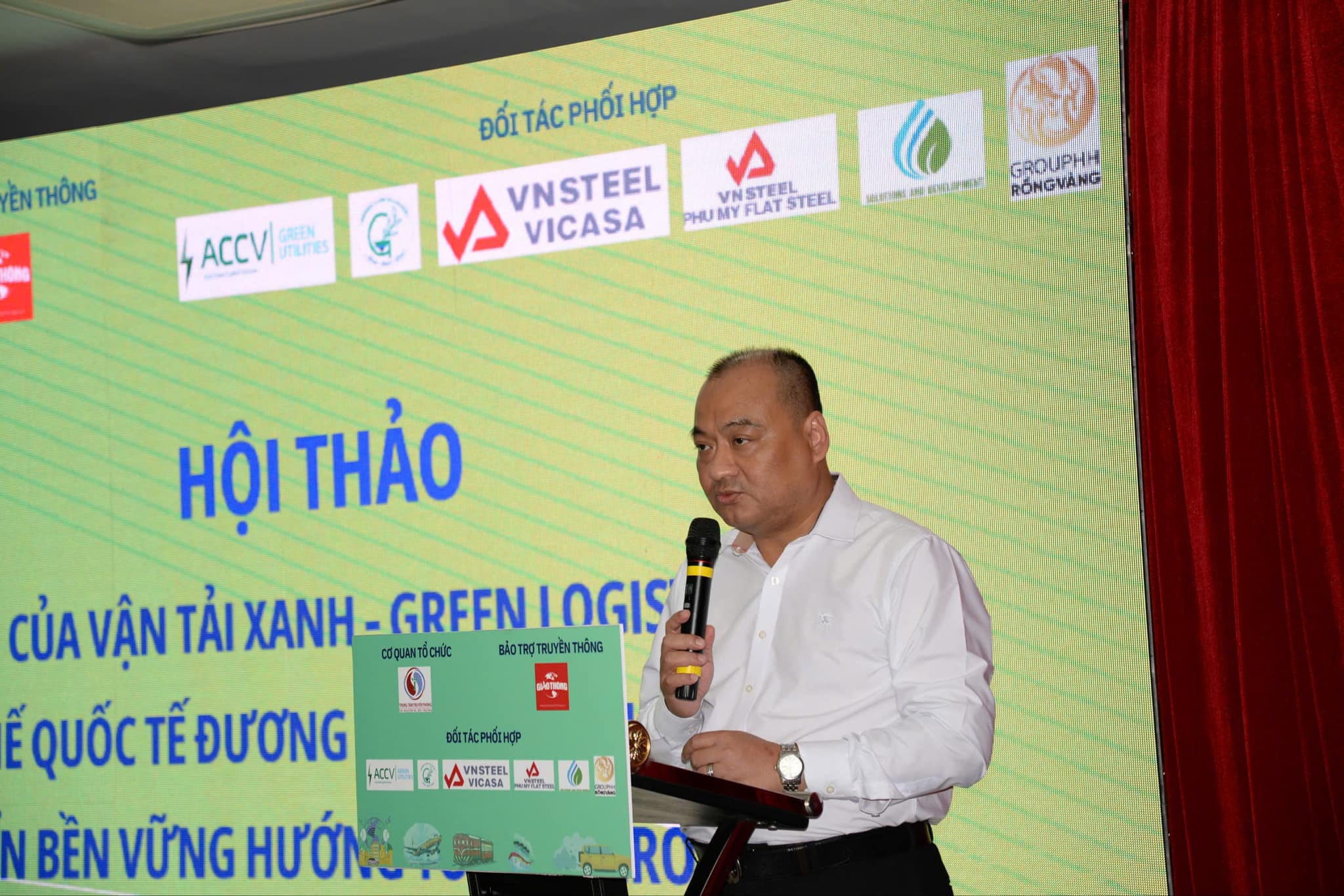
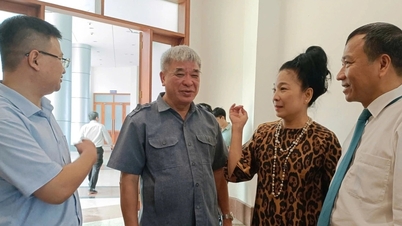
Mr. Nguyen Viet Dung, Director of the Center for Resource and Environment Communication, Ministry of Natural Resources and Environment . Photo: Organizing Committee.
Mr. Nguyen Viet Dung, Director of the Center for Resource and Environment Communication, Ministry of Natural Resources and Environment, stated that green logistics is an activity aimed at achieving sustainable, environmentally friendly goals and minimizing negative impacts on the environment. These activities include: transportation services, processing and storage of raw materials, inventory control, warehousing, packaging, and decisions regarding the location and distribution of goods…
Currently, there are over 40,000 businesses operating in the logistics sector nationwide. Vietnam also leads ASEAN countries in the number of logistics service businesses licensed by the US Maritime Administration; ranking 11th among the top 50 emerging logistics markets globally, according to the Agility 2022 ranking.
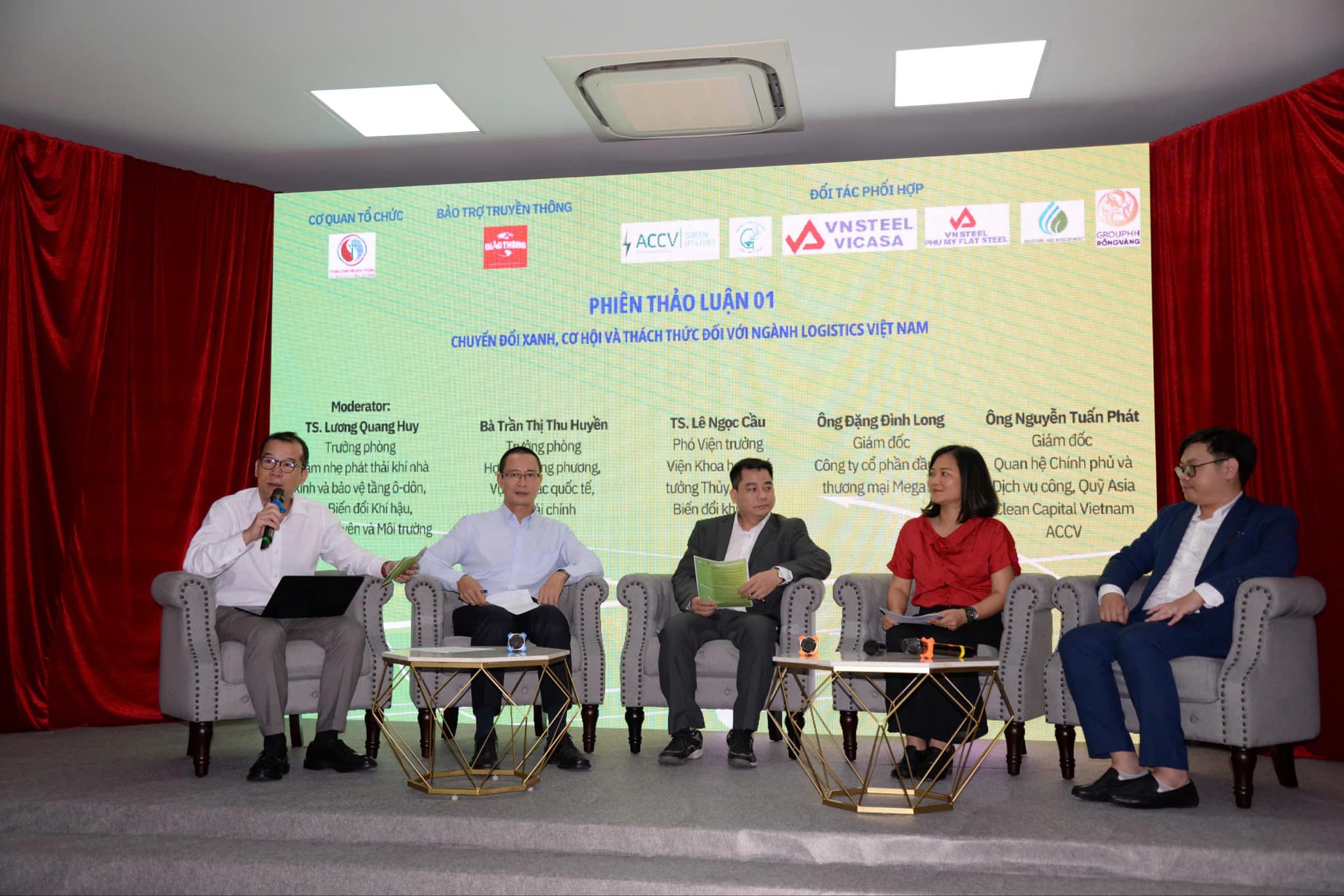
Experts, speakers, and representatives from transportation businesses discussed the opportunities and challenges facing the logistics industry in the context of green transformation. Photo: Organizing Committee.
Currently, green logistics is receiving professional attention and investment from the government and businesses. In particular, transportation infrastructure is being increasingly invested in and expanded; key highway systems are being built and renovated, creating favorable conditions for the development of transportation businesses.
In addition, the port system has also been improved, with a focus on investment, modernization, and access to more advanced, modern, and environmentally friendly transportation services.
However, Vietnamese logistics businesses currently operate in a fragmented manner and lack regional linkages. This situation is common across Vietnam, especially for businesses operating in the road freight transport sector.
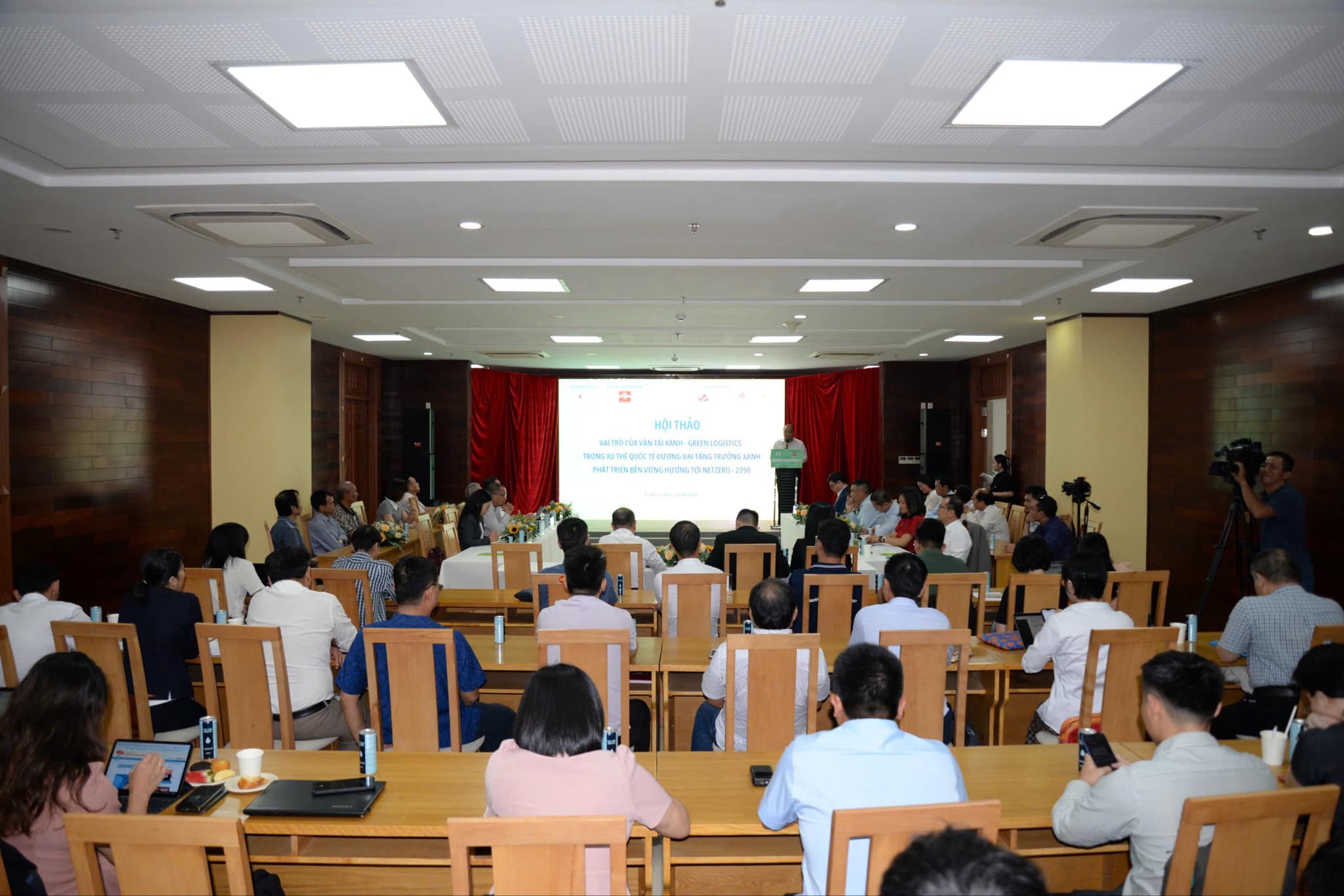
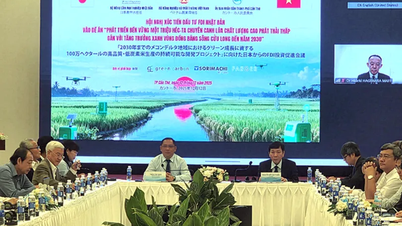
Overview of the conference. Photo: Organizing Committee
At the workshop, experts, speakers, and business representatives in the transportation sector discussed two main topics: Green transformation - opportunities and challenges for Vietnam's logistics industry, and resources, the roles of stakeholders, and models for transforming Vietnam's logistics industry.
According to Dr. Le Ngoc Cau, Deputy Director of the Institute of Meteorology, Hydrology and Climate Change, the Ministry of Transport has a clear roadmap for green transition to achieve the Netzero goal by 2050.
The goal from now until 2030 is to accelerate the transition to using electricity and green energy in the transportation sector. By 2050, the rational development of transportation methods will be pursued, and the complete conversion of all vehicles, equipment, and transportation infrastructure to use electricity and green energy will be strongly implemented.
According to Dr. Le Ngoc Cau, the transportation and logistics sector in general has the potential to reduce greenhouse gas emissions through the transition to new fuel and energy sources.
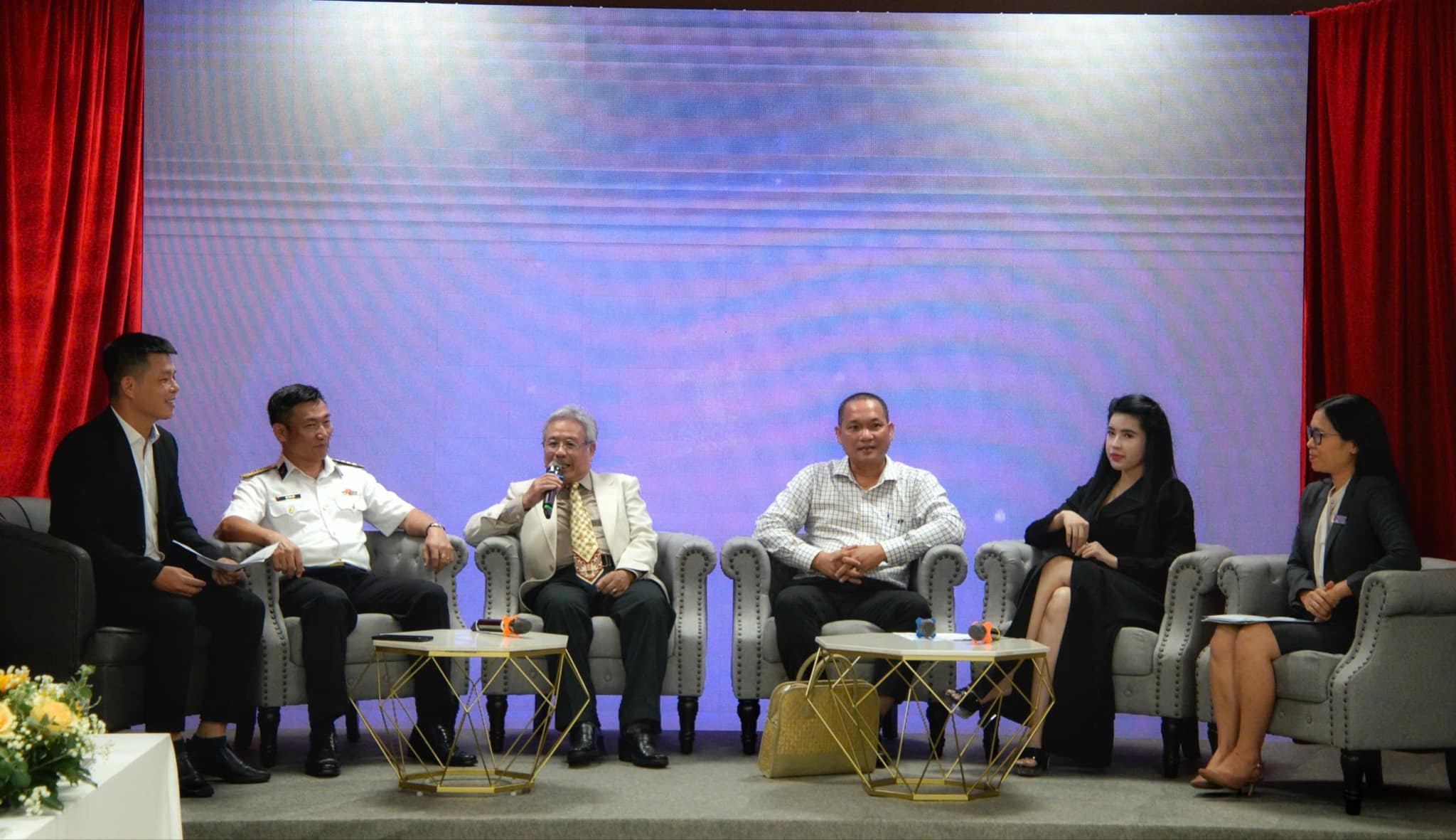
Many ideas were put forward at the workshop aimed at achieving the goal of green transportation. Photo: Organizing Committee
Meanwhile, Mr. Bui Van Quy, Deputy General Director of Saigon Newport Corporation and Chairman of the ASEAN Port Association, believes that institutional, infrastructure, and human resources are essential for implementing the green transportation program. In addition, the State must support green development, gradually investing in infrastructure, finance, technology, and clean and green energy. More specific criteria need to be established, and green certifications should be granted to businesses that meet these criteria. This would also serve as a goal for businesses to move towards a more positive green transformation.
Dr. Luong Quang Huy, Head of the Greenhouse Gas Emission Mitigation and Ozone Layer Protection Department, Climate Change Agency, Ministry of Natural Resources and Environment, noted that the advantage of green transportation is that city governments and businesses have invested in vehicles and related infrastructure systems to put into use environmentally friendly transportation.
However, the implementation of green transportation still faces some difficulties in persuading people to proactively switch to using public transportation in general and green transportation in particular.
Furthermore, the market currently lacks access to diverse suppliers, preventing competition and offering more attractive price options for consumers.
While many businesses are wondering about government policies, financial resources, and mechanisms to support their green transformation, Mr. Nguyen Tuan Phat, Director of Government Relations and Public Services at Asia Capital Vietnam Fund, shared important information at the workshop: currently, there are investment funds from the European Union, Canadian and Australian business associations, etc., with capital ranging from tens to even billions of USD to support businesses in their green transformation.
"It's crucial that associations are more proactive in accessing these funding sources and introducing them to businesses. No one can help you better than yourself," Mr. Phat said.
Source: https://www.baogiaothong.vn/vai-role-of-green-transport-with-net-zero-routes-19224101518264893.htm
![[Photo] Prime Minister Pham Minh Chinh presides over a meeting on private sector economic development.](/_next/image?url=https%3A%2F%2Fvphoto.vietnam.vn%2Fthumb%2F1200x675%2Fvietnam%2Fresource%2FIMAGE%2F2025%2F12%2F20%2F1766237501876_thiet-ke-chua-co-ten-40-png.webp&w=3840&q=75)


![[Photo] Prime Minister Pham Minh Chinh presides over the conference announcing the establishment of the International Finance Centre in Vietnam.](/_next/image?url=https%3A%2F%2Fvphoto.vietnam.vn%2Fthumb%2F1200x675%2Fvietnam%2Fresource%2FIMAGE%2F2025%2F12%2F21%2F1766309817714_ndo_br_dsc-3400-jpg.webp&w=3840&q=75)









































































Comment (0)