The voice of culture carries more weight and has a wider reach.
- As a representative in the field of culture, looking back at the 15th National Assembly term, how do you see the cultural sector being addressed in the National Assembly forum?
- Culture is no longer on the sidelines but has truly stepped onto the "center stage." Never before have issues concerning the development of grassroots cultural life, the cultural environment, the development of the cultural industry, heritage preservation, or culture in media and cyberspace been placed on the agenda so frequently, profoundly, and strategically as in this term.
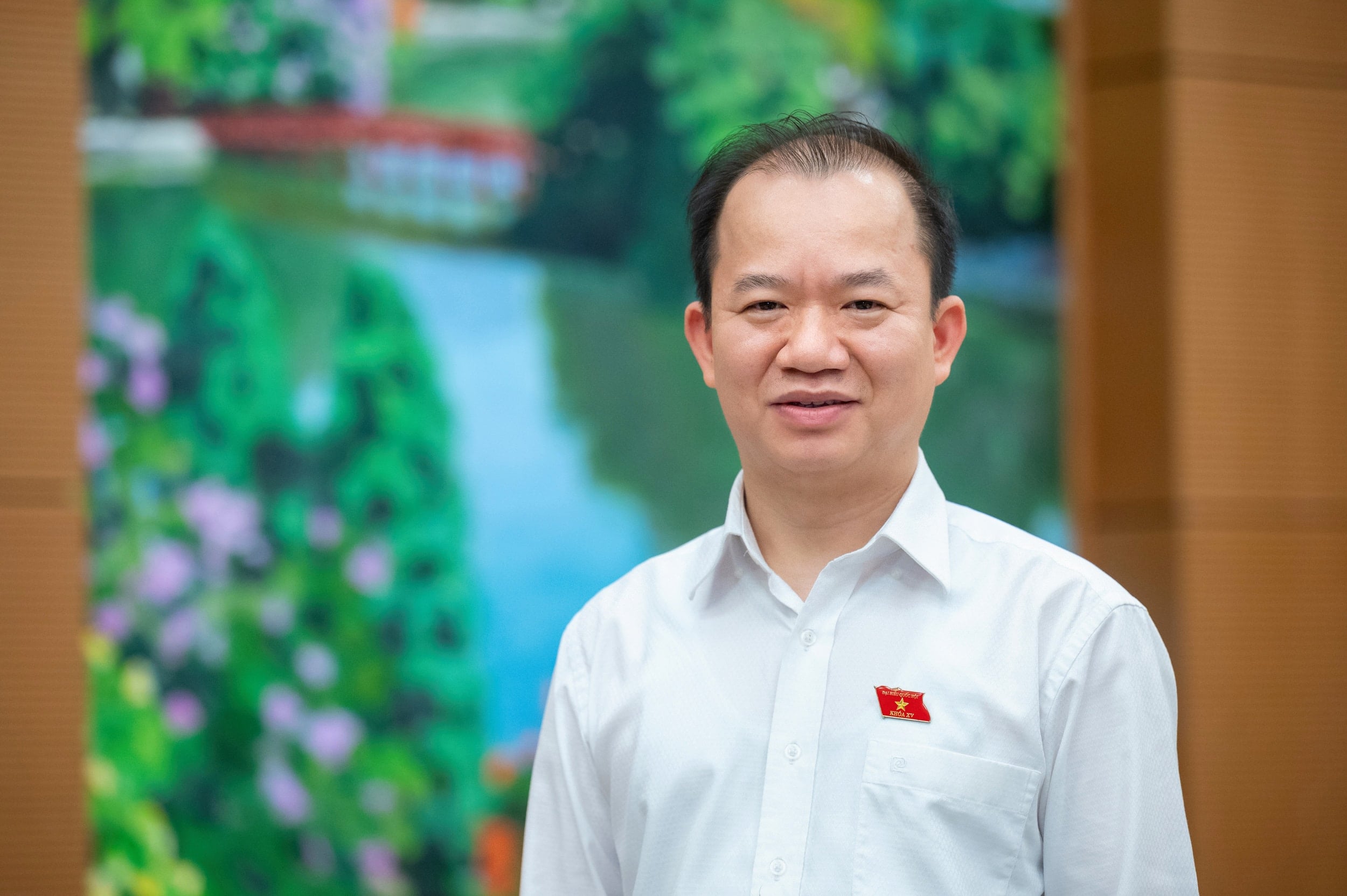
When discussing draft laws in the cultural sector, or when overseeing the implementation of policies and laws in this field, delegates from various sectors and localities have viewed culture not only as a spiritual life, but also as a pillar of development, an economic resource, and a method of enhancing national competitiveness. This shift in perception has given the voice on culture in the National Assembly forum more weight and reach. I clearly sense the sharing, consensus, and responsibility of the National Assembly towards the cause of revitalizing and developing national culture.
- That being said, it seems that culture has received the attention it deserves?
- If asked whether we are up to par, I would frankly say that we still have much work to do. Culture inherently has a time lag, depth, and is difficult to quantify, thus requiring even greater perseverance and persistence in policy planning, resource investment, and implementation monitoring. However, compared to previous terms, this term places culture in a very different position: more central, more strategic, and closely linked to the goals of national development in the new era. This is a crucial foundation for us to continue on this new path, with the belief that the soft power of culture will accompany the nation on its path to progress with confidence and resilience.
- If you had to choose the most representative decision of the 15th National Assembly in the field of culture, in your opinion, it would be…?
- This involves placing culture in its proper position as a driving force for development through a comprehensive, synchronized, and modern system of policies and laws. Laws such as the amended Film Law, the amended Cultural Heritage Law, the amended Intellectual Property Law, the amended Law on Prevention and Control of Domestic Violence, as well as the Resolution approving the investment policy for the National Target Program on Cultural Development, or the provisions facilitating culture in resolutions on special mechanisms for Hanoi , Ho Chi Minh City, Hue, etc., have created a new "institutional ecosystem" that both preserves traditional values and encourages creativity, innovation, and international integration.
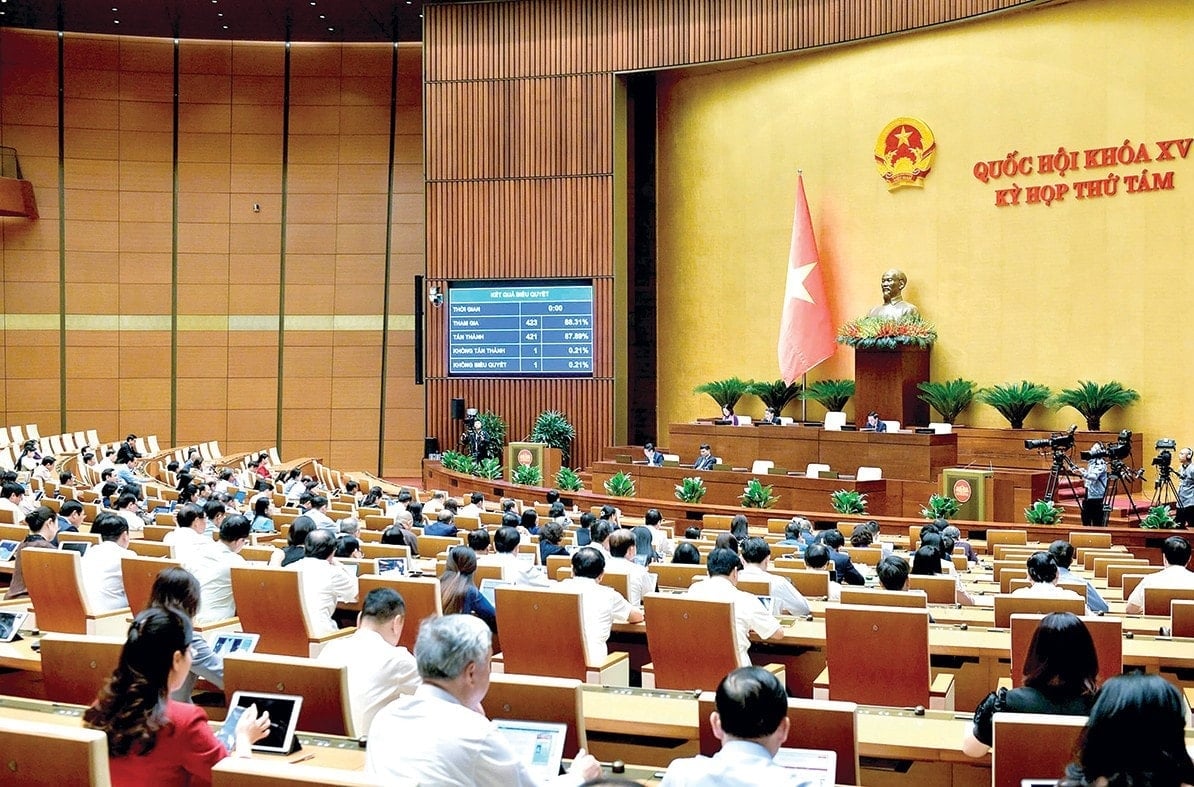
The National Assembly voted to approve the Resolution on the investment policy for the National Target Program on Cultural Development for the period 2025-2035 at the Eighth Session, on November 27, 2024. Photo: Ho Long
I appreciate that these laws and resolutions have changed the way we approach culture, broadening our perspective to connect it with the market, digital technology, and the growth model, while also protecting people's access to culture and artists' creative rights. The laws not only "manage" but also "open up"—paving the way for cultural creation to become a new economic sector, a part of the nation's soft power structure. This is a concrete step in realizing the spirit of the 13th National Congress, so that culture truly becomes the foundation and internal strength for national development.
A historic opportunity for culture to break through.
- Good policies and guidelines are important, but whether they are implemented effectively depends on the execution phase. In your opinion, what should be emphasized in the future implementation of laws and resolutions of the National Assembly to truly bring about a positive impact on culture?
- Once we have the right policies and increasingly完善 laws, the crucial remaining point is implementation. As I said, culture is subtle and difficult to measure, so if the implementation mechanism remains formalistic, the management mindset is heavily bureaucratic, and resources are insufficient, then even good laws and resolutions will be difficult to put into practice. Therefore, we must consider the organization and implementation of cultural policies as a central focus, even a "soft reform," to bring the spirit of the National Assembly into each locality, each institution, and each community.
First and foremost , we need to concretize the law through sub-laws, guidelines, criteria, and procedures that are clear, transparent, and easy to apply, minimizing the situation where each place interprets and applies it differently. Simultaneously, there needs to be strong decentralization and delegation of power, coupled with inspection, supervision, and accountability. Culture is linked to the community, so localities must be proactive, creative, and flexible in implementation, but without distorting the spirit of the policy. When resources are provided along with trust, localities will certainly be more confident in preserving heritage, developing cultural industries, and building a healthy cultural environment.
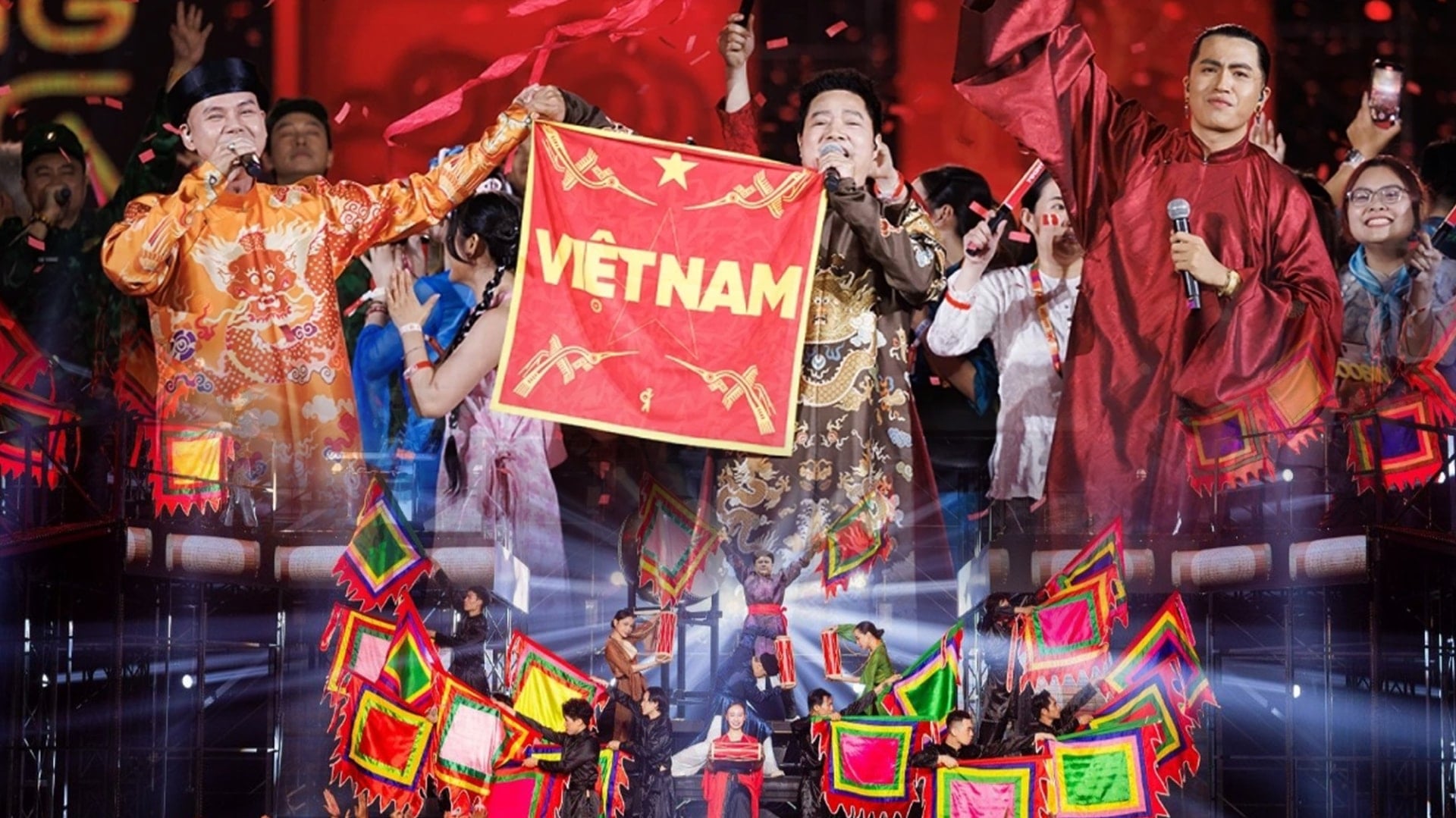
Culture and people are not only affirmed as the spiritual foundation, but also as a powerful resource, goal, and driving force of development. Source: yeah1.com
Secondly , resources must align with policy. Investing in culture requires a holistic approach: investing in people, in the creative ecosystem, in digital transformation, and in truly "living" cultural institutions. The private sector, businesses, and creative communities must be encouraged to participate through transparent, stable, and consistent social mechanisms. We must view culture as a long-term investment that yields both economic and spiritual benefits.
Thirdly , we need to enhance the capacity of cultural workers. No matter how good the law is, if those implementing it lack knowledge, skills, and passion for culture, its effectiveness will be limited. This is where we need a systematic, modern, and practical training program, so that every official, every artist, and every cultural worker becomes an agent of innovation.
Finally , I want to emphasize the role of monitoring, evaluating, and listening to the people. The people themselves are the creators and beneficiaries of culture. When they are satisfied, when villages, cities, schools, and public spaces become more humane, safe, and creative, that is the most honest measure of policy. The National Assembly, the Government, ministries, and local authorities need mechanisms for regular monitoring, timely resolution of obstacles, and flexible adjustments according to practical realities.
- With the new cultural policies outlined in the draft documents of the 14th Party Congress and the new decisions of the National Assembly as you just mentioned, what are your expectations for the development of culture in the coming period?
- I have always envisioned a Vietnam entering a new era of development with confidence, deep integration, and a strong aspiration for progress. In the draft documents of the 14th Party Congress, culture and people are affirmed not only as the spiritual foundation, but also as a powerful resource, goal, and driving force for development. Along with the new decisions of the National Assembly, I believe that Vietnamese culture is facing a historic opportunity to break through.
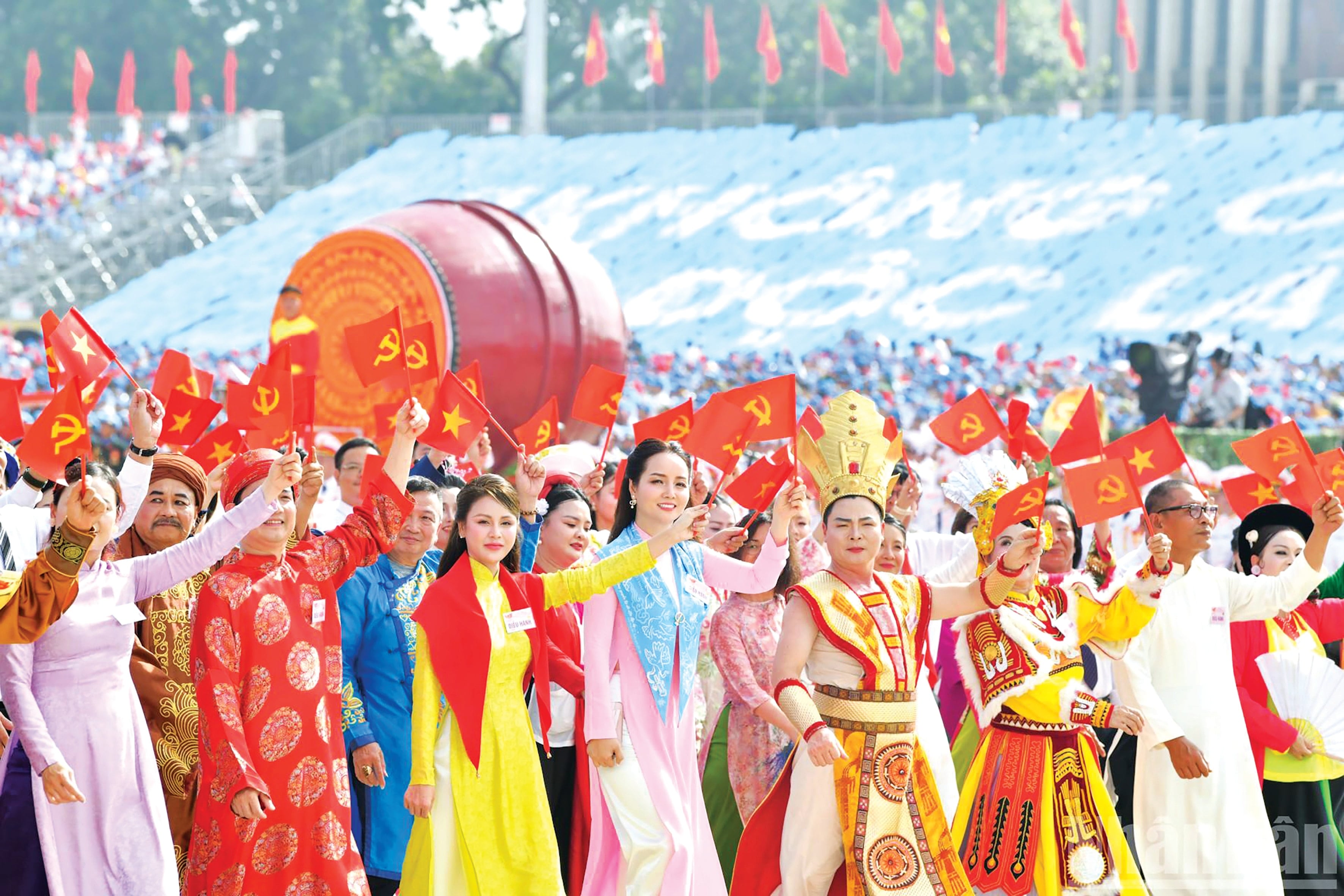
Images of the cultural and sports contingent at the parade commemorating the 80th anniversary of the successful August Revolution and National Day on September 2nd. Photo: Dang Khoa
Culture must truly become the dominant force in all development strategies, deeply permeating national governance, the economy, education, science and technology, urbanization, digital transformation, etc., so that we can develop rapidly without losing our identity, integrate while preserving our roots. Culture is not just about festivals, art, or heritage, but about how Vietnamese people treat each other, nature, and the world; it is about the values of integrity, responsibility, creativity, and humanism in every policy and every daily activity.
I also expect the cultural industry to become a significant economic driver, creating high-quality jobs, nurturing creative talent, promoting Vietnam's image to the world, and making a worthy contribution to GDP while still being based on national identity. Music, film, design, fashion, video games, cultural tourism products… that embody the "Vietnamese spirit" will confidently enter regional and global markets.
Thank you, sir!
Source: https://daibieunhandan.vn/van-hoa-buoc-ra-trung-tam-san-khau-va-toa-sang-10402428.html


















![[Photo] Reception to welcome General Secretary and President To Lam and his wife on their State visit to the Philippines](https://vphoto.vietnam.vn/thumb/1200x675/vietnam/resource/IMAGE/2026/06/01/1780295488620_vna-potal-chieu-dai-chao-mung-tong-bi-thu-chu-tich-nuoc-to-lam-va-phu-nhan-tham-cap-nha-nuoc-toi-philippines-8798060-7855-jpg.webp)










































Comment (0)