

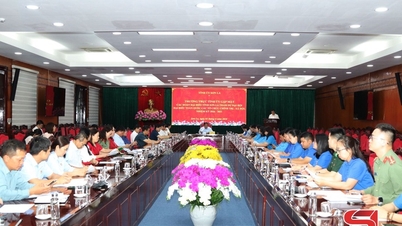
According to Associate Professor Dr. Nguyen The Ky, Resolution 80-NQ/TW dated January 7, 2026, of the Politburo (13th term) on the development of Vietnamese culture was issued in the context of the country entering a new stage of development with increasingly high demands in all areas of social life. Resolution 80-NQ/TW is a continuation and development of Ho Chi Minh's thought and the Party's guidelines and viewpoints on culture, from the 1943 Outline on Vietnamese Culture, developed and gradually perfected during the resistance war and national construction from 1945 to 1975; especially through 40 years of national renewal (1986-2026).
Culture is a vital endogenous resource that nurtures the intellect, soul, spirit, and character of the Vietnamese people.
Reviewing the historical milestones in the development of the national culture, especially after the 1943 Outline on Vietnamese Culture , Associate Professor Dr. Nguyen The Ky stated that , for the first time , the Communist Party of Vietnam outlined a cultural program , defining the content, nature, organization, and development orientation of a cultural revolution that could only be linked to the national liberation revolution and the future of that culture after the revolution's success. The Outline on Vietnamese Culture (1943) determined that building Vietnamese culture (including ideology, scholarship, and art) "...will be freed from its shackles by the victorious democratic liberation revolution and will catch up with the world's new democratic culture"; affirming three principles: "Nationalization"; "Popularization"; and " Scientification ". The cultural endeavor belongs to the entire people, under the leadership of the Party; clearly affirming the nature of the new Vietnamese culture: National in form, new democratic in content.
Associate Professor Dr. Nguyen The Ky assessed that, after 15 years of implementing Resolution No. 5 of the Central Committee (8th term), the cause of building and developing the country's culture has seen positive changes and achieved many important results. However, in the face of the rapid, diverse, and complex changes in life in the market economy and the context of globalization and international integration, cultural activities have also revealed many shortcomings and limitations. Based on the country's reality after nearly 30 years of reform and development, the Ninth Conference of the Central Committee of the Party (11th term) discussed and issued a resolution (Resolution No. 33-NQ/TW dated June 9, 2014) on "Building and developing Vietnamese culture and people to meet the requirements of sustainable national development" . Through Central Resolution 9, the Party's theoretical thinking has developed, demonstrating creativity in understanding the position and role of culture, especially the human element; and in determining the direction, characteristics, nature, driving forces, and specifics of activities in building and developing culture and human resources.
According to Associate Professor Dr. Nguyen The Ky, after 40 years of implementing the country's renovation process, especially the implementation of the Party's resolutions through various Congresses, the resolutions of the Central Committee and the Politburo on cultural development and human development, on January 7, 2026, the Politburo (13th term) issued Resolution 80-NQ/TW on the development of Vietnamese culture. The resolution affirms: "Vietnamese culture is the crystallization of the nation's finest values in the process of thousands of years of nation-building and national defense; it is an important endogenous resource that nurtures the intellect, soul, spirit, and character of the Vietnamese people."
Resolution 80-NQ/TW clearly points out the limitations and shortcomings: "The understanding of the position and role of culture is not yet comprehensive and profound. The institutionalization of the Party's guidelines and policies into the State's laws and regulations is slow, inconsistent, and in some aspects lacks breakthroughs. The cultural environment is not truly healthy, and social morality still shows signs of degradation and loss of identity. Investment in culture is low and scattered; resources mainly rely on the state budget. There are many shortcomings in the cultural human resources. Mechanisms and policies have not fully unleashed the creativity of stakeholders, especially intellectuals and artists. The level of access to and enjoyment of culture among the people still varies between regions and localities."
Associate Professor Dr. Nguyen The Ky believes that, stemming from this serious self-reflection and review, Resolution 80-NQ/TW emphasizes that "The requirements for national development in the new era demand breakthrough strategic and synchronized policies and decisions to overcome limitations and shortcomings; proactively seize opportunities, overcome challenges, and promote cultural development. Culture must lead the way, permeate every development decision, uphold humanistic values and social ethical standards. Building and developing culture must truly become a solid foundation, an intrinsic strength of the nation, and a regulating system for rapid and sustainable national development, aiming towards the goal of 100 years since the founding of the Party and 100 years since the founding of the Nation; affirming the position and stature of Vietnamese culture worthy of a socialist-oriented developing nation with a long-standing cultural and historical tradition, making a worthy contribution to the flow of human civilization."
Resolution 80-NQ/TW outlines the Party's guiding principles: "Developing culture and human resources is the foundation, an important endogenous resource, a great driving force, a pillar, and a regulating system for the rapid and sustainable development of the country. Cultural values must be closely and harmoniously integrated, deeply permeating all aspects of social life, from politics, economics, society, environment to national defense, security, and foreign relations, truly becoming the soft power of the nation in the new era"... "Developing culture for the perfection of the socialist human personality in the new era and building human beings to develop culture. Creating a humane, healthy, civilized, and modern cultural environment. Developing Vietnamese culture and people comprehensively on the foundation of national values, cultural values, family values, and the standards of Vietnamese human beings."
The Party's consistent viewpoint on cultural development is that it is a cause of the entire people, led by the Party, managed by the State, with the people as the creators and beneficiaries, and with intellectuals, artists, cultural officials, and entrepreneurs playing an important role. At the same time, the pioneering and exemplary role of cadres and Party members is emphasized, as affirmed in Resolution 80-NQ/TW.
Furthermore, Resolution 80-NQ/TW calls for strongly and comprehensively promoting the strength of Vietnamese culture and people; better addressing the internal relationships of culture: "construction" and "combat"; tradition and modernity; national and international; preservation and development; popular and scholarly; real life and digital space; open data and ensuring the security and sovereignty of digital culture.
The overall goal by 2030 is to "build and develop an advanced Vietnamese culture, rich in national identity; unified in diversity; possessing national characteristics, democracy, humanism, science, and modernity. Build a healthy cultural environment from family and school to society and the digital space. Develop literature and art commensurate with the nation's cultural history and the country's stature in the new era… Promote the development of cultural industries; form an ecosystem of creative cultural and artistic industry startups"…
"Resolution 80-NQ/TW has inspired and clearly outlined solutions for innovation, even breakthroughs in the system."
According to Associate Professor Dr. Nguyen The Ky, Resolution 80-NQ/TW has identified several important targets: "Completing the national cultural institution system, ensuring that 100% of local governments at both levels and the armed forces have cultural institutions that meet the needs of cultural creation and enjoyment for people at the grassroots level and officers and soldiers; 90% of grassroots cultural institutions operate regularly and effectively. Striving to complete the digitization of 100% of cultural heritage sites that have been ranked at the national and special national levels by 2026. 100% of students and trainees in the national education system have access to and participate effectively and regularly in artistic activities and cultural heritage education. Ensuring commensurate resources for cultural development; allocating at least 2% of the total annual state budget expenditure to culture and gradually increasing it according to practical requirements. Issuing financial mechanisms to prioritize implementation in three breakthrough areas." Breakthrough: Training and nurturing talent in the fields of culture and arts; applying science, technology, and digital transformation in the cultural sector; and commissioning the creation of cultural works, literary works, and artistic works of high ideological, content, and artistic value, worthy of Vietnamese culture in the new era… Developing cultural industries that contribute 7% of GDP; forming 5-10 national brands in cultural industries, such as: cinema, performing arts, cultural tourism, design, and fashion… Successfully building 5 international art festivals and cultural events in cinema, music, and fine arts. Establishing 1-3 more Vietnamese cultural centers abroad, prioritizing locations with comprehensive strategic partners. Striving for 5 more cultural heritage sites to be recognized and inscribed by UNESCO.
Resolution 80-NQ/TW sets the vision for 2045: "To build and develop a socialist Vietnamese culture, in which people are the center, subject, goal, and driving force of development; cultural values play a fundamental role, serve as standards, and are permeated in all areas of social life. Affirming the cultural position of a developed, high-income, socialist-oriented nation. Vietnam will be an attractive destination for regional and international cultural and artistic events; becoming one of the dynamic centers of cultural and creative industries, with several key indicators: The cultural industry and creative economy will truly become the pillar of sustainable development, striving to contribute 9% of GDP. There will be 10 internationally recognized art festivals and cultural events; striving for approximately 8-10 more cultural heritage sites to be recognized and inscribed by UNESCO. Striving to be in the Top 3 in ASEAN and Top 30 in the world." Regarding the country's Soft Power Index and the value of cultural industry exports.
Discussing the new and outstanding points of Resolution 80-NQ/TW, Associate Professor Dr. Nguyen The Ky stated that, in the section on tasks and solutions, Resolution 80-NQ/TW outlines correct, decisive, and feasible actions and methods regarding "Strongly reforming thinking, achieving high unity in awareness and action to develop culture in the new era. Perfecting institutions to create strategic breakthroughs and unlock resources for cultural development." This is a new and outstanding point compared to previous resolutions on cultural development.
Many tasks and solutions are closely aligned with real-life situations, and some are even very urgent, such as: "Developing, promulgating, and implementing a national cultural index and a statistical index on the contribution of cultural industries to economic development according to international standards. Building breakthrough mechanisms and policies for the development of science, technology, innovation, and digital transformation in the cultural sector… Supporting cultural industry enterprises in accessing and applying advanced technologies to digital content production, developing cultural products and services, and protecting intellectual property rights in the digital environment; policies to attract investment from large technology corporations into digital infrastructure and the development of high-tech solutions for culture; prioritizing investment in the development of key multimedia press agencies. Piloting new cultural business models linked to digital platforms; encouraging the private sector to invest in training facilities and cultural institutions, especially in disadvantaged areas, remote areas, and areas inhabited by ethnic minorities." minority….
The resolution also suggests and clearly outlines solutions for innovation, even breakthroughs in institutional frameworks: "There should be specific, breakthrough policies to promote public-private cooperation in the cultural sector, implementing a model of public leadership - private management; public investment - private management; private investment - public use for some cultural and sports institutions; encouraging models of cultural and artistic patronage based on voluntary, non-profit contributions; promoting the leading role and social responsibility of organizations and individuals in the cultural ecosystem. Establish a cultural and artistic fund based on a public-private model. Develop specific mechanisms for discovering, training, nurturing, valuing, and promoting cultural, artistic, and sports talents; focusing on traditional art forms while promoting contemporary art forms; ensuring specific teaching and creative conditions and specialized healthcare. There should be policies to support cultural creation in the digital space, digital environment, digital society, and digital economy. There should be preferential policies." "We should recognize and reward folk artisans and artists; create conditions to encourage and support artists to participate in and win major awards at prestigious and renowned art competitions and exhibitions around the world. We should have an effective mechanism to bring back top-tier art works and cultural heritage of Vietnam that meet the criteria of national treasures and rare and valuable artifacts currently located abroad. We should have a mechanism for commissioning and disseminating cultural, literary, and artistic works of high ideological, content, and artistic value, commensurate with Vietnamese culture in the new era."
All goals, strategies, and solutions are directed towards people, for people, and because of people. "Focus on building a comprehensively developed Vietnamese person, creating a humane, healthy, civilized, and modern cultural environment"... "Taking the development of human character as the central focus to guide cultural, educational, and scientific activities towards the goal of building a comprehensively developed person in terms of morality, intellect, physical health, and aesthetics; helping people improve their intelligence, perfect their character, form a scientific worldview, and strive towards the values of truth, goodness, and beauty"... "Implementing a comprehensive system of cultural values (national, democratic, humanistic, scientific), national values (peace, unity, independence, a prosperous people, a strong nation, democracy, fairness, civilization, happiness), family values (well-being, happiness, progress, civilization), and the standards of Vietnamese people (patriotism, solidarity, self-reliance, loyalty, honesty, responsibility, discipline, creativity)."
Associate Professor Dr. Nguyen The Ky emphasized that Resolution 80-NQ/TW outlines a policy and regulation that has received widespread support from all segments of the population: "Unanimously choosing November 24th every year as 'Vietnamese Culture Day'."
Diep Anh
Source: https://baolangson.vn/van-hoa-soi-duong-cho-dan-toc-tien-vao-ky-nguyen-moi-5074576.html










![[Photo] Reception to welcome General Secretary and President To Lam and his wife on their State visit to the Philippines](https://vphoto.vietnam.vn/thumb/1200x675/vietnam/resource/IMAGE/2026/06/01/1780295488620_vna-potal-chieu-dai-chao-mung-tong-bi-thu-chu-tich-nuoc-to-lam-va-phu-nhan-tham-cap-nha-nuoc-toi-philippines-8798060-7855-jpg.webp)














































Comment (0)