

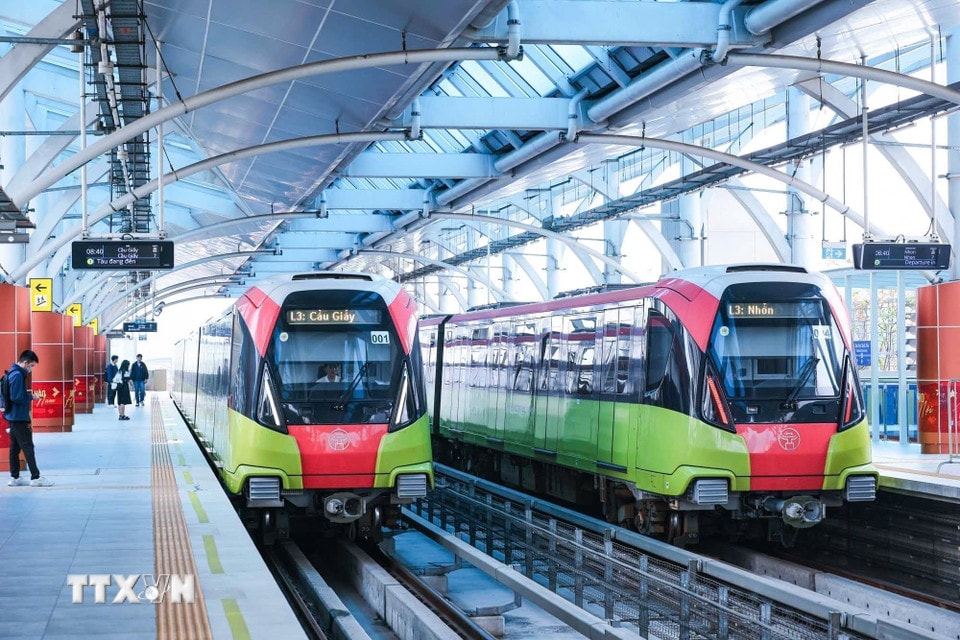
A vibrant civics class in the heart of the city.
When the first metro trains rolled out, Hanoi entered a different rhythm of movement. The incessant honking of car horns gradually subsided, and the congestion in the crowded traffic lessened. The metro brought about an orderly, smooth, and well-structured transportation environment. What is noteworthy is the depth of this change, clearly reflected in how people interact with each other.
Stepping out of the train station, the sight of neatly lined-up people waiting for their trains gradually became familiar. There was no pushing or shoving; each person adjusted their pace to blend into the general order. When the train arrived, passengers patiently waited for everyone else to disembark before boarding. These actions reflected a clear shift: the habit of "traveling quickly" was gradually giving way to a sense of "traveling properly."
On the train, the silence was surprisingly profound. Some spoke softly, others read, and some quietly observed through the windows. Priority seats were often given to the elderly, pregnant women, and people with disabilities with little prompting. This consideration had become a natural reflex.
The Metro, in this way, is operating as a "living civics classroom." On each train, every passenger is both a learner and a practitioner, together establishing new standards of behavior. Seemingly dry rules like queuing, maintaining order, not eating or drinking, not littering... when implemented daily, have become ingrained habits, forming the foundation of civilized urban life.
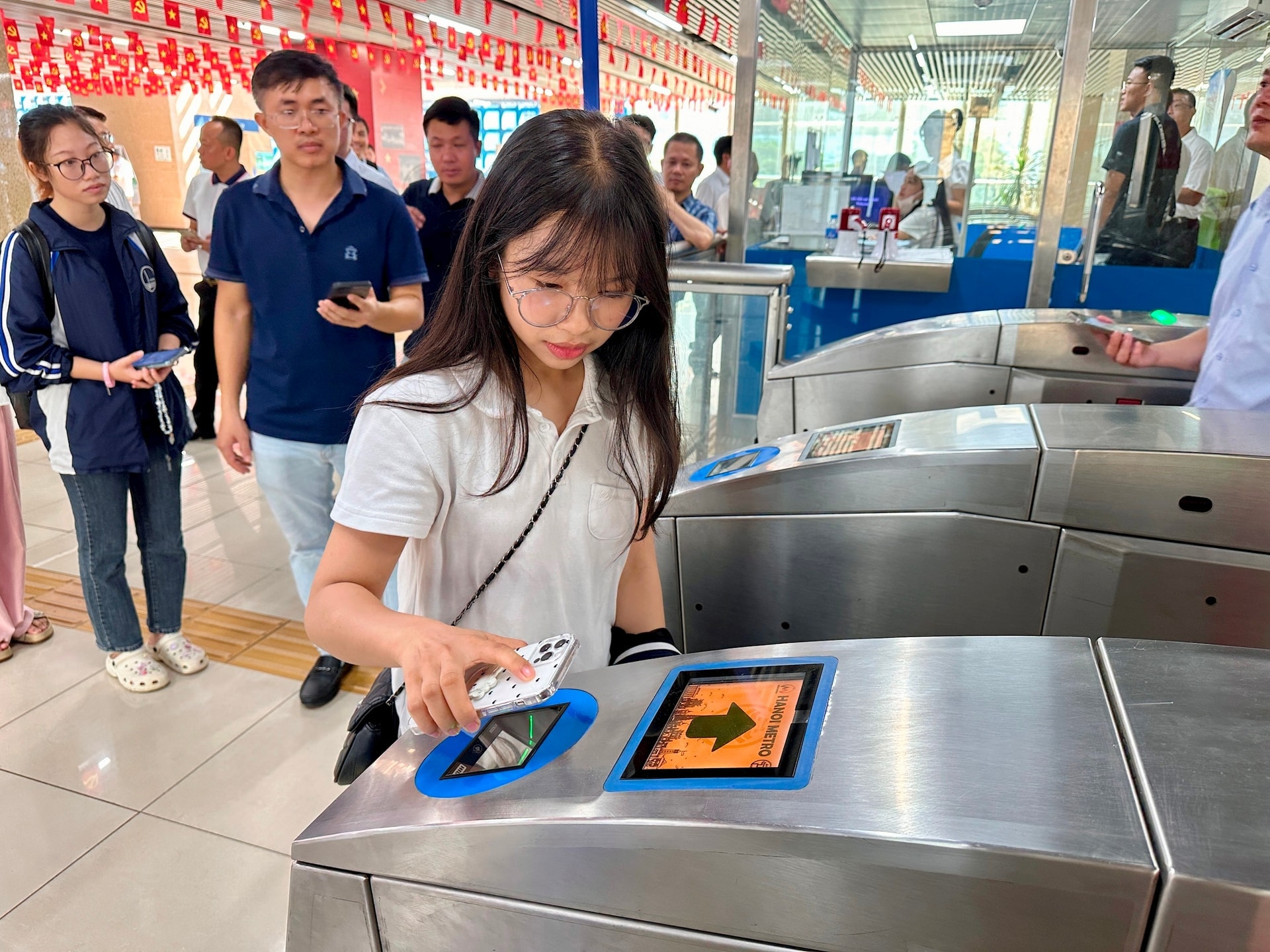
In line with the spirit of Resolution 80-NQ/TW of the Politburo on the development of Vietnamese culture, building a modern person with a disciplined, responsible lifestyle and respect for the community needs to begin in specific spaces. Metro, with its characteristic highly organized public environment, is gradually taking on that role.
"Seeds" that sow the seeds of a happy city.
Every behavior on the metro can be seen as a "seed" of culture. These seeds are silently sprouting in urban life. Queuing, giving up seats, maintaining cleanliness, being punctual, complying with regulations... are gradually shaping a new transportation standard, where people move with mutual respect.
It is noteworthy that these changes stem from everyday experiences. To catch the train on time, passengers need to manage their time effectively; to board safely, they need to queue; to enjoy a comfortable space, they need to maintain order. The repetition of these positive experiences has created a persistent and effective process of "soft education ."
The metro thus becomes a "mirror" of urban culture. There, the beauty of civility is clearly evident, while inappropriate behaviors are easily identified. An act of offering a seat can spread good manners; a timely silence helps maintain a pleasant shared space.
These standards have the potential to spread to other modes of transportation and to all aspects of urban life. Traffic culture gradually develops on a foundation of self-awareness, rather than solely relying on regulations.
In line with Resolution No. 02-NQ/TW, Hanoi aims to be a cultured, civilized, and modern capital city. Urban quality is measured by both the infrastructure and how people behave in public spaces.
In particular, the Resolution of the 18th Congress of the Hanoi City Party Committee included the element of "happiness" in its development goals. A happy city is associated with a sense of safety, respect, and the level of satisfaction of its citizens in their daily lives.
From that perspective, the metro contributes to creating "the joy of commuting." When travel becomes smooth, orderly, and less stressful, people are more likely to remain calm, friendly, and sharing. This is the foundation of a livable city.
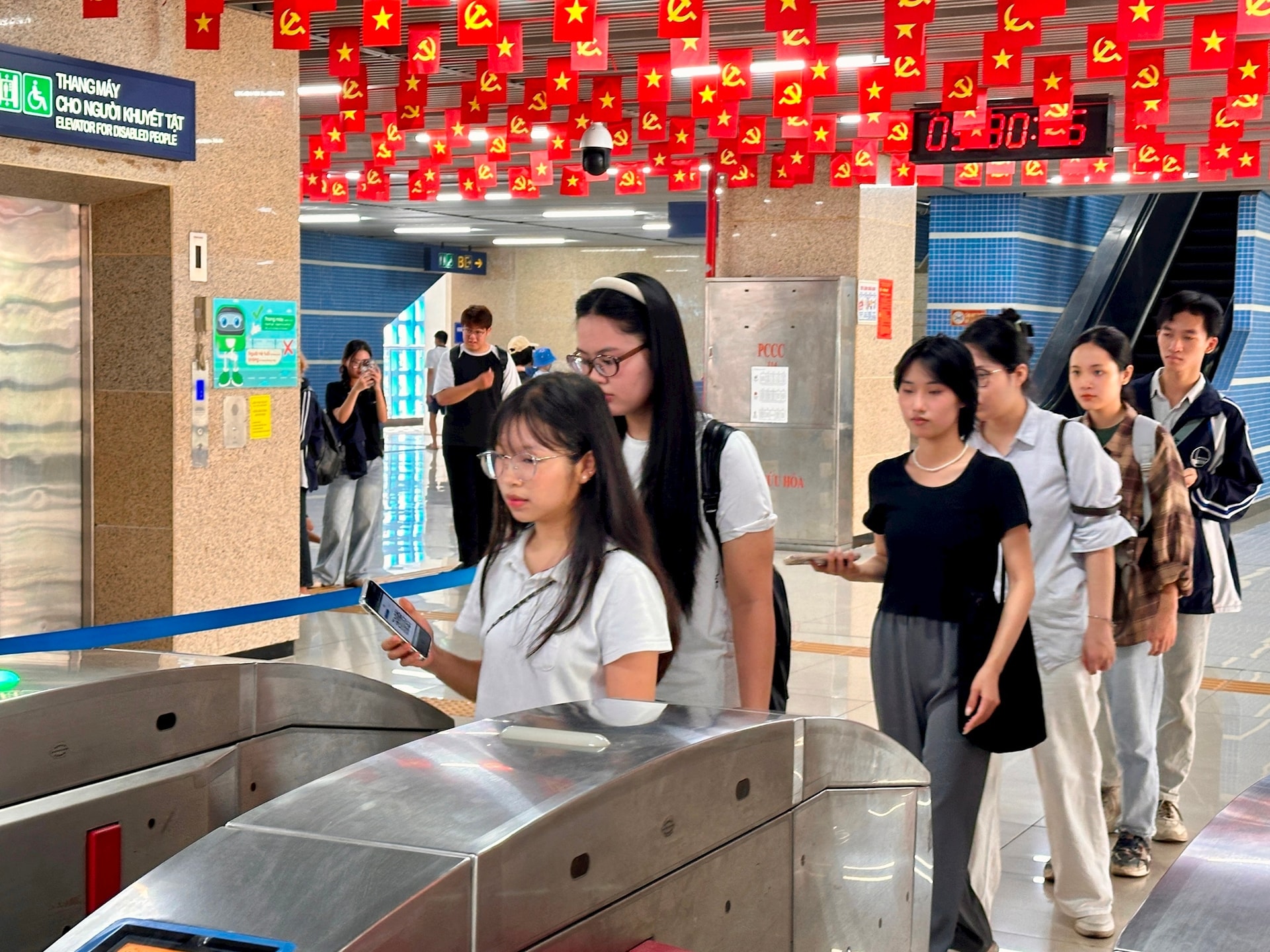
New cultural institutions of the capital city.
Alongside the positive changes, there are still some "blemishes" that need to be frankly acknowledged. Pushing and shoving while queuing, eating in train carriages, loud phone conversations, using speakerphones... these behaviors still occasionally occur in some places. These actions reflect the persistence of impolite behavior in public spaces.
The causes lie in many factors: uneven individual awareness, lack of specific standards, and insufficient enforcement mechanisms. Public culture takes time to develop; it requires a combination of education and practical experience.
To make metro culture a clear hallmark of elegant and civilized Hanoi residents, a comprehensive approach is needed. First and foremost, a concise, easy-to-remember, and easy-to-implement code of conduct should be developed and visually communicated at stations and on trains. Simple yet consistent messages will help form good habits.
Alongside this, it is necessary to strengthen education in schools, helping students to access traffic culture from an early age. Strict handling of violations is also needed to ensure deterrence and fairness.
Another crucial factor is improving the quality of the experience. Convenient connectivity, friendly service, and easy payment options will encourage people to use public transportation. When positive experiences are repeated, civilized behavior will gradually become a way of life.
The Metro, viewed as a whole, is a new "cultural institution" of the capital city. On each train, every act of behavior contributes to shaping common standards. Small things like queuing, giving up seats, and maintaining order are gradually creating a civilized and modern urban landscape.
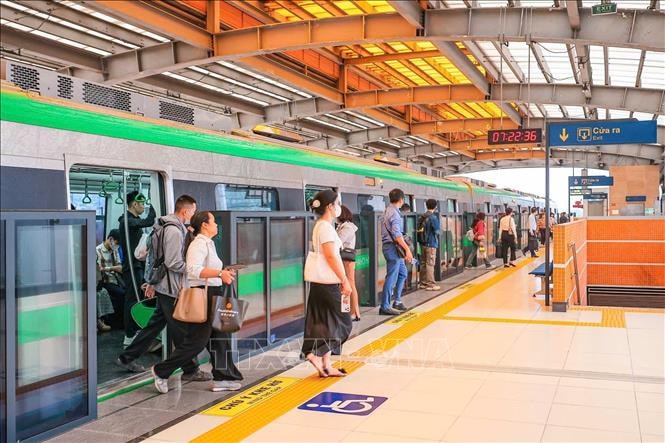
The elegance and civility of Hanoians are recognized through their words and behavior in modern public spaces. The Metro has become a new "benchmark," where cultural values are tested daily through concrete actions.
From these modern trains, we can expect Hanoi to move closer to the image of a cultured, modern, and happy city – where culture is present in every aspect of daily life.
Source: https://hanoimoi.vn/van-hoa-ung-xu-tren-metro-them-thuoc-do-nguoi-ha-noi-thanh-lich-741923.html


![[Photo] General Secretary and President To Lam presides over a working session with the Central Policy and Strategy Committee on the development of the materials industry.](https://vphoto.vietnam.vn/thumb/1200x675/vietnam/resource/IMAGE/2026/05/21/1779359935432_a3-bnd-3129-1412-jpg.webp)
![[Photo] National Assembly Chairman Tran Thanh Man working with the Standing Committee of the Law and Justice Committee](https://vphoto.vietnam.vn/thumb/1200x675/vietnam/resource/IMAGE/2026/05/21/1779378929214_ndo_br_1-4610-jpg.webp)






















































Comment (0)