

The news that CMA-CGM, a major global shipping company, will invest in an electric barge project to transport goods from Binh Duong to Cai Mep is expected to boost the green supply chain as the world moves towards reducing carbon emissions.
Battery-powered barge
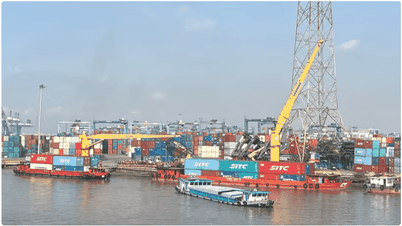
Gemalink (a subsidiary of Gemadept) is the largest deep-water port in the Cai Mep – Thi Vai area.
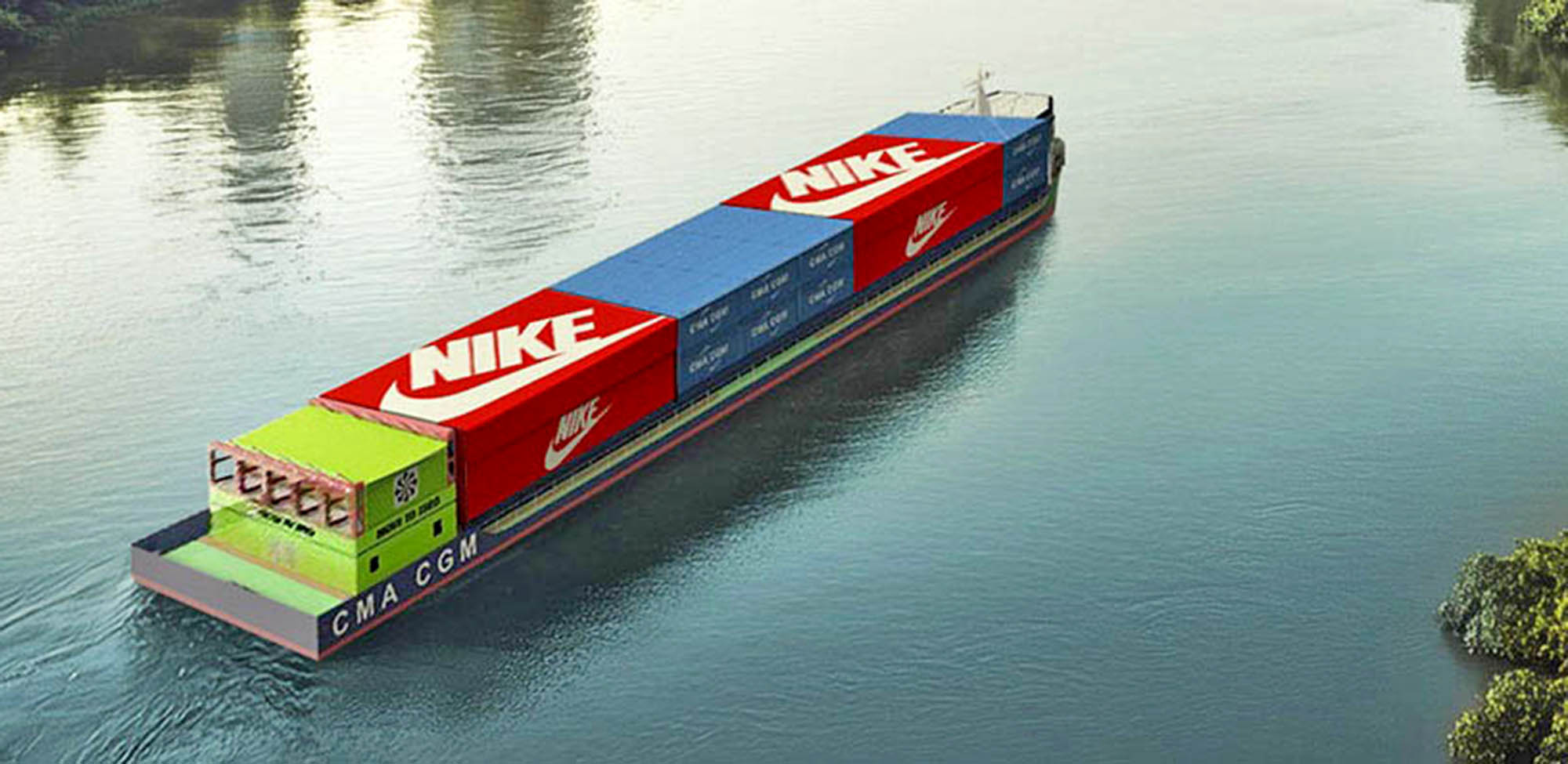
CMA - CGM wants to invest in battery-powered barges to transport goods from Binh Duong to Cai Mep.
Recently, Gemalink's leadership has been contemplating an investment project in a solar power system to produce renewable energy for battery-powered barges, promoting a green supply chain in the Cai Mep area. This is a collaborative project with CMA-CGM, the world's third-largest shipping company.
According to an announcement by CMA-CGM, the company is developing a zero-emission inland waterway transport project using battery-powered barges. The barges will transport Nike's goods from Binh Duong to Gemalink port in Cai Mep. With a round-trip journey of 180km, the barges are expected to reduce CO2 emissions by 778 tons per year compared to barges using diesel engines.
The barge has a capacity of approximately 100 TEU and uses 100% renewable energy. The shipping company expects to transport 50,000 TEU annually, with official operations scheduled to begin in 2026.
To support the operation of electric barges, Gemalink Port will deploy a solar power system that produces 1 GWh of renewable energy per year.
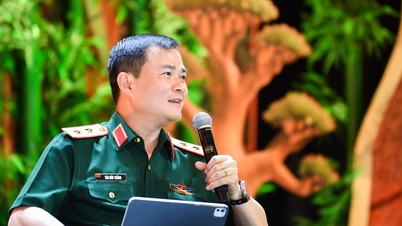
Mr. Cao Hong Phong, Deputy General Director of Gemalink, said that for this project, installing a solar power system is necessary to obtain renewable energy and meet the requirements for green credit.
However, achieving a green supply chain involves many related issues, from "green" practices at the Binh Duong port area to the operational management of shipping companies.
"Will the barges operate exclusively on the route from Binh Duong to Cai Mep, or will they stop at other ports along the way to increase their operational capacity? If the barges stop at other ports, will those ports be able to supply electricity?", Mr. Phong questioned.
The cost of switching is high.
Currently, some markets in Europe and the US have tightened green standards for products, requiring "green" products throughout the entire supply chain. This will affect import and export activities in Vietnam as well as supply chains.
The Ministry of Transport and the Vietnam Inland Waterways Administration have always supported pioneering companies like CMA-CGM in introducing electric barges into operation.
But for now, a pilot program should be implemented on one route, in one area. If successful, it will provide valuable experience and contribute to the development of green and sustainable transportation and logistics.
Mr. Le Minh Dao, Deputy Director
Vietnam Inland Waterways Administration
Therefore, CMA-CGM's investment project in battery-powered barges for inland waterway transport is expected to boost the green supply chain.
However, Mr. Le Minh Dao, Deputy Director of the Vietnam Inland Waterway Department, stated that according to current regulations, foreign companies can only bring electric barges in for domestic transport businesses to operate, and are not allowed to operate them directly.
Safety standards and regulations for electric motors have been established for vehicle registration purposes. Therefore, if electric motor barges meet the registration requirements, they can be operated and used for transportation. However, determining the energy consumption, charging station, and efficiency of the systems supporting the operation of electric motor barges requires a period of pilot testing and evaluation.
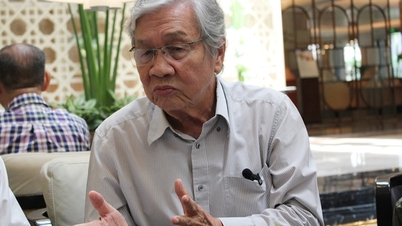
"A shipping company operating on a single route is easy to assess, but if applied across an entire country, transitioning to a new energy ecosystem requires careful consideration because it's necessary to determine which ports and locations need electric power solutions, which entails very high costs," Mr. Dao said.
Waiting for support mechanisms and policies.
According to Mr. Tran Do Liem, Chairman of the Vietnam Inland Waterway Transport Association, if Vietnamese inland waterway transport businesses do not proactively implement solutions for transformation, then when the State implements regulations and the roadmap to fulfill commitments at COP 26, these businesses will not have the means to operate.
Recently, the German International Cooperation Agency (GIZ) representative office, in coordination with relevant Vietnamese agencies, surveyed the needs of businesses and ship owners to convert diesel engines in water transport vehicles to electric engines. Based on this, they developed a loan program of approximately $150 million to implement electrification.
Instead of investing in building new green energy vehicles, businesses could invest in replacing the diesel engines currently installed on their operating vehicles with electric motors. However, this conversion requires careful planning and changes to the vehicle's original design.
Before this solution can be widely implemented, a pilot program with a number of vehicles for about a year is needed to evaluate all aspects and determine its effectiveness. At that point, businesses can borrow capital from GIZ to invest in the conversion, repaying it gradually.
Mr. Liem believes that, in order to facilitate Vietnamese businesses, the State needs to have policies and mechanisms to support and encourage them.
Meanwhile, Mr. Cao Hong Phong argued that the current loading and unloading cost for barges, at around $9 per container, is too low for businesses to afford the transition to green energy vehicles and equipment. He added that if this isn't done now, Vietnamese goods will be unable to access markets like the US and Europe in the future.
The leaders of Gemalink Port also expressed concern: "If a business installs a solar power system to supply electricity to barges, how will the surplus electricity be handled? The government needs clear guidelines and policies regarding financial mechanisms and electricity output guarantees to enable businesses to act proactively."
Source: https://www.baogiaothong.vn/van-tai-thuy-nhap-cuoc-chuyen-doi-xanh-192250107192048406.htm
![[Photo] General Secretary and President To Lam presides over a meeting with the Central Organizing Committee.](https://vphoto.vietnam.vn/thumb/1200x675/vietnam/resource/IMAGE/2026/06/03/1780482764658_a1-bnd-4741-3342-jpg.webp)
![[Photo] Secretary of the National Assembly Party Committee, Chairman of the National Assembly presides over the meeting of the Standing Committee and Executive Committee of the National Assembly Party Committee.](https://vphoto.vietnam.vn/thumb/1200x675/vietnam/resource/IMAGE/2026/06/03/1780480353201_ndo_br_bnd-2585-jpg.webp)

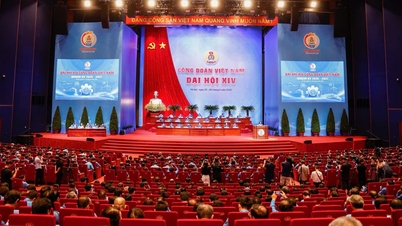
![[Photo] First session of the 14th Congress of the Vietnam Trade Union](https://vphoto.vietnam.vn/thumb/1200x675/vietnam/resource/IMAGE/2026/06/03/1780465947883_ndo_br_img-3852-jpg.webp)




































![[Video] Sunset at Lap An Lagoon – Where the sun sets over the fishing nets](https://vphoto.vietnam.vn/thumb/1200x675/vietnam/resource/IMAGE/2026/05/31/1780192137701_beach-landscape-sea-water-nature-grass-745871-pxhere-com.jpeg)





























Comment (0)