

According to information released today, May 6th, by the General Statistics Office ( Ministry of Finance ), in April, domestic gold prices fluctuated in the same direction as world gold prices.
The gold price index in April increased by 10.54% compared to the previous month, by 37.14% compared to the same period last year, and by 22.43% compared to December 2024. On average, the gold price index increased by 32.85% in the first four months of this year.
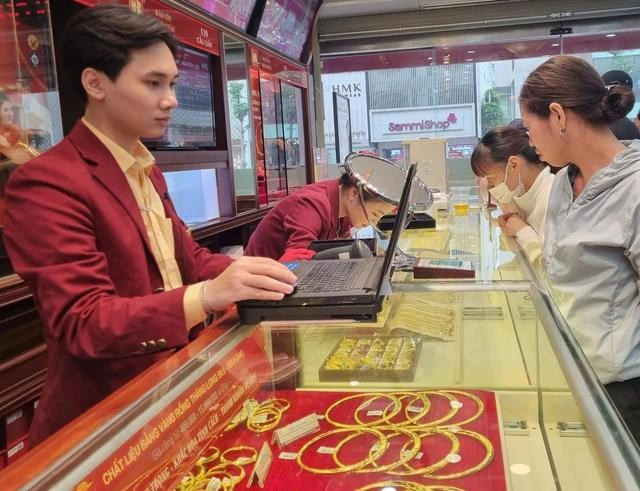
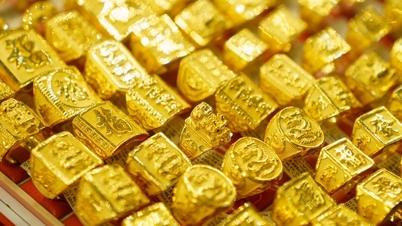
According to the gold price chart of Saigon Jewelry Company (SJC), in April, the buying and selling prices of SJC gold bars increased to VND 19.8 million/ounce and VND 19.5 million/ounce respectively.
From April 1st to May 6th, the buying and selling prices of SJC gold bars recorded a sharp increase from 99.5 million VND/ounce and 101.8 million VND/ounce to 120.8 million VND/ounce and 122.8 million VND/ounce respectively.
Thus, each SJC gold bar increased by 21.3 million VND for the buying price and 21 million VND for the selling price. Currently, each SJC gold bar is nearly 17 million VND more expensive than the world gold price.
This is primarily due to the expectation that world gold prices will continue to rise amidst the anticipated negative impact of the US President Donald Trump's tariff policies on the global economy; the unpredictable monetary policy path of the US Federal Reserve (Fed); tense global geopolitical developments; and potential commodity price shocks that could increase demand for gold.
Furthermore, the supply of gold bars on the market has not increased since the beginning of 2025. The foreign exchange and gold markets are relatively stable, so the State Bank of Vietnam does not need to intervene.
The State Bank of Vietnam does not rule out the possibility that some businesses and individuals are taking advantage of market fluctuations to speculate, inflate prices, and profit illegally.
Despite the rising domestic gold prices, the State Bank of Vietnam assesses that these fluctuations will not immediately affect monetary policy management and macroeconomic stability.
This agency will continue to closely monitor developments in the domestic and international gold markets, coordinate with relevant agencies to strengthen management, and take measures to stabilize the gold market within its authority.
According to the General Statistics Office, as of April 28, the average price of gold in the world was $3,220.07 per ounce, an increase of 7.33% compared to March.
In April, global gold prices continued to rise sharply and reached new highs due to prolonged geopolitical instability, from the conflict in Ukraine and tensions in the Middle East to escalating trade disputes between the US and China, which increased risk aversion and boosted demand for gold as a safe haven.
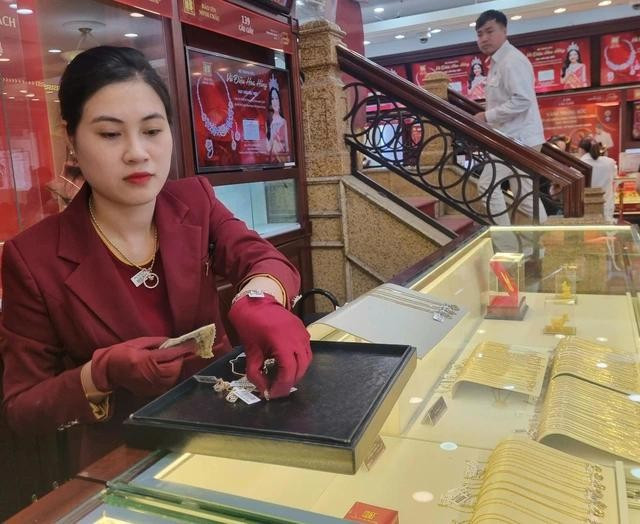
"Massive gold purchases by central banks, particularly in Asia and the Middle East, coupled with expectations of a Fed interest rate cut, have contributed to the rise in gold prices," the Statistics Bureau emphasized.
In its Q1 2025 Gold Demand Trends Report, published on May 5th by the World Gold Council (WGC), the WGC stated that central banks are entering their 16th consecutive year of net gold purchases, adding 244 tonnes to global gold reserves in Q1 2025.
Although this level of gold demand is 21% lower than the same period last year, it still indicates strong demand corresponding to stable buying activity at the quarterly average over the past three years.
According to Louise Street, senior market analyst at WGC, the global gold market has had a volatile start to the year. Demand for gold in the first quarter of 2025 reached its highest level since 2016.
Given the overall economic outlook remains unpredictable, and this uncertainty could fuel gold price increases, Louise Street asserted: "Demand for gold as a safe-haven asset from institutions, individuals, and the official sector could increase in the coming months."
According to Dan Thanh (TNO)
Source: https://baogialai.com.vn/vang-tang-gan-20-trieu-dongluong-trong-1-thang-co-quan-quan-ly-noi-gi-post321967.html


![[Photo] Prime Minister Pham Minh Chinh attends the Conference on the Implementation of Tasks for 2026 of the Industry and Trade Sector](/_next/image?url=https%3A%2F%2Fvphoto.vietnam.vn%2Fthumb%2F1200x675%2Fvietnam%2Fresource%2FIMAGE%2F2025%2F12%2F19%2F1766159500458_ndo_br_shared31-jpg.webp&w=3840&q=75)
















































































Comment (0)