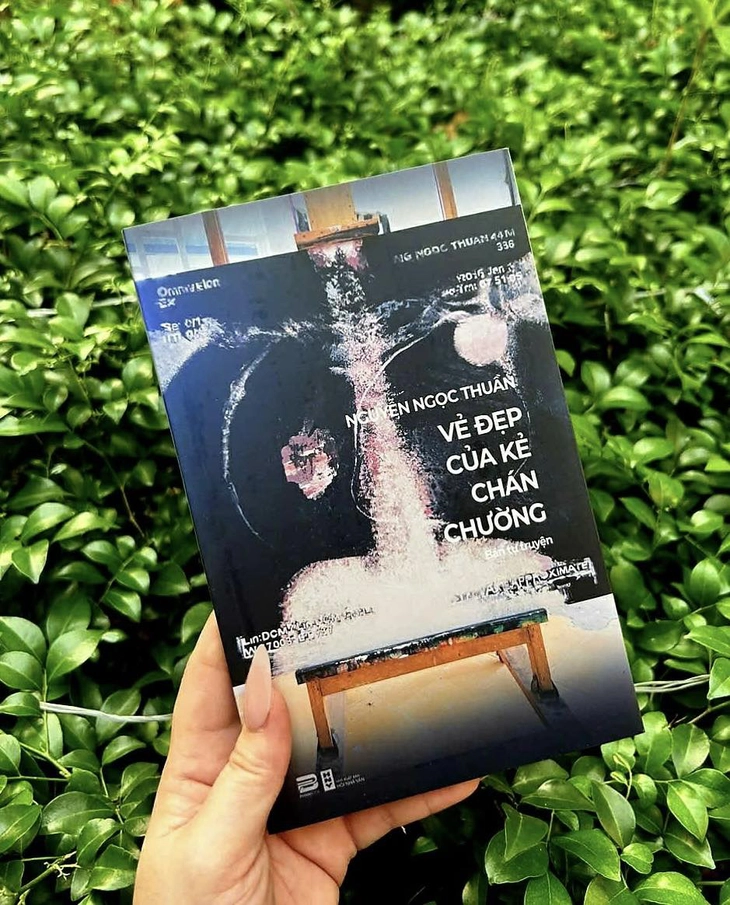
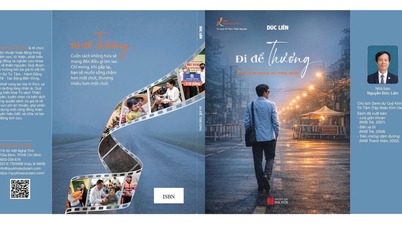
The Beauty of the Disillusioned is published by Phanbook and the Vietnam Writers Association Publishing House.
A thin book to record long days. So long that time seems to dissolve, drifting endlessly without months or days. And space seems to be confined to a place no one wants to set foot in: the hospital.
Trapped by an intense premonition of death.
Time stretches out, space shrinks. Within this space-time is a small human being, writhing in pain, trapped in the suffocating confines of a monotonous daily life.
Meanwhile, outside , the world seems to be bustling with a vibrant rhythm.
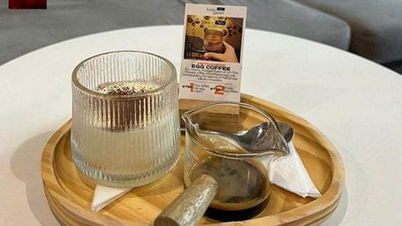
But "here," everything seems to be in a cup of latte, constantly being stirred by some metaphysical being with a spoon. Things spin around, and the days feel unreal.
Everything seemed absurd. Absurd like the idea of a young, healthy person being confined to a hospital bed, surrounded by IV drips and needles. And most terrifying of all, being trapped by an intense premonition of death.
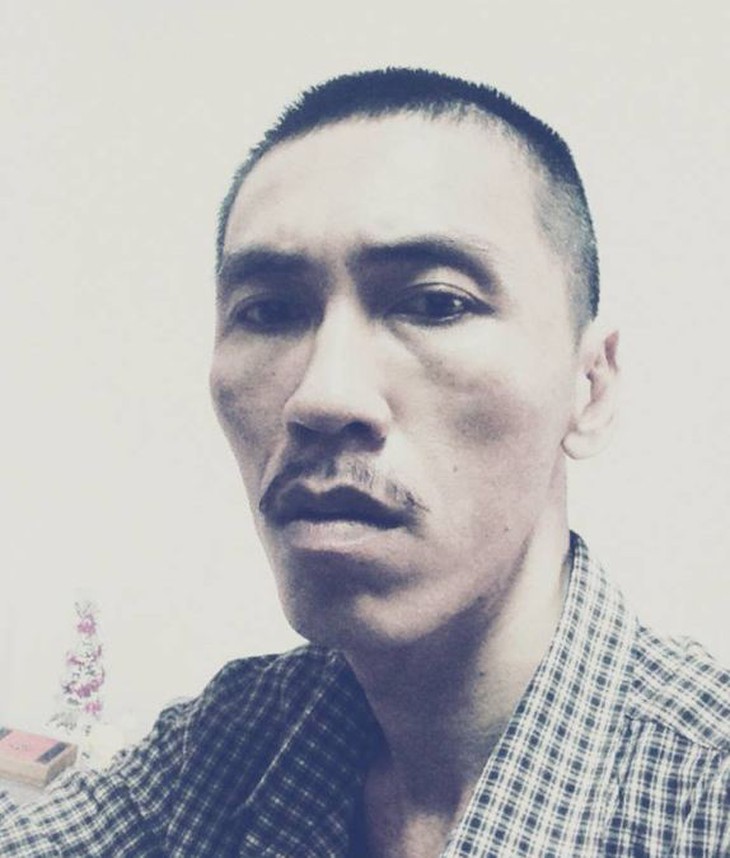
Writer and painter Nguyen Ngoc Thuan. Photo: FBNV
In such an environment, it would be strange not to become a "boredomer." But boredom comes in many forms.
As Bui Giang once mentioned his "disillusionment with poetry": "Being disillusioned with poetry, yet still writing poems—that is the way of life."
In *The Beauty of the Disillusioned* , Nguyen Ngoc Thuan writes poetry. The poems are not ornate or flowery, nor do they add unnecessary embellishments. The verses are straightforward, as if poetry is being breathed out right in the midst of the poet's own struggles to breathe.
Perhaps writer Nguyen Ngoc Thuan will deny it: "I don't write poetry." That's perfectly fine, because (mimicking Bui Giang): saying you don't write poetry is plagiarism.
The Orangutan Poet also wrote: "To grin in the darkness, that is the Way. To never catch dragonflies but claim to always catch them, that is the Way... To suffer immensely in the dark night of the world, yet still claim the world is magnificent, that is the Way... To skip five days of food, yet claim to have skipped five and a half days, that is the Way. To not skip food, yet claim to have skipped food, that is the Way..."
Nguyen Ngoc Thuan sought "the Way" in all the daily activities of the hospital. In the camaraderie of fellow patients. In the doctor's visits. He searched in brief encounters, in trips home, and then back to the hospital.
Appearing between two spaces and two states are people who come and go. A woman X, a woman Z... They are muses, confidantes, friends, relatives. Or they are merely fleeting shadows in life, leaving behind an enduring sense of regret.
The moment is the only thing that truly matters.
The writing in "The Beauty of the Disillusioned" is like waves, constantly crashing in and then receding, and vice versa. It's like pain, rising, subsiding, and then recurring. Those people come and go in his life, amidst uncertain, vague days, when life and death, joy and sorrow seem to have the same meaning.
Nguyen Ngoc Thuan mocks everything. Death. Life. Love. Nostalgia. He even mocks poetry, although this work is like a poem with short segments connected by the writer's emotions rather than a cohesive order.
Existing like a poem, this book celebrates the moment; only the moment is truly valuable. So don't ask who Ms. X or Mr. K are. Don't ask what the fate of the characters appearing in this text will be.
From the moment they appeared, they slipped from the author's grasp. They carried within them a life without past and without future. Only the present. Only the moment they were created by these words.
Nguyen Ngoc Thuan plays with genre. From the outset, the way this work is labeled shows a playful attitude: semi-autobiography. Does that mean half the truth? And even so, that half isn't clearly defined but is mixed together, creating a fantastical world in Nguyen Ngoc Thuan's style.
In that world, there comes a point where we don't know if the characters presented here are all one and the same. They are all myriad states, extracted from a single reality, existing independently and reflecting each other. They reflect sadness, anger, loneliness, and even fear. But even in loneliness, there exists a kind of pleasure.
"Of all fears, loneliness is the most terrifying. It signals our solitude. It signals days that lack meaning. But it is also a strange kind of pleasure. It lets us know clearly that we can no longer hold on to it." (p. 162).
Thus, Nguyen Ngoc Thuan blended everything together, creating a beautifully melancholic mass. A melancholy that doesn't confine the individual to their solitude, but always looks outward, constantly squinting at the world. Even if that world is filled with countless bitterness and pain.
That is why literature is necessary in life. We need to express our feelings through poetry even when life isn't always poetic.
Nguyen Ngoc Thuan leads us through a world that is far from poetic with a calm, charming tone. Even amidst the chaos of literature, we can still find a touch of gentleness in this work of existential bewilderment.
"The hospital, empty days, the abandoned building reeking of disinfectant. / Where I sit, the stone bench is as cold as a graveyard. / Meaning the night before, there was a little rain in the city. / The sound of traffic outside falls on my clothes, on the bench, giving way to the natural sounds of the raindrops. / The words of the raindrops."
The sound of rain hitting the corrugated iron roof rattles and clatters. / What words are those of mine? / I sit on a small park bench. No hospital is cheerful. Not even this small world of park benches. / Rain pools on the path. Moss sings underfoot, making it slippery. / I miss you. / The puddles make me miss you." (pp. 28-29).
Often, it is this very longing and regret that keeps us in this world full of suffering. To continue living, to continue facing life's tragedies, and to continue writing poetry.
Back to the topic
HUYNH TRONG KHANG
Source: https://tuoitre.vn/ve-dep-cua-ke-chan-chuong-20260112092100832.htm








































































Comment (0)